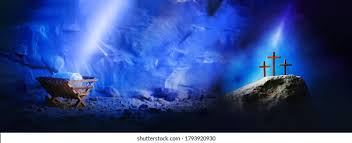
Advent

How many of us have Advent Calendars, and the accompanying daily chocolate?

Interesting isn’t it? Advent is synonymous with Lent and yet this is the difference between them – for Lent we attempt to give something up but in Advent we excitedly open doors and eat chocolate.

Lent is a time when we aim to cut out the distractions, preparing and making ourselves ready for the work Jesus has for us and for Him to be in our hearts.

Advent is a time when we have to look at our lives and make a choice. Do we accept forgiveness and follow Jesus; preparing and making ourselves ready and cutting out the distractions?

Or do we allow ourselves to get swept up in the commercialism, the busyness, the chaos, the overindulgence, the excess food, the drama, the darkness? It is easy to do – there is, after all, so much of it all around us.

Are we ready?

No, I don’t mean do you have the tree and decorations up, presents and cards all wrapped/written/sent, parties organised, invites sent, that Christmas food shop booked and all the other activities we think of when we use the term festivities.

Are we ready for Jesus?

This passage from Mark* is full of imagery. Jesus was talking in a way that the Jews of the time would understand. There are however, several key points.

The first is that Jesus is foretelling the second coming – that He will come again. He does not know the exact time of His return but He will be returning. This is an excellent example of faith and trust in God. Jesus knows that if God has told Him He will come again that will indeed happen. Jesus does not need to question all the finer details.

Jesus was also foretelling the destruction of the Great Temple in Jerusalem and the fall of Jerusalem. When Jesus says “this generation will not pass away until these things happen” it is this destruction that He is referring to. And this prophecy was indeed fulfilled when Jerusalem and the Temple were destroyed in 70AD.

We do not need to doubt Jesus prophecies. We know they will come to pass. We know He will come again.

Jesus likens us to men who know that their master is coming but who do not know exactly when he will arrive. We do not need to be afraid of this. But we must live our lives in a way that means we are ready no matter when He arrives. Every moment of every day becomes a preparation for the moment we meet Him face to face.

The next point is that, of all things, it is most foolish to be so wrapped up in earthly distractions that we forget God. The wise are those who never forget that they must be ready when the summons come, so that, for them, the end will be eternal joy.

“Come, Lord Jesus, come quickly. We long for the day, when we will see your face, we will be with you, you as our light.” This prayer sums up waiting for the Lord and the fulfilment of God’s plan. No one waits without a good reason and how long we wait is determined by the reward at the end. Jesus is surely the best reward.

The farmer does not know (exactly) what day the rain will come or the crops be ripened but the farmer knows they will and waits patiently and faithfully, ready and prepared for when that time comes. Likewise, we must wait patiently and trust in God whilst we wait, faithfully and prepared.

But when we are waiting for something how do we wait? Do we fill our lives with distractions and keep busy to avoid the waiting?

We have the chance to wait and change our lives but we miss it by running around. We forget our heart.

Do we use advent as a time to slow down as we prepare for Jesus to be born again in our hearts at Christmas or do we rush around more than ever letting life get more and more hectic?

Advent is a time of preparation and waiting. A time to slow down and open up – opening up our hearts and minds.

Advent is a time for prayer. A time for tradition – by which I mean it’s actual meaning of sharing and passing on belief. It is about going deeper in our personal journey with Christ. It is a chance to reset and ensure we have what we need to be prepared so that we are ready no matter what day or hour He returns. It is a time to stop being complacent. A time to keep relationship with God and work on it; doing God’s will everyday.

Advent is a time to put our hearts right with God and prepare them. Are we ready to use this Advent to prepare ourselves so that we are always ready for Jesus’s return and ready to welcome Him into our hearts once again?

*Mark 13.24-37

Light of the world

All Saints*

Wednesday was All Saints Day and so we are celebrating all saints today. Hence, we have the reading from John’s Revelation describing the multitude of saints in Heaven and The Beatitudes from Jesus’s Sermon on the Mount.

When reading, some of you may remember seeing a child learning to read and recognise this, sometimes there is a word which is slightly more unusual and which the reader may not have heard pronounced. In this circumstance, the knowledge the reader has accrued from what they do know about letter sounds and similar words to work out a way of pronouncing it. Sometimes the result is correct and sometimes it varies to how others may pronounce the word.

Some of you may have guessed where this is going.

When I was little I pronounced beatitude as “beautytude”. Now the thing is that whilst my church read the Old Testament, the Epistle and the Gospel at all services, the reading would be announced and then read without the title headings that some passages have. So it was a long time before I actually heard anyone else pronounce “beautytude” as “be attitude”.

Beatitude comes from the Latin word for blessedness and The Beatitudes have been interpreted many times by many different scholars. The highlight the human state and God’s righteousness. They depict the ideal heart condition for a disciple of Christ, a member of God’s kingdom.

But they are also much more than that. Remember what I used to call them – “beautytudes”. There is a further reason to that and it is simply that the beatitudes are beautiful. The are beautiful, uplifting, words of encouragement. They show us the truth of God’s kingdom. They help uphold us when times are hard.

Feeling lost? You are blessed – God will show you the way. Carrying sadness, grief, loss, pain? Joy will come. Feeling unheard and not valued? God hears you. You are precious to Him. Hungry? Homeless? In need of respite? God the Comforter is with you. Desperate for peace and righteousness? Trodden down by war and persecutors? God is by your side sharing your pain.

The saints are not those who have it all figured out. They are not perfect, they are not irreproachable, they have not set unattainable examples.

They are sinners! They suffered! They know grief and pain! They love God and their neighbour. They find ways to seek and serve Christ and praise Him!

Charles Wesley, who incidentally loved All Saints Day, wrote many hymns, including O For a Thousand Tongues to sing. The conclusion to which is:

“To God all glory, praise, and love
be now and ever given
by saints below and saints above,
the Church in earth and heaven. ”

Here on earth we are too fond of canonizing to officially grant the title of saint. There are even five stages that have to be followed to enable this to happen and generally this process can’t even start until 5 years after their death.

At the risk of being struck down, I don’t think it is our right to decide who is a saint. In my opinion, that right is God’s. Only God knows what is truly in our hearts. I also think that there is a huge flaw with canonizing. This is that I don’t think someone has to be dead to be a saint. I’m not saying that those who have already passed into light perpetual are not saints – just that there are also some still breathing.

How many times do we say to someone “you’re a saint” when they help us in a time of need?

Look around.

Saints are sinners! Saints love God and their neighbour. They have chequered pasts but have repented, serve Christ and strive to walk in His footsteps. They are filled with the Holy Spirit, and no matter what the circumstances are still able to lift their hearts in prayer and praise to God.

Saints are found in the most unlikely of places, in the street, in the supermarket, everywhere. And today we celebrate them all.

There is an old hymn that used to be sung a lot but which I haven’t heard sung for many years by Lesbia Scott which I feel is very poignant today and so I’m going to finish by reading it to you:

I sing a song of the saints of God,
patient and brave and true,
who toiled and fought and lived and died
for the Lord they loved and knew.
And one was a doctor, and one was a queen,
and one was a shepherdess on the green:
they were all of them saints of God, and I mean,
God helping, to be one too.

They loved their Lord so dear, so dear,
and God’s love made them strong;
and they followed the right, for Jesus’ sake,
the whole of their good lives long.
And one was a soldier, and one was a priest,
and one was slain by a fierce wild beast:
and there’s not any reason, no, not the least,
why I shouldn’t be one too.

They lived not only in ages past;
there are hundreds of thousands still;
the world is bright with the joyous saints
who love to do Jesus’ will.
You can meet them in school, or in lanes, or at sea,
in church, or in trains, or in shops, or at tea;
for the saints of God are just folk like me,
and I mean to be one too.

Source: Glory to God: the Presbyterian Hymnal #730

*Talk from Holy Trinity Sheerness 5th November 2023

All saints

Testing

This morning’s Gospel is just like my children…

… they ask testing questions and … yep – when they are asked to do something they either don’t do it or … if it’s the youngest anyway … they say “No!”; then they go away and think about it and then get on with it.

The chief priests tried to trick Jesus, testing Him, by asking where His authority came from.

Jesus, of course, did not fall into their trap. Instead, He turned it around by asking whether John’s baptism came from heaven or from human origin. They refused to answer Him, out of fear of recrimination from the crowd and damage to their reputation.

So Jesus tells this parable of the first son who refused to do what his father asked but then changed his mind; and of the second son who agreed but then did nothing.

A lesson about obedience and disobedience. The chief priests claimed to accept God’s message and would put on a show for the people – but that’s all it was – just a show. Jesus is saying they are like the second son who said “yes” but then did not obey.

The point is that those who refuse God but who later repent and follow Him, obey Him, can enter the Kingdom of God. Those who say “yes” but do not repent (which includes following through with their actions) can’t.

If the chief priests are the second son, who are the first?

Jesus answered that for us too – He points out to the chief priests that the tax collectors and prostitutes (those who were considered at the time to be the biggest sinners) were the first son and would enter the Kingdom of God first because they believed, repented and returned to God. The chief priests, who only claimed to follow God with their words but not with their hearts or actions, would not get to enter God’s Kingdom unless they truly repented.

Turning to God with repentance is the key to our salvation, no matter what our past sins might be or how many times we’ve disappointed God. He can see what is in our hearts and forgives us when we are truly sorry.

It’s what we do, not just what we say, that counts.

Let’s renew our own commitments to be faithful followers of Jesus.

Let us thank God for sending His Son who truly is who He says He is.

Let us be genuine in our actions and live in love serving others.

Talk from Holy Trinity Sheerness (Matthew 21:23-32)

Questioning authority

Knock Knock…

… Who’s there? Jesus. Jesus who?

Jesus who? This is what Jesus asks His disciples. He starts with an icebreaker – who do the people say I am?

I suspect that, like many of us would do when we are asked a searching question, the disciples may have been analysing the question to try and work out what answer Jesus was looking for.

The Bible references many identities that the people had allocated to Jesus. The disciples had lots to choose from to answer Jesus’s question.

But then Jesus asks the key question (no pun intended).

He says: “But you, who do you say I am?”

And Peter does not disappoint. Peter answers from his heart, sharing the knowledge given to him by God.

“You are the Christ”, Peter says, “the Son of the Living God”.

This is Peter confessing his faith and it is so important that it is on this faith, this statement by Peter that Jesus is the Christ, our Saviour from sin, that Jesus builds the foundation of His church – a church tasked with the mission of sharing the good news that Jesus Christ is our Saviour.

C.S. Lewis wrote:

A man who was merely a man and said the sort of things Jesus said would not be a great moral teacher. He would either be a lunatic – on a level with the man who says he is a poached egg – or else he would be the devil of hell. You must make your choice. Either this man was, and is, the Son of God; or else a madman or something worse. You can shut Him up for a fool, you can spit at Him and kill Him as a demon; or you can fall at His feet and call Him Lord and God. But let us not come with any patronising nonsense about His being a great human teacher. He has not left that open to us. He did not intend to.

Mere Christianity by C.S.Lewis

Jesus is Lord! He is the Son of God!

… So, who is Jesus to you? Don’t answer with your head. The answer is written in your heart.

Who is Jesus to you?

And now, let’s turn that around: Who does Jesus say you are?

When you leave this world, how do you want to be remembered? Will your obituary/eulogy be just a boring list of facts – born on – worked at – died on? Or will it be full of memories from people whose lives you have touched with kindness – whether you remember it or not?

Alfred Nobel was reading the morning paper in 1888. The day before, his brother, Ludvig had died. But the newspaper accidently wrote the obituary about Alfred. He was dismayed that they had called him “the merchant of death” and that it read “Dr Alfred Nobel, who became rich by finding ways to kill more people faster than ever before, died yesterday.”

Nobel was appalled and this inspired him to create the Nobel Peace Prize and to donate his entire fortune to causes of peace.

Who does Jesus say you are?

Will Jesus see us as being faithful to Him? Micah 6:8 says: “This is what the Lord requires of you. Be fair to other people. Love kindness and loyalty, and humbly obey your God.”

Faith means walking with Jesus by treating others right, showing kindness and lifting up those who weary from the journey.

Jesus told us to be ready because He will come again at an hour when we do not expect Him.

Are we ready?

Who does Jesus say we are?

Sparkler

Talk given at Minster Abbey 27th August 2023

“We’re All Going On A Summer Holiday…

…no more worries for a week or two…”

…except we all know that isn’t the reality. The school year has ended, costs have dramatically increased – but, of course, certain things are always more expensive during that long Summer holiday break. In addition, the expectation of schools and organisations, and even within other areas of society, is that families must indulge in expensive activities taking the children out to a multitude of places and trips away over this time period. This year, from one of the groups the children were even sent home with a notebook where they were instructed to carefully detail all these activities. This, like non school uniform days, places even more pressure on the parents as, just as they cannot be seen by the other school parents sending the children in anything less than designer wear even though they cannot afford it, they are made to feel the same about what holiday activities are undertaken. Sadly, prejudice and competition are still rife and the class system is still very much evident with children still being mocked if they cannot do similar activities to their peers.

This causes a drain on parents, a drain on the resources available, worry and stress over whether the effort put in to find alternative activities will be enough to cover the inability to take the children to expensive holiday resorts or Disneyland. Parents who are already trying to cope with childcare arrangements with the children being off school, the extra food costs, and additionally any additional support their child needs to assist with Autism, ADHD etc.

However, despite economic, worldly and social pressures, it does not have to be like that!

When we were growing up we considered ourselves lucky to be able to play outside with the neighbouring children, playing in the garden, borrowing different books from the library, going to our parents’ workplaces and helping out, visiting our grandparents and helping them, completing jigsaw puzzles, playing board or card games, helping out around the home and garden, even naming our own school uniform for the new school year. We were not bored! We did not need electronic devices. We enjoyed our holidays and learnt a lot. We visited whole new worlds and made whole new friends through our reading. The holidays used to fly by – in a good way. We did not ask our parents whether we would be going out on a day trip every day and then complain if the answer was no. The school projects were not always “What we did on our holidays” but were based on what we would be studying in the Autumn term or on something topical that was happening in the world. We would enjoy spending time researching these in the library and making a scrap book about the theme.

Yes, there would be the occasional trip out, a family picnic or a family day out. But, these were not demanded upon or an expected requirement; they were a treat.

In 1987, Tales of A Church Mouse by Revd Alec Shearwood was published. In one of these tales, called Holidays, the mice children on school holiday visit Grandfather Sebastian, who tells them to go away as he is recreating himself. When asked what this means they get the response, “you must know what recreation means, don’t you?” When the mice children suggest that means games and having fun they are told, “Stuff and nonsense! Recreation means recreating yourself.” On their return home the Rector was in the church and so they asked him what recreation meant:

“Well William,” he said, ” it means making a thing again, making it as fresh and good as it was before, and that is what holidays are for. Some people go away to the seaside for their recreation so that when they come home they are no longer tired and stale. Some play games, or garden, or go for long walks.”

I told him about Grandfather.

“Yes,” he went on, “some just need a good rest.”

Revd Alec Shearwood

Jesus says to us:

“Come to Me, all you who labour and are heavy laden, and I will give you rest. Take my yoke upon you and learn of me, for I am gentle and lowly in heart, and you will find rest for your souls. For My yoke is easy and My burden is light.” 

Matthew 11:28-30

We are lucky to have been granted the privilege to bring everything to God in prayer. Instead of forfeiting peace and carrying needless pain and worries around as a heavy burden, we can give these to God and be grateful receivers of His peace and strength as He guides us through all difficulties.

So let us all have a good holiday with lots of fun, let us give all our burdens to Jesus, let us be refreshed and eager to do God’s work through all that we do, let us be “recreated”!

Walking by the sea.

Minster Abbey Talk on John 17:1-11

“The time has come,” the Walrus said, “to talk of many things:…”

Lewis Carroll

And if we were having a conversation over some coffee and cake (hint hint) that is precisely what would happen. We would have a conversation; maybe about the weather, the coronation, a television drama, … all sorts.

Some of us find it easy to converse, some of us find it more difficult and communicate in other ways. Some of us are good at listening and for some of us it “goes in one ear and out the other”.

But, how do we pray?

There are many different ways we can pray, but ultimately, if we think about it, prayer is just the same as that conversation over coffee … isn’t it?

If not why not?

We have the opportunity to talk to God about anything and everything; and not just when we’re worried or in need or when things aren’t going as we’d like but also when we’re thankful, joyful and when things are going well.

We can do a lot of talking to God but we need to remember to listen as well. If we are honest none of us listen as much as we should.

Prayer is vitally important in our lives. An oft repeated quote “seven days without prayer makes one week (weak!)”.

Today’s Gospel reading is part of one of Jesus’s longest prayers.

In short it summarises Jesus’s relationship with the Father and the relationship He wanted His disciples to have with Himself and the Father.

Like the Holy Trinity (Father, Son and Holy Spirit) this prayer is in three sections.

  1. Jesus prays for Himself
  2. Jesus prays for His disciples
  3. Jesus prays for all believers past, present and future

Despite us having celebrated Jesus’s Ascension on Thursday, this prayer passage takes place before His arrest. But it is significant because it becomes Jesus’s evaluation of the purpose of His life, death, resurrection and ascension.

God’s glory and Jesus’s glory are one and the same. Through the death of Jesus God is glorified and all believers receive eternal life.

Eternal life is knowing the one true God; being in a living fellowship with God. And this life we receive when we accept Jesus into our hearts and lives. Jesus’s purpose, His mission, is salvation.

Jesus prays with great concern for His disciples. He was not concerned about Himself – He knew God’s plan, He knew He had to suffer and die to be victorious. Jesus’s victory was unquestionable. The disciples were just like us. They were not infallible. Jesus had predicted the disciples would desert Him. And so He prayed for them, that they would be kept safe and protected by the Father’s power and that they would fulfil their future ministry. The disciples were about to be tested and Jesus prayed that this would not separate them from Himself or from each other.

Again, like the Three-in-one, Jesus mentions three things about His disciples:

  1. They had accepted His teaching
  2. They had accepted the knowledge that Jesus is the Son of God
  3. They believed

Jesus prayed that the world would stop being opposed to God.

“All I have is Yours and all You have is Mine.” Jesus has equality with the Father.

He prays that, as He and God are one, the disciples and believers will remain as one.

In unity.

Not divided.

Division is the result of the failures of Christians.

God is awe-inspiring and loving. Jesus’s prayer is an outpouring of love and concern.

Jesus was shortly returning to the Father and to the glory He has before the world began. He had completed His mission. The Holy Spirit had been promised. With the help of the Holy Spirit it is now our turn.

Our mission, if we choose to accept it, is to bring glory to God through all we do in His name.

Are we ready?

Do we accept this mission?

Minster Abbey, Sheppey

Witnessing and Doubting

(Talk given at Minster Abbey 16th April 2023)

So…witnessing and Doubting Thomas!

The other day I read that the public (according to the newspapers) claim the church do not promote Easter as much as Christmas. Easter and Christmas… two very important events for us – Christmas the celebration of the birth of Christ, the incarnation, God becoming man to save us…and Easter where Jesus is sacrificed in our place to defeat death, rise again, and enable us to be forgiven for our sins and reconciled with God.

So I thought about this and here’s a couple of comparisons:

The Church

At Christmas:

  • Advent – 4 Sundays
    • Hope, Prophecy, Patriarchs
    • Peace, Bethlehem, Prophets
    • Joy, Shepherds, John the Baptist
    • Love, Angels, Mary
  • Carol Service
  • Christingle Service
  • Crib Service
  • Midnight Mass
  • Christmas Morning Service
  • Candlemass

At Easter:

  • Ash Wednesday Ashing Service
  • Lent – 6 Sundays
    • Invocabit
    • Reminiscere
    • Oculi
    • Laetare
    • Judica
    • Palm Sunday
  • Maundy Thursday Service
  • Good Friday Pilgrimage and Gathering at the Cross
  • Stations of the Cross
  • Holy Saturday Vigil/Service of Light
  • Easter Sunday Service
  • Ascension
  • Pentecost
  • Corpus Christi

Versus

What I think is most appropriate to call commercialisation:

Where Christmas is promoted with:

  • Father Christmas
  • School Nativity Plays
  • Carols
  • Christmas number ones/Christmas songs
  • Grottos
  • TV Ads
  • Work Dos/Christmas parties
  • Decorations
  • Cards
  • Presents
  • Trees
  • High Street decorations and lights
  • Shop displays and more decorations
  • Christmas dinner menu options at pubs and restaurants for approx. 2 months
  • Pantomimes
  • Etc

And where Easter is promoted with:

  • Chocolate and chocolate eggs
  • The Easter Bunny
  • TV Ads but on a smaller scale
  • Small shop displays normally in seasonal aisles
  • Small amount of Easter decorations
  • Small amount of Easter cards
  • Easter dinner menu options for 1 day

In my opinion, having compared the aforementioned; the media, yet again, is showing a biased and incomplete picture. The evidence suggests that on the contrary the church does more at Easter but the sway of commercialisation makes the commercial version of Christmas more widely known.

This needs to be combated, but how? Simply, we need to follow the instruction and example of Peter in Acts and go out and witness, spreading the good news of the true meaning of both Christmas and Easter, sharing what, through love, Christ did for us and the joy of His resurrection with all it’s connotations of redemption.

Meanwhile, where does Thomas fit into all this?

Personally, I feel sorry for Thomas. I think he got a bit of a rough deal. Thomas the Doubter…in actuality he was a fervent believer yet what do we remember him for – doubting – the one who wouldn’t believe without seeing for himself and touching his beloved Master’s wounds.

Maybe, despite it being unfair, one of the reasons we remember Thomas specifically for this event is because it shows us that doubt is okay!

Doubt is something we all experience at some point and in reality, faith and doubt can and do co-exist side by side.

Thomas was not evicted from the group of disciples for his doubt. He was not condemned by Jesus for his doubt. He continued to be a valued part of the disciples as they stayed together, discussing all that had happened, sharing meals, continuing to accept each other.

Thomas had not been there when Jesus had appeared to the group of disciples initially. What was he doing? Where and why wasn’t he there are interesting questions.

BUT, it occurs to me that maybe, just maybe, he wasn’t there so that God could use him for the benefit of those too scared to admit their doubt both then and now.

Thomas only doubted for one week! He then met the risen Jesus and believed. In fact, he believed so fervently for the rest of his life that he was killed (or martyred) for his belief. Yet, still, he is referred to as “Doubting Thomas”.

One small brief moment of doubt, one incident, one mistake, one failing – and a label is applied – something that is still very much done today. And, whilst that person learns, believes, repents, changes, moves on, that label sticks.

Instead of calling Thomas “Believing Thomas” – a far more accurate name/label; because of that one brief moment of doubt he is known as “The Doubter”.

Through this and through Thomas, maybe God is teaching and reminding us that we should not label people. That we should allow people to change and accept that people do change. That we all make mistakes but when we repent God forgives us; likewise when others make mistakes we should allow them to repent and forgive them.

One more thing: asking questions.

There is a common phrase heard in classrooms and training rooms throughout the land:

“There are no stupid questions” and “if you ask a question most of the people in the room are probably thinking it and are just too scared to ask”.

Children in particular ask a lot of questions and, whilst these are often ‘when or what is for dinner?’, they often ask the really big questions:

  • What is God’s name?
  • What does God look like?
  • What does it mean to be reborn?
  • How is Jesus alive?

The questions children, and indeed some adults, ask are, in their own way, blessings. They make us think and help us gain deeper understanding and insight together.

The person that both expressed the doubts of everyone and asked the question everyone else was thinking was Thomas. For this we owe him a great deal for if the question had not been asked the answer would not have been given. Thomas the Brave who said to Jesus “Lord we do not know where you are going. How can we know the way?” To whom we owe thanks for Jesus’s answer “I am the [only] way [to God], the [real] truth and the [real] life, no one comes to the Father but through me”.

Thanks to Thomas we know it is okay to be honest about our doubts as well as our faith, we know that labels do not reflect who people truly are and we can realise how questions can lead us to deeper knowledge and growth. Thanks to Thomas, who believed because he had seen, we can see because we believe.

Three crosses

Mothering Sunday

Talk from 19th March 2023

I’ll start by admitting that, whilst I was thinking about what I might say today, I was tempted to include a vote on who wants a talk about Mothering Sunday versus who wants a talk on today’s readings (Colossians 3:12-17, Luke 2:33-35, John 19:25b-27). Instead, in a good news bad news kind of result, you’ve got a bit of both.

The other week my husband asked me if I would be taking the Mothers’ Day break in the Lenten fast. Being me I asked why and got told it’s because it’s Respite Sunday. Well, those of us with the job title of Mother might agree that respite is a myth! So I looked it up.

In medieval times this Sunday, called Mid-Lent or Refreshment Sunday, was indeed used as a day of respite from the Lenten fast.

So why, I thought, would you break the fast, or resolution if you like, for one day when (assuming you’ve been able to keep it so far) you are half way through and it’s beginning to get easier. After all, it takes 6 weeks to make a new routine stick and only 1 to break it. Breaking the fast surely just makes it harder to keep for the final half of Lent.

Penny drops!

That’s why, I thought, because it had got easier, it’s not a temptation in the same way anymore, it’s easier to resist, that habit of having whatever it is we’ve given up is becoming a habit of not having it. We are not having to make as much effort and so the motive of Lent, the preparation, the trials, the testing need refreshing so that we are putting the same amount or even more effort into the second half of Lent as we did in the first half. It is not supposed to be easy.

So how did this become associated with Mothering Sunday? Simply because of the texts read at Mass during those medieval times which were full of many metaphors for and references to mothers; which are often linked to the personification of the church as the Bride of Christ and with the Virgin Mary.

Time passed. (It didn’t know the answer to the question). After the English Reformation (when coincidently the same readings were still being assigned to this Sunday in the Book of Common Prayer) Christians would ‘Go a Mothering’. This means they would return to their “Mother Church” for a service on this Sunday. By “Mother Church” we normally mean either the church in which we were baptised, the local parish church or the nearest cathedral (the cathedral being the “Mother Church” of all the churches in the diocese).

In more recent history, Mothering Sunday became a day when domestic servants were given a day off to visit their Mother Church, usually with their own mothers and family members.

Nowadays, we use Mothering Sunday to give thanks to all those who mother us. A day when we celebrate all who have and do give us motherly care.

Providing this love and care is, in itself, a vocation. It is a vocation of nurturing, care, love and joy. Equally, it is a vocation of tiredness and worry, pain and sacrifice.

There can be no doubt that Mary experienced all these elements of motherhood. She accepted the vocation and all the pain that was to come with it.

Jesus was born to be our Saviour and this involved Him being the Ultimate Sacrifice. In this short passage from Luke, Simeon receives Jesus like a priest receiving a sacrifice. He warns Mary that “a sword will pierce” her soul also.

We are told that Mary treasured and pondered on all these things she was told about Jesus. We can only imagine how much she may have dwelt on and worried or dreaded that time coming. Did it give her a chance to be prepared? A chance to be ready when that moment came?

Mary understood the joy of motherhood. But, she also had to understand the pain as she saw Jesus humiliated, tortured and die an extremely painful death. The sword piercing her soul.

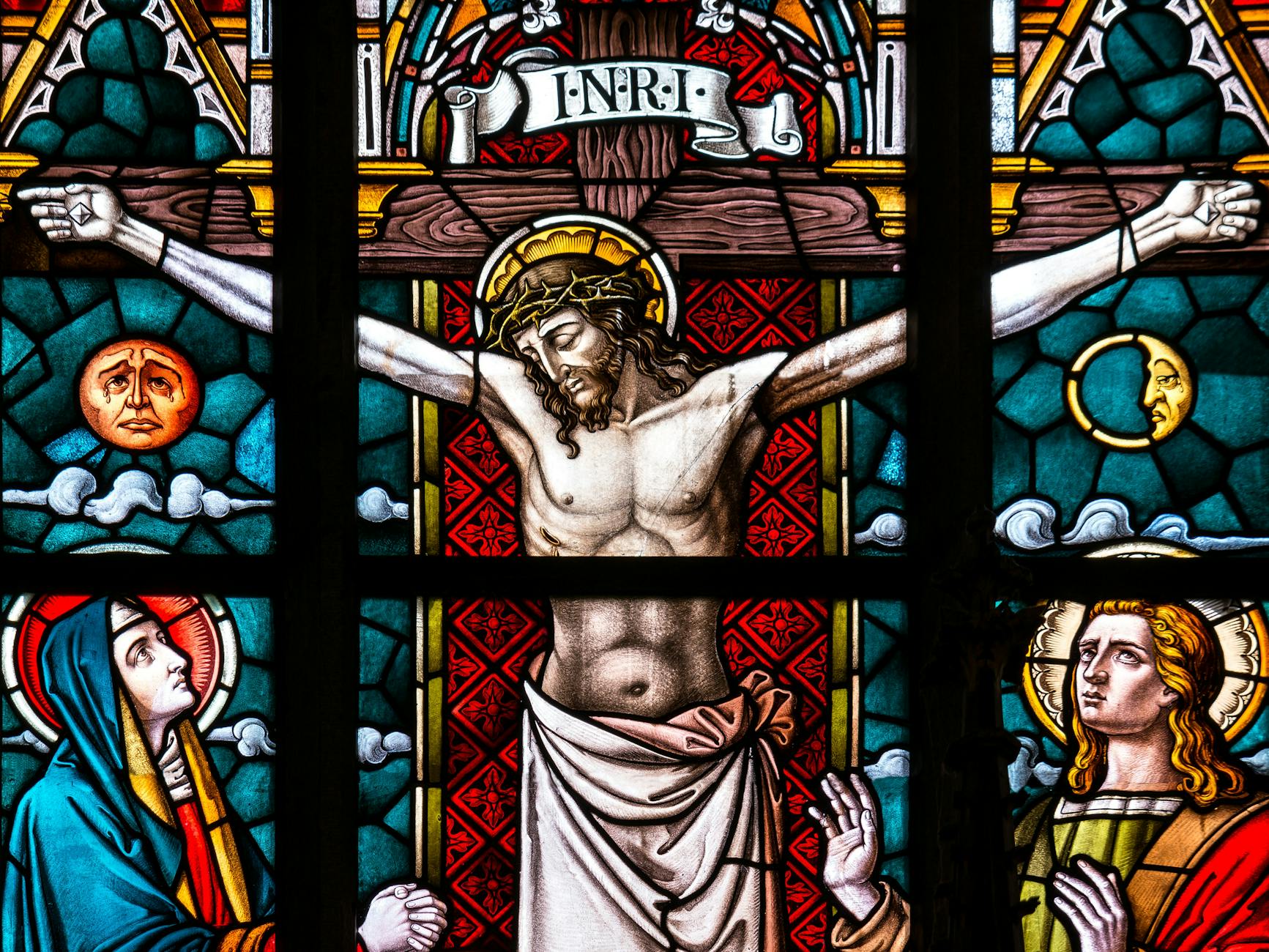
Mary was there at important moments in Jesus’s life. Likewise, she was at the cross at His time of death. Yet, even at the moment of death Jesus’s heart is open. He sees the pain and grief of the mother who sacrificed for Him, whom He loves and respects. He sees the grief of a trusted disciple and friend and He gives them to each other to support and care for each other. He ensures that they will be okay by this act. An act of compassion at His darkest hour.

So as we move towards communion and towards our time of prayer let us bring to the Lord all our joys and sorrows. Let us bring to Him our thanks for all those who have provided us with a mothering care and all those who have been like mothers to us.

As we remember Jesus’s sacrifice for us upon the cross, His act of love, may we try and understand the pain of those who suffer out of love and may we strive to follow His example and walk in His footsteps striving to act with compassion, kindness, humility, meekness, patience, forgiveness and love.

A bouquet of flowers

First Sunday in Advent 27th November 2022

Happy New Church Year! Today, we are celebrating both the first Sunday in the church year AND the first Sunday in Advent; and so, yes, the Christmas jumpers have been got out.

And in Matthew, Jesus tells us to “Stay Awake…”. I don’t know about you but I am most definitely going to need more coffee!!!

We are told that, if the house owner knew in advance exactly what time the thief was going to break into his house, then he would have stayed awake and not let his house be broken into. He would be prepared! He would have made plans to protect his home and for the thief to be caught.

Likewise, if we were to receive a warning that something would happen at a certain time then we would prepare and make sure we were ready. If an electricity company says at this time on this day we are turning the electric off then we would make sure that batteries were charged, the torches were working and so on.

We would be ready and alert!

“Keep awake for you do not know on what day or at what hour your Lord is coming.”

We know Christ will return – this is promised and God keeps His promises. What we do not know is the timing – and God’s time is not the same as ours.

So we must be ready and watchful.

Be prepared.

Advent is a time of waiting and preparation.

Are we prepared?

When I ask you “are you ready for Christmas” what do you think of?

Is it whether you’ve got all the presents?

Is it whether they are all wrapped or how much wrapping you need to do?

Is it whether the Christmas cards are all written or who you’ve still got to send one to or whether they’ll be posted in time with the planned postal strikes?

Is it when the decorations will go up or whether they are up already or when they’ll be got out of storage?

Is it whether the Christmas pudding and Christmas cake are made or when they’ll be made?

Be honest – when asked if you are ready for Christmas – who actually interprets this question as:

Are you ready for Jesus?

Are you ready for His birth?

Are you ready for Him to come again?

!!!

“Keep awake for we do not know the hour He will return.”

Thankfully, this does not mean that we all must become insomniacs. It means we need to be Spiritually awake. To be on our guard against spiritual distraction. To pay attention. To spend time with God in prayer and growing our faith. To be more fully alive in Christ.

I was writing Christmas cards this week. I’ve been writing quite a lot to give hope to people who would otherwise be forgotten. And I got quite cross because I found a range of cards that have the greeting “Happy Holidays”.

Now this really annoys me. It’s the same with a lot of television adverts on at this time of year.

Let me share why…

It misses the point!

It doesn’t just miss the point – it totally avoids it with an enormous detour.

And what is it that these Christmas cards and adverts are all missing out?

Well, the clue’s in the name. The reason for the season – Christ. The greatest gift of all.

So we must stay spiritually awake so that we do not commit the crime of leaving Christ out of Christmas. We must be alert and watchful to make sure that we do not demote Jesus to the bottom of the list. We must be on our guard to ensure that we are not just giving Him a cursory nod/brief acknowledgement or lip service just so that we can “tick that box”.

We must be prepared and ensure that we are putting Jesus at the forefront of our lives. Before everything else. First.

So this year let us use this time of Advent to wait patiently for Christ.

Waiting can seem boring. It can be hard to be patient. Especially when there are so many other distractions.

But waiting does not actually mean doing nothing!

It is an opportunity to prepare our hearts, our minds, our souls.

It is an opportunity to put our trust in the Lord. To truly repent, to forgive and to accept forgiveness. It is an opportunity to seek God more deeply in prayer and to surrender to His ways – becoming more alive in Christ.

I’m going to deviate slightly to quote from a Christmas film, which due to this quote is, in my opinion, one of the best Christmas films:

Tonight I want to tell you the story of an empty stocking. Once upon a midnight clear, there was a child’s cry. A blazing star hung over a stable and wise men came with birthday gifts.

We haven’t forgotten that night down the centuries; we celebrate it with stars on Christmas trees, the sound of bells and with gifts. But especially with gifts. You give me a book; I give you a tie. Aunt Martha has always wanted an orange squeezer and Uncle Henry could do with a new pipe.

We forget nobody, adult or child. All the stockings are filled…all that is, except one. And we have even forgotten to hang it up. The stocking for the child born in a manger. It’s his birthday we are celebrating. Don’t ever let us forget that.
Let us ask ourselves what he would wish for most…and then let each put in his share. Loving kindness, warm hearts and the stretched out hand of tolerance. All the shining gifts that make peace on earth.

The Bishop’s Wife (1947)

So let us use this advent to be ready for and to remember Christ this Christmas as we pray:

Lord, grant that we may stay awake, remain watchful and stand firm in the faith out of our love for you. Amen.

Poppet bowing to the Posada nativity

Harvest Festival

As normal, for our area, donations received during the Harvest Festival were mainly in the form of long life goods for the food bank. A representative for the food bank passed on their thanks from themselves and on the behalf of those who need to use the food bank – which was nice!

But, during the service I glanced around at all the tins of food and I was thinking…

I thought back to when I was a child and we were asked to take something in for the school and church harvest festivals. Mother would go through the cupboard and present us with a tin, “You can take that” she’d say “no one likes that one”!

I thought about comments I have heard from varying sources on such occasions of: “And everybody bring a tin. Everyone always has something in the cupboard they don’t like so there’s no excuse.”

I thought that, whilst given the choice between nothing and a tin of food that has only been chosen as a donation because nobody likes it then there may well be some gratitude, because anything may well be better than nothing – if it is the only food you can get and you are actually starving. BUT does that make our reason the right reason when we choose what to give?

I thought, shouldn’t we be giving the best we can offer. It is to God to whom we are giving our offerings. It is to God we are giving thanks for the harvest and that we are fortunate enough to have something to eat. When donations leave the altar and make their way to the food bank to feed those in need they are also “feeding Jesus”. Surely, therefore, it should indeed be the best we can offer.

Whilst it is true that people have different tastes and it may well be that a food one person hates is another person’s favourite; the important thing is the motive. What is the motive behind the choice of product? Is it the best we can offer or is it actually just a case of wanting that item out our cupboard? Are we giving our Lord the best of our harvest or the dregs?

What is written in our hearts is known. No excuses can be made.

So when such choices are to be made, remember we should be giving of our best with a pure heart (the right motive) – not finally getting rid of that tin that nobody likes but providing a feast fit for a King – our Saviour.

Poppet lying on a sofa hugging her pumpkin.