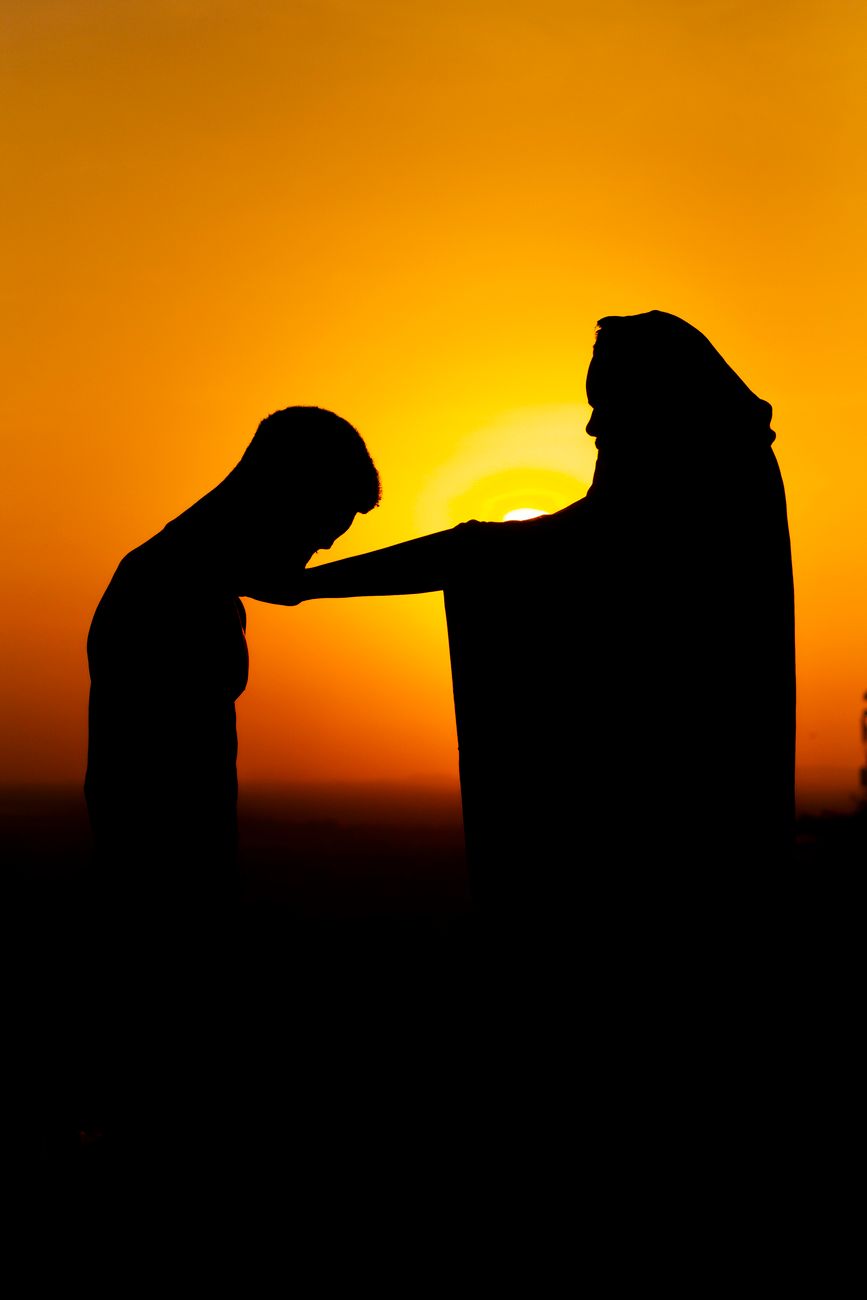
Pentecost

Pentecost – the day the Holy Spirit was sent to be with us forever – is about much more than we realise. It is about the reversal of division, about overcoming human limitations, about the power to forgive and about continuous ministry.

It is the culmination of a series of events that began a long long time before. Let’s start with the reversal of division.

The Tower of Babel

Now the whole earth had one language and the same words. And as they migrated from the east, they came upon a plain in the land of Shinar and settled there. And they said to one another, ‘Come, let us make bricks, and burn them thoroughly.’ And they had brick for stone, and bitumen for mortar. Then they said, ‘Come, let us build ourselves a city, and a tower with its top in the heavens, and let us make a name for ourselves; otherwise we shall be scattered abroad upon the face of the whole earth.’ The Lord came down to see the city and the tower, which mortals had built. And the Lord said, ‘Look, they are one people, and they have all one language; and this is only the beginning of what they will do; nothing that they propose to do will now be impossible for them. Come, let us go down, and confuse their language there, so that they will not understand one another’s speech.’ So the Lord scattered them abroad from there over the face of all the earth, and they left off building the city. [Genesis 11:1-8]

Instead of obeying the Lord God and allowing Him to be their God, the people gathered to build the tower. This was much more than our concept of a tower and was to be a man-made sacred mountain on which humanity intended to live and be gods themselves.

Humanity shunned the Lord God and His plan to restore Eden through them, and so God scattered humankind, dividing them with different languages, wanting to start again.

Israel did not actually exist at this point. God then selected Abram; a man from the very heart of the rebellion. It is through God’s covenant with Abram that Israel was created from Abram’s descendants.

In this covenant, God said that all the nations of the earth would be blessed through Abram and his descendants. This shows the intention of God; that despite His decision to punish the nations of the earth, the Israelites would serve as a mediator for the return of the True God with a trail leading the nations back to God through Israel and The Messiah.

When the Holy Spirit came, as described in Acts, as wind and fire, this links back to the images used for God’s presence in the Old Testament.

But more than that are the signs that the reunification, the reversal of division, is in progress whilst pointing to the division point. The flaming tongues were divided, and the crowd formed from all the nations, were confused. The tongues are distributed amongst the disciples as they are commissioned to preach the good news.

As the people heard about Jesus and His resurrection and became His followers, they carried the news back to their nations. The people are being reunited and reconciled with God through the Holy Spirit.

This is part of the continuous mission. To witness and call the people back to God. 

The Holy Spirit unites people across boundaries. It replaces judgement and division with understanding, unity and peace.

So, what about the overcoming of human limitations?

The Holy Spirit provides the inner strength needed to work through hurts, resentment and shame. This allows forgiveness as an act enabled by the Holy Spirit instead of human effort on its own.

Forgiveness is also part of the continuous mission as we are called to continually release grievances, heal relationships and extend the same forgiveness to others as that we receive from God.

Which brings us to the power to forgive.

Again Jesus said, “Peace be with you! As the Father has sent me, I am sending you”. And with that He breathed on them and said “Receive the Holy Spirit. If you forgive anyone’s sins, their sins are forgiven; if you do not forgive them, they are not forgiven.” [John 20: 19-23]

As Christians we are obliged to forgive. It can be difficult to forgive. It can be difficult to forgive others. It can be difficult to forgive ourselves.

Forgiveness – forgiving does not mean forgetting. It does not mean making excuses or trying to justify what occurred. It does not mean that there won’t be consequences. It is about whether those involved can move forward in life or whether they are imprisoned by being unforgiven.

If we choose for sins to be retained we choose a state of unforgiveness and living in darkness. To live in such darkness is our choosing not God’s choosing.

The Holy Spirit gives us power to forgive. It opens doors and allows us to live in the light. 

The Lord breathes the Holy Spirit on us and gives us a new life, a new heart and a new mission:

Go and forgive!

Peace is not possible without forgiveness. Love is not possible without forgiveness.

At Easter we celebrate the Resurrection of the Lord. Just like Jesus did not stay in the tomb His instructions didn’t either. He instructed us to love, to forgive, to reconcile, to love God, to love our neighbours and to love our enemies.

The highest form of love is forgiveness. 

Forgiveness is unconditional love. It is not only loving those who are easy to love but also those who are difficult to love.

Jesus arrived in that locked room and said to His disciples “Peace be with you” He was telling them that they did not need to be afraid of Him, that He loved them and that He forgave them.

Go in peace! Go and forgive!

Tongues of Fire (Photo by Marek Piwnicki on Pexels.com)

Three Promises

John 14:15-21

Our Gospel reading today is a passage of three promises. The promise of Jesus that He will not leave the disciples (or us) as orphans. The promise of the Holy Spirit that the Father will send His Spirit to dwell in us. And the promise of the Father that whoever obeys Jesus’s commands and loves Him will be loved by the Father and both God the Father and God the Son will make their home with us.

God the Father, Son and Holy Spirit want to be with us on earth because they want us to be with them in heaven.

When we obey God’s word and fulfil our mission, God comes to us and great things happen. Barriers are broken, enemies are reconciled, disease is cured, addiction is conquered, hope is established, people are blessed, communities are formed, unity is established and church happens. 

When God sends the Holy Spirit discouraged people cheer up, dishonest people clean up, sour people sweeten up, gossipers shut up, conflicted people make up, sleeping people wake up, lukewarm people fire up BUT most of all the Lord Jesus Christ, the Saviour of all the world, is lifted up.

What do we picture or imagine when we think of the Holy Spirit? When we think of Him, what do we think He looks like?

We have an image we apply to God the Father, whether consciously or subconsciously. In the Old Testament we have, amongst many others,  the imagery of the burning bush, the fiery and cloudy pillars. We have the imagery of God as the brightest light, and, thanks to the film industry there is of course the image of God as the kindly old man on a cloud with a long white beard. However, we personally imagine God when we try to box Him into a particular image, there are many solid concepts that we apply. 

We have an image we apply to God the Son. Jesus incarnated as human gives us a very definite image of God in man shape. The exact image is often influenced by works of art and our own society as we imagine Him looking more like our own rather than taking into consideration the human heritage and society He was born into. And, of course, for both God the Father and God the Son, we take the verse from Genesis that tells us that we were created in God’s own image and reverse it to mistakenly try and make God like us. However, again, regardless of how we personally imagine Jesus, we have a solid concept for Him.

But do we have the same solid concept of the Holy Spirit? Or is one of the reasons we do not refer to the Spirit as much as we should because we have less of a clear image in our minds of how to personify Him.

The Holy Spirit is the breath of God. He dwells in us. He has appeared as a dove and as tongues of fire. Jesus spoke of the Holy Spirit in very solid concrete terms. All mentions of the Holy Spirit in the Bible are very concrete, very solid, very real.

Jesus is, again, preparing His disciples for His departure. It’s been a bit of a rollercoaster for them.

Jesus prepares them for His death. Jesus is betrayed by one of their intimate group. Jesus is arrested, tried, tortured, crucified. He dies and is placed in the tomb, rises from the dead and is again with His disciples but now He is saying they have to say goodbye again as He is going back to the Father.

Confusion, betrayal, fear, terror, loss, sadness, grief, surprise, joy, relief and now they are looking loss in the face again.

But Jesus wasn’t leaving His disciples, or us, bereft of God. He was preparing the way for the Holy Spirit to be with and dwell in us. 

The Lord is here. His Spirit is with us. Ever present in our lives.

Jesus, God the Son, brought comfort, help, guidance and healing to the people He met. God the Holy Spirit brings comfort, help, healing and confidence in God’s continued and eternal presence. The Holy Spirit is the embodiment of God, dwelling within each one of us who have become united with Christ through our salvation; transforming us and growing us so that we can be a blessing to others and to the world.

Some one once described the Holy Spirit as “the present-tense of God”: not the God of history, not the God of the future, but the God of the here and now, active in our lives. Through the Holy Spirit we experience God on a day to day basis as He keeps us in God’s presence every moment of every day, sustaining us and our faith.

As the Holy Spirit works more and more in our lives we increasingly become obedient to God’s will for our lives. 

Jesus says “If you love me you will keep my commandments … and those who love me will be loved by the Father”.

Do you love Jesus?

We are not talking about a “pink and fluffy” kind of love.

Jesus wants our obedience, our actions, our devotion. Love for Jesus is about following His call on our lives. Authentic love for Jesus is shown by how we live to Him and how we live with each other.

Love for Jesus begins with emotion but as it deepens it moves to obedience and devotion.

And so we must rely on the power of the Holy Spirit working within us, changing us, transforming us, drawing us closer to God.

The Lord is here. His Spirit is with us. Change is coming!  

Holy Spirit (Photo by Ann H on Pexels.com)

The Vine of Life

Jesus is the vine, we are the branches. We know that Jesus taught using images that the disciples and crowds knew. Vineyards were a familiar concept to His listeners; both as a literal vine and as a metaphor. The Old Testament uses the vine as a metaphor for the people of Israel, in both positive and negative ways.

A vine and its branches can be twisty, intertwined and complex.

God is the Vine Grower, Jesus is the Vine and we are the branches. The Vine is the life source of the branches.

Jesus is the Way, the Truth and the Life. He is our life source. God, the Vine Grower, tends the branches and will lift up those that produce no fruit. 

Modern translations of this passage use the harsh words “cuts off” those that bear no fruit but the origin text used words that mean to lift up.

A vine grower will lift up those branches that are bearing no fruit so that instead of trailing along the ground, where the branches will grow tiny roots and try and feed themselves from the poor shallow soil, they are away from the ground and getting good nutrients from the actual vine. The shallow soil does not meet the needs of the branches leaving them unable to produce good fruit. The branches need to be nurtured by the vine which provides them with all they need and gives them a chance to produce good sweet fruit.

And the branches? Their job is to remain in the vine and produce fruit. 

Remain …

In this 8 verse passage the word remain appears 8 times. Jesus really wants us to get the message that we need to remain, or abide, in Him. He knows that we cannot “go it alone” even though our stubborn human selves will try. The branch cannot bear fruit when separated from the vine – to bear fruit it must remain part of the vine.

Do not be fooled into thinking that relying on God and abiding in Jesus gets us an easy ride. Quite the opposite. As Jesus reminds us “every branch that bears fruit will be pruned to make it bear more fruit” and branches bearing no fruit will be taken away and lifted up. Branches bearing fruit will be stripped of what they do not need to enable the nutrients to go to the fruit growing and enabling the branches to concentrate on the fruit and not be wasted on anything else.

Abiding in Christ the Vine does mean change! Being pruned – changed to bear much fruit. God preserves and nurtures us so we can produce good fruit and then He cleans us so we can produce more and sweeter fruit.

So let us abide in Christ the Vine, drench ourselves in His word and in prayer, so that we the branches can produce good sweet fruit.

Fruitful Vine (Photo by Gina Meyers on Pexels.com)

The Merry Month of May …

…May is a month of rebirth, inspiration and excitement; a time of profound growth, renewal and divine grace.

“What a busy world we live in.

Everyone is full of cares.

Worries, stress and strain of living.

Nothing done, yet time is scarce.”

As we see more signs of Spring and more signs that we are moving into Summer, we have the opportunity to pause …

… to pause and reflect …

… to pause and renew …

But, for this to have any positive effect on our lives we must truly understand what that means.

Renewal is the beautiful, often slow, sometimes painful, work of God stripping away our ways of being that we think feel safe but which, ultimately, are not our truest selves. It is God stripping those away, layer by layer, to reveal the glory He placed inside us.

By glory I don’t mean fame, influence, ego, or self importance; but a “crucified” kind of glory. One which comes through surrender.

Resurrection cannot be experienced without death. We need the cross!

If we allow God into our hearts we cannot limit Him to just the part we want Him to see. We must surrender to Him our whole selves, good and bad, happy and sad, our ingrained patterns and our hidden fears. Then we have to allow Him to transform us.

It’s not about becoming better but about becoming “God’s original masterpiece”; becoming who God originally created us to be.

Freedom and renewal begins in admitting we are deeply flawed and desperately in need of a Saviour. It begins in surrender.

Ephesians 4:22-24 “To put off your old self, which belongs to your former manner of life and is corrupt through deceitful desires, and to be renewed in the spirit of your minds, and to put on the new self, created after the likeness of God in true righteousness and holiness.”

So, how can we achieve this? 

Slowly and repeatedly. Renewal is a slow plodding process of pain, death and reconfiguration, well before any energy and encouragement bursts onto the scene. To be made new or to be remade new means something needs to change and change is not easy. It needs to happen everyday. It happens by the Grace of God but we have a significant part to play. We must, daily, reflect, pray and act. We must also open ourselves to humility. We must emulate Jesus – what would Jesus do? We must trust in God and in His loving ways. We must stop resisting and pass our burdens to God, allowing Him to provide.

True renewal requires releasing old ways, habits or pains. It is an act of “composting” old habits and letting them die in order to nurture new growth.

Embrace change! It is, after all, a daily requirement of being a Christian; and it’s coming whether you like it or not!

May (Photo by Gamontat Om on Pexels.com)

The Shepherd and The Gatekeeper

Genesis 7, Acts 2:42ff, Psalm 23, 1 Peter 2:19ff, John 10:1-10

As is so often the case, whilst it might not initially seem like it, our Old Testament and New Testament readings go hand in hand.

Our Old Testament reading details the onset of The Great Flood; representing God’s righteous judgement on a corrupt world and His merciful salvation of Noah’s family.

Indeed, its key themes are the finality of God’s judgement when it comes and the Ark as a type of Christ – a place of absolute sanctuary, provided by God.

There is the invitation into safety: “Come into the Ark” – a final invitation to salvation, not merely survival but true salvation and sanctuary prepared by God. It is a promise of protection. When God sends judgement He also provides total shelter for His people.

God closed the door of the Ark signifying that the time of mercy and warnings has passed. It is a seal of safety for those who accepted God’s invitation and finality for those who remain outside.

Of course, there is also the obedience of Noah, like a sheep steered by a shepherd, who only entered the Ark once he was commanded, completing a long and difficult task of faith.

The Ark highlights a stark contrast between salvation for the obedient and judgement for the rebellious; mirroring the finality of Judgement Day.

In our New Testament readings we are like sheep who have gone astray. Jesus describes Himself as the Shepherd and the Gate for the sheep. Like the Ark, Jesus is concerned with keeping His people, His sheep, safe and cares deeply for them. Both Jesus and the Ark are protectors, gatekeepers and shepherds.

A shepherd tends, herds, feeds and guards their sheep.

Some denominations call their church leaders Pastors. Pastor is the Latin word for shepherd.

Shepherds lead sheep by building trust, using vocal cues, and employing protective, guiding techniques. Often they work in groups, working together to share the responsibilities.

Sometimes they lead the sheep from the front, such as leading them to pasture, breaking a trail, clearing danger, and demonstrating a safe path.

Sometimes the shepherd leads from behind to guide and protect the sheep from danger, keeping the flock together from the rear and allowing the fastest to go first to direct the herd’s overall movement. Herding the sheep instead of expecting them to follow.

By walking opposite to the flock, shepherds can push them into a new direction.

To contain or direct them, shepherds might walk along the side of the sheep, keeping full view of the flock.

Shepherds focus on providing security and nourishment, which ensures the sheep trust them enough to follow.

And, of course, there is the famous shepherd’s crook, which is used to guide, separate, or protect the sheep. The distinct hook at the end is used for managing, catching and guiding sheep by their necks or legs without causing injury. It is especially useful for catching lambs or holding a sheep in the pasture. The long handle is used to guide the sheep through the gates, separate, or steer them without getting close enough to scare/frighten them.

It also supports the shepherd, like a hiking pole, when travelling across rough, uneven or steep terrain.

The shepherd can also use the crook as a defensive weapon against predators to protect the flock or to shake fruit from high branches or to part thick undergrowth.

This highlights how deeply a good shepherd knows their sheep and how well they know their shepherd. The sheep know the shepherd’s voice. The shepherd brings security and life. Jesus as the Shepherd and Gatekeeper is the protector and provider, offering security and life, in direct contrast with the Pharisees or “thieves” who come to steal, kill and destroy.

The gate and the shepherd work together. The function of the gate is to keep the sheep together during the night, safe from predators. During the day the gate is opened so that the shepherd can guide the sheep to pasture. It is important to emphasise that the gate is not a gate of exclusion. It is not to keep out other sheep. Jesus said “I have other sheep that do not belong to this field. I must bring them also, and they will listen to my voice. So there will be one flock, one shepherd.” The gate is purely to guard against all that threatens the sheep.

Not only do the gate and shepherd work together but they are one and the same. Hence, Jesus using both in this teaching. Many get confused by this but it is simpler than it seems.

Let me tell you about an Arab shepherd. This shepherd was not a christian and did not know the Bible. But he did know his sheep and was showing off his flock to a scholar, and also showed off the penned area where his sheep slept every night. “And when they go in there” the shepherd said proudly, “they are perfectly safe”.

But then the scholar noticed something and said, “Your sheep sleep in that pen and yet I notice that the pen does not have a gate on it”.

“Yes that’s right,” the shepherd replied, “I am the gate”.

“What do you mean?” the man asked.

“After my sheep are in the pen, I lay my body across the opening. No sheep will step over me and no wolf can get in without getting past me first. I am the gate.”

The other interesting part of this passage from John is verse 6: “This figure of speech Jesus used with them, but they did not understand what he was saying to them.”

There are many shepherds in the Old Testament, Moses, Rachel, David are just a few. Shepherding was a common job at the time. In addition, the shepherd/sheep metaphors are used over and over again throughout the Old Testament. Yet, despite this, the Pharisees, the people who claimed to be experts in the Old Testament, didn’t understand what Jesus was talking about. They did not understand because they did not believe.

The role of the good shepherd is to take care of the sheep, to protect the sheep, to lay down their life for the sheep and to love the sheep. There is no better metaphor to describe the nature of Jesus’s bond with His people. He is a gentle shepherd who leads His sheep.

On the other hand, Jesus is calling the Pharisees “bad shepherds”. They were the very people who were supposed to spiritually nourish and protect the people of God and yet they were leading the people astray. Jesus was comparing these false teachers to thieves, robbers and strangers. He is saying that His sheep, the sheep of the true shepherd will not be controlled by the pharisees.

Jesus is saying, just in a different way, the same thing that He says in John 14:6, “I am the way, the truth, and the life. No one comes to the Father except through me.”

Enter salvation through the Jesus Gate. Be a Jesus Sheep, in the sanctuary of the Ark, tended, herded, fed, cared for and guarded by the Jesus Shepherd; and receive abundant everlasting life, green pastures, still waters, peace and joy.

Shepherding Sheep (Photo by cottonbro studio on Pexels.com)

The Straw Which Broke The Straw That Broke The Camel’s Back …

… AKA The Straw That Decimated The Camel.

Snarky comments every day.
Snide remarks never at bay.
Twisting all I say and do.
Timing how long I'm in the loo.

Dictating how long I sleep or wake.
Logging where I go, how long I take.
Dictating what I'm able to do,
How far I walk, and how long too.

Behaving like a spoilt child,
Toys out pram and stomping wild.
Making excuses every day,
It's always someone else you say.

"It's their fault" or it's theirs or theirs
But never yours, it's mine or theirs.
You twist the truth cos you can't take
The onus for the crimes you make.
You play the victim but it's you
Who makes my life hard to live through.

You just want someone to control,
Who'll put you on a pedestal,
And then you're nice for a short time,
Whilst them you fully undermine.

And when there's nothing left of me,
So much you have killed snarkily,
You'll play the victim one more time,
Knowing it's you that's done the crime.

It's not just words it's actions too,
You killed the trust I had in you.
You never even took the time
To help in a way that would be fine.

You want the glory, you want to boast,
But I hate the smell of burning toast.
You don't care what I think or need.
For glory you have so much need.

A little effort is the task,
It's really not so much to ask,
Like putting things where they should be
And making decent cups of tea.

But comments snide and snarkily,
And years of going on at me,
Of hurt and tears at what you say,
And do nearly every day,
Must stop if you want me to stay!

Dissent

On 28th March 2026, we were privileged to be able to go in person to the wonderful Service of Welcome for our new Archbishop. People from all across the diocese were there and we were all worshipping together.

On 29th March 2026, we went to a wonderful Palm Sunday service with Bishop Rose and 4 out of the 5 churches of Sheppey Group Ministry were all worshipping together and united in our faith.

Where was the 5th I hear you ask. They, sadly, quite simply do not want to be a part of the wider journey of serving Jesus. They claim they cannot get to the other churches; but the rest of us managed it and the day before representatives from across the whole diocese managed it. They claim the age of their congregation is a barrier as it makes them unable to go anywhere else. Yet on 29th March 2026 we had all ages with us, as we did on the day before, young and old and all in-between. They claim there is insufficient transport and that only one of their number has a car. This is untrue! I counted up how many cars are accessible to that congregation and they could have all car shared and still have space for extra people. There were some who do not drive or do not have a car with us on Palm Sunday but whom were able to attend through sharing with others. The day before also people shared their cars and travelled together. An essential part of our journey, in fact, is to do just that – to travel together, supporting each other.

Sadly, this missing church of which I speak feels like it has lost its way and instead of following Jesus, who is the true and only way, it feels like they are growing more and more like a cult, worshipping one of their own instead of our Lord Jesus Christ.

Brothers and Sisters, pray for them, do not let them mar the wonderful time and opportunity of united worship as we ground ourselves in the Lord and give thanks for His grace and salvation. Be strong in our Lord and follow only Him, who is the true way, the true truth and the true light.

Missing piece (Photo by Ann H on Pexels.com)

Doubting Thomas

When it was evening on that day, the first day of the week, and the doors of the house where the disciples had met were locked for fear of the Jews, Jesus came and stood among them and said, ‘Peace be with you.’ After he said this, he showed them his hands and his side. Then the disciples rejoiced when they saw the Lord. Jesus said to them again, ‘Peace be with you. As the Father has sent me, so I send you.’ When he had said this, he breathed on them and said to them, ‘Receive the Holy Spirit. If you forgive the sins of any, they are forgiven them; if you retain the sins of any, they are retained.’ But Thomas (who was called the Twin), one of the twelve, was not with them when Jesus came. So the other disciples told him, ‘We have seen the Lord.’ But he said to them, ‘Unless I see the mark of the nails in his hands, and put my finger in the mark of the nails and my hand in his side, I will not believe.’ A week later his disciples were again in the house, and Thomas was with them. Although the doors were shut, Jesus came and stood among them and said, ‘Peace be with you.’ Then he said to Thomas, ‘Put your finger here and see my hands. Reach out your hand and put it in my side. Do not doubt but believe.’ Thomas answered him, ‘My Lord and my God!’ Jesus said to him, ‘Have you believed because you have seen me? Blessed are those who have not seen and yet have come to believe.’ Now Jesus did many other signs in the presence of his disciples, which are not written in this book. But these are written so that you may come to believe that Jesus is the Messiah, the Son of God, and that through believing you may have life in his name.

The Gospel of John, chapter 20 starting at verse 19

This reading is the one from which the name Doubting Thomas originates.

I always feel sorry for Thomas. He was an extremely faithful disciple. Indeed, in an earlier passage from John, when Lazarus has died and the other disciples do not want to go with Jesus back to Judea, it is Thomas who persuades them; and even says “Let us also go, that we may die with him”.

Again, when Jesus explains He is going to prepare a place in His Father’s house for His followers, it is Thomas who had the foresight to ask “Lord, we don’t know where you are going so how can we know the way?” This gained us that vital answer from Jesus that He is the way, the truth and the life; revealing that Jesus is the only path to God, moving the focus from a physical location to a spiritual relationship.

In that locked room where all the disciples except Thomas were gathered, Jesus appeared to them. He stood among them and said, “Peace be with you.” After saying this, Jesus showed His disciples His hands and His side.

Then the disciples rejoiced when they saw the Lord.

Let’s be clear on this, the disciples had already had the testimony of the empty tomb with the folded grave clothes from Peter and John. They had had the testimony of the women and from Mary who had seen the risen Christ. Yet Jesus still joined them in the room although all the doors were locked and showed them His wounds before they recognised Him.

Thomas, on the other hand, by not being with the other disciples had missed out on seeing the proof of the resurrection that the others had been shown freely by Jesus without having to ask for it.

Thomas, like the others had been, was in mourning for Jesus.

When we look at it this way, it does seem a little unfair that Thomas should be dubbed for all time The Doubter when he merely asked to experience the same as the others had already received.

Thomas is a wonderful gift to us … and we are, and should be, so thankful for the gift of Thomas.

He demonstrates true love, loyalty and faithfulness in going back to Judea with Jesus, even if it meant death, and persuading the other disciples to do likewise.

He demonstrated wisdom and courage in asking Jesus how we find our way to His Father’s house; which gifts us the teaching and understanding that Jesus is the way and we must follow His example and become like Him.

It is because of Thomas that we can be reassured that it is okay to have doubts.

Doubt can, after all, serve to bring us to deeper faith and understanding. It can be an invitation to ask sincere questions which can lead to a stronger relationship with God. Doubt is questioning that seeks answers. Honest questions are part of the spiritual journey for many. “Thinking is believing and believing is thinking” is a crucial part of our faith.

Thomas, by declaring “my Lord and my God” when Christ reappeared and showed Thomas His wounds, was the first person to explicitly acknowledge Jesus’s divinity.

Thomas was an enthusiastic apostle full of great fervor, an extremely human figure, close to each of us, symbolizing the doubts that can lead to greater awareness and the uncertainty that nurtures faith.

When the disciples scattered after Pentecost to bring the news of new life in Christ to all, Thomas went east, first to the Persians and then to India. From there he eventually reached the Malabar coast (present -day Kerala).

Thomas was completely filled with the Light of the Resurrection. In this light, full of the deepest faith and belief, Thomas was martyred in Chennai, India, in 72AD.

In a kind of paradox, Thomas’s death turned his statement from the events of Lazarus’s death and resurrection into a prophecy, for Thomas did indeed die to go with Christ.

Thomas The Apostle viewing Jesus’s wounds.

Life to Dry Bones

The hand of the LORD came upon me, and he brought me out by the spirit of the LORD and set me down in the middle of a valley; it was full of bones. He led me all around them; there were very many lying in the valley, and they were very dry. He said to me, “Mortal, can these bones live?” I answered, “O Lord GOD, you know.” Then he said to me, “Prophesy to these bones, and say to them: O dry bones, hear the word of the LORD. Thus says the Lord GOD to these bones: I will cause breath to enter you, and you shall live. I will lay sinews on you, and will cause flesh to come upon you, and cover you with skin, and put breath in you, and you shall live; and you shall know that I am the LORD.” So I prophesied as I had been commanded; and as I prophesied, suddenly there was a noise, a rattling, and the bones came together, bone to its bone. I looked, and there were sinews on them, and flesh had come upon them, and skin had covered them; but there was no breath in them. Then he said to me, “Prophesy to the breath, prophesy, mortal, and say to the breath: Thus says the Lord GOD: Come from the four winds, O breath, and breathe upon these slain, that they may live.” I prophesied as he commanded me, and the breath came into them, and they lived, and stood on their feet, a vast multitude. Then he said to me, “Mortal, these bones are the whole house of Israel. They say, ‘Our bones are dried up, and our hope is lost; we are cut off completely.’ Therefore prophesy, and say to them, Thus says the Lord GOD: I am going to open your graves, and bring you up from your graves, O my people; and I will bring you back to the land of Israel. And you shall know that I am the LORD, when I open your graves, and bring you up from your graves, O my people. I will put my spirit within you, and you shall live, and I will place you on your own soil; then you shall know that I, the LORD, have spoken and will act, says the LORD.”

Ezekiel 37: 1 – 14


When I read this passage it always reminds me of the scene from the 1963 Jason and the Argonauts when the bones rise out of the ground and reform into skeleton soldiers marching across the valley. When I shared this with my husband and explained the intricacies of this stop motion creation by Ray Harryhausen, unbelievably, of course, my husband had no idea what I was talking about. Well, obviously that had to be rectified and so I showed him the scene in question so that he could see the animation of the skeletons – to help him visualise the life to dry bones. If, like him, you have missed out on this cultural experience the clip is available to view on YouTube.

Having slightly detoured, let’s get back to Ezekiel and the dry bones.

“The hand of the Lord came upon me and brought me out in the Spirit of the Lord”, basically, Ezekiel had a vision. And in his vision he saw a large valley, the Valley of Death. Everywhere he looked Ezekiel could see bones all over the ground. Bones laying on the surface of the ground are from people in disgrace who have been denied a proper burial; and being dry bones they are from people who have been dead a long time. They had had life once but it had long departed. Yet God asked Ezekiel whether these bones could live.

Ezekiel had no hope in the bones, but he did have hope in God. Ezekiel did not presume to know what God wanted to do with the bones; but he was confident that God DID know.

Ezekiel deliberately left the matter with God, to God’s power and wisdom. In return God commanded Ezekiel to prophesy to these dry, dead bones.

To an outsider looking in this would probably be conceived as foolishness. In Corinthians Paul acknowledged that God’s rescue of humanity in the person and work of Jesus, especially His sacrifice on the cross, was foolishness to those intent on perishing.

Ezekiel preached his message full of faith in God, he was confident that he was speaking God’s word and that the word of God is full of power.

God promised to restore life to these bones. The bones could not create life themselves but as the word of God was proclaimed over them they received God’s promise of life.

This restoration of life was to be marked by breath living once again in these bones – God’s Spirit, the breath of life.

Ezekiel did as God commanded and as he continued to prophesy to the bones their revival took place in stages. First the bones stirred, then they assembled, sinews and flesh were added, the skin covered the tissues and they awaited the breath of God. This is a direct reversal of the decomposition process.

Next God told Ezekiel to call upon the Spirit of God to come upon those on whom the word of God was working. Ezekiel proclaimed God’s message, the breath of God breathed into the reanimated bodies and they stood on their feet becoming an exceedingly great army who lived to act under the orders of God who gave and restored their life. They had God’s word and Spirit, an army of life willingly under the command of God.

If we have word but no Spirit we are like a dead army, assembled but without the true breath of life.

God then explains the vision to Ezekiel. God is promising to restore the whole house of Israel in a restoration so wide and deep that it will be fulfilled as part of God’s plan for Israel in the very last days.

This whole passage highlights to us how God works in revival and how God’s servants should think and act relevant to God’s mighty reviving work:
– God’s servant knows the bones are dead and dry
– God’s servant must walk among the dead and the unrevived
– God’s servant must proclaim God’s word
– God’s servant must have almost a foolish confidence in God’s word
– God’s servant must understand that the Spirit works in a process
– God’s servant must recognise that the work of the Holy Spirit is essential
– God’s servant must boldly pray for the Spirit to move
– God’s servant must speak in the power of faith
– God’s servant must notice every evidence of the Spirit’s work
– God’s servant must look for God’s people to be revived into an army of service
– God’s servant must not say that hope is lost

Upon the valley, wide and sear,
Where death had settled, year on year,
The Spirit set me in the cold,
Amidst the dry bones, grey and old.
Can these bones live? The Voice did ask,
This impossible, heavy task?
I answered not with my own thought,
But “Sovereign Lord, You know,” I brought.

Then came the word: “Prophesy, O son,
To what is broken, dead, and done!
Tell them to hear the LORD on high,
Who brings back breath, who gives them sky.”
As I did speak, a rattling song,
As bone to bone rushed to belong!
Tendons and sinews, flesh and skin,
Wrapped around the void within.
The forms stood up in silent grace,
A breathless army in that place.

“Prophesy again,” the Word did say,
“Call from the four winds, breath of day!
Breathe on these slain, that they may live,
The resurrection I will give.”
The breath of God, the spirit-wind,
Filled the lungs and freed the pinned.
They stood on feet, a vast, huge host,
Alive by Son and Holy Ghost.

“These are my people,” saith the Lord,
“Lost in the graves, by hope ignored.
But I will open up the tomb,
And bring them out of death’s cold gloom.
I’ll put My Spirit in your heart,
A new life, right from the start.
Then you shall know, from dust and sigh,
The Lord has spoken—and will not lie.”

The Valley of Whispering Dust
Moving Skeleton

Inconsiderate People

Inconsiderate people,
They really are a pain.
They inconvenience others
Again and again.
They'll say they "really do not care"
No matter what is said
And treat others more unfairly
To spite them all instead.

They don't care if they're in the way
Or talking very loud.
They stand in front of all the seats
In every football crowd.
They'll take the last cake muffin
Just because that's all you'll eat,
And make sure vegetarians
Are only left with meat.

They don’t believe in fairness,
They just believe in gain.
Deliberately salting all the chips
To spite their wife again.
They hover and intimidate
And strop and cause a fuss.
They want their own way all the time
And 'sod' the rest of us.

They don't give way at roundabouts
Or even indicate.
They think it should be all their way;
The whole world's their estate
... (except it's not).
They think that they are Champion
And the rest of us are rats;
We're only there to serve them
And, of course, to hold their hats.

One day they'll get their comeuppance!
People standing in the ‘do not stand’ area blocking the stands at a football match.