Grace and Prayer

Exodus 32:1-14, Philippians 4:1-9, Matthew 22:1-14

What do we do when there are delays and we don’t know what is going on? Do we remain calm, immersed in prayer and preparation? Or, do we panic?

In our Exodus reading, we pick up the journey of the Israelites at a point where Moses is on the mountain conversing with God. However, at this point he has been gone for forty days, the Israelites do not know what is going on or why he has not yet returned and they are, most certainly, panicking.

To them it has been a very very long time since Moses was last with them; but God’s time is not as our time and to Moses it seemed a relatively short time when compared to the out working of God’s plan for Israel. A delay ordained by God.

How we deal with, or handle, God’s ordained delays – times allocated for waiting and preparation – like Lent or Advent – is a good measure of our spiritual maturity. We should make good use of these times to deepen our perseverance in following God, to pray and study God’s Word, to ready ourselves for whatever will come next.

However, if we allow such delays to be used for drifting into sin, or lapsing into resignation to fate, then we are reacting poorly to those times – like the people of Israel did here. This episode of sin described in this passage started at the impulse of popular opinion. An example of where the will of the people is not always the will of God.

Not knowing what was happening with Moses, the people allowed their uncertainty to take over and turned to idolatry and sin instead of trusting God.

Aaron is just as guilty as the rest of the people. He asked them for their gold and they were generous in what they gave.

In general, people tend to be more generous in what they give to idols but we should be being more generous with what we give to God.

Aaron melted the gold, moulded it and fashioned it carefully with an engraving tool. This work was not led by the Holy Spirit but instead was inspired by sin and yet Aaron took the time to plan it out and carefully detail what he made.

Instead of refusing to go along with what he knew to be wrong, Aaron went along with the people and with popular opinion instead of standing firm for what is right.

Aaron and the people then put their energy, time, sleep, money in service to this idol. People usually find a way to rise early/give to things that are really important to them; but what should be really important to them (and us) is the Lord God.

God told Moses what the people were doing and was a tad upset. God offers to destroy all the people and still keep His promises by rebuilding the nation from Moses. He tells Moses to let Him alone so He could do this.

This implies that if Moses did nothing this plan would go ahead but Moses refused to do nothing. Just as when we see wrongs we should refuse to do nothing. Moses pleaded with the Lord in a short prayer. Prayer does not have to be long – it is the strength of the prayer that matters, not how long it is.

Moses was full of compassion for the people but also concerned with the honour of God. Just as what we do should bring honour to God.

Moses prayed: ‘Lord these people belong to you not me. We didn’t deserve to be freed from Egypt but you saved us by grace, continue to deal with us in your grace. If you kill the people the Egyptians will say you are a cruel God who only saved the Israelites to kill them – don’t let anybody say that about you. Lord you keep your promises and are always faithful, don’t break your promises.’

Now, the wording translation in our reading is “so the Lord changed His mind.”

This is a good place to pause and point out that Moses wrote in anthropomorphic or “man-centred” language. He described the actions of God as they appeared to him.

Moses’s prayer did not change God, but it did change the standing of the people in God’s sight – the people were now in a place of mercy, where previously they were in a place of judgement.

God did not destroy Israel and He knew He would not destroy Israel. He deliberately put Moses into this crucial place of intercession so that Moses’s heart could become like God’s heart for the people, a heart of love and compassion.

Moses prayed just as God wanted him to – as if heaven and earth, salvation and destruction depended upon his prayer.

This is how God wants us to pray.

He also wants us to live a life of prayer, which brings us to Paul’s letter to the Philippians.

The segment that forms our reading this morning starts with Paul addressing a disagreement between Euodia and Syntyche. Paul urges them to settle their differences or agree to differ and to remember their common ground in the Lord. He also advises the rest of the church to help them resolve this matter instead of taking sides and causing a rift.

Paul then moves on: “Rejoice in the Lord. Again, I will say rejoice!”

Joy in the Lord is a cure for all discord.

Let your gentleness be known to all men. The Lord is at hand. Have patience, forbearance, magnanimity, moderation to all men, not just to whom we please.

Live with the awareness that Jesus will return, that He will settle all wrongs and we can trust Him to make things right in our falling apart world.

Live a life of prayer.

Everything is the subject of prayer – there are no areas of our lives that are of no concern to God. Both prayer and supplication are required. Prayer means all our communications with God whereas supplication is directly asking God to do something.

Many of our prayers go unanswered because we do not ask God for anything. God invites us to make our requests known to Him. He wants us to ask with thanksgiving.

Pray about everything. Ask God our requests. Be thankful for anything we receive.

Paul goes on to say that the peace of God will guard our hearts and minds for us. God’s peace is a gift and is beyond our power of thinking. Peace with God is the relationship we enter into with God through the finished work of Jesus Christ.

Finally, Paul tells us to meditate on what is:

  • true
  • noble
  • just
  • pure
  • lovely
  • of good report
  • virtue
  • praiseworthy

This is a way to bring our thoughts and minds back to the obedience of Christ. Follow Jesus’s example and set that example.

Can we say of our lives “Follow me as I follow Jesus”?

If we do not follow Jesus we are rejecting Him. In the reading from Matthew’s gospel, Jesus tells the parable of the Wedding Feast to explain to the religious leaders and listening crowds the dangers of rejecting Him.

Those who had been invited were not willing to come to the Royal Wedding. It seems strange that all those invited refused and this illustrates that there is no logical reason for God’s good gifts to be refused.

The king made the invitation as attractive as possible. He really wanted these people to come and he sent more messengers to them, yet they still refused. Not only did they refuse but they laughed and killed the messengers. The king proclaimed judgement, sending an army to destroy these murderers. A prophesy of what would happen to Jerusalem where the religious leaders strongly, and repeatedly. rejected Jesus.

The king sent his servants to go out and invite everyone they came across. Everyone was to be invited.

This is both like God’s grace and like His invitation to both the Jews and the Gentiles.

Those invited and those who came to the wedding feast were undeserving of the invitation, much less the wedding feast itself.

We are undeserving of God’s grace, yet He freely and indiscriminately gives it to us.

The king came to see the guests just as we will all come before God in judgement. And there was a man there without a wedding garment. He was noticeably different from the other guests.

This man came only because he was invited but came only in appearance. The wedding banquet was to honour the king’s son but this man did not intend honour or respect. He came to eat the good things on offer but in his heart there was no love for the king (God) or his well-beloved son (Jesus).

This man has made too free with holy things and actively insulted the king. The result: this man suffered a terrible fate.

Those indifferent to the gospel and those antagonistic against the gospel and those unchanged by the gospel suffer the same fate – none of these will enjoy the king’s feast.

For many are called but few are chosen.

In this context , this statement of Jesus touches on the great working together of the choices of man and the choosing of God.

Why did they not come to the wedding feast? Because they refused the invitation. Why did they not come to the wedding feast? Because they were called but not chosen.

Do you accept the invitation? Will you be one of the chosen? Do you accept or reject Jesus? Will you come and follow Him if He but calls your name?

Grace and Prayer (Photo by Garrison Gao on Pexels.com)

Calling and Love

Now the Lord said to Abram, “Go from your country and your kindred and your father’s house to the land that I will show you. I will make of you a great nation, and I will bless you and make your name great, so that you will be a blessing. I will bless those who bless you, and the one who curses you I will curse, and in you all the families of the earth shall be blessed.” So Abram went, as the Lord had told him, and Lot went with him. Abram was seventy-five years old when he departed from Haran. Abram took his wife Sarai and his brother’s son Lot and all the possessions that they had gathered and the persons whom they had acquired in Haran, and they set forth to go to the land of Canaan. When they had come to the land of Canaan, Abram passed through the land to the place at Shechem, to the oak of Moreh. At that time the Canaanites were in the land. Then the Lord appeared to Abram and said, “To your offspring I will give this land.” So he built there an altar to the Lord, who had appeared to him. From there he moved on to the hill country on the east of Bethel and pitched his tent, with Bethel on the west and Ai on the east, and there he built an altar to the Lord and invoked the name of the Lord. And Abram journeyed on by stages toward the Negeb.

Genesis 12: 1-9

As Jesus was walking along, he saw a man called Matthew sitting at the tax-collection station, and he said to him, “Follow me.” And he got up and followed him. And as he sat at dinner in the house, many tax collectors and sinners came and were sitting with Jesus and his disciples. When the Pharisees saw this, they said to his disciples, “Why does your teacher eat with tax collectors and sinners?” But when he heard this, he said, “Those who are well have no need of a physician, but those who are sick. Go and learn what this means, ‘I desire mercy, not sacrifice.’ For I have not come to call the righteous but sinners.”

While he was saying these things to them, suddenly a leader came in and knelt before him, saying, “My daughter has just died, but come and lay your hand on her, and she will live.” And Jesus got up and followed him, with his disciples. Then suddenly a woman who had been suffering from a flow of blood for twelve years came up behind him and touched the fringe of his cloak, for she was saying to herself, “If I only touch his cloak, I will be made well.” Jesus turned, and seeing her he said, “Take heart, daughter; your faith has made you well.” And the woman was made well from that moment. When Jesus came to the leader’s house and saw the flute players and the crowd making a commotion, he said, “Go away, for the girl is not dead but sleeping.” And they laughed at him. But when the crowd had been put outside, he went in and took her by the hand, and the girl got up. And the report of this spread through all of that district.

Gospel of Matthew 9:9-13, 18-26

Have you noticed how it is always busy people that Jesus calls?

When He calls us to do something, He calls us away from something else. He calls ordinary people out of the ordinariness of their lives. They are not being called because they have nothing to do and are just sitting there twiddling their thumbs. Jesus doesn’t call people who do nothing.

Every one of the disciples Jesus called were busy people and were in the middle of their normal work at the time they were called. Peter and Andrew were fishing. James and John were mending their nets. Levi (who becomes Matthew), as we read in the first part of the Gospel passage, was in the middle of his work collecting taxes.

It is not that they don’t have anything else to do. It is that the most important thing to do is to hear and obey the Saviour’s call. Jesus, our Saviour, says “Drop what you are doing and follow me”. And the correct and best response is, of course, to get up and follow Him.

Matthew did not choose Jesus. Matthew was rather busy collecting taxes and was not contemplating following anyone.

Jesus chose Matthew. Not only did He choose Matthew but He did not grant the option of thinking it over. Jesus chose Matthew and told him to follow then and there. And Matthew got up and followed Him. Jesus calls us to do the same. No thinking time. No preparation time. No advance training – the only available training is on the job as we go! Just drop everything and follow Him.

When Jesus called Matthew, Matthew got up and left his desk. He left behind the symbol of his profession and the root of his sinfulness. We are never called to something without being called away from something else. We cannot come into full discipleship if we are unable to let go of what Jesus is calling us to leave behind.

In the passage from Genesis 12 Abram is called by God to leave his country, his kin, his father’s house and travel to an unknown land that God would show him. He was called to leave his past behind and to put his trust fully in God for the future. You cannot get to what God has for you without letting go of where you are and what is holding you back and following Him. It is not what Jesus sees in us that makes us worthy of following Him, but what He puts in us when we obey His command.

Jesus also said “I desire mercy not sacrifice. Go and find out what this means”.

Hosea 6:6 says “For I desire steadfast love and not sacrifice.”

The Hebrew word used is “hesed”. I desire hesed not sacrifice. Hesed is translated as steadfast love, mercy, goodness, kindness, compassion and loyalty. Jesus, God, desires all these things from us; not just sacrifice. And here, the meaning of sacrifice is tithing. Gifts given to God and used to support the priests leading worship. Tithing is important to God. I remember reading about a church in Africa where, as the choir sang, the people brought their offerings to God; mostly grain and produce. The people did this with great joy and enthusiasm, giving to God a portion of whatever they had. Tithes and offerings are important to our worship and important to God. But, they are not more important than our steadfast love and mercy.

What do we tithe? What do we give to God? Is it our time? Our talents? A portion of our income or possessions? Volunteering to help our community? All of these are a form of tithe and sacrifice, but, whilst they are important to God, they are not as important as our steadfast love and mercy.

Let us imagine that you help out at the food bank on a Monday morning, preparing and handing out food parcels to the hungry. This is a tithe and a sacrifice. But, whilst you are doing this work, are you gossiping with the other volunteers? Are you speculating about our new Priest in Charge to be? Making assumptions about what he is like without having met him and without waiting to find out? Are you googling him, claiming to know all about him, his experience and his qualifications, even though you haven’t actually read his C.V? Are you judging and claiming you know precisely what he will do before he has even got here? Are you gossiping about other people you know? About those you are serving?

If so, where is the love, the mercy and the kindness? It is noticeably absent from this scenario and, sadly, it is exactly what occurred on Monday and so we pray for them.

God wants us to sacrifice our time, our talents, a portion of our treasures or income, but not at the sacrifice of our steadfast love and mercy.

Our time, talents and money are no substitute for our steadfast love towards God and our neighbours or for our kindness and mercy.

God shows us, and it is detailed over and over again in scripture, the kind of steadfast love and mercy that is important to Him. He is not asking anything of us that He has not already given us.

There is a story about Gandhi. A mother asked him to talk to her son about giving up sweets. He agreed but weeks went by. The mother asked him why he had not yet spoken to her son. Gandhi replied that he still intended to speak with her son but that he was finding it harder to give up sweets than he had expected. The mother realised that Gandhi could not and would not ask someone else to do something he was not already doing and so the conversation with her son could not take place until Gandhi himself had managed to give up sweets.

Like this story about Gandhi, God only asks of us what He has already given us. God gives us and shows us that His steadfast love and mercy for us endures forever and will be with us all the days of our lives.

God demonstrated this by giving us His Son. God so loved the world that He gave His only begotten Son that whoever believeth in Him shall not perish but will have everlasting life.

And Jesus demonstrated God’s steadfast love and mercy over and over again.

We not only have the example of the calling of Matthew in our readings but also the healing of the woman who had been bleeding for 12 years and the resurrection of the synagogue leader’s daughter.

Jesus showed the same mercy to everyone whether they believed in Him or not. His love and mercy really are unconditional and for everybody.

He called sinners, He healed the sick, He raised the dead, He spoke against injustice, He showed us how to love with a steadfast, merciful, kind, pure, good, everlasting love that knows no bounds. God loves us completely, unconditionally with an endless love that is for everyone.

Drop everything!

Let it go!

Follow Him!

Starfish Story

The Shepherd and The Gatekeeper

Genesis 7, Acts 2:42ff, Psalm 23, 1 Peter 2:19ff, John 10:1-10

As is so often the case, whilst it might not initially seem like it, our Old Testament and New Testament readings go hand in hand.

Our Old Testament reading details the onset of The Great Flood; representing God’s righteous judgement on a corrupt world and His merciful salvation of Noah’s family.

Indeed, its key themes are the finality of God’s judgement when it comes and the Ark as a type of Christ – a place of absolute sanctuary, provided by God.

There is the invitation into safety: “Come into the Ark” – a final invitation to salvation, not merely survival but true salvation and sanctuary prepared by God. It is a promise of protection. When God sends judgement He also provides total shelter for His people.

God closed the door of the Ark signifying that the time of mercy and warnings has passed. It is a seal of safety for those who accepted God’s invitation and finality for those who remain outside.

Of course, there is also the obedience of Noah, like a sheep steered by a shepherd, who only entered the Ark once he was commanded, completing a long and difficult task of faith.

The Ark highlights a stark contrast between salvation for the obedient and judgement for the rebellious; mirroring the finality of Judgement Day.

In our New Testament readings we are like sheep who have gone astray. Jesus describes Himself as the Shepherd and the Gate for the sheep. Like the Ark, Jesus is concerned with keeping His people, His sheep, safe and cares deeply for them. Both Jesus and the Ark are protectors, gatekeepers and shepherds.

A shepherd tends, herds, feeds and guards their sheep.

Some denominations call their church leaders Pastors. Pastor is the Latin word for shepherd.

Shepherds lead sheep by building trust, using vocal cues, and employing protective, guiding techniques. Often they work in groups, working together to share the responsibilities.

Sometimes they lead the sheep from the front, such as leading them to pasture, breaking a trail, clearing danger, and demonstrating a safe path.

Sometimes the shepherd leads from behind to guide and protect the sheep from danger, keeping the flock together from the rear and allowing the fastest to go first to direct the herd’s overall movement. Herding the sheep instead of expecting them to follow.

By walking opposite to the flock, shepherds can push them into a new direction.

To contain or direct them, shepherds might walk along the side of the sheep, keeping full view of the flock.

Shepherds focus on providing security and nourishment, which ensures the sheep trust them enough to follow.

And, of course, there is the famous shepherd’s crook, which is used to guide, separate, or protect the sheep. The distinct hook at the end is used for managing, catching and guiding sheep by their necks or legs without causing injury. It is especially useful for catching lambs or holding a sheep in the pasture. The long handle is used to guide the sheep through the gates, separate, or steer them without getting close enough to scare/frighten them.

It also supports the shepherd, like a hiking pole, when travelling across rough, uneven or steep terrain.

The shepherd can also use the crook as a defensive weapon against predators to protect the flock or to shake fruit from high branches or to part thick undergrowth.

This highlights how deeply a good shepherd knows their sheep and how well they know their shepherd. The sheep know the shepherd’s voice. The shepherd brings security and life. Jesus as the Shepherd and Gatekeeper is the protector and provider, offering security and life, in direct contrast with the Pharisees or “thieves” who come to steal, kill and destroy.

The gate and the shepherd work together. The function of the gate is to keep the sheep together during the night, safe from predators. During the day the gate is opened so that the shepherd can guide the sheep to pasture. It is important to emphasise that the gate is not a gate of exclusion. It is not to keep out other sheep. Jesus said “I have other sheep that do not belong to this field. I must bring them also, and they will listen to my voice. So there will be one flock, one shepherd.” The gate is purely to guard against all that threatens the sheep.

Not only do the gate and shepherd work together but they are one and the same. Hence, Jesus using both in this teaching. Many get confused by this but it is simpler than it seems.

Let me tell you about an Arab shepherd. This shepherd was not a christian and did not know the Bible. But he did know his sheep and was showing off his flock to a scholar, and also showed off the penned area where his sheep slept every night. “And when they go in there” the shepherd said proudly, “they are perfectly safe”.

But then the scholar noticed something and said, “Your sheep sleep in that pen and yet I notice that the pen does not have a gate on it”.

“Yes that’s right,” the shepherd replied, “I am the gate”.

“What do you mean?” the man asked.

“After my sheep are in the pen, I lay my body across the opening. No sheep will step over me and no wolf can get in without getting past me first. I am the gate.”

The other interesting part of this passage from John is verse 6: “This figure of speech Jesus used with them, but they did not understand what he was saying to them.”

There are many shepherds in the Old Testament, Moses, Rachel, David are just a few. Shepherding was a common job at the time. In addition, the shepherd/sheep metaphors are used over and over again throughout the Old Testament. Yet, despite this, the Pharisees, the people who claimed to be experts in the Old Testament, didn’t understand what Jesus was talking about. They did not understand because they did not believe.

The role of the good shepherd is to take care of the sheep, to protect the sheep, to lay down their life for the sheep and to love the sheep. There is no better metaphor to describe the nature of Jesus’s bond with His people. He is a gentle shepherd who leads His sheep.

On the other hand, Jesus is calling the Pharisees “bad shepherds”. They were the very people who were supposed to spiritually nourish and protect the people of God and yet they were leading the people astray. Jesus was comparing these false teachers to thieves, robbers and strangers. He is saying that His sheep, the sheep of the true shepherd will not be controlled by the pharisees.

Jesus is saying, just in a different way, the same thing that He says in John 14:6, “I am the way, the truth, and the life. No one comes to the Father except through me.”

Enter salvation through the Jesus Gate. Be a Jesus Sheep, in the sanctuary of the Ark, tended, herded, fed, cared for and guarded by the Jesus Shepherd; and receive abundant everlasting life, green pastures, still waters, peace and joy.

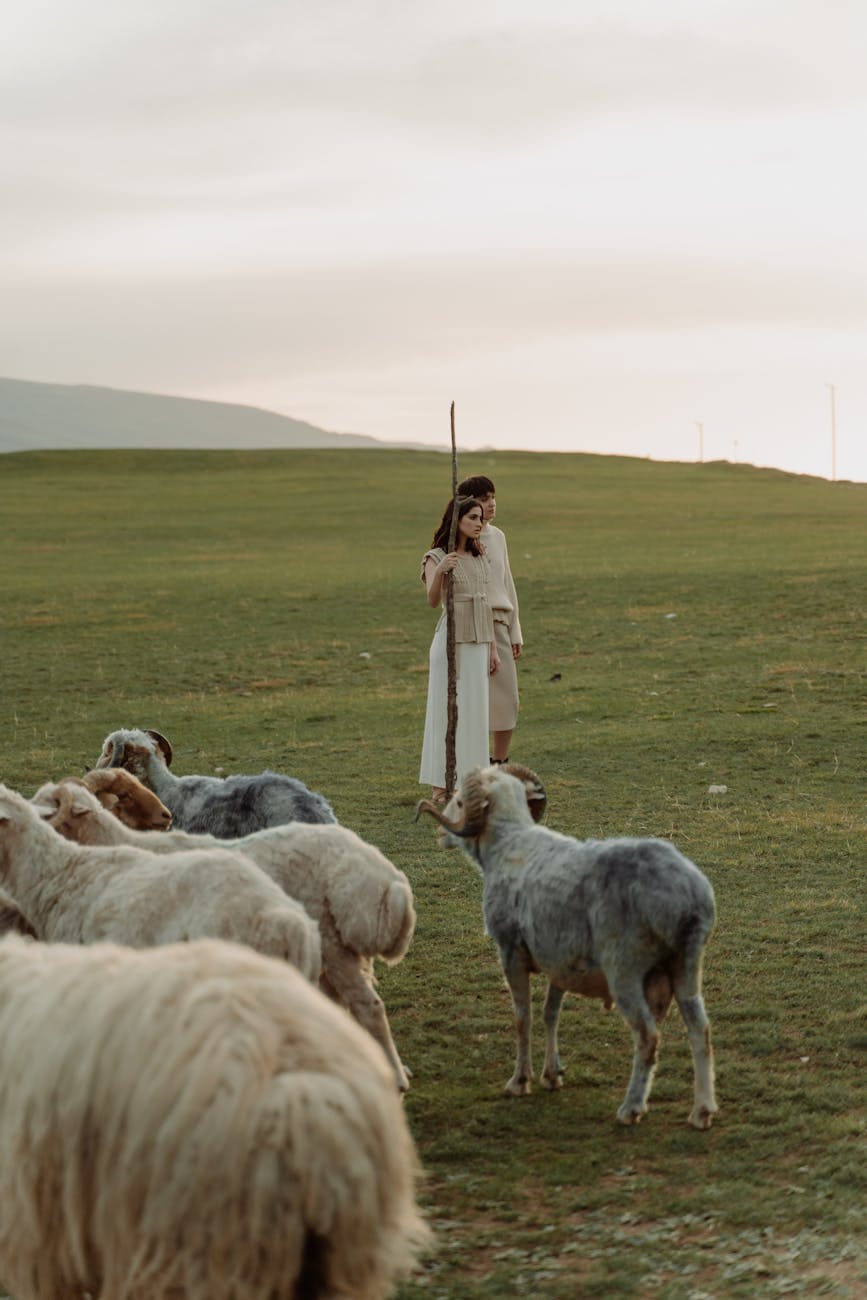
Shepherding Sheep (Photo by cottonbro studio on Pexels.com)

The Time Had Arrived

Palm Sunday is the day we appoint to mark Jesus’s parade into Jerusalem.

Up to this point Jesus has told His disciples to keep the knowledge of His Messiahship to themselves because His hour had not yet come. But now, the time had arrived. Jesus was making a declaration and He took dramatic action to make the announcement. Jesus rode into Jerusalem in a way which would be an unmistakable claim to be the Messiah – God’s approved king.

This event had been carefully planned. “The Lord needs it” was a password chosen and set up a long time prior to this event taking place.

It was certainly an act of defiance and courage. There was already a price on Jesus’s head. And yet, He enters in a way which throws the lime-light upon Him – giving Him centre stage. Every eye now beheld Him.

Jesus was fulfilling the prophecy in Zechariah 9. Even with His deliberate claim to be king, Jesus underlined the kind of kingship He claimed – king of love and peace.

Jesus used the language of the culture of the time. His procession used symbols which were part of the common understanding; touching a hope and a need in the people’s hearts. Consequently. the people eagerly responded.

Jesus rode a colt. A colt is an unridden donkey – which symbolised purity and peace. This confirmed His fulfilment of the Messiah role was by bringing reconciliation and peace.

In those days in that country, donkeys were considered noble. Only in war did kings ride a horse. In times of peace they rode donkeys.

By riding a donkey, Jesus came as a king of peace and love – not the conquering military hero the Jews had expected and awaited.

The waving of palm branches acknowledged Jesus’s authority. By throwing down their cloaks, the people were ushering a prince into their midst; showing honour and homage. And the traditional welcome to a new king – “Blessed is He who comes in the name of the Lord”.

In the loudest way possible Jesus was saying, “Here I am, your king, your prince of peace.” The reply – “Hosanna” meaning “save us” – accepting that Jesus is the saviour.

Some of the pharisees – not all but some – heard the crowds and did not like it. They felt contempt at all the rabble as well as being afraid of Rome – who did not like disturbances from others.

In response to the pharisees telling the crowd to be quiet, Jesus answers that if the crowd were silent the stones would shout out.

When it is time, it is time. God’s purpose will be fulfilled. The king has come. The kingdom is coming.

The triumphal entry did not happen in a vacuum. It was not an accident. Everyone gathered together saw the meaning before them plain and simple. The king was entering the city in righteous victory and the crow were in desperate need of salvation and rescue.

We often read the whole passion – the whole suffering – on Palm Sunday because out of context from each other the rest doesn’t make full sense.

Jesus, the true king, the one coming in the name of the Lord, entering in triumph, helps us understand the whole passion more fully. It was never about human thrones and powers – it was always about triumph over evil and death.

The one who resurrected Lazarus comes to Jerusalem, in faithful obedience to the covenant, to allow humanity to expend its evil upon Him and for Him to then rise up from the dead. Humanity expends its evil upon the Son of God. The Powers and Principalities of the world snuff out the light. Satan claims he has victory over the God with whom he thought equality could be grasped.

But … that is not the end of the story …

… Jesus comes to us the same way He came to Jerusalem – amidst the praises of the people. enthroned by the cries begging for salvation and the royal welcome.

He guides us through His passion-tide, to bring us to share in His meal, to kneel at His cross, to wait by His tomb, to await His resurrection and victory over the darkness, the grave and His defeat of Satan, as we shout “Alleluia” on Easter Sunday.

The six stages of Holy Week:

  • Jesus as king
  • Jesus’s obedience to God’s will
  • Jesus as suffering servant
  • Betrayal and loyalty
  • Jesus’s passion/suffering
  • Salvation through Jesus

What a difference a day makes.

What a difference a week makes.

Palm Sunday, crowds are cheering Jesus and celebrating. Yet, just a few short days later, the same crowds jeer and call for the brutal murder of Jesus upon the cross.

Jesus knew what was coming but He still taught and proclaimed the Kingdom of God to His final breath.

Jesus made one last appeal to be accepted as their king. Before the hatred of men engulfed Him.

Once again, He confronted them with love’s invitation.

donkey

Here Is The News…

(Isaiah 40:1-11, Luke 3:1-6)

Today, we have heard about the proclamation of God’s message.

The message is that people need to repair their lives and prepare for Christ’s coming. John (the Baptist) proclaims this by calling the people to repent and be baptised.

We also have the beginning of the end before the new beginning.

We have the introduction of four men who will play significant roles in Jesus’s crucifixion. In fact, the seven people Luke mentions at the beginning of our Gospel reading, are only remembered today, despite historical records, because they are mentioned here in Luke’s Gospel.

God chooses unlikely people. We sometimes wonder about our calling, but God knows what He is doing. He knows the right people to call. God often calls the lowly.

And John fulfils the prophecy from Isaiah quoted by Luke. “A voice of one calling in the wilderness, ‘Prepare the way for the Lord…'”

But why in the wilderness and not Jerusalem? The wilderness is sparse whereas Jerusalem was highly populated and held the Temple.

Yet, throughout history the wilderness has been a place where God has shaped His people and forged the nation of Israel. It is where God’s prophets did most of their work and where Jesus was tested. God continues to work in the wilderness; for the wilderness is where and when life seems bleak and barren. It is when we are most open to hearing God. God works in the wilderness of our lives.

The baptism of repentance for the remission of sins is the type of baptism that John introduced to the Jews. They were already familiar with a different type of baptism – a type called Proselyte Baptism which was a ritual required of any Gentile who wished to become a Jew to cleanse sins.

But John was introducing a baptism which required all to repent and be baptised for the forgiveness of sins.

This concept was unfamiliar to the Jews and so the prophecy that John would give the people knowledge of salvation was fulfilled through his teaching of this concept.

John taught the ethical requirements of repentance. It requires bearing fruit worthy of repentance and sharing with those in need. To deal honestly with people and not use power in an abusive way.

Advent is a time of preparation. Here we find the way to prepare – bearing fruit worthy of repentance -sharing with those in need – dealing with people honestly – using power justly – turning around and facing a new direction.

Repent and turn around away from the sin. Turn away from worldly compulsions and turn towards Godly affections.

The reward of repentance is remission of sins. This is more than just forgiveness. It is also freedom from compulsions and addictions and habits that threaten to undo us.

Repentance is called for by John at both personal and national levels for without it Israel was heading towards destruction.

At the end of this Gospel Luke emphasises again repentance and forgiveness . “Thus it is written, and thus it was necessary for Christ to suffer and to rise from the dead the third day, and that repentance and remission of sins should be preached in His name to all nations…”

People still need forgiveness. God still forgives.

People know they are sinners. Dealing with sin seriously can be a relief because if sin is not ignored but is addressed then forgiveness can be believed.

Just as Israel needed repentance, we also need to prepare our hearts and minds to receive the Lord and to help our friends and family prepare their hearts and minds as well.

The important work and the real goal is the preparation of our hearts and minds to receive God and the work of the Holy Spirit.

We can contribute to the Spirit’s work in many ways but especially through prayer and the preparation of our hearts.

ALL will see God’s salvation.

Jesus has eliminated barriers to the salvation of all people.

We live in a highly divided world. God calls ALL people in every land, every race, every persuasion, every circumstance.

ALL are called. ALL will see the salvation.

No-one is excluded. The call is to repent and receive forgiveness of sins.

Wilderness

The Wilderness of Lent

Mark*, in just a few short verses, has summarised for us two key elements from Jesus’s life which took place just before the start of His ministry.

The first is Jesus’s baptism of water by His cousin John. John’s baptism was one of repentance, one of cleansing and forgiveness. God cleansed the earth by flood in Genesis – in a sense starting again. Baptism gives us a chance to start again; to say sorry for our wrongdoings, receive forgiveness and to start a new life in Christ striving to follow in His footsteps.

So why did Jesus, God’s Son, the only truly perfect human, need to be baptised by John.

John was the forerunner to prepare the way. This was also an indication for Jesus that it was time for His ministry to commence. By being baptised by John, Jesus was affirming that He was ready and willing to take the next step on His journey for our salvation. He was saying “yes” to what God wanted Him to do. And God confirmed His approval as He says to Jesus “You are my beloved Son”. He was also showing us what we needed to do.

At that time the Holy Spirit descended upon Jesus, equipping Him for what was to come. It descended in the form of a dove, just like the dove that carried the olive branch back to Noah, symbolising gentleness, peace and love.

Straight away the Spirit took Jesus into the wilderness. Jesus was being prepared and tested. He was not being set up to fail but instead to strengthen His mind, heart and soul.

The wilderness is mentioned many times in the Bible. It is a place of preparation – like Lent which we can use to say goodbye to our old selves and find Christ.

It is a place where God communes with His people – God spoke to Abraham, Moses, Elijah and John the Baptist in the wilderness. It is not a place of hopelessness. Jesus, John, Elijah, Isaiah, Moses, Abraham etc were not in the desert by accident but by God’s design. God wanted to speak to them somewhere there would not be distractions. Jesus often went into the wilderness for rest, prayer and to teach His disciples. It provided peace away from the crowds and other distractions.

We often want to escape what we perceive as the discomfort of the desert – hardships and difficult times. But these are the times when God’s presence is greatest. It is an invitation from God for us to encounter Him and listen to Him – He wants to speak to us.

Likewise, Lent is about cutting out the distractions, about preparing and making ourselves ready for the work Jesus has for us and for Him to be in our hearts.

It is not about a show of giving up something that we don’t intend to stick to – for example, chocolate or wine or Facebook – when we know full well that we intend to indulge in what we have cut out as soon as Lent is over.

It is about preparation. In Advent we wait and prepare for the coming of Jesus as a tiny baby. In Lent we prepare for Holy Week and Easter – awaiting the sacrifice of Jesus and His resurrection. In both we should be preparing our hearts and minds, getting them ready for our Lord and the work He has for us.

Lent is about meeting God in the wilderness, listening to Him, strengthening ourselves for the work He has for us. It is about prayer. Praying more, communing with God more, conversing and listening to God. Setting aside that time for Him. So let us ask God to use this time of Lent to prepare and strengthen us for whatever lies ahead.

Wilderness

*Mark 1: 9-14

Rules for Life

“Do not be afraid; for God has come only to test you and to put the fear of Him upon you so that you do not sin.”

God wanted to help His people – not destroy them. But when they heard the thunder and the trumpet, when they saw the flashing and the smoke on the mountain, they were afraid.

Because of their fear, the people wanted a mediator; yet God had already granted them one in the form of Moses.

We, also, already have a mediator – Jesus.

The word fear has more than one meaning. There is the type of fear the Israelites had – that of being scared, afraid, terrified – but that is the wrong type of fear to have of God.

Then there is the right kind of fear to have of God, and that is one of awe, respect and reverence. It is through this that we are granted the boldness to approach God through Jesus Christ.

God gave Moses the Ten Commandments. The purpose of these is how to have healthy relationships with God and each other.

God invites us to have a personal relationship with Him.

The deep significance of the gift of the Ten Commandments has been obscured by society. As a result we lose the religious awe found in this passage of Exodus and lessen our understanding.

They are not “maxims for a good life”. They ARE the living words of the living God. The God who has redeemed us. It is not the Ten Commandments which save us. Salvation is a gift of God – which He gives us freely through His grace.

There are some who try to use the Ten Commandments to conclude that we have to somehow earn God’s love and care. But actually it is the opposite. They demonstrate God’s continued love and care – giving us the law in the first place proves God’s love for us.

Our obedience is a loving, grateful response to all that God has done and continues to do.

So what is the essence of The Ten Commandments?

Jesus already gave us the answer to this when He told us that the greatest commandment is this, “To love the Lord our God with all our heart, soul, mind and strength and to love everyone else as we love ourselves”.

Baptism is the act of making a God choice. The making of the promises is choosing faith in God above any other life. Living our baptism means living by a single loyalty to God.

Remembering our baptism, who we are and who God is, in the inner recesses of our hearts and in the life we share together makes us grateful that God has given us these commandments, that we might find strength and shelter in our darkest times – helping us to remember that even in our darkest times we are not alone.

Talk from Holy Trinity Sheerness 8th October 2023 (Exodus 20)

Ten Commandments

Testing

This morning’s Gospel is just like my children…

… they ask testing questions and … yep – when they are asked to do something they either don’t do it or … if it’s the youngest anyway … they say “No!”; then they go away and think about it and then get on with it.

The chief priests tried to trick Jesus, testing Him, by asking where His authority came from.

Jesus, of course, did not fall into their trap. Instead, He turned it around by asking whether John’s baptism came from heaven or from human origin. They refused to answer Him, out of fear of recrimination from the crowd and damage to their reputation.

So Jesus tells this parable of the first son who refused to do what his father asked but then changed his mind; and of the second son who agreed but then did nothing.

A lesson about obedience and disobedience. The chief priests claimed to accept God’s message and would put on a show for the people – but that’s all it was – just a show. Jesus is saying they are like the second son who said “yes” but then did not obey.

The point is that those who refuse God but who later repent and follow Him, obey Him, can enter the Kingdom of God. Those who say “yes” but do not repent (which includes following through with their actions) can’t.

If the chief priests are the second son, who are the first?

Jesus answered that for us too – He points out to the chief priests that the tax collectors and prostitutes (those who were considered at the time to be the biggest sinners) were the first son and would enter the Kingdom of God first because they believed, repented and returned to God. The chief priests, who only claimed to follow God with their words but not with their hearts or actions, would not get to enter God’s Kingdom unless they truly repented.

Turning to God with repentance is the key to our salvation, no matter what our past sins might be or how many times we’ve disappointed God. He can see what is in our hearts and forgives us when we are truly sorry.

It’s what we do, not just what we say, that counts.

Let’s renew our own commitments to be faithful followers of Jesus.

Let us thank God for sending His Son who truly is who He says He is.

Let us be genuine in our actions and live in love serving others.

Talk from Holy Trinity Sheerness (Matthew 21:23-32)

Questioning authority

Minster Abbey Talk on John 17:1-11

“The time has come,” the Walrus said, “to talk of many things:…”

Lewis Carroll

And if we were having a conversation over some coffee and cake (hint hint) that is precisely what would happen. We would have a conversation; maybe about the weather, the coronation, a television drama, … all sorts.

Some of us find it easy to converse, some of us find it more difficult and communicate in other ways. Some of us are good at listening and for some of us it “goes in one ear and out the other”.

But, how do we pray?

There are many different ways we can pray, but ultimately, if we think about it, prayer is just the same as that conversation over coffee … isn’t it?

If not why not?

We have the opportunity to talk to God about anything and everything; and not just when we’re worried or in need or when things aren’t going as we’d like but also when we’re thankful, joyful and when things are going well.

We can do a lot of talking to God but we need to remember to listen as well. If we are honest none of us listen as much as we should.

Prayer is vitally important in our lives. An oft repeated quote “seven days without prayer makes one week (weak!)”.

Today’s Gospel reading is part of one of Jesus’s longest prayers.

In short it summarises Jesus’s relationship with the Father and the relationship He wanted His disciples to have with Himself and the Father.

Like the Holy Trinity (Father, Son and Holy Spirit) this prayer is in three sections.

  1. Jesus prays for Himself
  2. Jesus prays for His disciples
  3. Jesus prays for all believers past, present and future

Despite us having celebrated Jesus’s Ascension on Thursday, this prayer passage takes place before His arrest. But it is significant because it becomes Jesus’s evaluation of the purpose of His life, death, resurrection and ascension.

God’s glory and Jesus’s glory are one and the same. Through the death of Jesus God is glorified and all believers receive eternal life.

Eternal life is knowing the one true God; being in a living fellowship with God. And this life we receive when we accept Jesus into our hearts and lives. Jesus’s purpose, His mission, is salvation.

Jesus prays with great concern for His disciples. He was not concerned about Himself – He knew God’s plan, He knew He had to suffer and die to be victorious. Jesus’s victory was unquestionable. The disciples were just like us. They were not infallible. Jesus had predicted the disciples would desert Him. And so He prayed for them, that they would be kept safe and protected by the Father’s power and that they would fulfil their future ministry. The disciples were about to be tested and Jesus prayed that this would not separate them from Himself or from each other.

Again, like the Three-in-one, Jesus mentions three things about His disciples:

  1. They had accepted His teaching
  2. They had accepted the knowledge that Jesus is the Son of God
  3. They believed

Jesus prayed that the world would stop being opposed to God.

“All I have is Yours and all You have is Mine.” Jesus has equality with the Father.

He prays that, as He and God are one, the disciples and believers will remain as one.

In unity.

Not divided.

Division is the result of the failures of Christians.

God is awe-inspiring and loving. Jesus’s prayer is an outpouring of love and concern.

Jesus was shortly returning to the Father and to the glory He has before the world began. He had completed His mission. The Holy Spirit had been promised. With the help of the Holy Spirit it is now our turn.

Our mission, if we choose to accept it, is to bring glory to God through all we do in His name.

Are we ready?

Do we accept this mission?

Minster Abbey, Sheppey

A Journey of Truth and Faith

(Talk on Luke 24:13-35 23rd April 2023)

This passage from Luke teaches us a lot about truth and faith. It is, in both a literal and a spiritual sense, about journeys. Literally, it is about two disciples (followers of Jesus) walking from Jerusalem to Emmaus. Spiritually, it is about their and our journey from not knowing Jesus to truly knowing Jesus and sharing our experiences of Jesus. It is about rediscovering Christ’s presence in our lives, gaining a fresher understanding of God’s transforming grace, allowing our hearts to be ignited with the Holy Spirit as we too walk with Christ.

The Bible makes very clear and specific statements about Jesus. As the disciples walked along they were discussing the scriptures and the recent events that had happened. When Jesus appeared to them they were walking the wrong way – away from Jerusalem. They were preoccupied with their own difficulties, overwhelmed with sadness, grief and hopelessness. They were unable to identify God’s purpose in what had happened.

Humans like to know reasons for…well everything. We ask (both aloud and to ourselves) why? We analyse, we interpret, we assume, we conclude. And we use the answers as a Sat Nav! What we decide the answers are determine/direct what and where we do/go next.

The disciples did not fully understand the Scriptures or the meaning of what had happened to Jesus. They had knowledge but it was incomplete and not understood. It was not true knowledge of the right information.

Jesus appeared and started to walk with them. They did not see Jesus. They were kept from recognising him. The Risen Christ walking with them on their journey, but unrecognised, igniting the fire of God’s love in their hearts. Like the Footsteps poem when there is only one set of footprints (because Jesus is carrying us).

But, this enabled Jesus to impart true knowledge. He explains and interprets for them. This teaches us that the key to interpreting the Old Testament is Jesus.

Jesus explained everything from Moses to the prophets, how the Messiah would save God’s people through His death and resurrection, rescuing a sinful, unholy people by reconciling them with The Holy God.

Jesus is the Messiah whose life, death and resurrection grants us salvation. Jesus Himself told us “I am the way, the truth and the life, no man comes to the Father except through me”.

God cannot be near sin. The only way for us sinners to be reconciled to Him was for Jesus to become sin, be punished for our sin, to die and defeat death; so that through His resurrection we could, with faith and repentance, be forgiven and have a relationship with God.

But it is not sufficient to just know the facts. We must also believe in that knowledge, we must truly believe in Jesus and in what He taught. Like the disciples recognising Jesus (when He broke the bread) and rushing back to tell the others, we have to open our eyes in faith. If we believe in Him then we strive to be in His image and this is shown in how we live. We need to believe in God’s word and be motivated by faith. We know God fulfils His promises but we also need to believe this. We know He is always with us, all the time, especially those times when we only see one set of footprints. But, we also need to believe this.

There is a story that gets quoted a lot so apologies if you, like me, have heard it used before:

There was a young boy caught in a house fire and forced to flee to the roof. The father stood on the ground below with outstretched arms, calling to his son, “Jump! I’ll catch you”. He knew the boy had to jump to save his life. All the boy could see was flame, smoke and darkness. The boy was too afraid to leave the roof. His father kept yelling “Jump! I WILL catch you”. The boy protested “Daddy, I can’t see you” The father replied, “But I CAN see you and that’s all that matters”.

Reece Sherman’s Faith Lessons

Do we understand truly? Or do we rely on our assumptions? Do we truly believe and trust in God? I pray that we do.

God is always there for us and will catch us. He can see us even if we cannot see Him. Do we have enough faith to jump into those life saving arms? I pray that we do.

Thank you.

Poppet on a journey, running through grass