The Time Had Arrived

Palm Sunday is the day we appoint to mark Jesus’s parade into Jerusalem.

Up to this point Jesus has told His disciples to keep the knowledge of His Messiahship to themselves because His hour had not yet come. But now, the time had arrived. Jesus was making a declaration and He took dramatic action to make the announcement. Jesus rode into Jerusalem in a way which would be an unmistakable claim to be the Messiah – God’s approved king.

This event had been carefully planned. “The Lord needs it” was a password chosen and set up a long time prior to this event taking place.

It was certainly an act of defiance and courage. There was already a price on Jesus’s head. And yet, He enters in a way which throws the lime-light upon Him – giving Him centre stage. Every eye now beheld Him.

Jesus was fulfilling the prophecy in Zechariah 9. Even with His deliberate claim to be king, Jesus underlined the kind of kingship He claimed – king of love and peace.

Jesus used the language of the culture of the time. His procession used symbols which were part of the common understanding; touching a hope and a need in the people’s hearts. Consequently. the people eagerly responded.

Jesus rode a colt. A colt is an unridden donkey – which symbolised purity and peace. This confirmed His fulfilment of the Messiah role was by bringing reconciliation and peace.

In those days in that country, donkeys were considered noble. Only in war did kings ride a horse. In times of peace they rode donkeys.

By riding a donkey, Jesus came as a king of peace and love – not the conquering military hero the Jews had expected and awaited.

The waving of palm branches acknowledged Jesus’s authority. By throwing down their cloaks, the people were ushering a prince into their midst; showing honour and homage. And the traditional welcome to a new king – “Blessed is He who comes in the name of the Lord”.

In the loudest way possible Jesus was saying, “Here I am, your king, your prince of peace.” The reply – “Hosanna” meaning “save us” – accepting that Jesus is the saviour.

Some of the pharisees – not all but some – heard the crowds and did not like it. They felt contempt at all the rabble as well as being afraid of Rome – who did not like disturbances from others.

In response to the pharisees telling the crowd to be quiet, Jesus answers that if the crowd were silent the stones would shout out.

When it is time, it is time. God’s purpose will be fulfilled. The king has come. The kingdom is coming.

The triumphal entry did not happen in a vacuum. It was not an accident. Everyone gathered together saw the meaning before them plain and simple. The king was entering the city in righteous victory and the crow were in desperate need of salvation and rescue.

We often read the whole passion – the whole suffering – on Palm Sunday because out of context from each other the rest doesn’t make full sense.

Jesus, the true king, the one coming in the name of the Lord, entering in triumph, helps us understand the whole passion more fully. It was never about human thrones and powers – it was always about triumph over evil and death.

The one who resurrected Lazarus comes to Jerusalem, in faithful obedience to the covenant, to allow humanity to expend its evil upon Him and for Him to then rise up from the dead. Humanity expends its evil upon the Son of God. The Powers and Principalities of the world snuff out the light. Satan claims he has victory over the God with whom he thought equality could be grasped.

But … that is not the end of the story …

… Jesus comes to us the same way He came to Jerusalem – amidst the praises of the people. enthroned by the cries begging for salvation and the royal welcome.

He guides us through His passion-tide, to bring us to share in His meal, to kneel at His cross, to wait by His tomb, to await His resurrection and victory over the darkness, the grave and His defeat of Satan, as we shout “Alleluia” on Easter Sunday.

The six stages of Holy Week:

  • Jesus as king
  • Jesus’s obedience to God’s will
  • Jesus as suffering servant
  • Betrayal and loyalty
  • Jesus’s passion/suffering
  • Salvation through Jesus

What a difference a day makes.

What a difference a week makes.

Palm Sunday, crowds are cheering Jesus and celebrating. Yet, just a few short days later, the same crowds jeer and call for the brutal murder of Jesus upon the cross.

Jesus knew what was coming but He still taught and proclaimed the Kingdom of God to His final breath.

Jesus made one last appeal to be accepted as their king. Before the hatred of men engulfed Him.

Once again, He confronted them with love’s invitation.

donkey

Here Is The News…

(Isaiah 40:1-11, Luke 3:1-6)

Today, we have heard about the proclamation of God’s message.

The message is that people need to repair their lives and prepare for Christ’s coming. John (the Baptist) proclaims this by calling the people to repent and be baptised.

We also have the beginning of the end before the new beginning.

We have the introduction of four men who will play significant roles in Jesus’s crucifixion. In fact, the seven people Luke mentions at the beginning of our Gospel reading, are only remembered today, despite historical records, because they are mentioned here in Luke’s Gospel.

God chooses unlikely people. We sometimes wonder about our calling, but God knows what He is doing. He knows the right people to call. God often calls the lowly.

And John fulfils the prophecy from Isaiah quoted by Luke. “A voice of one calling in the wilderness, ‘Prepare the way for the Lord…'”

But why in the wilderness and not Jerusalem? The wilderness is sparse whereas Jerusalem was highly populated and held the Temple.

Yet, throughout history the wilderness has been a place where God has shaped His people and forged the nation of Israel. It is where God’s prophets did most of their work and where Jesus was tested. God continues to work in the wilderness; for the wilderness is where and when life seems bleak and barren. It is when we are most open to hearing God. God works in the wilderness of our lives.

The baptism of repentance for the remission of sins is the type of baptism that John introduced to the Jews. They were already familiar with a different type of baptism – a type called Proselyte Baptism which was a ritual required of any Gentile who wished to become a Jew to cleanse sins.

But John was introducing a baptism which required all to repent and be baptised for the forgiveness of sins.

This concept was unfamiliar to the Jews and so the prophecy that John would give the people knowledge of salvation was fulfilled through his teaching of this concept.

John taught the ethical requirements of repentance. It requires bearing fruit worthy of repentance and sharing with those in need. To deal honestly with people and not use power in an abusive way.

Advent is a time of preparation. Here we find the way to prepare – bearing fruit worthy of repentance -sharing with those in need – dealing with people honestly – using power justly – turning around and facing a new direction.

Repent and turn around away from the sin. Turn away from worldly compulsions and turn towards Godly affections.

The reward of repentance is remission of sins. This is more than just forgiveness. It is also freedom from compulsions and addictions and habits that threaten to undo us.

Repentance is called for by John at both personal and national levels for without it Israel was heading towards destruction.

At the end of this Gospel Luke emphasises again repentance and forgiveness . “Thus it is written, and thus it was necessary for Christ to suffer and to rise from the dead the third day, and that repentance and remission of sins should be preached in His name to all nations…”

People still need forgiveness. God still forgives.

People know they are sinners. Dealing with sin seriously can be a relief because if sin is not ignored but is addressed then forgiveness can be believed.

Just as Israel needed repentance, we also need to prepare our hearts and minds to receive the Lord and to help our friends and family prepare their hearts and minds as well.

The important work and the real goal is the preparation of our hearts and minds to receive God and the work of the Holy Spirit.

We can contribute to the Spirit’s work in many ways but especially through prayer and the preparation of our hearts.

ALL will see God’s salvation.

Jesus has eliminated barriers to the salvation of all people.

We live in a highly divided world. God calls ALL people in every land, every race, every persuasion, every circumstance.

ALL are called. ALL will see the salvation.

No-one is excluded. The call is to repent and receive forgiveness of sins.

Wilderness

The Wilderness of Lent

Mark*, in just a few short verses, has summarised for us two key elements from Jesus’s life which took place just before the start of His ministry.

The first is Jesus’s baptism of water by His cousin John. John’s baptism was one of repentance, one of cleansing and forgiveness. God cleansed the earth by flood in Genesis – in a sense starting again. Baptism gives us a chance to start again; to say sorry for our wrongdoings, receive forgiveness and to start a new life in Christ striving to follow in His footsteps.

So why did Jesus, God’s Son, the only truly perfect human, need to be baptised by John.

John was the forerunner to prepare the way. This was also an indication for Jesus that it was time for His ministry to commence. By being baptised by John, Jesus was affirming that He was ready and willing to take the next step on His journey for our salvation. He was saying “yes” to what God wanted Him to do. And God confirmed His approval as He says to Jesus “You are my beloved Son”. He was also showing us what we needed to do.

At that time the Holy Spirit descended upon Jesus, equipping Him for what was to come. It descended in the form of a dove, just like the dove that carried the olive branch back to Noah, symbolising gentleness, peace and love.

Straight away the Spirit took Jesus into the wilderness. Jesus was being prepared and tested. He was not being set up to fail but instead to strengthen His mind, heart and soul.

The wilderness is mentioned many times in the Bible. It is a place of preparation – like Lent which we can use to say goodbye to our old selves and find Christ.

It is a place where God communes with His people – God spoke to Abraham, Moses, Elijah and John the Baptist in the wilderness. It is not a place of hopelessness. Jesus, John, Elijah, Isaiah, Moses, Abraham etc were not in the desert by accident but by God’s design. God wanted to speak to them somewhere there would not be distractions. Jesus often went into the wilderness for rest, prayer and to teach His disciples. It provided peace away from the crowds and other distractions.

We often want to escape what we perceive as the discomfort of the desert – hardships and difficult times. But these are the times when God’s presence is greatest. It is an invitation from God for us to encounter Him and listen to Him – He wants to speak to us.

Likewise, Lent is about cutting out the distractions, about preparing and making ourselves ready for the work Jesus has for us and for Him to be in our hearts.

It is not about a show of giving up something that we don’t intend to stick to – for example, chocolate or wine or Facebook – when we know full well that we intend to indulge in what we have cut out as soon as Lent is over.

It is about preparation. In Advent we wait and prepare for the coming of Jesus as a tiny baby. In Lent we prepare for Holy Week and Easter – awaiting the sacrifice of Jesus and His resurrection. In both we should be preparing our hearts and minds, getting them ready for our Lord and the work He has for us.

Lent is about meeting God in the wilderness, listening to Him, strengthening ourselves for the work He has for us. It is about prayer. Praying more, communing with God more, conversing and listening to God. Setting aside that time for Him. So let us ask God to use this time of Lent to prepare and strengthen us for whatever lies ahead.

Wilderness

*Mark 1: 9-14

Rules for Life

“Do not be afraid; for God has come only to test you and to put the fear of Him upon you so that you do not sin.”

God wanted to help His people – not destroy them. But when they heard the thunder and the trumpet, when they saw the flashing and the smoke on the mountain, they were afraid.

Because of their fear, the people wanted a mediator; yet God had already granted them one in the form of Moses.

We, also, already have a mediator – Jesus.

The word fear has more than one meaning. There is the type of fear the Israelites had – that of being scared, afraid, terrified – but that is the wrong type of fear to have of God.

Then there is the right kind of fear to have of God, and that is one of awe, respect and reverence. It is through this that we are granted the boldness to approach God through Jesus Christ.

God gave Moses the Ten Commandments. The purpose of these is how to have healthy relationships with God and each other.

God invites us to have a personal relationship with Him.

The deep significance of the gift of the Ten Commandments has been obscured by society. As a result we lose the religious awe found in this passage of Exodus and lessen our understanding.

They are not “maxims for a good life”. They ARE the living words of the living God. The God who has redeemed us. It is not the Ten Commandments which save us. Salvation is a gift of God – which He gives us freely through His grace.

There are some who try to use the Ten Commandments to conclude that we have to somehow earn God’s love and care. But actually it is the opposite. They demonstrate God’s continued love and care – giving us the law in the first place proves God’s love for us.

Our obedience is a loving, grateful response to all that God has done and continues to do.

So what is the essence of The Ten Commandments?

Jesus already gave us the answer to this when He told us that the greatest commandment is this, “To love the Lord our God with all our heart, soul, mind and strength and to love everyone else as we love ourselves”.

Baptism is the act of making a God choice. The making of the promises is choosing faith in God above any other life. Living our baptism means living by a single loyalty to God.

Remembering our baptism, who we are and who God is, in the inner recesses of our hearts and in the life we share together makes us grateful that God has given us these commandments, that we might find strength and shelter in our darkest times – helping us to remember that even in our darkest times we are not alone.

Talk from Holy Trinity Sheerness 8th October 2023 (Exodus 20)

Ten Commandments

Testing

This morning’s Gospel is just like my children…

… they ask testing questions and … yep – when they are asked to do something they either don’t do it or … if it’s the youngest anyway … they say “No!”; then they go away and think about it and then get on with it.

The chief priests tried to trick Jesus, testing Him, by asking where His authority came from.

Jesus, of course, did not fall into their trap. Instead, He turned it around by asking whether John’s baptism came from heaven or from human origin. They refused to answer Him, out of fear of recrimination from the crowd and damage to their reputation.

So Jesus tells this parable of the first son who refused to do what his father asked but then changed his mind; and of the second son who agreed but then did nothing.

A lesson about obedience and disobedience. The chief priests claimed to accept God’s message and would put on a show for the people – but that’s all it was – just a show. Jesus is saying they are like the second son who said “yes” but then did not obey.

The point is that those who refuse God but who later repent and follow Him, obey Him, can enter the Kingdom of God. Those who say “yes” but do not repent (which includes following through with their actions) can’t.

If the chief priests are the second son, who are the first?

Jesus answered that for us too – He points out to the chief priests that the tax collectors and prostitutes (those who were considered at the time to be the biggest sinners) were the first son and would enter the Kingdom of God first because they believed, repented and returned to God. The chief priests, who only claimed to follow God with their words but not with their hearts or actions, would not get to enter God’s Kingdom unless they truly repented.

Turning to God with repentance is the key to our salvation, no matter what our past sins might be or how many times we’ve disappointed God. He can see what is in our hearts and forgives us when we are truly sorry.

It’s what we do, not just what we say, that counts.

Let’s renew our own commitments to be faithful followers of Jesus.

Let us thank God for sending His Son who truly is who He says He is.

Let us be genuine in our actions and live in love serving others.

Talk from Holy Trinity Sheerness (Matthew 21:23-32)

Questioning authority

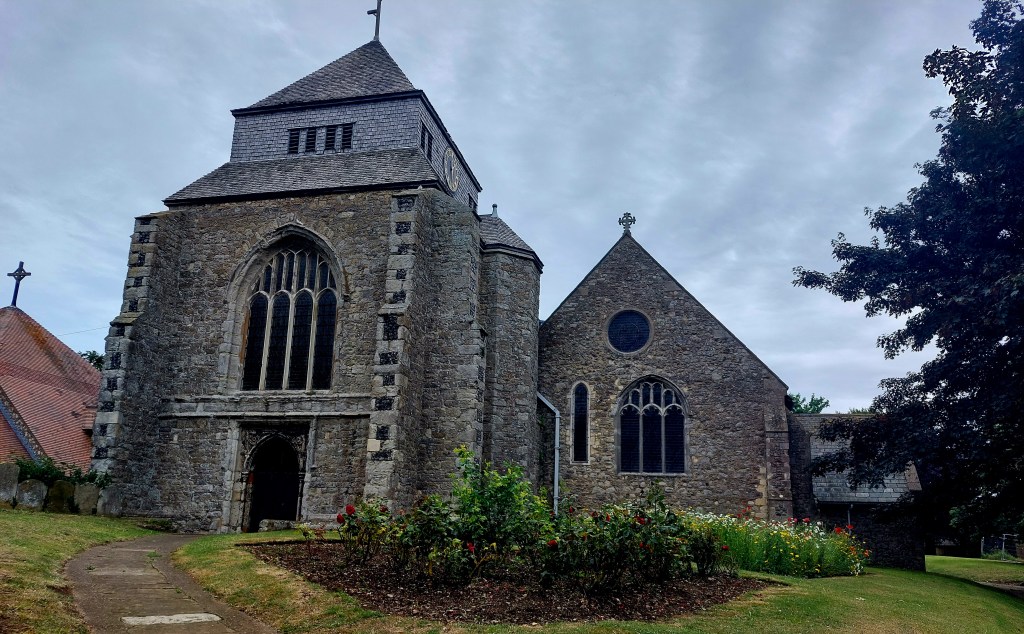
Minster Abbey Talk on John 17:1-11

“The time has come,” the Walrus said, “to talk of many things:…”

Lewis Carroll

And if we were having a conversation over some coffee and cake (hint hint) that is precisely what would happen. We would have a conversation; maybe about the weather, the coronation, a television drama, … all sorts.

Some of us find it easy to converse, some of us find it more difficult and communicate in other ways. Some of us are good at listening and for some of us it “goes in one ear and out the other”.

But, how do we pray?

There are many different ways we can pray, but ultimately, if we think about it, prayer is just the same as that conversation over coffee … isn’t it?

If not why not?

We have the opportunity to talk to God about anything and everything; and not just when we’re worried or in need or when things aren’t going as we’d like but also when we’re thankful, joyful and when things are going well.

We can do a lot of talking to God but we need to remember to listen as well. If we are honest none of us listen as much as we should.

Prayer is vitally important in our lives. An oft repeated quote “seven days without prayer makes one week (weak!)”.

Today’s Gospel reading is part of one of Jesus’s longest prayers.

In short it summarises Jesus’s relationship with the Father and the relationship He wanted His disciples to have with Himself and the Father.

Like the Holy Trinity (Father, Son and Holy Spirit) this prayer is in three sections.

  1. Jesus prays for Himself
  2. Jesus prays for His disciples
  3. Jesus prays for all believers past, present and future

Despite us having celebrated Jesus’s Ascension on Thursday, this prayer passage takes place before His arrest. But it is significant because it becomes Jesus’s evaluation of the purpose of His life, death, resurrection and ascension.

God’s glory and Jesus’s glory are one and the same. Through the death of Jesus God is glorified and all believers receive eternal life.

Eternal life is knowing the one true God; being in a living fellowship with God. And this life we receive when we accept Jesus into our hearts and lives. Jesus’s purpose, His mission, is salvation.

Jesus prays with great concern for His disciples. He was not concerned about Himself – He knew God’s plan, He knew He had to suffer and die to be victorious. Jesus’s victory was unquestionable. The disciples were just like us. They were not infallible. Jesus had predicted the disciples would desert Him. And so He prayed for them, that they would be kept safe and protected by the Father’s power and that they would fulfil their future ministry. The disciples were about to be tested and Jesus prayed that this would not separate them from Himself or from each other.

Again, like the Three-in-one, Jesus mentions three things about His disciples:

  1. They had accepted His teaching
  2. They had accepted the knowledge that Jesus is the Son of God
  3. They believed

Jesus prayed that the world would stop being opposed to God.

“All I have is Yours and all You have is Mine.” Jesus has equality with the Father.

He prays that, as He and God are one, the disciples and believers will remain as one.

In unity.

Not divided.

Division is the result of the failures of Christians.

God is awe-inspiring and loving. Jesus’s prayer is an outpouring of love and concern.

Jesus was shortly returning to the Father and to the glory He has before the world began. He had completed His mission. The Holy Spirit had been promised. With the help of the Holy Spirit it is now our turn.

Our mission, if we choose to accept it, is to bring glory to God through all we do in His name.

Are we ready?

Do we accept this mission?

Minster Abbey, Sheppey

A Journey of Truth and Faith

(Talk on Luke 24:13-35 23rd April 2023)

This passage from Luke teaches us a lot about truth and faith. It is, in both a literal and a spiritual sense, about journeys. Literally, it is about two disciples (followers of Jesus) walking from Jerusalem to Emmaus. Spiritually, it is about their and our journey from not knowing Jesus to truly knowing Jesus and sharing our experiences of Jesus. It is about rediscovering Christ’s presence in our lives, gaining a fresher understanding of God’s transforming grace, allowing our hearts to be ignited with the Holy Spirit as we too walk with Christ.

The Bible makes very clear and specific statements about Jesus. As the disciples walked along they were discussing the scriptures and the recent events that had happened. When Jesus appeared to them they were walking the wrong way – away from Jerusalem. They were preoccupied with their own difficulties, overwhelmed with sadness, grief and hopelessness. They were unable to identify God’s purpose in what had happened.

Humans like to know reasons for…well everything. We ask (both aloud and to ourselves) why? We analyse, we interpret, we assume, we conclude. And we use the answers as a Sat Nav! What we decide the answers are determine/direct what and where we do/go next.

The disciples did not fully understand the Scriptures or the meaning of what had happened to Jesus. They had knowledge but it was incomplete and not understood. It was not true knowledge of the right information.

Jesus appeared and started to walk with them. They did not see Jesus. They were kept from recognising him. The Risen Christ walking with them on their journey, but unrecognised, igniting the fire of God’s love in their hearts. Like the Footsteps poem when there is only one set of footprints (because Jesus is carrying us).

But, this enabled Jesus to impart true knowledge. He explains and interprets for them. This teaches us that the key to interpreting the Old Testament is Jesus.

Jesus explained everything from Moses to the prophets, how the Messiah would save God’s people through His death and resurrection, rescuing a sinful, unholy people by reconciling them with The Holy God.

Jesus is the Messiah whose life, death and resurrection grants us salvation. Jesus Himself told us “I am the way, the truth and the life, no man comes to the Father except through me”.

God cannot be near sin. The only way for us sinners to be reconciled to Him was for Jesus to become sin, be punished for our sin, to die and defeat death; so that through His resurrection we could, with faith and repentance, be forgiven and have a relationship with God.

But it is not sufficient to just know the facts. We must also believe in that knowledge, we must truly believe in Jesus and in what He taught. Like the disciples recognising Jesus (when He broke the bread) and rushing back to tell the others, we have to open our eyes in faith. If we believe in Him then we strive to be in His image and this is shown in how we live. We need to believe in God’s word and be motivated by faith. We know God fulfils His promises but we also need to believe this. We know He is always with us, all the time, especially those times when we only see one set of footprints. But, we also need to believe this.

There is a story that gets quoted a lot so apologies if you, like me, have heard it used before:

There was a young boy caught in a house fire and forced to flee to the roof. The father stood on the ground below with outstretched arms, calling to his son, “Jump! I’ll catch you”. He knew the boy had to jump to save his life. All the boy could see was flame, smoke and darkness. The boy was too afraid to leave the roof. His father kept yelling “Jump! I WILL catch you”. The boy protested “Daddy, I can’t see you” The father replied, “But I CAN see you and that’s all that matters”.

Reece Sherman’s Faith Lessons

Do we understand truly? Or do we rely on our assumptions? Do we truly believe and trust in God? I pray that we do.

God is always there for us and will catch us. He can see us even if we cannot see Him. Do we have enough faith to jump into those life saving arms? I pray that we do.

Thank you.

Poppet on a journey, running through grass

Witnessing and Doubting

(Talk given at Minster Abbey 16th April 2023)

So…witnessing and Doubting Thomas!

The other day I read that the public (according to the newspapers) claim the church do not promote Easter as much as Christmas. Easter and Christmas… two very important events for us – Christmas the celebration of the birth of Christ, the incarnation, God becoming man to save us…and Easter where Jesus is sacrificed in our place to defeat death, rise again, and enable us to be forgiven for our sins and reconciled with God.

So I thought about this and here’s a couple of comparisons:

The Church

At Christmas:

  • Advent – 4 Sundays
    • Hope, Prophecy, Patriarchs
    • Peace, Bethlehem, Prophets
    • Joy, Shepherds, John the Baptist
    • Love, Angels, Mary
  • Carol Service
  • Christingle Service
  • Crib Service
  • Midnight Mass
  • Christmas Morning Service
  • Candlemass

At Easter:

  • Ash Wednesday Ashing Service
  • Lent – 6 Sundays
    • Invocabit
    • Reminiscere
    • Oculi
    • Laetare
    • Judica
    • Palm Sunday
  • Maundy Thursday Service
  • Good Friday Pilgrimage and Gathering at the Cross
  • Stations of the Cross
  • Holy Saturday Vigil/Service of Light
  • Easter Sunday Service
  • Ascension
  • Pentecost
  • Corpus Christi

Versus

What I think is most appropriate to call commercialisation:

Where Christmas is promoted with:

  • Father Christmas
  • School Nativity Plays
  • Carols
  • Christmas number ones/Christmas songs
  • Grottos
  • TV Ads
  • Work Dos/Christmas parties
  • Decorations
  • Cards
  • Presents
  • Trees
  • High Street decorations and lights
  • Shop displays and more decorations
  • Christmas dinner menu options at pubs and restaurants for approx. 2 months
  • Pantomimes
  • Etc

And where Easter is promoted with:

  • Chocolate and chocolate eggs
  • The Easter Bunny
  • TV Ads but on a smaller scale
  • Small shop displays normally in seasonal aisles
  • Small amount of Easter decorations
  • Small amount of Easter cards
  • Easter dinner menu options for 1 day

In my opinion, having compared the aforementioned; the media, yet again, is showing a biased and incomplete picture. The evidence suggests that on the contrary the church does more at Easter but the sway of commercialisation makes the commercial version of Christmas more widely known.

This needs to be combated, but how? Simply, we need to follow the instruction and example of Peter in Acts and go out and witness, spreading the good news of the true meaning of both Christmas and Easter, sharing what, through love, Christ did for us and the joy of His resurrection with all it’s connotations of redemption.

Meanwhile, where does Thomas fit into all this?

Personally, I feel sorry for Thomas. I think he got a bit of a rough deal. Thomas the Doubter…in actuality he was a fervent believer yet what do we remember him for – doubting – the one who wouldn’t believe without seeing for himself and touching his beloved Master’s wounds.

Maybe, despite it being unfair, one of the reasons we remember Thomas specifically for this event is because it shows us that doubt is okay!

Doubt is something we all experience at some point and in reality, faith and doubt can and do co-exist side by side.

Thomas was not evicted from the group of disciples for his doubt. He was not condemned by Jesus for his doubt. He continued to be a valued part of the disciples as they stayed together, discussing all that had happened, sharing meals, continuing to accept each other.

Thomas had not been there when Jesus had appeared to the group of disciples initially. What was he doing? Where and why wasn’t he there are interesting questions.

BUT, it occurs to me that maybe, just maybe, he wasn’t there so that God could use him for the benefit of those too scared to admit their doubt both then and now.

Thomas only doubted for one week! He then met the risen Jesus and believed. In fact, he believed so fervently for the rest of his life that he was killed (or martyred) for his belief. Yet, still, he is referred to as “Doubting Thomas”.

One small brief moment of doubt, one incident, one mistake, one failing – and a label is applied – something that is still very much done today. And, whilst that person learns, believes, repents, changes, moves on, that label sticks.

Instead of calling Thomas “Believing Thomas” – a far more accurate name/label; because of that one brief moment of doubt he is known as “The Doubter”.

Through this and through Thomas, maybe God is teaching and reminding us that we should not label people. That we should allow people to change and accept that people do change. That we all make mistakes but when we repent God forgives us; likewise when others make mistakes we should allow them to repent and forgive them.

One more thing: asking questions.

There is a common phrase heard in classrooms and training rooms throughout the land:

“There are no stupid questions” and “if you ask a question most of the people in the room are probably thinking it and are just too scared to ask”.

Children in particular ask a lot of questions and, whilst these are often ‘when or what is for dinner?’, they often ask the really big questions:

  • What is God’s name?
  • What does God look like?
  • What does it mean to be reborn?
  • How is Jesus alive?

The questions children, and indeed some adults, ask are, in their own way, blessings. They make us think and help us gain deeper understanding and insight together.

The person that both expressed the doubts of everyone and asked the question everyone else was thinking was Thomas. For this we owe him a great deal for if the question had not been asked the answer would not have been given. Thomas the Brave who said to Jesus “Lord we do not know where you are going. How can we know the way?” To whom we owe thanks for Jesus’s answer “I am the [only] way [to God], the [real] truth and the [real] life, no one comes to the Father but through me”.

Thanks to Thomas we know it is okay to be honest about our doubts as well as our faith, we know that labels do not reflect who people truly are and we can realise how questions can lead us to deeper knowledge and growth. Thanks to Thomas, who believed because he had seen, we can see because we believe.

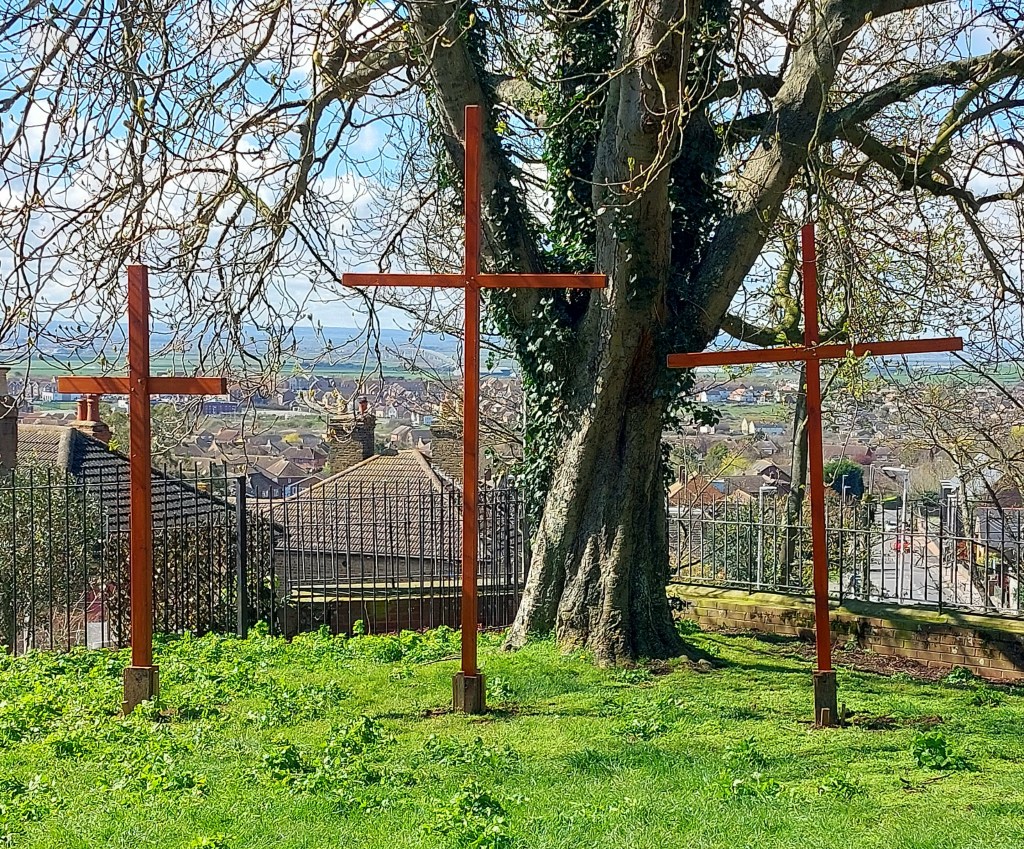
Three crosses

Mothering Sunday

Talk from 19th March 2023

I’ll start by admitting that, whilst I was thinking about what I might say today, I was tempted to include a vote on who wants a talk about Mothering Sunday versus who wants a talk on today’s readings (Colossians 3:12-17, Luke 2:33-35, John 19:25b-27). Instead, in a good news bad news kind of result, you’ve got a bit of both.

The other week my husband asked me if I would be taking the Mothers’ Day break in the Lenten fast. Being me I asked why and got told it’s because it’s Respite Sunday. Well, those of us with the job title of Mother might agree that respite is a myth! So I looked it up.

In medieval times this Sunday, called Mid-Lent or Refreshment Sunday, was indeed used as a day of respite from the Lenten fast.

So why, I thought, would you break the fast, or resolution if you like, for one day when (assuming you’ve been able to keep it so far) you are half way through and it’s beginning to get easier. After all, it takes 6 weeks to make a new routine stick and only 1 to break it. Breaking the fast surely just makes it harder to keep for the final half of Lent.

Penny drops!

That’s why, I thought, because it had got easier, it’s not a temptation in the same way anymore, it’s easier to resist, that habit of having whatever it is we’ve given up is becoming a habit of not having it. We are not having to make as much effort and so the motive of Lent, the preparation, the trials, the testing need refreshing so that we are putting the same amount or even more effort into the second half of Lent as we did in the first half. It is not supposed to be easy.

So how did this become associated with Mothering Sunday? Simply because of the texts read at Mass during those medieval times which were full of many metaphors for and references to mothers; which are often linked to the personification of the church as the Bride of Christ and with the Virgin Mary.

Time passed. (It didn’t know the answer to the question). After the English Reformation (when coincidently the same readings were still being assigned to this Sunday in the Book of Common Prayer) Christians would ‘Go a Mothering’. This means they would return to their “Mother Church” for a service on this Sunday. By “Mother Church” we normally mean either the church in which we were baptised, the local parish church or the nearest cathedral (the cathedral being the “Mother Church” of all the churches in the diocese).

In more recent history, Mothering Sunday became a day when domestic servants were given a day off to visit their Mother Church, usually with their own mothers and family members.

Nowadays, we use Mothering Sunday to give thanks to all those who mother us. A day when we celebrate all who have and do give us motherly care.

Providing this love and care is, in itself, a vocation. It is a vocation of nurturing, care, love and joy. Equally, it is a vocation of tiredness and worry, pain and sacrifice.

There can be no doubt that Mary experienced all these elements of motherhood. She accepted the vocation and all the pain that was to come with it.

Jesus was born to be our Saviour and this involved Him being the Ultimate Sacrifice. In this short passage from Luke, Simeon receives Jesus like a priest receiving a sacrifice. He warns Mary that “a sword will pierce” her soul also.

We are told that Mary treasured and pondered on all these things she was told about Jesus. We can only imagine how much she may have dwelt on and worried or dreaded that time coming. Did it give her a chance to be prepared? A chance to be ready when that moment came?

Mary understood the joy of motherhood. But, she also had to understand the pain as she saw Jesus humiliated, tortured and die an extremely painful death. The sword piercing her soul.

Mary was there at important moments in Jesus’s life. Likewise, she was at the cross at His time of death. Yet, even at the moment of death Jesus’s heart is open. He sees the pain and grief of the mother who sacrificed for Him, whom He loves and respects. He sees the grief of a trusted disciple and friend and He gives them to each other to support and care for each other. He ensures that they will be okay by this act. An act of compassion at His darkest hour.

So as we move towards communion and towards our time of prayer let us bring to the Lord all our joys and sorrows. Let us bring to Him our thanks for all those who have provided us with a mothering care and all those who have been like mothers to us.

As we remember Jesus’s sacrifice for us upon the cross, His act of love, may we try and understand the pain of those who suffer out of love and may we strive to follow His example and walk in His footsteps striving to act with compassion, kindness, humility, meekness, patience, forgiveness and love.

A bouquet of flowers

Jesus’s Baptism (notes for 9th January 2021)

Two weeks ago we celebrated Jesus’s birth – the birth of a tiny baby. Last week we remembered the Wise Men finding and worshipping Jesus – a toddler. Today, we jump forward nearly three decades, doesn’t time fly, Jesus is thirty and being baptised.

In some ways, it is not strange to us that we celebrate Jesus’s baptism shortly after His birth. After all, it is not a rare occurrence for a baby to be baptised, making them a part of the family of God, washing away the consequences of the original and actual sin, granting them the hope and promise of salvation and professing the faith on their behalf whilst promising to bring them up in that faith.

Baptism is linked by Jesus to salvation. It is a symbol of the forgiveness of sins, the death of old life and the start of new life and acceptance into God’s family.

However, Jesus was not a baby. He was a grown man and the sinless Son of God.

So why did Jesus need to be baptised?

Indeed, John the Baptist asked the same thing saying “I need to be baptised by you, yet you come to me?”

Jesus replied “Let it be so now; it is proper for us to do this to fulfill all righteousness.”

Jesus was to be the one to separate believers from betrayers. Jesus was also to bring a purifying and transforming baptism of fire; which enables us to be empowered by the Holy Spirit.

Jesus was baptised to identify Himself with sinful man, who He came to save. He took our sin to save us. His baptism marks the end of His old life marking the acceptance of and the start of His ministry. He is annointed by the Holy Spirit whilst He is affirmed by God as His Son (a parallel with Pentecost when the Holy Spirit came down on the church).

This affirmation from God that Jesus is the Messiah also provides confirmation to John that he has completed his mission of preparing the way for the Messiah; whilst Jesus begins His earthly ministry with the blessing of God His Father and the empowerment of the Holy Spirit.

Father God, we ask that you baptise us all again with your Holy Spirit empowering us to do your work. Amen.

A beautiful lake.