Holy Innocents

The Feast of the Holy Innocents takes place on 28th December.

Doctor Who tells us that time is “wibbly wobbly timey wimey”. That is what we experience throughout the forty days of Christmastide.

Just a few days before the Remembrance of the Holy Innocents we celebrated Jesus’s birth as a teeny tiny human baby. Then at this feast day we jump forward a couple of years to after the magi’s visit and Herod is ordering the slaughter of many children in an attempt to kill Jesus. Then the following week we go back to that visit of the magi before we leap forward to Jesus being a man at His baptism and then a couple of weeks later Jesus is a teeny tiny baby again as He is presented at the Temple.

But for now, let us return to the day when we remember the Holy Innocents whose deaths Herod was responsible for.

Each year we remember that Joseph heeded the warnings and instructions he received, that he took his family to Egypt and that as a result of this the prophecy was fulfilled and Jesus was kept safe to grow into a man, fulfil His mission and be our salvation.

But we skim over the bit where many innocent children were killed by a scared but cruel man who wanted Jesus dead because he thought he would lose his power.

A voice was heard in Ramah, sobbing and loud lamentation; Rachel weeping for her children, and she would not be consoled, since they were no more.”

In the Holocaust, approximately 1.5 million Jewish children, and tens of thousands of non-Jewish children were murdered.

The Nazi’s targeted children as part of their ideological goal to create a “radically pure” society and eliminate future generations of “unwanted groups” including Romani, Polish and disabled children.

In the hope of killing one child, Herod had many killed.

Looking back at Moses, who came into the world to bring a kind of deliverance, a new king had risen to power in Egypt. This new king knew nothing of Joseph1 (the Israelite who saved Egypt from the famine). He just saw how numerous the Israelite people were and, wanting to stop the numbers increasing, ordered the death of every Israelite boy born.

There is a constant battle between good and evil in the world and in our own lives.

Evil will always lash out violently towards good. Evil will use any means necessary in an attempt to retain power. There will be resistance when we do good in the world. There will be temptations as we turn away from sin. The strength of these temptations show how committed to change and how committed to doing good we are.

There is wickedness in the world. There are, very sadly, people in this world who will slaughter or arrange the slaughter of thousands and thousands of beautiful, innocent, babies and children, for their own ends, to get what they want and to keep their power.

Evil does not hold back it’s hate for the young and God does not hold back His grace from the young.

God gives us His grace freely and in abundance out of love for us. He is a generous God and there is more than enough grace to encompass everyone no matter their age. He protects us with His grace.

Our world today is, again very sadly, not that different from the world throughout history. We can still see the callousness of Herod and those like him. We still live in a world where innocents are murdered.

We can lament and cry for them. We can pray for their families and friends. But the massacres still continue. Change begins in the human heart and is expressed in what we do and think and say.

It is hard to change a world ingrained with death. But we can contribute to this change. We can demonstrate charity and patience and sanctity of life.

Christ came for our lives, to give us life abundant, sacred and unending.

Herod represents all the powers that stand against Christ; all the people that reject Christ and all the elements of ourselves that want nothing to do with Christ and prefer their independence to His will.

What are we willing to destroy because of our refusal of Christ? What aspects of our own lives and the lives of others are we ready to destroy because of our refusal of Christ?

Herod’s massacre of the innocents is a warning to us. After his death, Herod’s kingdom was divided between the sons he hated. In less than 100 years, everything Herod had built, including the monuments he had intended as structures for his glory, had been reduced to ruins.

Herod is remembered as a petty tyrant. He is not mourned.

We mourn the innocents, the children of Bethlehem, yet they are so often forgotten.

But, in heaven, “where like stars, His children crowned, all in white shall wait“.
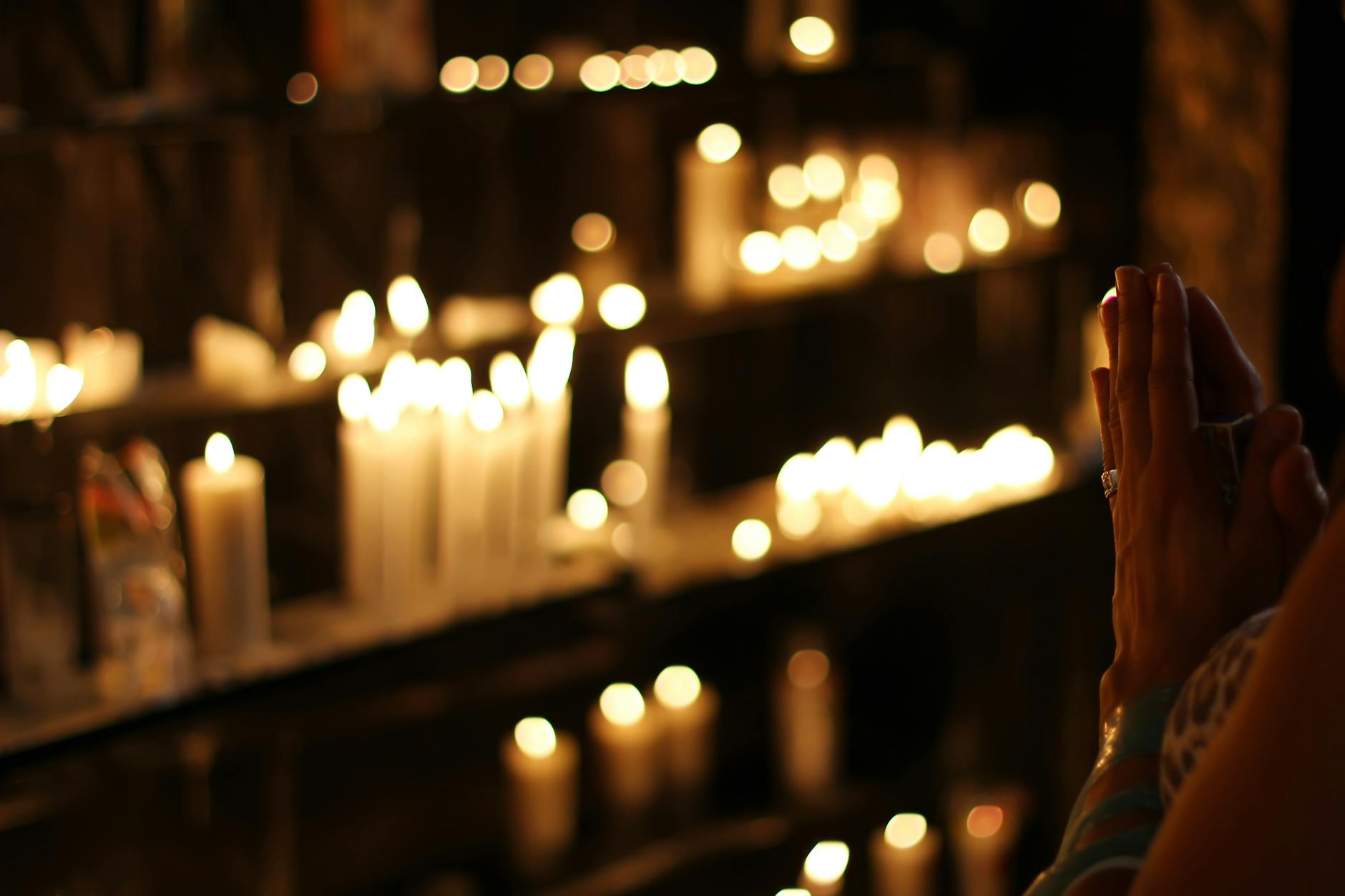
Lit candles for prayer and remembrance. (Photo by Rodolfo Clix on Pexels.com)
  1. Genesis ↩︎

Be prepared!

As I was reading the passage Luke chapter 12, verses 32 – 40, some words from The Lion King popped into my head:

“Even you can’t be caught unawares, so, prepare for a chance of a lifetime, be prepared for sensational news. A shining new era is tiptoeing nearer. And where do we feature? Just listen to teacher. Be prepared!”

There are many distractions in our world, many temptations and many things clamouring for our attention. 

Where your treasure is there also will your heart be.

Jesus is calling us to prioritise and to focus on the things and activities that give eternal life. He is reminding us that we should be centering our lives on God. The world will not make this easy. There will be distractions in the world around us which may make this seem difficult. But (there’s always a but!) it is essential for our lives as Christians and if we don’t we will be caught unprepared!

This passage from Luke is about vocation! It is not simply ‘be prepared and you will be saved’.

It is actually about being ready and alert, being aware and listening so that when God calls us to action we can seize the opportunity and spring into action, spreading the good news full of the energy of the gospel – healing, justice, love, grace, peace, mercy …

Those who are ready for the return of the Lord will be served by God. Remember the words of the hymn: 

“This is my God, the Servant King.”

This gives the impression of being a contradiction but it does not mean that we stop serving God. Instead it is a promise of what will happen when you re-centre your life around God. The good news of Christ will serve you in your life so that you are not afraid.

Jesus promises that God has given everything so that we do not need to be afraid. He then goes on to talk about how God will serve us reminding us about the gift of life and creation, the gift of eternal life, the gift of the Holy Spirit in Baptism and the gift of Christ’s body and blood in Communion. This highlights how abundantly God showers gifts upon us, how abundantly He loves us and desires good for us. It echoes His covenant with Abraham. 

So, how ready are we?

Are we ready to help others in need? Have we considered the issues of peace and justice going on in the world? Are we ready to be part of God’s solution?

Jesus is encouraging us to live with an expectation that God is always and already with us … and watching as God has always been. Jesus being incarnated as man was a reminder and embodiment of that reality and an example for us to follow.

This passage of priorities is a call to keep God’s priorities ahead of our own every day in all the choices we make. God’s list of priorities may seem long or challenging at times. It means accepting God’s forgiveness for our own sins and forgiving those who sin against us.

It means loving one another and loving our enemies. It means standing up to injustice when we see it, praying for and voting for and working for peace in the world. 

It means living and shopping and consuming in ways that care for creation; eating and drinking and exercising in ways that care for the temples our bodies are meant to be.

Going back to just before Jesus gave us this list of priorities He says to us:

“Do not be afraid little flock, for it is the Father’s good pleasure to give you the kingdom”.

God wants us to be with Him in His kingdom. God’s kingdom is already here among us thanks to Jesus’s sacrifice and resurrection. 

Being typical human beings we don’t see and experience it clearly because we’re looking the wrong way or wandering off on our own instead of following our God Guide.

But, like the pleasure we get giving someone a gift, God has immense pleasure in gifting us His kingdom, right here, right now as a foretaste of things to come, because of His grace. And God’s list of priorities is the key that opens the gate.

By being generous we can glimpse God’s kingdom. By sacrificing something, giving something freely and willingly to someone who needs it, enables us to experience and share in a measure of His kingdom. 

By seeking out the least among us and giving them a hand we can feel the kingdom among us. By forgiving all who cross us we experience the peace of the kingdom – the peace that passes all understanding. 

Converse with those with different opinions to yourself, send a note to someone who’d be surprised you thought of them, keep them in your prayers and God’s kingdom will be in your midst and theirs.

Be Ready

Be Alert

Be Prepared

Listen for God’s call and spring into action.

Be Prepared

He Is Risen!

Listening to the readings again on Easter Sunday with the women going to the tomb to prepare Jesus’s body reminds me of something I read recently about Mary – Jesus’s mother.

It is interesting, is it not, that Jesus’s mother – arguably His greatest disciple, a woman of tremendous faith, who stayed by Him to the bitter end, is not listed amongst the women going to attend to Jesus’s body.

And this poses the theory that the first person Jesus appeared to may well have been His mother and that this is why she was not among those going to the tomb at dawn. Such an appearance would be part of completing her participation in the essential parts of the paschal mystery.

Mary suffered above all others in the suffering and death of her son. Christ kept the commandments. He honoured His heavenly Father, His earthly father and His mother, so it makes sense that he’d visit her first.

If a son lived far away and his mother was told he’d died but he was actually alive and healthy and he returned to the area, it would highlight that he was not a good son if he visited his friends first and his mother last.

Jesus was the perfect son. So, why would He not visit His mother first. There’s also her faith, which, despite the apostles losing theirs at Jesus’s passion, Mary had in abundance. Scripture tells us that the Lord shows Himself to those who have faith in Him. And, of course, she loved her son so much and scripture tells us that those who love Him will be visited by Him.

How joyful she must have felt at seeing her son alive once more.

There is a special kind of joy at Easter. It’s not just the spring flowers springing up into life or the longer days. What it is is a deep, radiant joy born from our Lord’s victory over sin and death so that we might have eternal life with Him.

Jesus leaves the darkness and rises to new life. Through God’s grace, this gives us the gift that, no matter what our past was, we have permission to leave it behind and embrace the hope and joy of new lives in Christ. His sacrifice and act of intermediary reconciliation grants us forgiveness of our past sins, our present sins and our future sins.

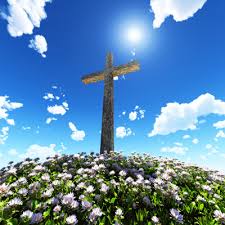
A cross in a sunny field of flowers. Easter Joy.

The Time Had Arrived

Palm Sunday is the day we appoint to mark Jesus’s parade into Jerusalem.

Up to this point Jesus has told His disciples to keep the knowledge of His Messiahship to themselves because His hour had not yet come. But now, the time had arrived. Jesus was making a declaration and He took dramatic action to make the announcement. Jesus rode into Jerusalem in a way which would be an unmistakable claim to be the Messiah – God’s approved king.

This event had been carefully planned. “The Lord needs it” was a password chosen and set up a long time prior to this event taking place.

It was certainly an act of defiance and courage. There was already a price on Jesus’s head. And yet, He enters in a way which throws the lime-light upon Him – giving Him centre stage. Every eye now beheld Him.

Jesus was fulfilling the prophecy in Zechariah 9. Even with His deliberate claim to be king, Jesus underlined the kind of kingship He claimed – king of love and peace.

Jesus used the language of the culture of the time. His procession used symbols which were part of the common understanding; touching a hope and a need in the people’s hearts. Consequently. the people eagerly responded.

Jesus rode a colt. A colt is an unridden donkey – which symbolised purity and peace. This confirmed His fulfilment of the Messiah role was by bringing reconciliation and peace.

In those days in that country, donkeys were considered noble. Only in war did kings ride a horse. In times of peace they rode donkeys.

By riding a donkey, Jesus came as a king of peace and love – not the conquering military hero the Jews had expected and awaited.

The waving of palm branches acknowledged Jesus’s authority. By throwing down their cloaks, the people were ushering a prince into their midst; showing honour and homage. And the traditional welcome to a new king – “Blessed is He who comes in the name of the Lord”.

In the loudest way possible Jesus was saying, “Here I am, your king, your prince of peace.” The reply – “Hosanna” meaning “save us” – accepting that Jesus is the saviour.

Some of the pharisees – not all but some – heard the crowds and did not like it. They felt contempt at all the rabble as well as being afraid of Rome – who did not like disturbances from others.

In response to the pharisees telling the crowd to be quiet, Jesus answers that if the crowd were silent the stones would shout out.

When it is time, it is time. God’s purpose will be fulfilled. The king has come. The kingdom is coming.

The triumphal entry did not happen in a vacuum. It was not an accident. Everyone gathered together saw the meaning before them plain and simple. The king was entering the city in righteous victory and the crow were in desperate need of salvation and rescue.

We often read the whole passion – the whole suffering – on Palm Sunday because out of context from each other the rest doesn’t make full sense.

Jesus, the true king, the one coming in the name of the Lord, entering in triumph, helps us understand the whole passion more fully. It was never about human thrones and powers – it was always about triumph over evil and death.

The one who resurrected Lazarus comes to Jerusalem, in faithful obedience to the covenant, to allow humanity to expend its evil upon Him and for Him to then rise up from the dead. Humanity expends its evil upon the Son of God. The Powers and Principalities of the world snuff out the light. Satan claims he has victory over the God with whom he thought equality could be grasped.

But … that is not the end of the story …

… Jesus comes to us the same way He came to Jerusalem – amidst the praises of the people. enthroned by the cries begging for salvation and the royal welcome.

He guides us through His passion-tide, to bring us to share in His meal, to kneel at His cross, to wait by His tomb, to await His resurrection and victory over the darkness, the grave and His defeat of Satan, as we shout “Alleluia” on Easter Sunday.

The six stages of Holy Week:

  • Jesus as king
  • Jesus’s obedience to God’s will
  • Jesus as suffering servant
  • Betrayal and loyalty
  • Jesus’s passion/suffering
  • Salvation through Jesus

What a difference a day makes.

What a difference a week makes.

Palm Sunday, crowds are cheering Jesus and celebrating. Yet, just a few short days later, the same crowds jeer and call for the brutal murder of Jesus upon the cross.

Jesus knew what was coming but He still taught and proclaimed the Kingdom of God to His final breath.

Jesus made one last appeal to be accepted as their king. Before the hatred of men engulfed Him.

Once again, He confronted them with love’s invitation.

donkey

A Sin Is A Sin or The Fig Tree

In the first part of Luke recounting the teaching of Jesus and the fig tree are people discussing Pilate mixing the blood of Galileans with their sacrifices.

This event, and that of the Tower of Siloam also mentioned by Jesus, were probably very well known by the crowds of the time, however, we know little about them today.

It is interesting that Pilate’s brutality is mentioned – which links up with the content of other historical references to him – and this gives us an impression of Pilate in advance of Jesus’s trial.

Considering this brutal nature of Pilate makes his act of washing his hands of Jesus stand out more. Pilate was quite happy to brutally kill people but he did not want to claim responsibility in any way for the death of Jesus.

Jesus uses the conversations of the crowd – one about a state sanctioned event and one an apparently random accident – for His teachings.

Jesus implies that we must not equate tragedy with divine punishment. However, repentance is needed universally. Unless we repent we will perish. To perish means the destruction of one’s soul.

The unrepentant will suddenly find that they have delayed too long and they have lost themselves.

Jesus asks the people – do they think that the Galileans being talked abount were greater sinners because of what happened to them. The Jews linked sin with suffering.

But there is no scale of sin. A sin is a sin.

Jesus expounds further by telling the parable of the fig tree. The fig tree was favoured because they had a higher chance of growing in the poor and shallow soil of the region.

Uselessness invites disaster. What is useful goes from strength to strength where what is useless is eliminated.

What would we answer when asked “of what use were you in this world?”

The land owner initially pronounces imminent and decisive judgement. The tree had not borne fruit for the last three years and so he wanted it cut down.

Nothing which only takes can survive.

The fig tree was taking strength and sustenance from the soil. In return it was producing nothing. This was the fig tree’s sin.

There are two types of people:

  • Those who take out more than they put in.
  • Those who put in more than they take out.

There is the duty placed upon us of handing things on better than we found them.

A fig tree normally takes three years to reach maturity. If it is not fruiting by then it is unlikely to produce fruit. But, this fig tree was given another chance.

The gardener pleaded for the tree to be given an extra year and the gardener would dig around the tree, placing manure around it. If the tree bears fruit it will stay but if the tree bears no fruit after the extra year it will be cut down.

The fig tree was given a second chance. We are given a second chance.

A second chance to change and repent.

It is always Jesus’s way to give man chance after chance. Peter, Mark and Paul all are witnesses to that. God is infinitely kind to those who fall and rise again.

God transforms us by grace – a grace that calls us to be generous towards those still trapped by poverty, want and devastation.

All sinners face the same fate before God. Everyone must stand before Him in judgement.

God is patient but, whilst He allows second chances and time for repentance, there is a limit.

There is a final chance!

If we refuse chance after chance, if God’s appeal and challenge come again and again in vain, the day finally comes, not when God has shut us out, but when we by deliberate choice have shut ourselves out.

Jesus uses the events of Galileans being executed and the tower falling on people in Jerusalem to emphasise the urgency of repentance, warning that those who don’t repent will perish.

A sin is a sin. There are no sins that are lesser than others. All sins are a sin.

Don’t be like the fruitless tree!

Focus on producing good fruit; on living a life which pleases God – rather than focussing on the misfortunes of others.

Jesus is emphasising that repentance is not just about acknowledging sins but actively changing to conform to God’s will.

The fig tree parable highlights God’s grace and the opportunity for change and restoration.

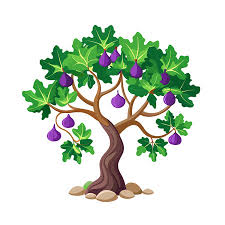
Fig Tree

Remembrance

This morning we have two key elements. We have the good news which is the gospel and we have Remembrance.

Our gospel1 this morning recounts an event which took place at the Sea of Galilee. Now, in Jesus’s time this was the centre of a prosperous fishing industry. The importance of knowing this will become clear shortly. 

And the event Mark is recounting is the pivotal moment of Jesus calling His first disciples. Relevant both then and now is that the call to follow Jesus was a call to BE with Jesus as well as to learn and be Jesus’s representatives, carrying out the ministry He gives. The disciples were with Jesus and learning directly from Jesus.

So Jesus calls to those He had chosen, and immediately they left their nets, their boats, their fishing businesses, their families, everything. No hanging back, no hesitation, no requests for extra time to finish what they were doing or to pack their equipment. Immediately! Leaving everything! To follow and be with Jesus!

These were just ordinary men, the same as you and me. They heard the call, calling to something deep inside them, and they knew they must heed it. They followed Jesus. They made mistakes just like all of us and they learnt from these, repented and were forgiven. They went on to do great work spreading the good news of Jesus all around the world and this was not without suffering and death but Jesus was with them and had prepared them for this work. They did not follow blindly but with eyes which had been opened.

God calls every single one of us and our whole lives must come under His rule. Our money, our relationships, our work, our time, our everything should be under the rule of Jesus – not because we accept Him as king but because He IS king. And what we are called to do is to repent and believe. To turn away from sin and accept the forgiveness freely offered to us by Jesus. 

Believing that Jesus is king who brought God’s kingdom to us and embracing it in faith, turning from sin and embracing forgiveness is the very starting point of discipleship. We are unable to move forward without repenting and submitting to the rule of Jesus. 

Belief is not merely accepting something as true. Belief involves a response from our whole being in complete obedience.

Just like in Jesus’s day when the people trusted in all sorts of things: their ancestry, land, temple, and laws are just a few examples of many, people today trust in many differing things. Jesus was calling them and calls us to trust the good news that God was and is doing something new through Jesus. To be part of His kingdom requires letting go of all these earthly ties that distract us and putting our whole trust in Jesus. Repent and believe because God has come and you can belong to His kingdom and have your sin taken away.

But that doesn’t mean we have to forget.

Remembrance Sunday is an opportunity to remember and honour those who have lost their lives in conflict and those who were left physically and emotionally scarred.

It is an opportunity to all join in the silence together and allow our remembrances to help us face more honestly what it means to be human and to deepen our commitment to peace.

In all of this we seek God’s everlasting and all encompassing love.

War brings much death and trauma. There are those who cannot speak of the horrors they experienced. The silence we hold today also honours them.

As we struggle to find words to speak into the silence and horror of loss and trauma, we make Christ known. In the depths, we discover, He gives us words to speak of healing, forgiveness, and the knowledge that in Christ death is not the end and that love not violence is the final word.

God takes from us all our raging and bitterness, if we just let Him, and in the resurrection He shows us the way to peace.

The hard won, costly peace of the sacrifice of His son, who faced war yet did not respond with retribution and retaliation but with mercy, forgiveness and love.

We hold silence and remember, not so we can forget for the rest of the year, but so we can be reminded of a call to speak and recommit to live as peacemakers, as people who through the love and passion of the self-offering and sacrifice of Christ, God has come near.

And we live into the hope of a world where war will be no more.

We will remember them.

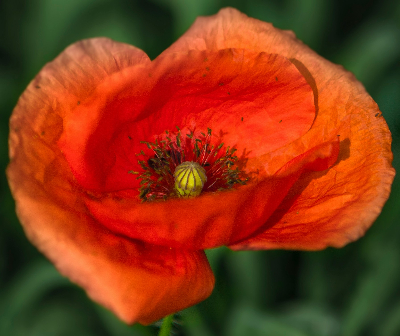
Poppy
  1. (Mark 1:14-20) ↩︎

… for life not just for Christmas …

I wonder how many already have put all the decorations away? I wonder how many will rush to put them away on twelfth night? I wonder how many will keep them up until Candlemas when Jesus is presented at the temple? I wonder how many still have turkey and excess food to eat?

I further wonder how many of those who’ve already put their decorations away, excitedly got them out in November, and on putting them away said something along the lines of “thank goodness they’re away for another year”? I also wonder how many of those who have not yet put the decorations away will be saying something similar when they do?

And all this wondering is because I wonder how many put Jesus away with the decorations? How many try to box Him up and leave Him in the loft with a “thank goodness that’s done for another year”?!

We see the slogan, “A dog is for life not just for Christmas”. Something which is very true – they are a life long commitment!

Jesus is a life long commitment. Not only that, He is for life in more ways than one.

Jesus was born as that tiny baby at Christmas for our salvation. He came to save our lives. His sacrifice for the forgiveness of sins for us to have life. Jesus is for life.

When we commit ourselves to Jesus and let Him into our lives; this is a life long commitment. We spend each day trying to follow Jesus’s example.

So this year I pray that, instead of putting Jesus away with the decorations for another year, we open the door to Him – letting Him in for life!

Jesus is for life not just for Christmas!