
Now when Jesus came into the district of Caesarea Philippi, he asked his disciples, “Who do people say that the Son of Man is?” And they said, “Some say John the Baptist but others Elijah and still others Jeremiah or one of the prophets.” He said to them, “But who do you say that I am?” Simon Peter answered, “You are the Messiah, the Son of the living God.” And Jesus answered him, “Blessed are you, Simon son of Jonah! For flesh and blood has not revealed this to you but my Father in heaven. And I tell you, you are Peter, and on this rock I will build my church, and the gates of Hades will not prevail against it. I will give you the keys of the kingdom of heaven, and whatever you bind on earth will be bound in heaven, and whatever you loose on earth will be loosed in heaven.” Then he sternly ordered the disciples not to tell anyone that he was the Messiah.
Matthew 16:13-20
Jesus took His disciples to Caesarea Philippi, about 25 miles north east of the Sea of Galilee, where the population was mainly non-Jewish; giving Jesus respite from the crowds and peace to teach His disciples.
In what is considered to be an introduction to a more important follow up question, Jesus asks the disciples who the people say He is.
Caesarea Philippi was associated with idols and temples to other gods, including a temple of white marble to worship Caesar. It is against this backdrop, amongst Gentiles worshipping multiple different things, that Jesus asked the disciples this question.
Some say the disciples took a guess at what the people thought. Some say they reported back gossip and hearsay and some say that the disciples genuinely knew what the crowds were thinking and saying. Either way the answers given were those of national reformers who stood up to corrupt rulers of their day. The Jews wanted a military Messiah who would lead them to victory against the Romans. Consequently, the general tendency of the people was to underestimate who Jesus was, giving Him some respect and honour but not to the extent due to Him and the people cannot decide who He is.
Having heard the answer to His introductory question, Jesus asked the main one: “Who do you think that I am?” Who did the disciples themselves think Jesus is? What did they believe about Him?
This is the question asked of all of us and all who hear about Jesus. We have the privilege of answering this question every day by what we believe and do. Believing Jesus is who He says He is affects the way we live and act.
Jesus had been teaching His disciples and ministering for some time. As their teacher He expected the disciples’ opinion to be their own and not influenced by the crowds hearsay.
Again, it is Peter whose answer is recorded “You are the Christ, the Son of the living God.” Jesus is the Christ, the Messiah. Through their time and experience with Jesus the disciples had come to understand who He was. They also needed to believe. Peter understood that Jesus was not only God’s Messiah but also God Himself.
Jesus reveals to Peter that he had spoken by divine inspiration – God the Father speaking through Peter and giving him the insight to make this revelation. Peter was blessed by both the insight itself and by how it came to him. How we identify with Jesus is based on our own personal encounters with Him, on immersing ourselves in God’s Word and in prayer. How we choose to identify with Jesus will impact the way we interact with one another and the earth.
Jesus reiterates that Simon Peter’s name is now Peter meaning rock. Peter was a rock and would become a rock as God works through Him transforming his naturally extreme self into someone solid and reliable. Jesus states that He will build His church. Not only is this the first use of the word ‘church’ in the Bible but the church belongs to Jesus. Jesus builds His church bringing His people, who belong to Him, together.
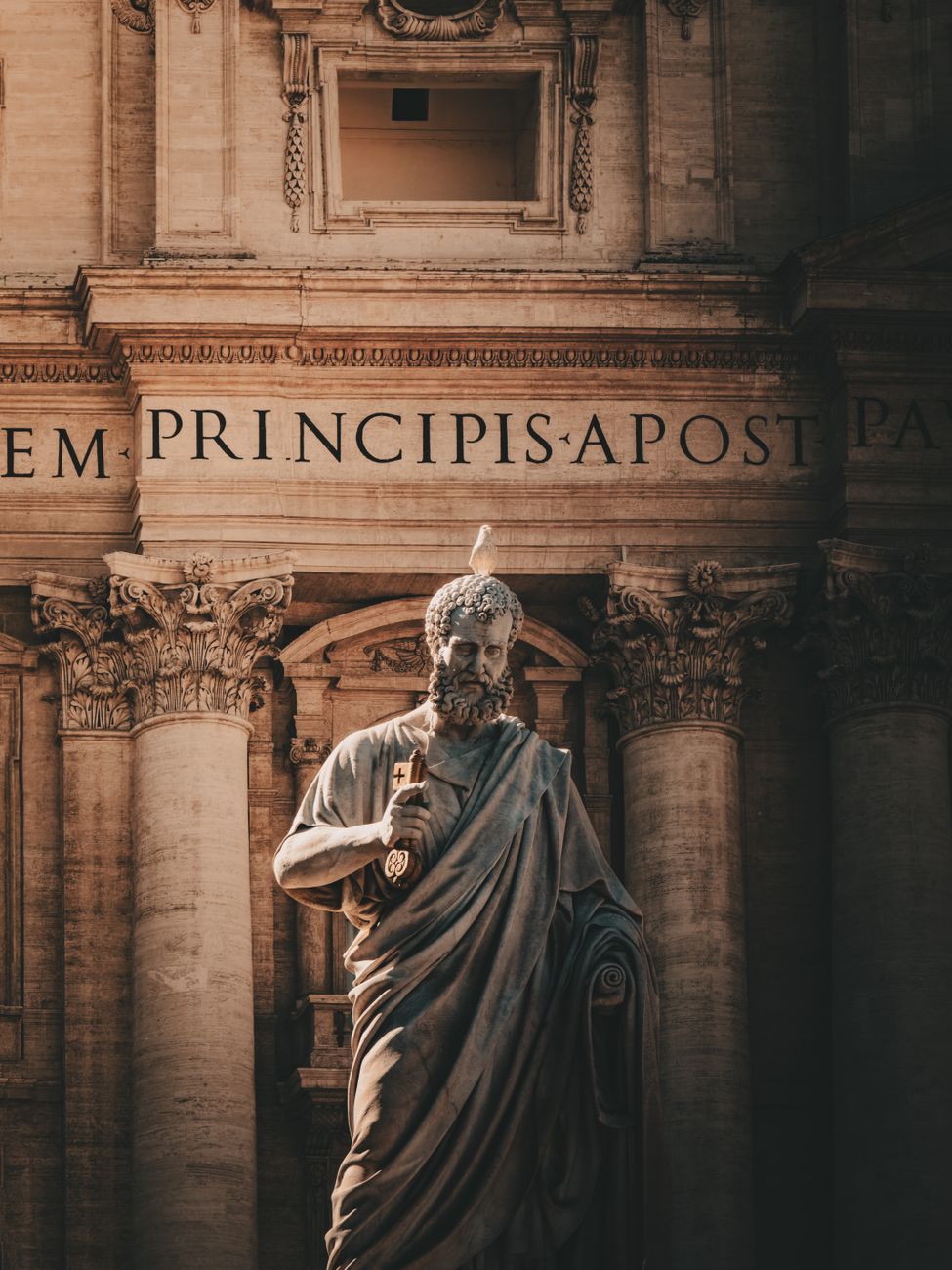
Jesus gave Peter the Keys to the Kingdom of Heaven, giving him the spiritual authority to open the door of salvation and lead the early church.
Peter had a special place among all the disciples and he had some privileges. He is always listed first in the listings of the disciples. He opened the doors of the Kingdom to the Jews. He opened the doors of the Kingdom to the Gentiles.
However, despite some views to the contrary, there is no proof or Biblical argument that Peter’s privilege and authority was passed on. Jesus gave Peter the Keys but didn’t give him the authority to pass them on to further generations.
Finally Jesus commanded His disciples that they should tell no one that He is the Christ. Their lives speak louder than words, more truthfully and more effectively. By leading a life of love for God, a life that loves the other as much as one loves themself, and a life in pursuit of justice and peace, the truth of Jesus’s identity is declared to the world.
Jesus said to tell no-one for it was not yet His time. Now is His time. He is alive for ever more. It is time for us to spread the word in what we do and think and say.