Don’t be a Pharisee …

The Legend of the Stones

Two women approached a wise man and asked for instruction. One of them regarded herself as a terrible sinner. In her youth, she had deceived her husband, and she tortured herself constantly with the memory of her infidelity.

The second, on the other hand, had lived her entire life within the law and by the rules. She wasn’t conscious of any serious sin, had nothing much to reproach herself with and felt quite pleased with herself.

The wise man asked both women about their life. The first went as she confessed her great sin. She felt her sin had been so great that she had no right to expect forgiveness. The second said that she had not committed any particular sins.

The wise man said to the first woman, ‘Go, daughter of God, and look for the heaviest boulder you can find – one that you can barely manage to carry – and bring it to me.’

‘And you,’ he said to the second woman, who could not recall any serious sin, ‘go and bring me as many stones as you can carry, but they must all be small ones.’

The women went off to do as the wise man had told them. The first brought a huge boulder; the second brought a whole sackful of small pebbles.

The wise man examined the stones and said, ‘Now do as follows. Take the stones back and replace each one of them exactly where you picked it up, and when you have put them all back where you found them, come back to me.’

The women went off again to carry out the wise man’s instructions. The first very easily found the place from where she had taken the huge boulder, and she replaced it where it had been. But the second had no idea where she had picked up all her little pebbles, and had to return to the wise man without having carried out his instruction.

‘You see,’ said the wise man, ‘that’s how it is with our sins. It was easy to take the big, heavy boulder back to its place because you knew exactly where you first found it. But it was impossible to remember where all those little pebbles came from.’

And to the first woman, he said, ‘You are very conscious of your sin. You carry in your heart the reproach of your husband and of your conscience; you have learned humility, and in this way you have been freed of your wrongdoing. You, however,’ he said to the second woman, who had come back still carrying her sack of little pebbles, ‘you, who have sinned in many small ways, do not know any more when and how you did wrong; you are not able to repent. You have grown accustomed to a life of little sins, to passing judgement on the sins of others while becoming more deeply entangled in your own. It has become impossible to free yourself of them.’

A story by Leo Tolstoy retold by Margaret Silf

To paraphrase from part of the Gospel of Luke, chapter 18: The Pharisee thanks God that he is not like other people. He details his religious practices and self perceived righteousness and considers himself more virtuous and superior to others.

The tax collector feels unworthy and simply asks God to have mercy on him, a sinner.

Jesus states it is the tax collector and not the Pharisee who went home justified by God. God values the tax collector’s humility, not the Pharisee’s self-righteousness.

Jesus told this parable to warn those who trusted in themselves but who treated others with contempt. He warns them against spiritual pride and calls for us to have humility in prayer and in life. Our justification comes solely from God’s grace and mercy and not from our own achievements.

Humility is essential for a right relationship with God whilst spiritual pride leads to self-righteousness and being rejected by God.

It is easy to fall into the trap of behaving like the Pharisee. I know someone who, on a regular basis, beats their chest and says “I thank God I am not like other men”.

Modern day Pharisees are not all as obvious as this but are characterised by their self-righteousness, a tendency to burden others with strict rules whilst not following them themselves and a focus on power and control of over serving.

They may appear religious whilst lacking genuine faith whilst adhering to certain rules or attending church yet without a corresponding difference in their daily life. They may focus on strict adherence to rules and traditions, creating heavy burdens for others yet ignoring the spirit of the law. They judge and condemn others, even misrepresenting their motives whilst projecting their own shortcomings onto them.

They believe they are more righteous than others but are unwilling to admit to their own sins or weaknesses.

They are more concerned about other’s opinion of them and how they are seen than they are about having a genuine relationship with God.

But, even for Pharisees, there is hope.

To not be a Pharisee, hear the words of Jesus. Jesus is the Light of the world, whoever follows Him will not walk in darkness but have the light of life.

Don’t ignore the content of what Jesus says, or you’ll miss out. Hear Jesus’s word and His message. Actively listen to Him by reading and paying attention to Scripture. If you ignore Scripture, if you ignore the Bible, if it just sits on a shelf gathering dust, then you are ignoring the word of Jesus.

Regardless of how busy we are, we make time for what matters most. Nobody is too busy to hear Jesus’s word.

Hearing Jesus’s word – reading the Bible is non-negotiable for both first-time faith and for growing faith. You can’t believe in and become like Jesus without His word. Hear His word.

See Jesus’s light. Light is a big metaphor. Jesus is an exposing light, an illuminating light, and a welcoming light.

He exposes what is hidden, calls out sin, and banishes darkness. He illuminates, revealing or making known the way, shining out in the darkness and showing us what we need to see. He is a welcoming light guiding us and inviting us home.

See the light, put your faith in Jesus, and be welcomed home. Follow Jesus’s path. Jesus’s promises of light and life are only for those who follow Him. Truly believe and truly follow Jesus.

This doesn’t mean just recognising that Jesus was a real person – and there is historical evidence of this – it means seeing and listening to Jesus, going wherever He leads and doing what He says. Literally following Him. Not just being a Christian but being a Christ-Follower. True believing where your highest allegiance is to Jesus; whatever He wants, that’s what you want.

Don’t be a Pharisee.
Hear Jesus’s word.
See Jesus’s light.
Follow Jesus’s path.
Be humble.

Lord Jesus Christ, Son of God, have mercy on us, all sinners.

Stones and Pebbles

A Sin Is A Sin or The Fig Tree

In the first part of Luke recounting the teaching of Jesus and the fig tree are people discussing Pilate mixing the blood of Galileans with their sacrifices.

This event, and that of the Tower of Siloam also mentioned by Jesus, were probably very well known by the crowds of the time, however, we know little about them today.

It is interesting that Pilate’s brutality is mentioned – which links up with the content of other historical references to him – and this gives us an impression of Pilate in advance of Jesus’s trial.

Considering this brutal nature of Pilate makes his act of washing his hands of Jesus stand out more. Pilate was quite happy to brutally kill people but he did not want to claim responsibility in any way for the death of Jesus.

Jesus uses the conversations of the crowd – one about a state sanctioned event and one an apparently random accident – for His teachings.

Jesus implies that we must not equate tragedy with divine punishment. However, repentance is needed universally. Unless we repent we will perish. To perish means the destruction of one’s soul.

The unrepentant will suddenly find that they have delayed too long and they have lost themselves.

Jesus asks the people – do they think that the Galileans being talked abount were greater sinners because of what happened to them. The Jews linked sin with suffering.

But there is no scale of sin. A sin is a sin.

Jesus expounds further by telling the parable of the fig tree. The fig tree was favoured because they had a higher chance of growing in the poor and shallow soil of the region.

Uselessness invites disaster. What is useful goes from strength to strength where what is useless is eliminated.

What would we answer when asked “of what use were you in this world?”

The land owner initially pronounces imminent and decisive judgement. The tree had not borne fruit for the last three years and so he wanted it cut down.

Nothing which only takes can survive.

The fig tree was taking strength and sustenance from the soil. In return it was producing nothing. This was the fig tree’s sin.

There are two types of people:

  • Those who take out more than they put in.
  • Those who put in more than they take out.

There is the duty placed upon us of handing things on better than we found them.

A fig tree normally takes three years to reach maturity. If it is not fruiting by then it is unlikely to produce fruit. But, this fig tree was given another chance.

The gardener pleaded for the tree to be given an extra year and the gardener would dig around the tree, placing manure around it. If the tree bears fruit it will stay but if the tree bears no fruit after the extra year it will be cut down.

The fig tree was given a second chance. We are given a second chance.

A second chance to change and repent.

It is always Jesus’s way to give man chance after chance. Peter, Mark and Paul all are witnesses to that. God is infinitely kind to those who fall and rise again.

God transforms us by grace – a grace that calls us to be generous towards those still trapped by poverty, want and devastation.

All sinners face the same fate before God. Everyone must stand before Him in judgement.

God is patient but, whilst He allows second chances and time for repentance, there is a limit.

There is a final chance!

If we refuse chance after chance, if God’s appeal and challenge come again and again in vain, the day finally comes, not when God has shut us out, but when we by deliberate choice have shut ourselves out.

Jesus uses the events of Galileans being executed and the tower falling on people in Jerusalem to emphasise the urgency of repentance, warning that those who don’t repent will perish.

A sin is a sin. There are no sins that are lesser than others. All sins are a sin.

Don’t be like the fruitless tree!

Focus on producing good fruit; on living a life which pleases God – rather than focussing on the misfortunes of others.

Jesus is emphasising that repentance is not just about acknowledging sins but actively changing to conform to God’s will.

The fig tree parable highlights God’s grace and the opportunity for change and restoration.

Fig Tree

Here Is The News…

(Isaiah 40:1-11, Luke 3:1-6)

Today, we have heard about the proclamation of God’s message.

The message is that people need to repair their lives and prepare for Christ’s coming. John (the Baptist) proclaims this by calling the people to repent and be baptised.

We also have the beginning of the end before the new beginning.

We have the introduction of four men who will play significant roles in Jesus’s crucifixion. In fact, the seven people Luke mentions at the beginning of our Gospel reading, are only remembered today, despite historical records, because they are mentioned here in Luke’s Gospel.

God chooses unlikely people. We sometimes wonder about our calling, but God knows what He is doing. He knows the right people to call. God often calls the lowly.

And John fulfils the prophecy from Isaiah quoted by Luke. “A voice of one calling in the wilderness, ‘Prepare the way for the Lord…'”

But why in the wilderness and not Jerusalem? The wilderness is sparse whereas Jerusalem was highly populated and held the Temple.

Yet, throughout history the wilderness has been a place where God has shaped His people and forged the nation of Israel. It is where God’s prophets did most of their work and where Jesus was tested. God continues to work in the wilderness; for the wilderness is where and when life seems bleak and barren. It is when we are most open to hearing God. God works in the wilderness of our lives.

The baptism of repentance for the remission of sins is the type of baptism that John introduced to the Jews. They were already familiar with a different type of baptism – a type called Proselyte Baptism which was a ritual required of any Gentile who wished to become a Jew to cleanse sins.

But John was introducing a baptism which required all to repent and be baptised for the forgiveness of sins.

This concept was unfamiliar to the Jews and so the prophecy that John would give the people knowledge of salvation was fulfilled through his teaching of this concept.

John taught the ethical requirements of repentance. It requires bearing fruit worthy of repentance and sharing with those in need. To deal honestly with people and not use power in an abusive way.

Advent is a time of preparation. Here we find the way to prepare – bearing fruit worthy of repentance -sharing with those in need – dealing with people honestly – using power justly – turning around and facing a new direction.

Repent and turn around away from the sin. Turn away from worldly compulsions and turn towards Godly affections.

The reward of repentance is remission of sins. This is more than just forgiveness. It is also freedom from compulsions and addictions and habits that threaten to undo us.

Repentance is called for by John at both personal and national levels for without it Israel was heading towards destruction.

At the end of this Gospel Luke emphasises again repentance and forgiveness . “Thus it is written, and thus it was necessary for Christ to suffer and to rise from the dead the third day, and that repentance and remission of sins should be preached in His name to all nations…”

People still need forgiveness. God still forgives.

People know they are sinners. Dealing with sin seriously can be a relief because if sin is not ignored but is addressed then forgiveness can be believed.

Just as Israel needed repentance, we also need to prepare our hearts and minds to receive the Lord and to help our friends and family prepare their hearts and minds as well.

The important work and the real goal is the preparation of our hearts and minds to receive God and the work of the Holy Spirit.

We can contribute to the Spirit’s work in many ways but especially through prayer and the preparation of our hearts.

ALL will see God’s salvation.

Jesus has eliminated barriers to the salvation of all people.

We live in a highly divided world. God calls ALL people in every land, every race, every persuasion, every circumstance.

ALL are called. ALL will see the salvation.

No-one is excluded. The call is to repent and receive forgiveness of sins.

Wilderness

Testing

This morning’s Gospel is just like my children…

… they ask testing questions and … yep – when they are asked to do something they either don’t do it or … if it’s the youngest anyway … they say “No!”; then they go away and think about it and then get on with it.

The chief priests tried to trick Jesus, testing Him, by asking where His authority came from.

Jesus, of course, did not fall into their trap. Instead, He turned it around by asking whether John’s baptism came from heaven or from human origin. They refused to answer Him, out of fear of recrimination from the crowd and damage to their reputation.

So Jesus tells this parable of the first son who refused to do what his father asked but then changed his mind; and of the second son who agreed but then did nothing.

A lesson about obedience and disobedience. The chief priests claimed to accept God’s message and would put on a show for the people – but that’s all it was – just a show. Jesus is saying they are like the second son who said “yes” but then did not obey.

The point is that those who refuse God but who later repent and follow Him, obey Him, can enter the Kingdom of God. Those who say “yes” but do not repent (which includes following through with their actions) can’t.

If the chief priests are the second son, who are the first?

Jesus answered that for us too – He points out to the chief priests that the tax collectors and prostitutes (those who were considered at the time to be the biggest sinners) were the first son and would enter the Kingdom of God first because they believed, repented and returned to God. The chief priests, who only claimed to follow God with their words but not with their hearts or actions, would not get to enter God’s Kingdom unless they truly repented.

Turning to God with repentance is the key to our salvation, no matter what our past sins might be or how many times we’ve disappointed God. He can see what is in our hearts and forgives us when we are truly sorry.

It’s what we do, not just what we say, that counts.

Let’s renew our own commitments to be faithful followers of Jesus.

Let us thank God for sending His Son who truly is who He says He is.

Let us be genuine in our actions and live in love serving others.

Talk from Holy Trinity Sheerness (Matthew 21:23-32)

Questioning authority

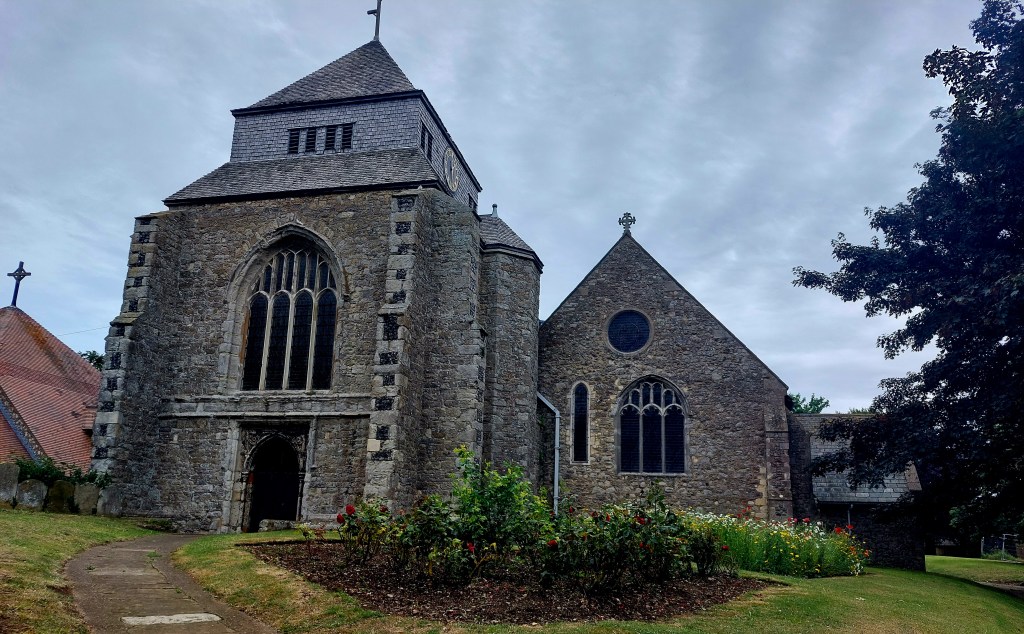
Minster Abbey Talk on John 17:1-11

“The time has come,” the Walrus said, “to talk of many things:…”

Lewis Carroll

And if we were having a conversation over some coffee and cake (hint hint) that is precisely what would happen. We would have a conversation; maybe about the weather, the coronation, a television drama, … all sorts.

Some of us find it easy to converse, some of us find it more difficult and communicate in other ways. Some of us are good at listening and for some of us it “goes in one ear and out the other”.

But, how do we pray?

There are many different ways we can pray, but ultimately, if we think about it, prayer is just the same as that conversation over coffee … isn’t it?

If not why not?

We have the opportunity to talk to God about anything and everything; and not just when we’re worried or in need or when things aren’t going as we’d like but also when we’re thankful, joyful and when things are going well.

We can do a lot of talking to God but we need to remember to listen as well. If we are honest none of us listen as much as we should.

Prayer is vitally important in our lives. An oft repeated quote “seven days without prayer makes one week (weak!)”.

Today’s Gospel reading is part of one of Jesus’s longest prayers.

In short it summarises Jesus’s relationship with the Father and the relationship He wanted His disciples to have with Himself and the Father.

Like the Holy Trinity (Father, Son and Holy Spirit) this prayer is in three sections.

  1. Jesus prays for Himself
  2. Jesus prays for His disciples
  3. Jesus prays for all believers past, present and future

Despite us having celebrated Jesus’s Ascension on Thursday, this prayer passage takes place before His arrest. But it is significant because it becomes Jesus’s evaluation of the purpose of His life, death, resurrection and ascension.

God’s glory and Jesus’s glory are one and the same. Through the death of Jesus God is glorified and all believers receive eternal life.

Eternal life is knowing the one true God; being in a living fellowship with God. And this life we receive when we accept Jesus into our hearts and lives. Jesus’s purpose, His mission, is salvation.

Jesus prays with great concern for His disciples. He was not concerned about Himself – He knew God’s plan, He knew He had to suffer and die to be victorious. Jesus’s victory was unquestionable. The disciples were just like us. They were not infallible. Jesus had predicted the disciples would desert Him. And so He prayed for them, that they would be kept safe and protected by the Father’s power and that they would fulfil their future ministry. The disciples were about to be tested and Jesus prayed that this would not separate them from Himself or from each other.

Again, like the Three-in-one, Jesus mentions three things about His disciples:

  1. They had accepted His teaching
  2. They had accepted the knowledge that Jesus is the Son of God
  3. They believed

Jesus prayed that the world would stop being opposed to God.

“All I have is Yours and all You have is Mine.” Jesus has equality with the Father.

He prays that, as He and God are one, the disciples and believers will remain as one.

In unity.

Not divided.

Division is the result of the failures of Christians.

God is awe-inspiring and loving. Jesus’s prayer is an outpouring of love and concern.

Jesus was shortly returning to the Father and to the glory He has before the world began. He had completed His mission. The Holy Spirit had been promised. With the help of the Holy Spirit it is now our turn.

Our mission, if we choose to accept it, is to bring glory to God through all we do in His name.

Are we ready?

Do we accept this mission?

Minster Abbey, Sheppey

A Journey of Truth and Faith

(Talk on Luke 24:13-35 23rd April 2023)

This passage from Luke teaches us a lot about truth and faith. It is, in both a literal and a spiritual sense, about journeys. Literally, it is about two disciples (followers of Jesus) walking from Jerusalem to Emmaus. Spiritually, it is about their and our journey from not knowing Jesus to truly knowing Jesus and sharing our experiences of Jesus. It is about rediscovering Christ’s presence in our lives, gaining a fresher understanding of God’s transforming grace, allowing our hearts to be ignited with the Holy Spirit as we too walk with Christ.

The Bible makes very clear and specific statements about Jesus. As the disciples walked along they were discussing the scriptures and the recent events that had happened. When Jesus appeared to them they were walking the wrong way – away from Jerusalem. They were preoccupied with their own difficulties, overwhelmed with sadness, grief and hopelessness. They were unable to identify God’s purpose in what had happened.

Humans like to know reasons for…well everything. We ask (both aloud and to ourselves) why? We analyse, we interpret, we assume, we conclude. And we use the answers as a Sat Nav! What we decide the answers are determine/direct what and where we do/go next.

The disciples did not fully understand the Scriptures or the meaning of what had happened to Jesus. They had knowledge but it was incomplete and not understood. It was not true knowledge of the right information.

Jesus appeared and started to walk with them. They did not see Jesus. They were kept from recognising him. The Risen Christ walking with them on their journey, but unrecognised, igniting the fire of God’s love in their hearts. Like the Footsteps poem when there is only one set of footprints (because Jesus is carrying us).

But, this enabled Jesus to impart true knowledge. He explains and interprets for them. This teaches us that the key to interpreting the Old Testament is Jesus.

Jesus explained everything from Moses to the prophets, how the Messiah would save God’s people through His death and resurrection, rescuing a sinful, unholy people by reconciling them with The Holy God.

Jesus is the Messiah whose life, death and resurrection grants us salvation. Jesus Himself told us “I am the way, the truth and the life, no man comes to the Father except through me”.

God cannot be near sin. The only way for us sinners to be reconciled to Him was for Jesus to become sin, be punished for our sin, to die and defeat death; so that through His resurrection we could, with faith and repentance, be forgiven and have a relationship with God.

But it is not sufficient to just know the facts. We must also believe in that knowledge, we must truly believe in Jesus and in what He taught. Like the disciples recognising Jesus (when He broke the bread) and rushing back to tell the others, we have to open our eyes in faith. If we believe in Him then we strive to be in His image and this is shown in how we live. We need to believe in God’s word and be motivated by faith. We know God fulfils His promises but we also need to believe this. We know He is always with us, all the time, especially those times when we only see one set of footprints. But, we also need to believe this.

There is a story that gets quoted a lot so apologies if you, like me, have heard it used before:

There was a young boy caught in a house fire and forced to flee to the roof. The father stood on the ground below with outstretched arms, calling to his son, “Jump! I’ll catch you”. He knew the boy had to jump to save his life. All the boy could see was flame, smoke and darkness. The boy was too afraid to leave the roof. His father kept yelling “Jump! I WILL catch you”. The boy protested “Daddy, I can’t see you” The father replied, “But I CAN see you and that’s all that matters”.

Reece Sherman’s Faith Lessons

Do we understand truly? Or do we rely on our assumptions? Do we truly believe and trust in God? I pray that we do.

God is always there for us and will catch us. He can see us even if we cannot see Him. Do we have enough faith to jump into those life saving arms? I pray that we do.

Thank you.

Poppet on a journey, running through grass

Witnessing and Doubting

(Talk given at Minster Abbey 16th April 2023)

So…witnessing and Doubting Thomas!

The other day I read that the public (according to the newspapers) claim the church do not promote Easter as much as Christmas. Easter and Christmas… two very important events for us – Christmas the celebration of the birth of Christ, the incarnation, God becoming man to save us…and Easter where Jesus is sacrificed in our place to defeat death, rise again, and enable us to be forgiven for our sins and reconciled with God.

So I thought about this and here’s a couple of comparisons:

The Church

At Christmas:

  • Advent – 4 Sundays
    • Hope, Prophecy, Patriarchs
    • Peace, Bethlehem, Prophets
    • Joy, Shepherds, John the Baptist
    • Love, Angels, Mary
  • Carol Service
  • Christingle Service
  • Crib Service
  • Midnight Mass
  • Christmas Morning Service
  • Candlemass

At Easter:

  • Ash Wednesday Ashing Service
  • Lent – 6 Sundays
    • Invocabit
    • Reminiscere
    • Oculi
    • Laetare
    • Judica
    • Palm Sunday
  • Maundy Thursday Service
  • Good Friday Pilgrimage and Gathering at the Cross
  • Stations of the Cross
  • Holy Saturday Vigil/Service of Light
  • Easter Sunday Service
  • Ascension
  • Pentecost
  • Corpus Christi

Versus

What I think is most appropriate to call commercialisation:

Where Christmas is promoted with:

  • Father Christmas
  • School Nativity Plays
  • Carols
  • Christmas number ones/Christmas songs
  • Grottos
  • TV Ads
  • Work Dos/Christmas parties
  • Decorations
  • Cards
  • Presents
  • Trees
  • High Street decorations and lights
  • Shop displays and more decorations
  • Christmas dinner menu options at pubs and restaurants for approx. 2 months
  • Pantomimes
  • Etc

And where Easter is promoted with:

  • Chocolate and chocolate eggs
  • The Easter Bunny
  • TV Ads but on a smaller scale
  • Small shop displays normally in seasonal aisles
  • Small amount of Easter decorations
  • Small amount of Easter cards
  • Easter dinner menu options for 1 day

In my opinion, having compared the aforementioned; the media, yet again, is showing a biased and incomplete picture. The evidence suggests that on the contrary the church does more at Easter but the sway of commercialisation makes the commercial version of Christmas more widely known.

This needs to be combated, but how? Simply, we need to follow the instruction and example of Peter in Acts and go out and witness, spreading the good news of the true meaning of both Christmas and Easter, sharing what, through love, Christ did for us and the joy of His resurrection with all it’s connotations of redemption.

Meanwhile, where does Thomas fit into all this?

Personally, I feel sorry for Thomas. I think he got a bit of a rough deal. Thomas the Doubter…in actuality he was a fervent believer yet what do we remember him for – doubting – the one who wouldn’t believe without seeing for himself and touching his beloved Master’s wounds.

Maybe, despite it being unfair, one of the reasons we remember Thomas specifically for this event is because it shows us that doubt is okay!

Doubt is something we all experience at some point and in reality, faith and doubt can and do co-exist side by side.

Thomas was not evicted from the group of disciples for his doubt. He was not condemned by Jesus for his doubt. He continued to be a valued part of the disciples as they stayed together, discussing all that had happened, sharing meals, continuing to accept each other.

Thomas had not been there when Jesus had appeared to the group of disciples initially. What was he doing? Where and why wasn’t he there are interesting questions.

BUT, it occurs to me that maybe, just maybe, he wasn’t there so that God could use him for the benefit of those too scared to admit their doubt both then and now.

Thomas only doubted for one week! He then met the risen Jesus and believed. In fact, he believed so fervently for the rest of his life that he was killed (or martyred) for his belief. Yet, still, he is referred to as “Doubting Thomas”.

One small brief moment of doubt, one incident, one mistake, one failing – and a label is applied – something that is still very much done today. And, whilst that person learns, believes, repents, changes, moves on, that label sticks.

Instead of calling Thomas “Believing Thomas” – a far more accurate name/label; because of that one brief moment of doubt he is known as “The Doubter”.

Through this and through Thomas, maybe God is teaching and reminding us that we should not label people. That we should allow people to change and accept that people do change. That we all make mistakes but when we repent God forgives us; likewise when others make mistakes we should allow them to repent and forgive them.

One more thing: asking questions.

There is a common phrase heard in classrooms and training rooms throughout the land:

“There are no stupid questions” and “if you ask a question most of the people in the room are probably thinking it and are just too scared to ask”.

Children in particular ask a lot of questions and, whilst these are often ‘when or what is for dinner?’, they often ask the really big questions:

  • What is God’s name?
  • What does God look like?
  • What does it mean to be reborn?
  • How is Jesus alive?

The questions children, and indeed some adults, ask are, in their own way, blessings. They make us think and help us gain deeper understanding and insight together.

The person that both expressed the doubts of everyone and asked the question everyone else was thinking was Thomas. For this we owe him a great deal for if the question had not been asked the answer would not have been given. Thomas the Brave who said to Jesus “Lord we do not know where you are going. How can we know the way?” To whom we owe thanks for Jesus’s answer “I am the [only] way [to God], the [real] truth and the [real] life, no one comes to the Father but through me”.

Thanks to Thomas we know it is okay to be honest about our doubts as well as our faith, we know that labels do not reflect who people truly are and we can realise how questions can lead us to deeper knowledge and growth. Thanks to Thomas, who believed because he had seen, we can see because we believe.

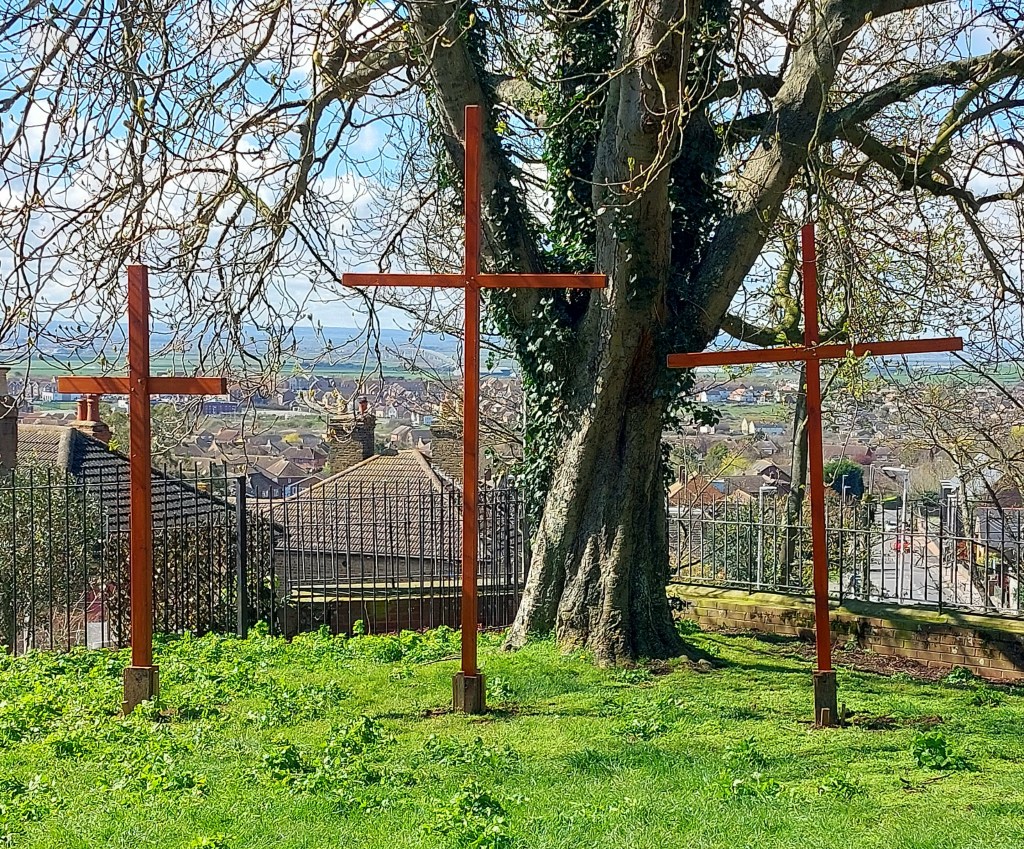
Three crosses

Jesus’s Baptism (notes for 9th January 2021)

Two weeks ago we celebrated Jesus’s birth – the birth of a tiny baby. Last week we remembered the Wise Men finding and worshipping Jesus – a toddler. Today, we jump forward nearly three decades, doesn’t time fly, Jesus is thirty and being baptised.

In some ways, it is not strange to us that we celebrate Jesus’s baptism shortly after His birth. After all, it is not a rare occurrence for a baby to be baptised, making them a part of the family of God, washing away the consequences of the original and actual sin, granting them the hope and promise of salvation and professing the faith on their behalf whilst promising to bring them up in that faith.

Baptism is linked by Jesus to salvation. It is a symbol of the forgiveness of sins, the death of old life and the start of new life and acceptance into God’s family.

However, Jesus was not a baby. He was a grown man and the sinless Son of God.

So why did Jesus need to be baptised?

Indeed, John the Baptist asked the same thing saying “I need to be baptised by you, yet you come to me?”

Jesus replied “Let it be so now; it is proper for us to do this to fulfill all righteousness.”

Jesus was to be the one to separate believers from betrayers. Jesus was also to bring a purifying and transforming baptism of fire; which enables us to be empowered by the Holy Spirit.

Jesus was baptised to identify Himself with sinful man, who He came to save. He took our sin to save us. His baptism marks the end of His old life marking the acceptance of and the start of His ministry. He is annointed by the Holy Spirit whilst He is affirmed by God as His Son (a parallel with Pentecost when the Holy Spirit came down on the church).

This affirmation from God that Jesus is the Messiah also provides confirmation to John that he has completed his mission of preparing the way for the Messiah; whilst Jesus begins His earthly ministry with the blessing of God His Father and the empowerment of the Holy Spirit.

Father God, we ask that you baptise us all again with your Holy Spirit empowering us to do your work. Amen.

A beautiful lake.