Don’t be a Pharisee …

The Legend of the Stones

Two women approached a wise man and asked for instruction. One of them regarded herself as a terrible sinner. In her youth, she had deceived her husband, and she tortured herself constantly with the memory of her infidelity.

The second, on the other hand, had lived her entire life within the law and by the rules. She wasn’t conscious of any serious sin, had nothing much to reproach herself with and felt quite pleased with herself.

The wise man asked both women about their life. The first went as she confessed her great sin. She felt her sin had been so great that she had no right to expect forgiveness. The second said that she had not committed any particular sins.

The wise man said to the first woman, ‘Go, daughter of God, and look for the heaviest boulder you can find – one that you can barely manage to carry – and bring it to me.’

‘And you,’ he said to the second woman, who could not recall any serious sin, ‘go and bring me as many stones as you can carry, but they must all be small ones.’

The women went off to do as the wise man had told them. The first brought a huge boulder; the second brought a whole sackful of small pebbles.

The wise man examined the stones and said, ‘Now do as follows. Take the stones back and replace each one of them exactly where you picked it up, and when you have put them all back where you found them, come back to me.’

The women went off again to carry out the wise man’s instructions. The first very easily found the place from where she had taken the huge boulder, and she replaced it where it had been. But the second had no idea where she had picked up all her little pebbles, and had to return to the wise man without having carried out his instruction.

‘You see,’ said the wise man, ‘that’s how it is with our sins. It was easy to take the big, heavy boulder back to its place because you knew exactly where you first found it. But it was impossible to remember where all those little pebbles came from.’

And to the first woman, he said, ‘You are very conscious of your sin. You carry in your heart the reproach of your husband and of your conscience; you have learned humility, and in this way you have been freed of your wrongdoing. You, however,’ he said to the second woman, who had come back still carrying her sack of little pebbles, ‘you, who have sinned in many small ways, do not know any more when and how you did wrong; you are not able to repent. You have grown accustomed to a life of little sins, to passing judgement on the sins of others while becoming more deeply entangled in your own. It has become impossible to free yourself of them.’

A story by Leo Tolstoy retold by Margaret Silf

To paraphrase from part of the Gospel of Luke, chapter 18: The Pharisee thanks God that he is not like other people. He details his religious practices and self perceived righteousness and considers himself more virtuous and superior to others.

The tax collector feels unworthy and simply asks God to have mercy on him, a sinner.

Jesus states it is the tax collector and not the Pharisee who went home justified by God. God values the tax collector’s humility, not the Pharisee’s self-righteousness.

Jesus told this parable to warn those who trusted in themselves but who treated others with contempt. He warns them against spiritual pride and calls for us to have humility in prayer and in life. Our justification comes solely from God’s grace and mercy and not from our own achievements.

Humility is essential for a right relationship with God whilst spiritual pride leads to self-righteousness and being rejected by God.

It is easy to fall into the trap of behaving like the Pharisee. I know someone who, on a regular basis, beats their chest and says “I thank God I am not like other men”.

Modern day Pharisees are not all as obvious as this but are characterised by their self-righteousness, a tendency to burden others with strict rules whilst not following them themselves and a focus on power and control of over serving.

They may appear religious whilst lacking genuine faith whilst adhering to certain rules or attending church yet without a corresponding difference in their daily life. They may focus on strict adherence to rules and traditions, creating heavy burdens for others yet ignoring the spirit of the law. They judge and condemn others, even misrepresenting their motives whilst projecting their own shortcomings onto them.

They believe they are more righteous than others but are unwilling to admit to their own sins or weaknesses.

They are more concerned about other’s opinion of them and how they are seen than they are about having a genuine relationship with God.

But, even for Pharisees, there is hope.

To not be a Pharisee, hear the words of Jesus. Jesus is the Light of the world, whoever follows Him will not walk in darkness but have the light of life.

Don’t ignore the content of what Jesus says, or you’ll miss out. Hear Jesus’s word and His message. Actively listen to Him by reading and paying attention to Scripture. If you ignore Scripture, if you ignore the Bible, if it just sits on a shelf gathering dust, then you are ignoring the word of Jesus.

Regardless of how busy we are, we make time for what matters most. Nobody is too busy to hear Jesus’s word.

Hearing Jesus’s word – reading the Bible is non-negotiable for both first-time faith and for growing faith. You can’t believe in and become like Jesus without His word. Hear His word.

See Jesus’s light. Light is a big metaphor. Jesus is an exposing light, an illuminating light, and a welcoming light.

He exposes what is hidden, calls out sin, and banishes darkness. He illuminates, revealing or making known the way, shining out in the darkness and showing us what we need to see. He is a welcoming light guiding us and inviting us home.

See the light, put your faith in Jesus, and be welcomed home. Follow Jesus’s path. Jesus’s promises of light and life are only for those who follow Him. Truly believe and truly follow Jesus.

This doesn’t mean just recognising that Jesus was a real person – and there is historical evidence of this – it means seeing and listening to Jesus, going wherever He leads and doing what He says. Literally following Him. Not just being a Christian but being a Christ-Follower. True believing where your highest allegiance is to Jesus; whatever He wants, that’s what you want.

Don’t be a Pharisee.
Hear Jesus’s word.
See Jesus’s light.
Follow Jesus’s path.
Be humble.

Lord Jesus Christ, Son of God, have mercy on us, all sinners.

Stones and Pebbles

How can I pray?

Do you think everyone else knows how to pray? You are not alone if you think this. Prayer is something we are often not taught. How often do we sit and kneel in church looking at other people and wondering what it is they are doing in their silent prayers? They always look so holy and yet here we are, trying to say something to God …

Do you feel like giving up? Don’t! Prayer is like every human skill. It is something that we need to learn how to do. We can use books, or ask a friend, or seek the guidance of a priest. But, in many ways, prayer is something that we do have to find out about for ourselves. God has made us all different, and so we will all pray differently. We will also pray differently in different situations.

What is prayer? Prayer is the way in which we keep in touch with God. Many people think that they can change God: ‘If I ask really nicely, then God will do what I want.’ For others, prayer is a form of magic: ‘If I say it in the right way then God will answer.’ Neither of these is true. Prayer is the way in which we open up to God, so that God can work in us. And God does always answer, although not always in the way that we want.

What is prayer like? If you love someone, you keep in touch. Prayer is the same. If we love God, we stay in touch. We talk to God and we listen to God. It’s a conversation!

How do we get in touch with God? To begin our conversation with God we need to get ready: to come consciously into God’s presence, to sit or kneel in a way that is comfortable and attentive. Then we need to calm down. Normally, our minds are full of distractions; thoughts just keep happening. One way of calming down is to listen to our breathing, the regular pattern of it. Another way is to repeat over and over, ‘Be still and know that I am God.’ After a while we settle down, our minds are less full, and then we are ready to pray.

When we are calm, then we can start to pray. Sometimes, this just means continuing to listen, just letting the awareness of God enfold us, like loving arms – we don’t need to say anything else, the contact is enough. At other times we need to say something, This can be anything: ‘Dear Father…’ or ‘Hello God…’ If you are going to say something (whether aloud or silently), then just say what you want to say. God doesn’t stand on ceremony.

We need to take time to say what we want: ‘Thank you.’ ‘Sorry.’ ‘Guess what?’ ‘I love you.’ Take time to listen – to your breathing, to your thoughts and feelings. Be aware of yourself and don’t push it. Give God time to speak to you. Conversations take time … and patience.

Traditionally, Christians pray every morning and evening. The more we are in touch, the better it gets. The more time we take, the more rewarding it can be. As we pray regularly, the more natural prayer becomes.

‘What a friend we have in Jesus,
All our sins and griefs to bear!
What a privilege to carry
Everything to God in prayer!
O what peace we often forfeit!
O what needless pain we bear!
All because we do not carry
Everything to God in prayer!

The Lord’s Prayer:
Though there are many versions and interpretations of the Bible, the Lord’s Prayer remains much the same and sets a pattern for our own prayers. Speaking to our Father in Heaven should be much like speaking to someone in the room, as He is there in spirit. It should be personal, intimate and all disclosing of the thoughts in our minds and the feelings in our hearts.

From the King James Bible, Matthew 6:9-13, these are the words of the Lord’s Prayer:

After this manner therefore pray ye: Our Father which art in heaven,
Hallowed be thy name.
Thy kingdom come. Thy will be done in earth as it is in heaven.
Give us this day our daily bread.
And forgive us our debts, as we forgive our debtors.
And lead us not into temptation, but deliver us from evil: For thine is the kingdom, and the power, and the glory, forever. Amen.

If we break this down we can see the pattern more clearly:

After this manner therefore pray ye: This discloses that this is the pattern or way we are to pray, not by rote, by following these guidelines.

Our Father which art in heaven. Hallowed be thy name: We should begin our prayer by acknowledging that God is our Father in heaven and that we honour him. This is an important step in humbling yourself before him and telling him that he is our God and we trust in his words and wisdom.

Thy kingdom come. Thy will be done in earth as it is in heaven: We let God know that we understand he is still in charge, that his kingdom will roll forth and that it is his will and not our own that we are to listen and obey. It is that same authority that was, and is, used to govern his home in heaven. At this point we should acknowledge all that he has done for us, all the bounteous blessings he has provided for our good, all the trials that he has blessed us with in order for us to learn what we need to learn, and every good thing in our lives.

Give us this day our daily  bread: We petition God for our needs and the righteous desires of our hearts, not our whims or worldly desires. Our daily bread could include harmony in our homes. Patience, more holiness in speech and actions, the ability to support ourselves and our families, all the things that are daily necessities for our growth and salvation.

And forgive us our debts, as we forgive our debtors: We should lay before God our sins and transgressions asking for forgiveness and for the strength to forgive everyone who has wronged us. This could also be financial debts, but includes so much more. This is our opportunity to repent for our weakness, our thoughtlessness, and our disobedience.

And lead us not into temptation, but deliver us from evil: We pray to God fervently for guidance in our walk and the power to overcome the evils that impede our paths. We pray that our self-mastery will be enough to conquer the adversary and keep us out of hot water!

For thine is the kingdom, and the power, and the glory, forever. Amen: We close our prayer by, once again, acknowledging that this is God’s kingdom and that he has all the power. The glory of what we do belongs to him for all that he provides for us. We should close in the holy name of Jesus Christ, our saviour and redeemer, and the only way back to our Father.

We are so blessed to know the goodness of God and the way he has prepared for us to return to him. Prayer is an essential part of that plan. Daily honest communication with our Heavenly Father keeps us in tune to the spirit, forces us to be honest with ourselves about our shortcomings, allows us to repent for them, blesses us with an accounting and acknowledgement of our many blessings which is particularly important on days when we think we have nothing and bonds us with deity.

So have:

Conversation with God.
Become familiar with prayer as conversation that involves a delightful rhythm of asking God questions and waiting on God for responses.

Pray with authenticity.
Understand that praying authentically involves expressing doubts and fears as well as truth, believing God can give strength and grace.

Make requests of God in terms of God’s concerns, not just our own.

Listen to God in prayer.
To bring our questions to God, being open to God’s answers and obeying what we hear.

Pray for others as Jesus did.
To make intercession by praying for others’ oneness with God, not ‘patching up’ folks or getting them to do what we think they should do.

Practice God’s presence.
Practice prayer that infuses all of life as we practice the presence of God.

Prayer

The Feast of St Peter and St Paul

(2 Timothy 4:6-8,17-18, Matthew 16:13-19)

St Peter and St Paul do not have separate feast days and are celebrated together as foundation members of the church – they were instrumental in establishing and spreading Christianity They had complementary ministries with Peter often being called the Apostle to the Jews and Paul the Apostle to the Gentiles.

Peter, originally a fisherman, was chosen by Jesus to lead His church. Paul, originally a pharisee, persecuted Christians until his conversion on the road to Damascus. Their deaths in Rome solidified their connection and their importance to the early church.

In our Gospel reading, Peter is praised for his belief and faith in Jesus as the Son of the Living God. Peter had times of doubt and unfaithfulness but the first call in his following of Jesus was to grow in the faith that would sustain his life.

Jesus withdrew from the mainly Jewish region of Galilee to a place more populated by Gentiles as a kind of retreat or respite. Whilst there He asked the disciples who the crowds thought He was – not because He didn’t know but as an ice breaker to His next question; who do the disciples say He is. And, of course, Peter answered “You are the Christ, the Son of the Living God”.

This question is asked of all who hear of Jesus, it is us, not Him, who are judged by the answer. If we really believe Jesus is who He said He is then that will affect the way we live.

Jesus presupposes that His disciples would have thought differently to the men of the crowds.

Jesus was a national reformer, a miracle worker, a prophet. He is the Christ.

Peter understood that Jesus was not just God’s Messiah but also God Himself. Jesus praises Peter for his bold and correct declaration. Jesus reveals to Peter that Peter had spoken by divine inspiration.

The name Peter means Rock. Peter was and would become a Rock. God was transforming his character into something solid and reliable.

“On this rock I will build my church”. Jesus is the cornerstone – the church’s one foundation. Peter was the first Rock among many Rocks. Interestingly, this is the first use of the word church in the New Testament. It came from a Greek word which just meant “group” or “called out group”.

Jesus prophesies the building of the church and claims ownership – “My church”. Jesus brings His people together, on a firm foundation, building them into something that belongs to Him and which is a stronghold.

“I will build, on this Rock, My church, the gates of Hades shall not prevail against it”.

Jesus promises that the forces of death and darkness cannot prevail against or conquer the church.

Jesus gave Peter the keys to the kingdom. Peter opened the doors of the kingdom to the Jesus (Acts 2:38-39). Peter opened the doors of the kingdom to the Gentiles (Acts 10:34-44). Peter was allocated special privileges but Jesus did not grant him the authority to pass the special privileges or authority to future generations.

Jesus gave permission and authority to the first generation apostles to make rules for the early church. This was a responsibility of the disciple group as a whole.

Jesus told His disciples not to tell anyone He was The Christ. He was pleased His disciples were coming to know who He was in truth, but He didn’t want His identity known before the proper time.

Before they could preach that Jesus was the Messiah, they had to learn what that meant.

The Epistle focuses on Paul’s impending death and God’s faithfulness. Paul’s life was a sacrifice and his death was a transition to be with the Lord. Faith is not faith in one’s own abilities bit in God’s faith planted within us which turns us, despite the upheavals and setbacks and failures of life into faithful workers in the vineyard. It speaks of conformity in Christ and is full of verses filled of hope.

Hope in the present, seeing the world with different eyes, with knowledge that Christ is present today. Hope from the certainty that God works through Him at all times, for the community, in the community, with the community.

“The Lord will rescue me from every evil attack and save me for His heavenly kingdom”. This is the prayer of one who relies solely on God and knows that it is not his work but God who will hold him, justify him and bless him. There is no other help but what God gives.

In this promise, we are all invited to pray.

Rocks

The Wilderness of Lent

Mark*, in just a few short verses, has summarised for us two key elements from Jesus’s life which took place just before the start of His ministry.

The first is Jesus’s baptism of water by His cousin John. John’s baptism was one of repentance, one of cleansing and forgiveness. God cleansed the earth by flood in Genesis – in a sense starting again. Baptism gives us a chance to start again; to say sorry for our wrongdoings, receive forgiveness and to start a new life in Christ striving to follow in His footsteps.

So why did Jesus, God’s Son, the only truly perfect human, need to be baptised by John.

John was the forerunner to prepare the way. This was also an indication for Jesus that it was time for His ministry to commence. By being baptised by John, Jesus was affirming that He was ready and willing to take the next step on His journey for our salvation. He was saying “yes” to what God wanted Him to do. And God confirmed His approval as He says to Jesus “You are my beloved Son”. He was also showing us what we needed to do.

At that time the Holy Spirit descended upon Jesus, equipping Him for what was to come. It descended in the form of a dove, just like the dove that carried the olive branch back to Noah, symbolising gentleness, peace and love.

Straight away the Spirit took Jesus into the wilderness. Jesus was being prepared and tested. He was not being set up to fail but instead to strengthen His mind, heart and soul.

The wilderness is mentioned many times in the Bible. It is a place of preparation – like Lent which we can use to say goodbye to our old selves and find Christ.

It is a place where God communes with His people – God spoke to Abraham, Moses, Elijah and John the Baptist in the wilderness. It is not a place of hopelessness. Jesus, John, Elijah, Isaiah, Moses, Abraham etc were not in the desert by accident but by God’s design. God wanted to speak to them somewhere there would not be distractions. Jesus often went into the wilderness for rest, prayer and to teach His disciples. It provided peace away from the crowds and other distractions.

We often want to escape what we perceive as the discomfort of the desert – hardships and difficult times. But these are the times when God’s presence is greatest. It is an invitation from God for us to encounter Him and listen to Him – He wants to speak to us.

Likewise, Lent is about cutting out the distractions, about preparing and making ourselves ready for the work Jesus has for us and for Him to be in our hearts.

It is not about a show of giving up something that we don’t intend to stick to – for example, chocolate or wine or Facebook – when we know full well that we intend to indulge in what we have cut out as soon as Lent is over.

It is about preparation. In Advent we wait and prepare for the coming of Jesus as a tiny baby. In Lent we prepare for Holy Week and Easter – awaiting the sacrifice of Jesus and His resurrection. In both we should be preparing our hearts and minds, getting them ready for our Lord and the work He has for us.

Lent is about meeting God in the wilderness, listening to Him, strengthening ourselves for the work He has for us. It is about prayer. Praying more, communing with God more, conversing and listening to God. Setting aside that time for Him. So let us ask God to use this time of Lent to prepare and strengthen us for whatever lies ahead.

Wilderness

*Mark 1: 9-14

“We’re All Going On A Summer Holiday…

…no more worries for a week or two…”

…except we all know that isn’t the reality. The school year has ended, costs have dramatically increased – but, of course, certain things are always more expensive during that long Summer holiday break. In addition, the expectation of schools and organisations, and even within other areas of society, is that families must indulge in expensive activities taking the children out to a multitude of places and trips away over this time period. This year, from one of the groups the children were even sent home with a notebook where they were instructed to carefully detail all these activities. This, like non school uniform days, places even more pressure on the parents as, just as they cannot be seen by the other school parents sending the children in anything less than designer wear even though they cannot afford it, they are made to feel the same about what holiday activities are undertaken. Sadly, prejudice and competition are still rife and the class system is still very much evident with children still being mocked if they cannot do similar activities to their peers.

This causes a drain on parents, a drain on the resources available, worry and stress over whether the effort put in to find alternative activities will be enough to cover the inability to take the children to expensive holiday resorts or Disneyland. Parents who are already trying to cope with childcare arrangements with the children being off school, the extra food costs, and additionally any additional support their child needs to assist with Autism, ADHD etc.

However, despite economic, worldly and social pressures, it does not have to be like that!

When we were growing up we considered ourselves lucky to be able to play outside with the neighbouring children, playing in the garden, borrowing different books from the library, going to our parents’ workplaces and helping out, visiting our grandparents and helping them, completing jigsaw puzzles, playing board or card games, helping out around the home and garden, even naming our own school uniform for the new school year. We were not bored! We did not need electronic devices. We enjoyed our holidays and learnt a lot. We visited whole new worlds and made whole new friends through our reading. The holidays used to fly by – in a good way. We did not ask our parents whether we would be going out on a day trip every day and then complain if the answer was no. The school projects were not always “What we did on our holidays” but were based on what we would be studying in the Autumn term or on something topical that was happening in the world. We would enjoy spending time researching these in the library and making a scrap book about the theme.

Yes, there would be the occasional trip out, a family picnic or a family day out. But, these were not demanded upon or an expected requirement; they were a treat.

In 1987, Tales of A Church Mouse by Revd Alec Shearwood was published. In one of these tales, called Holidays, the mice children on school holiday visit Grandfather Sebastian, who tells them to go away as he is recreating himself. When asked what this means they get the response, “you must know what recreation means, don’t you?” When the mice children suggest that means games and having fun they are told, “Stuff and nonsense! Recreation means recreating yourself.” On their return home the Rector was in the church and so they asked him what recreation meant:

“Well William,” he said, ” it means making a thing again, making it as fresh and good as it was before, and that is what holidays are for. Some people go away to the seaside for their recreation so that when they come home they are no longer tired and stale. Some play games, or garden, or go for long walks.”

I told him about Grandfather.

“Yes,” he went on, “some just need a good rest.”

Revd Alec Shearwood

Jesus says to us:

“Come to Me, all you who labour and are heavy laden, and I will give you rest. Take my yoke upon you and learn of me, for I am gentle and lowly in heart, and you will find rest for your souls. For My yoke is easy and My burden is light.” 

Matthew 11:28-30

We are lucky to have been granted the privilege to bring everything to God in prayer. Instead of forfeiting peace and carrying needless pain and worries around as a heavy burden, we can give these to God and be grateful receivers of His peace and strength as He guides us through all difficulties.

So let us all have a good holiday with lots of fun, let us give all our burdens to Jesus, let us be refreshed and eager to do God’s work through all that we do, let us be “recreated”!

Walking by the sea.

Minster Abbey Talk on John 17:1-11

“The time has come,” the Walrus said, “to talk of many things:…”

Lewis Carroll

And if we were having a conversation over some coffee and cake (hint hint) that is precisely what would happen. We would have a conversation; maybe about the weather, the coronation, a television drama, … all sorts.

Some of us find it easy to converse, some of us find it more difficult and communicate in other ways. Some of us are good at listening and for some of us it “goes in one ear and out the other”.

But, how do we pray?

There are many different ways we can pray, but ultimately, if we think about it, prayer is just the same as that conversation over coffee … isn’t it?

If not why not?

We have the opportunity to talk to God about anything and everything; and not just when we’re worried or in need or when things aren’t going as we’d like but also when we’re thankful, joyful and when things are going well.

We can do a lot of talking to God but we need to remember to listen as well. If we are honest none of us listen as much as we should.

Prayer is vitally important in our lives. An oft repeated quote “seven days without prayer makes one week (weak!)”.

Today’s Gospel reading is part of one of Jesus’s longest prayers.

In short it summarises Jesus’s relationship with the Father and the relationship He wanted His disciples to have with Himself and the Father.

Like the Holy Trinity (Father, Son and Holy Spirit) this prayer is in three sections.

  1. Jesus prays for Himself
  2. Jesus prays for His disciples
  3. Jesus prays for all believers past, present and future

Despite us having celebrated Jesus’s Ascension on Thursday, this prayer passage takes place before His arrest. But it is significant because it becomes Jesus’s evaluation of the purpose of His life, death, resurrection and ascension.

God’s glory and Jesus’s glory are one and the same. Through the death of Jesus God is glorified and all believers receive eternal life.

Eternal life is knowing the one true God; being in a living fellowship with God. And this life we receive when we accept Jesus into our hearts and lives. Jesus’s purpose, His mission, is salvation.

Jesus prays with great concern for His disciples. He was not concerned about Himself – He knew God’s plan, He knew He had to suffer and die to be victorious. Jesus’s victory was unquestionable. The disciples were just like us. They were not infallible. Jesus had predicted the disciples would desert Him. And so He prayed for them, that they would be kept safe and protected by the Father’s power and that they would fulfil their future ministry. The disciples were about to be tested and Jesus prayed that this would not separate them from Himself or from each other.

Again, like the Three-in-one, Jesus mentions three things about His disciples:

  1. They had accepted His teaching
  2. They had accepted the knowledge that Jesus is the Son of God
  3. They believed

Jesus prayed that the world would stop being opposed to God.

“All I have is Yours and all You have is Mine.” Jesus has equality with the Father.

He prays that, as He and God are one, the disciples and believers will remain as one.

In unity.

Not divided.

Division is the result of the failures of Christians.

God is awe-inspiring and loving. Jesus’s prayer is an outpouring of love and concern.

Jesus was shortly returning to the Father and to the glory He has before the world began. He had completed His mission. The Holy Spirit had been promised. With the help of the Holy Spirit it is now our turn.

Our mission, if we choose to accept it, is to bring glory to God through all we do in His name.

Are we ready?

Do we accept this mission?

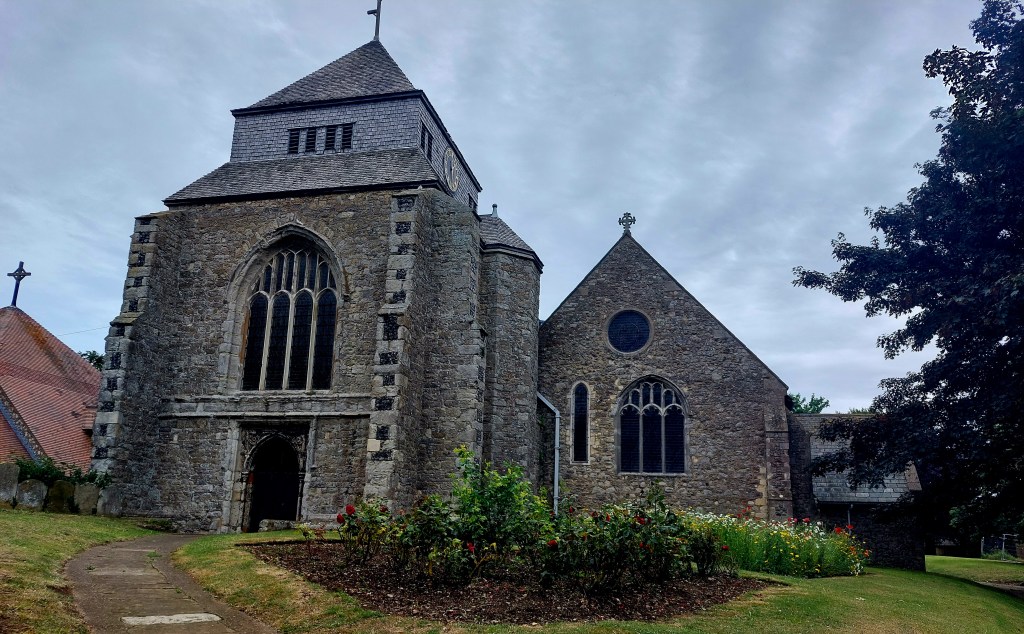
Minster Abbey, Sheppey

A Journey of Truth and Faith

(Talk on Luke 24:13-35 23rd April 2023)

This passage from Luke teaches us a lot about truth and faith. It is, in both a literal and a spiritual sense, about journeys. Literally, it is about two disciples (followers of Jesus) walking from Jerusalem to Emmaus. Spiritually, it is about their and our journey from not knowing Jesus to truly knowing Jesus and sharing our experiences of Jesus. It is about rediscovering Christ’s presence in our lives, gaining a fresher understanding of God’s transforming grace, allowing our hearts to be ignited with the Holy Spirit as we too walk with Christ.

The Bible makes very clear and specific statements about Jesus. As the disciples walked along they were discussing the scriptures and the recent events that had happened. When Jesus appeared to them they were walking the wrong way – away from Jerusalem. They were preoccupied with their own difficulties, overwhelmed with sadness, grief and hopelessness. They were unable to identify God’s purpose in what had happened.

Humans like to know reasons for…well everything. We ask (both aloud and to ourselves) why? We analyse, we interpret, we assume, we conclude. And we use the answers as a Sat Nav! What we decide the answers are determine/direct what and where we do/go next.

The disciples did not fully understand the Scriptures or the meaning of what had happened to Jesus. They had knowledge but it was incomplete and not understood. It was not true knowledge of the right information.

Jesus appeared and started to walk with them. They did not see Jesus. They were kept from recognising him. The Risen Christ walking with them on their journey, but unrecognised, igniting the fire of God’s love in their hearts. Like the Footsteps poem when there is only one set of footprints (because Jesus is carrying us).

But, this enabled Jesus to impart true knowledge. He explains and interprets for them. This teaches us that the key to interpreting the Old Testament is Jesus.

Jesus explained everything from Moses to the prophets, how the Messiah would save God’s people through His death and resurrection, rescuing a sinful, unholy people by reconciling them with The Holy God.

Jesus is the Messiah whose life, death and resurrection grants us salvation. Jesus Himself told us “I am the way, the truth and the life, no man comes to the Father except through me”.

God cannot be near sin. The only way for us sinners to be reconciled to Him was for Jesus to become sin, be punished for our sin, to die and defeat death; so that through His resurrection we could, with faith and repentance, be forgiven and have a relationship with God.

But it is not sufficient to just know the facts. We must also believe in that knowledge, we must truly believe in Jesus and in what He taught. Like the disciples recognising Jesus (when He broke the bread) and rushing back to tell the others, we have to open our eyes in faith. If we believe in Him then we strive to be in His image and this is shown in how we live. We need to believe in God’s word and be motivated by faith. We know God fulfils His promises but we also need to believe this. We know He is always with us, all the time, especially those times when we only see one set of footprints. But, we also need to believe this.

There is a story that gets quoted a lot so apologies if you, like me, have heard it used before:

There was a young boy caught in a house fire and forced to flee to the roof. The father stood on the ground below with outstretched arms, calling to his son, “Jump! I’ll catch you”. He knew the boy had to jump to save his life. All the boy could see was flame, smoke and darkness. The boy was too afraid to leave the roof. His father kept yelling “Jump! I WILL catch you”. The boy protested “Daddy, I can’t see you” The father replied, “But I CAN see you and that’s all that matters”.

Reece Sherman’s Faith Lessons

Do we understand truly? Or do we rely on our assumptions? Do we truly believe and trust in God? I pray that we do.

God is always there for us and will catch us. He can see us even if we cannot see Him. Do we have enough faith to jump into those life saving arms? I pray that we do.

Thank you.

Poppet on a journey, running through grass

Mothering Sunday

Talk from 19th March 2023

I’ll start by admitting that, whilst I was thinking about what I might say today, I was tempted to include a vote on who wants a talk about Mothering Sunday versus who wants a talk on today’s readings (Colossians 3:12-17, Luke 2:33-35, John 19:25b-27). Instead, in a good news bad news kind of result, you’ve got a bit of both.

The other week my husband asked me if I would be taking the Mothers’ Day break in the Lenten fast. Being me I asked why and got told it’s because it’s Respite Sunday. Well, those of us with the job title of Mother might agree that respite is a myth! So I looked it up.

In medieval times this Sunday, called Mid-Lent or Refreshment Sunday, was indeed used as a day of respite from the Lenten fast.

So why, I thought, would you break the fast, or resolution if you like, for one day when (assuming you’ve been able to keep it so far) you are half way through and it’s beginning to get easier. After all, it takes 6 weeks to make a new routine stick and only 1 to break it. Breaking the fast surely just makes it harder to keep for the final half of Lent.

Penny drops!

That’s why, I thought, because it had got easier, it’s not a temptation in the same way anymore, it’s easier to resist, that habit of having whatever it is we’ve given up is becoming a habit of not having it. We are not having to make as much effort and so the motive of Lent, the preparation, the trials, the testing need refreshing so that we are putting the same amount or even more effort into the second half of Lent as we did in the first half. It is not supposed to be easy.

So how did this become associated with Mothering Sunday? Simply because of the texts read at Mass during those medieval times which were full of many metaphors for and references to mothers; which are often linked to the personification of the church as the Bride of Christ and with the Virgin Mary.

Time passed. (It didn’t know the answer to the question). After the English Reformation (when coincidently the same readings were still being assigned to this Sunday in the Book of Common Prayer) Christians would ‘Go a Mothering’. This means they would return to their “Mother Church” for a service on this Sunday. By “Mother Church” we normally mean either the church in which we were baptised, the local parish church or the nearest cathedral (the cathedral being the “Mother Church” of all the churches in the diocese).

In more recent history, Mothering Sunday became a day when domestic servants were given a day off to visit their Mother Church, usually with their own mothers and family members.

Nowadays, we use Mothering Sunday to give thanks to all those who mother us. A day when we celebrate all who have and do give us motherly care.

Providing this love and care is, in itself, a vocation. It is a vocation of nurturing, care, love and joy. Equally, it is a vocation of tiredness and worry, pain and sacrifice.

There can be no doubt that Mary experienced all these elements of motherhood. She accepted the vocation and all the pain that was to come with it.

Jesus was born to be our Saviour and this involved Him being the Ultimate Sacrifice. In this short passage from Luke, Simeon receives Jesus like a priest receiving a sacrifice. He warns Mary that “a sword will pierce” her soul also.

We are told that Mary treasured and pondered on all these things she was told about Jesus. We can only imagine how much she may have dwelt on and worried or dreaded that time coming. Did it give her a chance to be prepared? A chance to be ready when that moment came?

Mary understood the joy of motherhood. But, she also had to understand the pain as she saw Jesus humiliated, tortured and die an extremely painful death. The sword piercing her soul.

Mary was there at important moments in Jesus’s life. Likewise, she was at the cross at His time of death. Yet, even at the moment of death Jesus’s heart is open. He sees the pain and grief of the mother who sacrificed for Him, whom He loves and respects. He sees the grief of a trusted disciple and friend and He gives them to each other to support and care for each other. He ensures that they will be okay by this act. An act of compassion at His darkest hour.

So as we move towards communion and towards our time of prayer let us bring to the Lord all our joys and sorrows. Let us bring to Him our thanks for all those who have provided us with a mothering care and all those who have been like mothers to us.

As we remember Jesus’s sacrifice for us upon the cross, His act of love, may we try and understand the pain of those who suffer out of love and may we strive to follow His example and walk in His footsteps striving to act with compassion, kindness, humility, meekness, patience, forgiveness and love.

A bouquet of flowers

First Sunday in Advent 27th November 2022

Happy New Church Year! Today, we are celebrating both the first Sunday in the church year AND the first Sunday in Advent; and so, yes, the Christmas jumpers have been got out.

And in Matthew, Jesus tells us to “Stay Awake…”. I don’t know about you but I am most definitely going to need more coffee!!!

We are told that, if the house owner knew in advance exactly what time the thief was going to break into his house, then he would have stayed awake and not let his house be broken into. He would be prepared! He would have made plans to protect his home and for the thief to be caught.

Likewise, if we were to receive a warning that something would happen at a certain time then we would prepare and make sure we were ready. If an electricity company says at this time on this day we are turning the electric off then we would make sure that batteries were charged, the torches were working and so on.

We would be ready and alert!

“Keep awake for you do not know on what day or at what hour your Lord is coming.”

We know Christ will return – this is promised and God keeps His promises. What we do not know is the timing – and God’s time is not the same as ours.

So we must be ready and watchful.

Be prepared.

Advent is a time of waiting and preparation.

Are we prepared?

When I ask you “are you ready for Christmas” what do you think of?

Is it whether you’ve got all the presents?

Is it whether they are all wrapped or how much wrapping you need to do?

Is it whether the Christmas cards are all written or who you’ve still got to send one to or whether they’ll be posted in time with the planned postal strikes?

Is it when the decorations will go up or whether they are up already or when they’ll be got out of storage?

Is it whether the Christmas pudding and Christmas cake are made or when they’ll be made?

Be honest – when asked if you are ready for Christmas – who actually interprets this question as:

Are you ready for Jesus?

Are you ready for His birth?

Are you ready for Him to come again?

!!!

“Keep awake for we do not know the hour He will return.”

Thankfully, this does not mean that we all must become insomniacs. It means we need to be Spiritually awake. To be on our guard against spiritual distraction. To pay attention. To spend time with God in prayer and growing our faith. To be more fully alive in Christ.

I was writing Christmas cards this week. I’ve been writing quite a lot to give hope to people who would otherwise be forgotten. And I got quite cross because I found a range of cards that have the greeting “Happy Holidays”.

Now this really annoys me. It’s the same with a lot of television adverts on at this time of year.

Let me share why…

It misses the point!

It doesn’t just miss the point – it totally avoids it with an enormous detour.

And what is it that these Christmas cards and adverts are all missing out?

Well, the clue’s in the name. The reason for the season – Christ. The greatest gift of all.

So we must stay spiritually awake so that we do not commit the crime of leaving Christ out of Christmas. We must be alert and watchful to make sure that we do not demote Jesus to the bottom of the list. We must be on our guard to ensure that we are not just giving Him a cursory nod/brief acknowledgement or lip service just so that we can “tick that box”.

We must be prepared and ensure that we are putting Jesus at the forefront of our lives. Before everything else. First.

So this year let us use this time of Advent to wait patiently for Christ.

Waiting can seem boring. It can be hard to be patient. Especially when there are so many other distractions.

But waiting does not actually mean doing nothing!

It is an opportunity to prepare our hearts, our minds, our souls.

It is an opportunity to put our trust in the Lord. To truly repent, to forgive and to accept forgiveness. It is an opportunity to seek God more deeply in prayer and to surrender to His ways – becoming more alive in Christ.

I’m going to deviate slightly to quote from a Christmas film, which due to this quote is, in my opinion, one of the best Christmas films:

Tonight I want to tell you the story of an empty stocking. Once upon a midnight clear, there was a child’s cry. A blazing star hung over a stable and wise men came with birthday gifts.

We haven’t forgotten that night down the centuries; we celebrate it with stars on Christmas trees, the sound of bells and with gifts. But especially with gifts. You give me a book; I give you a tie. Aunt Martha has always wanted an orange squeezer and Uncle Henry could do with a new pipe.

We forget nobody, adult or child. All the stockings are filled…all that is, except one. And we have even forgotten to hang it up. The stocking for the child born in a manger. It’s his birthday we are celebrating. Don’t ever let us forget that.
Let us ask ourselves what he would wish for most…and then let each put in his share. Loving kindness, warm hearts and the stretched out hand of tolerance. All the shining gifts that make peace on earth.

The Bishop’s Wife (1947)

So let us use this advent to be ready for and to remember Christ this Christmas as we pray:

Lord, grant that we may stay awake, remain watchful and stand firm in the faith out of our love for you. Amen.

Poppet bowing to the Posada nativity

Amen

Recently I was watching some of the programmes showing compilations of Paul McCartney performing and the following quote was put up on screen:

“I’m not particularly religious, but I do believe in the idea that there is some sort of higher power that can help us,” says McCartney. “So, this song becomes a prayer, or mini – prayer. And the word ‘Amen’ itself means ‘so be it’ – or ‘let it be'”

Paul McCartney speaking about his song “Let It Be”

This got me thinking about the word ‘Amen’ and all the different ways we use it. For me, the main use of ‘Amen’ is to conclude a prayer or as a response to a prayer but having started to think about the word and its other uses I looked at this word in more depth.

So, next came the English definitions of the word (just because that is the language I speak – no other reason) and these were listed as:

  • let it be
  • verily
  • truly
  • it is true
  • let it be so

The word is thought to be of Biblical Hebrew origin and appears many times in the Hebrew Bible as a confirmatory response and especially following blessings.

However, its root word is now common to a number of languages with the meaning:

  • to be firm
  • confirmed
  • reliable
  • dependable
  • to have faith
  • to believe

Having been imported into Greek from the Judaism of the Early Church, the word ‘Amen’ continued to spread becoming part of many other European languages, thence to Latin and then English. It can also be found in Arabic translations of the Bible and also other texts, for example after recitation of the Quran.

Sometimes ‘Amen’ is translated from the Hebrew word as ‘so be it’.

The phrase “Amen to that” can seem quite familiar but what do we actually mean when we say that. We use this to express strong agreement with something, as a declaration of affirmation, to say “that’s sorted then”. We also use it in the same way we might say “fine” or “just leave it there”.

I mentioned earlier about it being a concluding word in, or a response word to, prayer. Jesus’s response when asked to teach us how to pray was “The Lord’s Prayer” in which is included the line “Your will be done”. He teaches us to recognise and acknowledge God’s will. He teaches us (as He prayed at Gethsemane) “yet not my will but Yours”. How apt then that Amen also means “your will be done”. So when we pray we are confirming that whilst we ask God, we acknowledge that He can see the big picture that we cannot and He knows what is best even if we cannot see it at the time and therefore we are praying “if it is your will let it be done”.

As such, “Amen” is a prayer all by itself. If you are ever stuck and thinking that you don’t know what to pray, don’t worry, God knows what is in your heart. A sincere Amen is sufficient.

Poppet helping me work.