Tell Us Who You Are

The Jews asked Jesus whether He was the promised one from God.

In his writings, John has told us that this event took place during the Jewish Festival of Dedication. This festival is also called Hanukkah or the Festival of Lights; and it takes place in remembrance of the purification, or cleansing, of the Temple, in 164 BC, after the desecration committed by a king of Syria called Antiochus Epiphanes in 170 BC.

During this Festival of Lights there would be great illuminations in the Temple and in every Jesish home as a reminder of the light of freedom coming back to Israel – the freedom won to worship God. It is significant that Jesus chose this time to say “I am the light of the world, I alone can light men into the knowledge and presence of God”.

The location of this event was Solomon’s Porch. Now the first court in the Temple precincts was the Court of the Gentiles and along two sides ran the Royal Porch and Solomon’s Porch. These were rows of magnificent pillars, almost 40 feet high and roofed, where people walked to pray and meditate. Rabbis walked there teaching their students the doctrines of faith.

This was where the Jews chose to ask Jesus whether He was the one promised from God.

Some of those asking would have been genuinely wanting to know but others were trying to trap Jesus. Jesus did not fall into the trap, simply saying He had already told them who He was.

There is a saying that actions speak louder than words.

Every miracle performed by Jesus testified that the Messiah had come.

Jesus’s words, the authority with which He spoke, the way He explained the scriptures and put His teaching in their place, showed that God was speaking in Him.Both the words and deeds of Jesus were a continuous claim to be the anointed one of God.

The sheep of a shepherd knows his call.

Jesus is the good shepherd.

He knows His sheep, who follow Him when He calls.

And, to those who accept Jesus, He promises eternal life that would know no end and that is secure.

Jesus promised that for those who accept Him as Lord and Master and become members of His flock, the littleness of earthly life would be gone and His flock will know the splendour and magnificence of the life of God. Jesus promised that death would not be the end but the beginning with the glory of indestructible life.

And security. Jesus promised that nothing can snatch His sheep from His hand.

This does not mean that there would be no sorrow or suffering but that in sorrow and at the darkest hour they would still be conscious of the everlasting arms underneath and about them.

Even in a world crashing to disaster they would know the serenity of God.

God’s promise is true. His arms are around us, embracing us in His love. I say this from my own experience of feeling God’s loving arms when times are tough.

It is God who gave Jesus the sheep. Both Jesus and His sheep are in the Father’s hand. We are secure in God’s power.

The bond of unity is love. Proof of love is obedience. We are one with one another if we are bound in Christ obeying the words of Christ and following His example. Jesus was one with God because He loved and obeyed Him perfectly and He came to this world to make us what He is – one with God.

Sheep

Rules for Life

“Do not be afraid; for God has come only to test you and to put the fear of Him upon you so that you do not sin.”

God wanted to help His people – not destroy them. But when they heard the thunder and the trumpet, when they saw the flashing and the smoke on the mountain, they were afraid.

Because of their fear, the people wanted a mediator; yet God had already granted them one in the form of Moses.

We, also, already have a mediator – Jesus.

The word fear has more than one meaning. There is the type of fear the Israelites had – that of being scared, afraid, terrified – but that is the wrong type of fear to have of God.

Then there is the right kind of fear to have of God, and that is one of awe, respect and reverence. It is through this that we are granted the boldness to approach God through Jesus Christ.

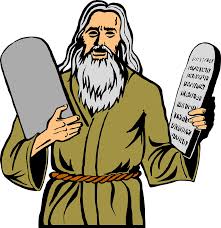
God gave Moses the Ten Commandments. The purpose of these is how to have healthy relationships with God and each other.

God invites us to have a personal relationship with Him.

The deep significance of the gift of the Ten Commandments has been obscured by society. As a result we lose the religious awe found in this passage of Exodus and lessen our understanding.

They are not “maxims for a good life”. They ARE the living words of the living God. The God who has redeemed us. It is not the Ten Commandments which save us. Salvation is a gift of God – which He gives us freely through His grace.

There are some who try to use the Ten Commandments to conclude that we have to somehow earn God’s love and care. But actually it is the opposite. They demonstrate God’s continued love and care – giving us the law in the first place proves God’s love for us.

Our obedience is a loving, grateful response to all that God has done and continues to do.

So what is the essence of The Ten Commandments?

Jesus already gave us the answer to this when He told us that the greatest commandment is this, “To love the Lord our God with all our heart, soul, mind and strength and to love everyone else as we love ourselves”.

Baptism is the act of making a God choice. The making of the promises is choosing faith in God above any other life. Living our baptism means living by a single loyalty to God.

Remembering our baptism, who we are and who God is, in the inner recesses of our hearts and in the life we share together makes us grateful that God has given us these commandments, that we might find strength and shelter in our darkest times – helping us to remember that even in our darkest times we are not alone.

Talk from Holy Trinity Sheerness 8th October 2023 (Exodus 20)

Ten Commandments

Testing

This morning’s Gospel is just like my children…

… they ask testing questions and … yep – when they are asked to do something they either don’t do it or … if it’s the youngest anyway … they say “No!”; then they go away and think about it and then get on with it.

The chief priests tried to trick Jesus, testing Him, by asking where His authority came from.

Jesus, of course, did not fall into their trap. Instead, He turned it around by asking whether John’s baptism came from heaven or from human origin. They refused to answer Him, out of fear of recrimination from the crowd and damage to their reputation.

So Jesus tells this parable of the first son who refused to do what his father asked but then changed his mind; and of the second son who agreed but then did nothing.

A lesson about obedience and disobedience. The chief priests claimed to accept God’s message and would put on a show for the people – but that’s all it was – just a show. Jesus is saying they are like the second son who said “yes” but then did not obey.

The point is that those who refuse God but who later repent and follow Him, obey Him, can enter the Kingdom of God. Those who say “yes” but do not repent (which includes following through with their actions) can’t.

If the chief priests are the second son, who are the first?

Jesus answered that for us too – He points out to the chief priests that the tax collectors and prostitutes (those who were considered at the time to be the biggest sinners) were the first son and would enter the Kingdom of God first because they believed, repented and returned to God. The chief priests, who only claimed to follow God with their words but not with their hearts or actions, would not get to enter God’s Kingdom unless they truly repented.

Turning to God with repentance is the key to our salvation, no matter what our past sins might be or how many times we’ve disappointed God. He can see what is in our hearts and forgives us when we are truly sorry.

It’s what we do, not just what we say, that counts.

Let’s renew our own commitments to be faithful followers of Jesus.

Let us thank God for sending His Son who truly is who He says He is.

Let us be genuine in our actions and live in love serving others.

Talk from Holy Trinity Sheerness (Matthew 21:23-32)

Questioning authority