Holy Innocents

The Feast of the Holy Innocents takes place on 28th December.

Doctor Who tells us that time is “wibbly wobbly timey wimey”. That is what we experience throughout the forty days of Christmastide.

Just a few days before the Remembrance of the Holy Innocents we celebrated Jesus’s birth as a teeny tiny human baby. Then at this feast day we jump forward a couple of years to after the magi’s visit and Herod is ordering the slaughter of many children in an attempt to kill Jesus. Then the following week we go back to that visit of the magi before we leap forward to Jesus being a man at His baptism and then a couple of weeks later Jesus is a teeny tiny baby again as He is presented at the Temple.

But for now, let us return to the day when we remember the Holy Innocents whose deaths Herod was responsible for.

Each year we remember that Joseph heeded the warnings and instructions he received, that he took his family to Egypt and that as a result of this the prophecy was fulfilled and Jesus was kept safe to grow into a man, fulfil His mission and be our salvation.

But we skim over the bit where many innocent children were killed by a scared but cruel man who wanted Jesus dead because he thought he would lose his power.

A voice was heard in Ramah, sobbing and loud lamentation; Rachel weeping for her children, and she would not be consoled, since they were no more.”

In the Holocaust, approximately 1.5 million Jewish children, and tens of thousands of non-Jewish children were murdered.

The Nazi’s targeted children as part of their ideological goal to create a “radically pure” society and eliminate future generations of “unwanted groups” including Romani, Polish and disabled children.

In the hope of killing one child, Herod had many killed.

Looking back at Moses, who came into the world to bring a kind of deliverance, a new king had risen to power in Egypt. This new king knew nothing of Joseph1 (the Israelite who saved Egypt from the famine). He just saw how numerous the Israelite people were and, wanting to stop the numbers increasing, ordered the death of every Israelite boy born.

There is a constant battle between good and evil in the world and in our own lives.

Evil will always lash out violently towards good. Evil will use any means necessary in an attempt to retain power. There will be resistance when we do good in the world. There will be temptations as we turn away from sin. The strength of these temptations show how committed to change and how committed to doing good we are.

There is wickedness in the world. There are, very sadly, people in this world who will slaughter or arrange the slaughter of thousands and thousands of beautiful, innocent, babies and children, for their own ends, to get what they want and to keep their power.

Evil does not hold back it’s hate for the young and God does not hold back His grace from the young.

God gives us His grace freely and in abundance out of love for us. He is a generous God and there is more than enough grace to encompass everyone no matter their age. He protects us with His grace.

Our world today is, again very sadly, not that different from the world throughout history. We can still see the callousness of Herod and those like him. We still live in a world where innocents are murdered.

We can lament and cry for them. We can pray for their families and friends. But the massacres still continue. Change begins in the human heart and is expressed in what we do and think and say.

It is hard to change a world ingrained with death. But we can contribute to this change. We can demonstrate charity and patience and sanctity of life.

Christ came for our lives, to give us life abundant, sacred and unending.

Herod represents all the powers that stand against Christ; all the people that reject Christ and all the elements of ourselves that want nothing to do with Christ and prefer their independence to His will.

What are we willing to destroy because of our refusal of Christ? What aspects of our own lives and the lives of others are we ready to destroy because of our refusal of Christ?

Herod’s massacre of the innocents is a warning to us. After his death, Herod’s kingdom was divided between the sons he hated. In less than 100 years, everything Herod had built, including the monuments he had intended as structures for his glory, had been reduced to ruins.

Herod is remembered as a petty tyrant. He is not mourned.

We mourn the innocents, the children of Bethlehem, yet they are so often forgotten.

But, in heaven, “where like stars, His children crowned, all in white shall wait“.

Lit candles for prayer and remembrance. (Photo by Rodolfo Clix on Pexels.com)
  1. Genesis ↩︎

Awe and Wonder*

*(John 6: 1-21), talk given at HTS 28th July 2024

Again, we have a reading that is often preached on. The feeding of the 5000 and walking on water – as recounted by John.

Consequently, I have heard so many different theories about how the feeding of the 5000 was accomplished.

These theories are spoken by supposed men of faith, and yet, what they all have in common is that they detract from the awesomeness of the miracle performed by Jesus.

I have said before (and will probably do so again) that we, mere mortals, try to explain away acts of God. We are so eager to know how something has been done that we make up theories to translate the unknowable, the un-understandable, the sheer magic if you like of God’s awesome power into something mundane as we falsely claim we know how it was achieved. Like explaining away all illusionist’s tricks as mere slight of hand. We can’t just accept the wonder – the miracle – for what it is.

A miracle!

The work of God!

An amazing gift from Him to us!

We don’t need to know how it was achieved – not if we have faith and believe. It should be enough for us just to know that God did it – God provided!

God did not ignore the pleas made on behalf of His people. Instead He provided what was needed and a lot more besides.

No one went hungry. Everyone ate their fill. And yet 12 baskets of bread remained at the end of the feast.

  • 12 baskets of bread
  • 12 tribes of Israel
  • 12 Apostles

Whilst you think about that for a moment; let me mention some more parallels that are at work here.

The Passover, a major festival in the Jewish calendar remembering when the Angel of Death passed over the houses of the Israelites the night before they, in a mass exodus, followed Moses out of Egypt into the Wilderness, where God provided for them with another miracle – manna – bread from heaven.

Moses, the foreteller of the plagues of Egypt, leading a crowd through a Wilderness where God provides them with the food they need each day. Moses, who went up a mountain to speak to God in peace and solitude away from the crowd.

Jesus, instead of foretelling plagues upon Egypt, provided healing in abundance. The crowd followed Him, drawn to Him by the signs they witnessed. Jesus was leading a crowd. John just tells us that they were the other side of the Sea of Galilee. The lack of a specific place name for where this significant event takes place puts it in parallel with Moses leading the Israelites through the Wilderness.

Jesus leads a crowd through the Wilderness. With the power given to Him by God His Father, Jesus provides bread in abundance. This acts as confirmation to the crowd that Jesus is from God. He sees what is in their minds and, knowing God’s plan knows that becoming the warrior king the crowd wanted was not how God wanted Him to save the world. Jesus goes up a mountain to speak with God in solitude away from the crowd.

As is a common thread through John’s Gospel; this passage is about who Jesus us and about proclaiming Jesus’s greatness. John does this by recounting this event in such a way that we see these parallels.

Both Moses and Jesus enabled their multitudes to have food in the Wilderness. However, it is the difference that is important here.

Moses asked God where to get food for the people. He didn’t know and asked God genuinely. Moses needed to rely on God. God provided, in abundance, food for His people. When Jesus asked Philip ‘where will we get bread for the people’ it was actually a rhetorical question. Jesus already knew what He was going to do. Jesus, the Son of God with the power of God, already knew that He Himself would perform a miracle providing food in abundance for the people.

John claims Jesus is testing Philip – and this is possible. The Jews knew the Scriptures in great depth. It is possible, therefore, that Jesus wanted to see whether the disciples knew enough about who He was, and is, and to see if they remembered the manna from heaven and would realise that in a similar way Jesus would be providing for His people.

We cannot second guess God, but what we do know is that if that was the case Philip failed. And not only Philip.

Like many today, Philip could only focus on how much it would cost to find a ‘shop’ and buy bread and Andrew could only focus on how little the supplies were.

And likewise, if Jesus tests us in a similar way, do we truly acknowledge that He will provide, or, do we fail the test by focussing on cost and resources?

Jesus fed His people. He took the loaves, gave thanks and distributed it to the people. And here we have the next important difference highlighting Jesus’s greatness.

If the Israelites collected more manna than they needed and tried to store it then the manna perished. When the disciples gathered the leftovers so that none would be wasted there were 12 baskets of good food leftover. Proof of the abundance Jesus provides for those who truly put their faith in and rely on Him.

The crowd see Jesus as a prophet sent from God. It is possible they may have seen Him as a second Moses.

But regardless of how the crowd saw Him, Jesus is more than just a prophet. He is the Son of God.

And in case we had any more doubts, like many passages in the Bible, like the Trinity, we have a third significant difference highlighting who Jesus is, His greatness and His power.

When the Israelites reached the Red Sea, Moses had to rely on God to part the waters so that he could lead the Israelites across on dry land.

When the disciples were crossing the sea in a boat, Jesus needed no such help. Jesus, God’s Son, with power over creation, walked on the water to the boat and immediately they all reach shore.

Jesus walked across the surface of the water as Lord and Master, revealing Himself to His disciples using His name – the name God revealed to Moses – I Am.

Moses is considered to be God’s greatest prophet and lawgiver. But Jesus is God. Jesus is mightier. Jesus is more.

Whoever you see as that Moses equivalent – be it as prophet or leader …

  • Jesus is greater
  • Jesus is the one who provides
  • Jesus is more

Let us see Jesus for who He really is. Let us fully put our faith and trust in Him. Let us fully rely on Him and allow Him to provide for us. Let us not continue to fail the test as Philip and Andrew did. Let us be ever thankful to God for HIs great grace, abundance and mercy. Amen.

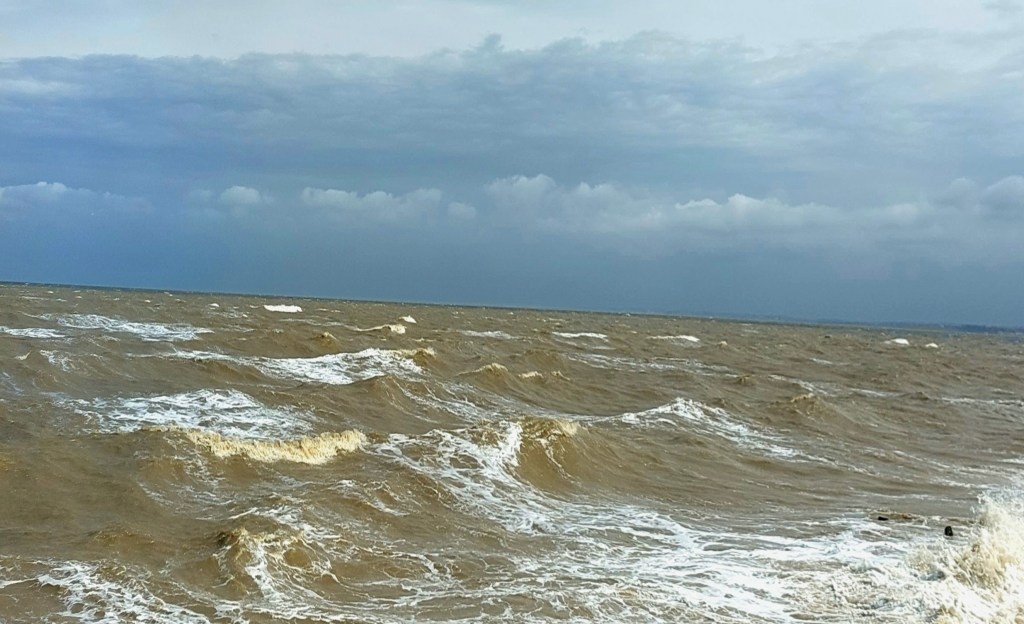
The Sea