Mary …

We tend to use a mixture of readings from the Gospels of Matthew and Luke to revisit the miracle of Jesus’s birth. Here, Matthew doesn’t tell us how the Virgin Birth took place—except that it was by the Holy Spirit. Whereas, Luke gives a little more detail, the angel telling Mary that the Holy Spirit will come upon her, and the power of the Most High will overshadow her. The Virgin Birth is a divine miracle in the power of the Holy Spirit.

But Matthew does tell us two things about Jesus, one being what he does: “You shall call his name Jesus for he shall save his people from their sins”. Many Jews were looking for a Messiah who would come in conquering power. But Matthew shows us the much deeper human need. Jesus comes to save us from our sins—our spiritual needs far outweighing other needs.

The miracle of the Virgin Birth is also a sign of the far greater miracle and mystery of God becoming flesh and taking his place amongst us as one of us – the Incarnation. God didn’t just send angels, prophets and messengers—he came! In Jesus, God has come close; has taken human nature and human life to himself joining human nature to his own divine being. This is all of the Grace of God, who is a God who stoops to take us by the hand. In this respect, Matthew quotes from the Old Testament: ‘The virgin will be with child and will give birth to a son, and they will call him “Immanuel”—which means, “God with us.”’ If the name Jesus is descriptive of what Jesus does, Immanuel is descriptive of who Jesus is—God with us.

The miracle of the Virgin Birth points towards both the humanity and the deity of Jesus. He was a human person born in the normal way. He is also the eternal God who has come to us—the God-man. Jesus didn’t begin his existence at Christmas, but as eternal God, entered into time and space at Christmas. For unto us a Child is born, unto us a Son is given… (Isaiah 9:6).
So many people are ‘in the dark’ about God and don’t see him clearly. Yet, if you want to know what God is like, you only have to look at Jesus. Jesus Christ is the “Word of the Father, now in flesh appearing…” He is the revelation of the will, wisdom and person of God. His teaching is the
instruction of God. His death is the death of God-for-us. His resurrection is the victory of God! The meaning of Christmas is first and foremost a message of amazing grace, of a God who comes near.

The miracle of the Virgin Birth is a new creation, the beginning of a whole new world. What we can’t do for ourselves, God has and is doing. Into a world of brokenness and sadness God has come by means of a supernatural birth in the power of the Holy Spirit. But it doesn’t end there: the same Spirit who hovered over Mary and brought about a miracle of new life and transformation in her can also do the same in us! Regardless of who you are or what you have done you can start a whole new life as part of the new world. Jesus is the answer to our deepest needs. He is God come among us in order to save us from our sins and to rescue us from the deepest cause of our alienation and brokenness. When we start from the inside out we can have hope that the entirety of our life can experience the transformation he brings.

Mary, mother of Jesus (Photo by Juan Carlos Leva on Pexels.com)

Awe and Wonder*

*(John 6: 1-21), talk given at HTS 28th July 2024

Again, we have a reading that is often preached on. The feeding of the 5000 and walking on water – as recounted by John.

Consequently, I have heard so many different theories about how the feeding of the 5000 was accomplished.

These theories are spoken by supposed men of faith, and yet, what they all have in common is that they detract from the awesomeness of the miracle performed by Jesus.

I have said before (and will probably do so again) that we, mere mortals, try to explain away acts of God. We are so eager to know how something has been done that we make up theories to translate the unknowable, the un-understandable, the sheer magic if you like of God’s awesome power into something mundane as we falsely claim we know how it was achieved. Like explaining away all illusionist’s tricks as mere slight of hand. We can’t just accept the wonder – the miracle – for what it is.

A miracle!

The work of God!

An amazing gift from Him to us!

We don’t need to know how it was achieved – not if we have faith and believe. It should be enough for us just to know that God did it – God provided!

God did not ignore the pleas made on behalf of His people. Instead He provided what was needed and a lot more besides.

No one went hungry. Everyone ate their fill. And yet 12 baskets of bread remained at the end of the feast.

  • 12 baskets of bread
  • 12 tribes of Israel
  • 12 Apostles

Whilst you think about that for a moment; let me mention some more parallels that are at work here.

The Passover, a major festival in the Jewish calendar remembering when the Angel of Death passed over the houses of the Israelites the night before they, in a mass exodus, followed Moses out of Egypt into the Wilderness, where God provided for them with another miracle – manna – bread from heaven.

Moses, the foreteller of the plagues of Egypt, leading a crowd through a Wilderness where God provides them with the food they need each day. Moses, who went up a mountain to speak to God in peace and solitude away from the crowd.

Jesus, instead of foretelling plagues upon Egypt, provided healing in abundance. The crowd followed Him, drawn to Him by the signs they witnessed. Jesus was leading a crowd. John just tells us that they were the other side of the Sea of Galilee. The lack of a specific place name for where this significant event takes place puts it in parallel with Moses leading the Israelites through the Wilderness.

Jesus leads a crowd through the Wilderness. With the power given to Him by God His Father, Jesus provides bread in abundance. This acts as confirmation to the crowd that Jesus is from God. He sees what is in their minds and, knowing God’s plan knows that becoming the warrior king the crowd wanted was not how God wanted Him to save the world. Jesus goes up a mountain to speak with God in solitude away from the crowd.

As is a common thread through John’s Gospel; this passage is about who Jesus us and about proclaiming Jesus’s greatness. John does this by recounting this event in such a way that we see these parallels.

Both Moses and Jesus enabled their multitudes to have food in the Wilderness. However, it is the difference that is important here.

Moses asked God where to get food for the people. He didn’t know and asked God genuinely. Moses needed to rely on God. God provided, in abundance, food for His people. When Jesus asked Philip ‘where will we get bread for the people’ it was actually a rhetorical question. Jesus already knew what He was going to do. Jesus, the Son of God with the power of God, already knew that He Himself would perform a miracle providing food in abundance for the people.

John claims Jesus is testing Philip – and this is possible. The Jews knew the Scriptures in great depth. It is possible, therefore, that Jesus wanted to see whether the disciples knew enough about who He was, and is, and to see if they remembered the manna from heaven and would realise that in a similar way Jesus would be providing for His people.

We cannot second guess God, but what we do know is that if that was the case Philip failed. And not only Philip.

Like many today, Philip could only focus on how much it would cost to find a ‘shop’ and buy bread and Andrew could only focus on how little the supplies were.

And likewise, if Jesus tests us in a similar way, do we truly acknowledge that He will provide, or, do we fail the test by focussing on cost and resources?

Jesus fed His people. He took the loaves, gave thanks and distributed it to the people. And here we have the next important difference highlighting Jesus’s greatness.

If the Israelites collected more manna than they needed and tried to store it then the manna perished. When the disciples gathered the leftovers so that none would be wasted there were 12 baskets of good food leftover. Proof of the abundance Jesus provides for those who truly put their faith in and rely on Him.

The crowd see Jesus as a prophet sent from God. It is possible they may have seen Him as a second Moses.

But regardless of how the crowd saw Him, Jesus is more than just a prophet. He is the Son of God.

And in case we had any more doubts, like many passages in the Bible, like the Trinity, we have a third significant difference highlighting who Jesus is, His greatness and His power.

When the Israelites reached the Red Sea, Moses had to rely on God to part the waters so that he could lead the Israelites across on dry land.

When the disciples were crossing the sea in a boat, Jesus needed no such help. Jesus, God’s Son, with power over creation, walked on the water to the boat and immediately they all reach shore.

Jesus walked across the surface of the water as Lord and Master, revealing Himself to His disciples using His name – the name God revealed to Moses – I Am.

Moses is considered to be God’s greatest prophet and lawgiver. But Jesus is God. Jesus is mightier. Jesus is more.

Whoever you see as that Moses equivalent – be it as prophet or leader …

  • Jesus is greater
  • Jesus is the one who provides
  • Jesus is more

Let us see Jesus for who He really is. Let us fully put our faith and trust in Him. Let us fully rely on Him and allow Him to provide for us. Let us not continue to fail the test as Philip and Andrew did. Let us be ever thankful to God for HIs great grace, abundance and mercy. Amen.

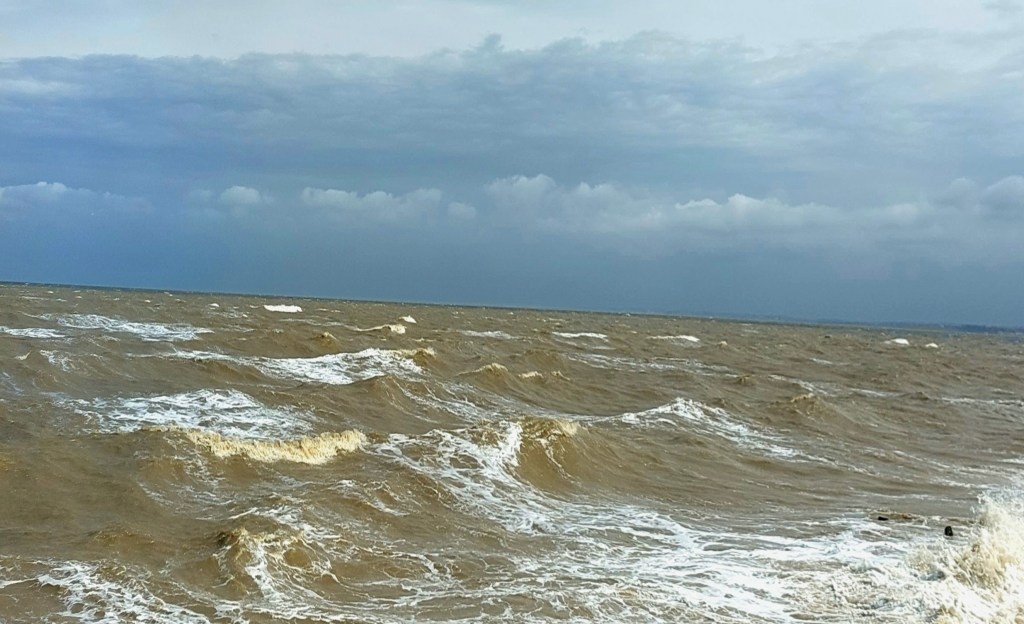
The Sea

Life After Death

Buzz died! It was old age that got him in the end. Having lost his cage-mate, he adjusted perfectly and kept little Gerry company as they squeaked at each other across the room. Sometimes they sang little chirpy songs and at others it was most definitely a conversation. He’d jump and climb about and sit in his food bowl to hide his food and then shout for more!

Now Buzz is with Nibbles entertaining our Lord, which is a good thing because otherwise he’d have had something to squeak about – having been prodded with a stick to ensure the certainty of his demise.

Despite my ancient years, despite caring for animals (and people) and all the pets whose lives eventually meet the inevitable, I still cannot touch a dead body. It is not just that it is dead, it is not gruesome horror, it is more than that. It’s Not them anymore. The soul is no longer there and what is left is just the unneeded carcass.

This is yet more of God’s miraculousness. Another proof of his promises written in the codex of his creation. This proves beyond everything that there is life after death. If there wasn’t then the soul would die and remain with the dead body. But that is not the case, when the body fails us and dies, the living soul leaves it and goes to meet our wonderful creator God.

Degus. In memory of Nibbles and Buzz.