
Palm Sunday is the day we appoint to mark Jesus’s parade into Jerusalem.
Up to this point Jesus has told His disciples to keep the knowledge of His Messiahship to themselves because His hour had not yet come. But now, the time had arrived. Jesus was making a declaration and He took dramatic action to make the announcement. Jesus rode into Jerusalem in a way which would be an unmistakable claim to be the Messiah – God’s approved king.
This event had been carefully planned. “The Lord needs it” was a password chosen and set up a long time prior to this event taking place.
It was certainly an act of defiance and courage. There was already a price on Jesus’s head. And yet, He enters in a way which throws the lime-light upon Him – giving Him centre stage. Every eye now beheld Him.
Jesus was fulfilling the prophecy in Zechariah 9. Even with His deliberate claim to be king, Jesus underlined the kind of kingship He claimed – king of love and peace.
Jesus used the language of the culture of the time. His procession used symbols which were part of the common understanding; touching a hope and a need in the people’s hearts. Consequently. the people eagerly responded.
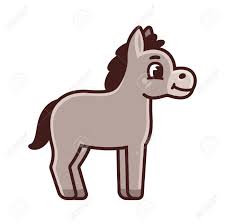
Jesus rode a colt. A colt is an unridden donkey – which symbolised purity and peace. This confirmed His fulfilment of the Messiah role was by bringing reconciliation and peace.
In those days in that country, donkeys were considered noble. Only in war did kings ride a horse. In times of peace they rode donkeys.
By riding a donkey, Jesus came as a king of peace and love – not the conquering military hero the Jews had expected and awaited.
The waving of palm branches acknowledged Jesus’s authority. By throwing down their cloaks, the people were ushering a prince into their midst; showing honour and homage. And the traditional welcome to a new king – “Blessed is He who comes in the name of the Lord”.
In the loudest way possible Jesus was saying, “Here I am, your king, your prince of peace.” The reply – “Hosanna” meaning “save us” – accepting that Jesus is the saviour.
Some of the pharisees – not all but some – heard the crowds and did not like it. They felt contempt at all the rabble as well as being afraid of Rome – who did not like disturbances from others.
In response to the pharisees telling the crowd to be quiet, Jesus answers that if the crowd were silent the stones would shout out.
When it is time, it is time. God’s purpose will be fulfilled. The king has come. The kingdom is coming.
The triumphal entry did not happen in a vacuum. It was not an accident. Everyone gathered together saw the meaning before them plain and simple. The king was entering the city in righteous victory and the crow were in desperate need of salvation and rescue.
We often read the whole passion – the whole suffering – on Palm Sunday because out of context from each other the rest doesn’t make full sense.
Jesus, the true king, the one coming in the name of the Lord, entering in triumph, helps us understand the whole passion more fully. It was never about human thrones and powers – it was always about triumph over evil and death.
The one who resurrected Lazarus comes to Jerusalem, in faithful obedience to the covenant, to allow humanity to expend its evil upon Him and for Him to then rise up from the dead. Humanity expends its evil upon the Son of God. The Powers and Principalities of the world snuff out the light. Satan claims he has victory over the God with whom he thought equality could be grasped.
But … that is not the end of the story …
… Jesus comes to us the same way He came to Jerusalem – amidst the praises of the people. enthroned by the cries begging for salvation and the royal welcome.
He guides us through His passion-tide, to bring us to share in His meal, to kneel at His cross, to wait by His tomb, to await His resurrection and victory over the darkness, the grave and His defeat of Satan, as we shout “Alleluia” on Easter Sunday.
The six stages of Holy Week:
- Jesus as king
- Jesus’s obedience to God’s will
- Jesus as suffering servant
- Betrayal and loyalty
- Jesus’s passion/suffering
- Salvation through Jesus
What a difference a day makes.
What a difference a week makes.
Palm Sunday, crowds are cheering Jesus and celebrating. Yet, just a few short days later, the same crowds jeer and call for the brutal murder of Jesus upon the cross.
Jesus knew what was coming but He still taught and proclaimed the Kingdom of God to His final breath.
Jesus made one last appeal to be accepted as their king. Before the hatred of men engulfed Him.
Once again, He confronted them with love’s invitation.
 Just because