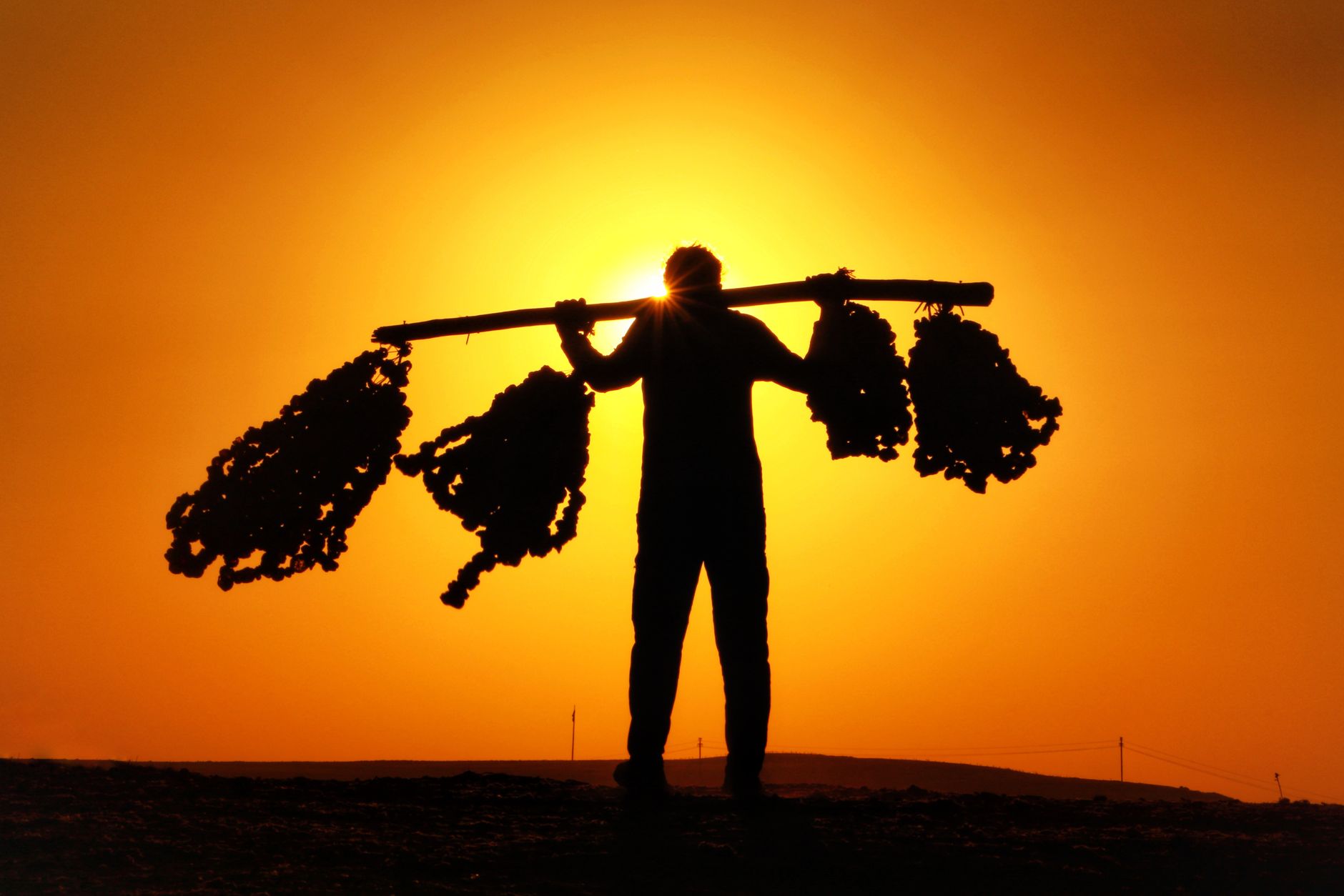
The Yoke of Life

‘But to what will I compare this generation? It is like children sitting in the market-places and calling to one another, “We played the flute for you, and you did not dance; we wailed, and you did not mourn.” For John came neither eating nor drinking, and they say, “He has a demon”; the Son of Man came eating and drinking, and they say, “Look, a glutton and a drunkard, a friend of tax-collectors and sinners!” Yet wisdom is vindicated by her deeds.’

At that time Jesus said, ‘I thank you, Father, Lord of heaven and earth, because you have hidden these things from the wise and the intelligent and have revealed them to infants; yes, Father, for such was your gracious will. All things have been handed over to me by my Father; and no one knows the Son except the Father, and no one knows the Father except the Son and anyone to whom the Son chooses to reveal him. ‘Come to me, all you that are weary and are carrying heavy burdens, and I will give you rest. Take my yoke upon you, and learn from me; for I am gentle and humble in heart, and you will find rest for your souls. For my yoke is easy, and my burden is light.’

Matthew 11.16-19, 25-end

Matthew 11:16-30 is split into three parts:

  • Part 1 – verses 16 to 19
  • Part 2 – verses 20-24
  • Part 3 – verses 25-30

Our reading today misses out part 2; this is, of course, widely available in any good Bible. This whole section of teaching from Jesus starts off (at the beginning of Matthew 11) after the sending out of the disciples, which we have looked at over the past two weeks.

So, Jesus’s disciples have set off to proclaim and live the Gospel and Jesus gave them space to do this by going to other towns to teach when He is asked a question by the disciples of John the Baptist, who is now in prison. Jesus tells them to report back that the prophecy regarding the Messiah is being fulfilled. Jesus then speaks about John, likening him to Elijah and bringing us to part 1 of today’s Gospel.

Jesus rebukes, or if you prefer, sternly tells off, those who are displeased with or who do not accept the ministry of John the Baptist and Himself.

He points out how picky, choosy and uncertain His current generation were about receiving God’s message and His messengers … I imagine this would be much the same if He were instead addressing today’s generation. 

He points out that those who want to criticise will do so no matter what; whether it was John the Baptist teaching them, Jesus Himself, or someone completely different – if they want to find fault they will and likewise if they want to refuse to listen to God’s voice both when it comes through in a serious way or a joyful way they will. Basically, if what is being said does not suit them and is not what they want to hear they will reject it.

Jesus then quotes some of the criticisms and insults that had been made about Him and in doing so turns them on their head. What started as a jibe and a condemnation becomes a title of honour and we praise our Lord, thanking Him for being our friend – a friend of sinners.

Jesus then highlights that those who are wise are proved so by their actions. These are those who accept both Jesus and John for who they were and who they were called to be.

Like Moses leading thousands of people out of Egypt towards God and preparing them for the promised land, John led thousands of people to repentance, preparing the way for the Messiah.

Like Moses taught the people to discern God’s will for their lives and to obey His commands, Jesus taught, worked, loved, and rose again to show us the way back to the Father.

Which brings us to the missing part 2. Here Jesus has stern rebuke for the cities which had witnessed both John’s ministry and mighty works and despite these still are unrepentant and disregarded Him. Neglect is just as bad as persecution.

And so we reach part 3, where Jesus praises those who do receive His message.

As Jesus communicates here with His Father there is a strong sense of joy. The Father, Son and Holy Spirit communicate and commune with each other with joy. Not happiness, which is nothing like joy and which is fleeting but true joy. Joy is a far deeper and enduring state of being centered around connection, meaning and purpose, and which can be maintained even during difficult times.

Jesus responds positively to God choosing those that the world would deem unlikely to respond to His message, but don’t forget the wider context of the rising rejection of Jesus and His messengers, especially by the elite.

This section of the passage shows us more about the relationship between God the Father and God the Son, between whom there are no secrets. No one knows the Son as well as the Father and no one knows the Father as well as the Son. There is a difference in the way the Son knows the Father to the way we know Him.

God the Son and God the Father are equal whereas we know God because He lowers Himself so that we might know Him.

Jesus has authority and this is shown as He calls us to Him with the words “Come unto me”. This invitation is open to all. None are excluded. Jesus calls those who are burdened and those who recognise that they need to come to Jesus and rely on Him instead of attempting to struggle on by themselves. By burdened Jesus refers to the burdens that we take on ourselves whereas by heavy laden He is referring to those that others have put upon us.

Jesus extends the invitation further saying take my yoke upon you and learn from me. We must come as disciples to learn, willing to be guided by Jesus and not merely for what we can get out of it. 

The Israelites and ancient Jews used the idea of a yoke to mean someone’s obligation to God. They had:

  • the yoke of the kingdom
  •       the yoke of the law
  •       the yoke of the command
  •       the yoke of repentance
  •       the yoke of faith
  •       and the general yoke of God.

Jesus is simplifying this. He is saying stop over – complicating it with all these yokes. The yoke you need to take is my yoke. Take my yoke upon you and learn from me.

Let’s take a closer look at the yoke of Jesus:

  • It is easy and light … unless we turn away from it.
  • It is not connected with worries or concerns forbidden to us.
  • It doesn’t include any of the burdens we choose to add ourselves.

Jesus invites us to let go of the extra burdens we like to hold on to. We don’t like to let go of things but these burdens are not part of the yoke of Jesus and are just weights we refuse to release.

Jesus is gentle and lowly of heart. Throughout His ministry He shows His servant heart and His qualification to bear our burdens for us.

Jesus promises that if we take on His yoke we will find rest for our souls. God previously offered this promise to those who follow Him. “Thus says the Lord: ‘stand at the crossroads and look; ask for the ancient paths, where the good way lies; walk in it and you will find rest for your souls’…” (Jeremiah 6:16). And Jesus now repeats this promise in His own name.

With Jesus bearing it with us the yoke is easy and the burden is light. Alone it could be unbearable,  but we are not alone. It does not mean we will have an easy life lounging in front of a pool sipping a refreshing beverage. It does not mean that there are lighter demands. It does mean entering into and being in a discipleship.

If your yoke is uncomfortable, if your burden is heavy, then it is not Jesus’s yoke or burden and you have not let Him bear it. Instead you are holding onto it like grim death. Like A Christmas Carol’s Scrooge and Marley choking under the weight of the chains they forged in life.

Give it to Jesus, let Him bear it. Take on His yoke. Ultimately, it’s up to you, that’s what free will is. Do you want to be Scrooge before his conversion – weighted down by the chains of his own making, or after his conversion – a new human in Christ? For as Jesus says ‘My yoke is easy and my burden is light’.

My yoke is easy and my burden is light. (Photo by Suat Tu00fcfenk on Pexels.com)

Jesus’s Baptism

Recently, I happened to hear someone teaching on the Baptism of Jesus. The question was asked “Why are people baptised?” And the answer given was “ To become a Christian”.

So I ask you, why then was Jesus baptised? 

You, like me, can probably see the flaw in the answer previously referred to – there’s a few to spot.

The term Christian was first used around 44AD in the city of Antioch, as recorded in Acts 11:26 which says “And the disciples were called Christians first in Antioch”, to describe followers of Jesus. Earlier followers called themselves “The Way” and the term Christian was not more widely adopted until later. It became a more standard term around 100AD when the word “christianity” was first recorded.

So Jesus did not get baptised to become a Christian – a word that was not even in existence at that time.

Neither did He need to be baptised to follow Himself -especially as Facebook didn’t exist then either.

Likewise, Jesus didn’t need to be baptised to believe in Jesus. He knew He was and is the Son of God. 

When a baby is baptised the parents have made the decision and make the declarations on behalf of the baby (or young child). If, like Jesus, someone is getting baptised as an adult then they have found their faith, believe in Christ and, as a believer of Christ, are already a Christian.

People are baptised as a public declaration of their faith, symbolising the person’s identification with Jesus’s death, burial, and resurrection, and a commitment to a new life in Christ. It serves as an outward sign of an inward change, a public testimony of one’s belief and a way to formally join a Christian community.

But, at the time of Jesus’s baptism, He hadn’t been crucified, dead, buried and resurrected yet.

So why did Jesus get baptised?

His cousin John, who was already known as John the Baptist, was calling people to be baptised and was baptising them. Yet Jesus was still alive, had not yet met His death and had not yet started His ministry. So why did the crowds flock to John in such great numbers and why did they and Jesus get baptised?

John’s mission was to prepare the way for the Messiah. He was calling the people to repentance for the forgiveness of sins and his baptism was a symbolic cleansing – a public declaration of turning away from sin and having a new start. It was also an act to make way for Jesus, who would baptise with the Holy Spirit, and served as a way to demonstrate a commitment to God’s law.

It was about spiritual readiness; John was urging the people to change their ways so they wouldn’t reject the Lord when He came.

Jesus was baptised to fulfil all righteousness, publicly launch His ministry as God’s Son, identify with all humanity (including sinners), and inaugurated a new covenant. All this was confirmed by the descent of the Holy Spirit and by the Voice of God.

Jesus’s baptism symbolised His union with sinners, foreshadowed His death and resurrection and established a model for the baptism we have today. 

By getting baptised by John, Jesus was signifying His obedience to God’s will and His immersion into humanity’s condition. It was a public act marking the start of His ministry and mission as the Messiah, validated by the Trinity (Father, Son and Holy Spirit). John’s baptism was a baptism of repentance. By being baptised by John Jesus identified with sinful humanity, taking humanity’s burden upon Himself.

The water symbolised death and burial and the chance of a new life (or a new start). It points to Jesus’s ultimate “baptism” on the cross – His death and resurrection. 

Jesus’s action set an example to His followers, showing the path to God and infusing the sacrament of baptism with God’s grace for us and for future believers.

Finally, when Jesus was baptised the heavens opened, the Holy Spirit descended like a dove, and God’s voice declared, “This is my beloved Son, with whom I am well pleased” – the indisputable confirmation of Jesus’s divine identity and mission.                                                   

Water (Photo by Victor Freitas on Pexels.com)

John the Baptist

Matthew 11:2-11 is a reading which often gets overlooked.

John the Baptist is in prison. He has been in prison for some time and knows he will not leave it alive because Herod’s wife wants him dead. She has not yet, however, found a way of securing his death and Herod is intrigued by John and so listens to what he has to say. Consequently, John is treated with respect and his disciples were allowed to visit him freely. His disciples keep him up to date with what is going on in the world outside and report to him what they have witnessed of Jesus.

John sends his disciples to Jesus with the question “Art thou he that should come?”

This is where opinion amongst well-known commentators differ.

Some state that John sent the disciples only to remove their doubts.

Others state that this question came directly from John with the answer being directed to John; who may have been feeling impatient at hearing about the signs and wonders but not seeing the appearance of God’s kingdom in a way he expected and so was falling into despair in prison.

Many Christians struggle with this passage and John’s question. This is not surprising considering what else we know about John.

John the forerunner. The one sent to “Prepare the way of the Lord”.

John, who, before he had even been born, recognised his cousin as Lord and Saviour and jumped for joy in his mother’s womb.

Seeds of doubt planted by the devil reach their peak at times of great despair and can cause people to question even the most important fundamental truths.

We hope that, nay we know that, John’s faith did not fail him.

However, at a time of despair, languishing in jail, confirmation of what he knew to be true would consolidate and strengthen his faith and hope.

Yet, if John had sent his disciples to Christ with the question for their satisfaction then we know that Christ pointed them to what they had heard and seen; directing them to the way in which salvation was to be found.

John, who at Jesus’s baptism witnessed the Holy Spirit descend on Jesus and heard the voice from heaven confirming Jesus as God’s beloved Son with whom He is well-pleased, had shown Christ to his disciples.

John saw that some of these disciples were envying for his sake and some were making the same misinterpretations as many of the Jews did about the Messiah. John wanted to ensure, before his own inevitable death took place, that his disciples were satisfied from their own experience of and sight of the works of Christ; and so he sent them on this errand.

“Poor men have the good news proclaimed to them,” Jesus added when He spoke to John’s disciples. He invited them to His kingdom and told them of peace and pardon.

It was predicted in Isaiah that the Messiah would indeed preach good tidings to the meek (the gospel to the poor).

Jesus knew that John the Baptist, whose heart was with the poor, knew that He was the one who united power and tenderness and could be none other than the expected king.

From verse 6: Blessed is he who shall not take offence at my poverty and lowliness of life and who will not reject me and my doctrine.

John wanted, not to force Christ’s hand into revealing Himself before His time came but, to ensure that he had completed his mission and passed the baton over to the one for whom he had been preparing the way.

Jesus then gave testimony to John, and to all he had achieved.

What Jesus said about John was not only to praise John but also for all the people.

Those who listen to the word will be called to give account of their improvements. Do we think that once the sermon is over the work is done? No! It most certainly is not. In fact, that is when the great work really begins.

Fervency and zeal are required by all. Self must be denied; the bent, frame and temper of the mind must be altered.

Those who have an interest in salvation will not mind what the terms are nor how hard they seem.

Things of God are of both great and common concern.

God requires no more from us than the right use of what he has given us.

People are ignorant because they will not learn.

John was sent to prepare the people to receive the Messiah and he fulfilled this commission. He preached repentance and faith in Christ.

As John prepared the way for Jesus then so we must prepare now.

We must prepare our hearts and minds, making them right and open ready to receive Him again this Christmas and for when He comes again in glory.

Not only that but we must spread that good news so that others also have the chance to repent and prepare.

Handing over the baton (Photo by BOOM ud83dudca5 Photography on Pexels.com)

Here Is The News…

(Isaiah 40:1-11, Luke 3:1-6)

Today, we have heard about the proclamation of God’s message.

The message is that people need to repair their lives and prepare for Christ’s coming. John (the Baptist) proclaims this by calling the people to repent and be baptised.

We also have the beginning of the end before the new beginning.

We have the introduction of four men who will play significant roles in Jesus’s crucifixion. In fact, the seven people Luke mentions at the beginning of our Gospel reading, are only remembered today, despite historical records, because they are mentioned here in Luke’s Gospel.

God chooses unlikely people. We sometimes wonder about our calling, but God knows what He is doing. He knows the right people to call. God often calls the lowly.

And John fulfils the prophecy from Isaiah quoted by Luke. “A voice of one calling in the wilderness, ‘Prepare the way for the Lord…'”

But why in the wilderness and not Jerusalem? The wilderness is sparse whereas Jerusalem was highly populated and held the Temple.

Yet, throughout history the wilderness has been a place where God has shaped His people and forged the nation of Israel. It is where God’s prophets did most of their work and where Jesus was tested. God continues to work in the wilderness; for the wilderness is where and when life seems bleak and barren. It is when we are most open to hearing God. God works in the wilderness of our lives.

The baptism of repentance for the remission of sins is the type of baptism that John introduced to the Jews. They were already familiar with a different type of baptism – a type called Proselyte Baptism which was a ritual required of any Gentile who wished to become a Jew to cleanse sins.

But John was introducing a baptism which required all to repent and be baptised for the forgiveness of sins.

This concept was unfamiliar to the Jews and so the prophecy that John would give the people knowledge of salvation was fulfilled through his teaching of this concept.

John taught the ethical requirements of repentance. It requires bearing fruit worthy of repentance and sharing with those in need. To deal honestly with people and not use power in an abusive way.

Advent is a time of preparation. Here we find the way to prepare – bearing fruit worthy of repentance -sharing with those in need – dealing with people honestly – using power justly – turning around and facing a new direction.

Repent and turn around away from the sin. Turn away from worldly compulsions and turn towards Godly affections.

The reward of repentance is remission of sins. This is more than just forgiveness. It is also freedom from compulsions and addictions and habits that threaten to undo us.

Repentance is called for by John at both personal and national levels for without it Israel was heading towards destruction.

At the end of this Gospel Luke emphasises again repentance and forgiveness . “Thus it is written, and thus it was necessary for Christ to suffer and to rise from the dead the third day, and that repentance and remission of sins should be preached in His name to all nations…”

People still need forgiveness. God still forgives.

People know they are sinners. Dealing with sin seriously can be a relief because if sin is not ignored but is addressed then forgiveness can be believed.

Just as Israel needed repentance, we also need to prepare our hearts and minds to receive the Lord and to help our friends and family prepare their hearts and minds as well.

The important work and the real goal is the preparation of our hearts and minds to receive God and the work of the Holy Spirit.

We can contribute to the Spirit’s work in many ways but especially through prayer and the preparation of our hearts.

ALL will see God’s salvation.

Jesus has eliminated barriers to the salvation of all people.

We live in a highly divided world. God calls ALL people in every land, every race, every persuasion, every circumstance.

ALL are called. ALL will see the salvation.

No-one is excluded. The call is to repent and receive forgiveness of sins.

Wilderness