
The Good Samaritan is a well-known story. Is it really just a parable or was Jesus recounting something that actually happened?
It’s certainly feasible and likely enough to have been an actual occurrence. Let me tell you a real, modern day version:
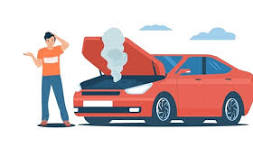
We got in the car, turn the key in the ignition, and, you’ve probably guessed it, the car wouldn’t start. The battery had suddenly and unexpectedly died. RIP battery!
So, there’s us by the roadside with my husband holding jump leads and jumping up and down trying to flag down the cars that were passing to ask them for help.
So many cars just drove past …
… and then another past, slowed down, turned around and drove back to us. The driver had turned around so that his car was facing the right way to be able to link up the jump leads. He got the car started for us.
We didn’t know him, he didn’t know us, he was just passing through, seen someone in need of help and provided that help.
Willingly, for no reason other than seeing someone in trouble and knowing that they could help. A real good Samaritan.
Jesus told the parable in response to the questions from the lawyer. Now, the lawyer had asked Jesus a question to which he knew the answer and so Jesus answered him with a question, drawing out the answer to the lawyer’s question so that it was provided by the lawyer himself.
Consequently, in a bid to justify asking the question in the first place, the lawyer asks for clarification on who classes as his neighbour. It is this that provokes Jesus into telling the good Samaritan parable.
There was a constant threat of bandits on the wilderness roads. And they did indeed beat people up and steal their possessions. Jesus’s audience, therefore, would not have been surprised by this scenario; it was after-all a part of their normal lives.
The audience may well have expected it to be the priest or Levite who’d help the victim, especially as they both have a calling to care for others.
Yet, they just pass by.
It is the one the audience would have least suspected to assist who gave the victim aid. Samaritans and Jews were not normally friendly towards each other. In fact, the Samaritans were hated by the Jews.
The victim’s own people passed him by. It was someone they would have considered an enemy who stopped and saved his life. Not only that the Samaritan provided for him whilst he healed and returned to health.
Jesus gave the lawyer, crowd, disciples and us the instruction to “Go and do likewise”.
But, like those cars that just drove straight past, how frequently are we the ones who pass the other by. The compassionate generosity of the Samaritan are the example for us to follow but so often we ignore the cries of the downtrodden, the disenfranchised, the forgotten.
The victim. ignored by his own people, reminds us what it feels like to be forgotten by others. The feelings of loneliness and forsakenness call for compassion and empathy for all experiencing it.
Whilst Jesus is the one telling the story, on a theological level God is both the one in the ditch as His children pass by, and the one who shows compassion and mercy to us when we are in need – the one who saved us through the cross.
This parable is a reminder that the call to care for others often goes unheard as we pass by the cries of those needing help.

 Just because