Gratitude

The passage from Luke 17:11-19 about the ten lepers clearly corresponds with the passage from 2 Kings in which Naaman the Syrian is healed of leprosy through Elisha the Prophet.

Leprosy in Jesus’s time was a deadly skin disease. Anyone who caught it had to live away from the healthy people and had to keep a distance away. Most would join a group of other lepers and be part of a leper colony.

When the lepers call out to Jesus, they call him “Master” – just like the disciples do.

In a similar way to other instances of lepers cleansing or healing, Jesus sent the lepers to the priests to confirm the healing.

The law was that if a leper was cured, they had to go to the priest to be inspected, and if they were healed (clean), the priest would give them a certificate. Only when they have the certificate would they be allowed back into society.

Jesus sent these ten lepers to the priest before the healing took place. They were required to obey and step out in faith to be healed; and they were healed whilst on their way to the priests.

God is at work when Jesus notices and heals hurts and brokenness that are not noticed by others.

Those living on the edges of our community, who are treated as invisible because of how they look, who they are, or where they come from. Jesus notices them and loves them and calls us to do the same.

But Jesus also notices the parts of ourselves that we hide, and he heals our hidden brokenness.

Jesus cares for the marginalised. In this example of the ten lepers, at least one of them was not a Jew.

After the ten lepers were healed, and once they had their certificates from the priests, they were free to go their own way, even to rejoin their families.

Ten were healed, and one returns full of gratitude and thanksgiving. That one, as it turned out, was a Samaritan, and Jesus said to them, “Your faith has made you well (saved you).”

Jesus’s life is full of people glorifying God – from the shepherds at his birth to the centurion at his death. Here, as in many other instances, it is as a result of Jesus’s work of healing and restoration.

The right response to Jesus is to praise and glorify God.

The Samaritan recognised God at work. He understood that to thank Jesus is to glorify God. He gave the response of faithful recognition and gratitude.

All ten lepers were willing to go to the priest in faith, but only one was filled with true praise and thanksgiving.

Jesus noticed that nine of the lepers did not return to give thanks. He notices our ingratitude.

There is no reason to assume that the other nine lepers were not grateful: they may have just been too wrapped up in their relief and amazement to even think of returning to give thanks to Jesus.

But one did return to Jesus. He recognised his gratitude and returned to say thank you and to form a relationship with Jesus.

It is one thing to offer words of thanks or feel thankful, but gratitude is a state of mind which transforms us.

The leper was transformed physically, emotionally, and socially. Jesus wants to physically, emotionally, and socially transform us too.

Ingratitude is a horrible thing. It is the enemy of the soul.

St. Paul tells us we should give thanks in all circumstances. Part of the vocation of any Christian is to give thanks and praise.

We can always find reasons for gratitude before God.

The nine lepers who leave without acknowledging Jesus highlight how blessings can be missed when gratitude is absent.

A blind boy sat on the steps of a building with a hat by his feet. He held up a sign which read, “I am blind, please help.”

There were only a few coins in the hat – spare change from folks as they hurried past.

A man was walking by. He took a few coins from his pocket and dropped them into the hat. He then took the sign, turned it around, and wrote some words. Then he put the sign back in the boy’s hand so that everyone who walked by would see the new words.

Soon the hat began to fill up. A lot more people were giving money to the blind boy.

That afternoon, the man who had changed the sign returned to see how things were. The boy recognised his footsteps and asked, “Were you the one who changed my sign this morning? What did you write?”

The man said, “I only wrote the truth. I said what you said but in a different way.”

I wrote, “Today is a beautiful day, but I cannot see it.”

Both signs spoke the truth. But the first sign simply the boy was blind, while the second sign conveyed to everyone walking by how they should be able to see…

When life is full of difficulty it can be hard to be full of gratitude. When things are going well we take it for granted.

Gratitude is a habit; a way of looking at the world and all the good things in it with appreciation regardless of whether we are going through the good times or the bad.

Gratitude is a heart-centred approach to being at peace with yourself, others, what you have, and the world around you.

We need to practice gratitude and give thanks and praise to God in all we do, and think and say.

Gratitude

Calling Levi

In chapter 9 of Matthew’s Gospel,  Matthew recounts his own call from Jesus to become a disciple. Matthew was the name Jesus gave him. Until he became one of Jesus’s disciples, he was called Levi. And he was at his place of work in the tax office. The Jewish people did not like those among their number who became tax collectors. They viewed these people as sinners and collaborators with the Romans against their own people. Tax collectors had the force of the Roman soldiers behind them to force the people to pay the taxes, but not only that, they were considered to be extortioners because they were allowed to keep any money they over-collected. Consequently, most if not all tax collectors over-charged on purpose to line their own pockets.

The call from Jesus gave Levi Matthew the opportunity to literally turn his life around. When he was a tax collector he was busy taking but Jesus was calling him to a work that was essentially giving.

Jesus said to him “Follow Me” and he did. He left his desk, taking nothing but his pen. Jesus called him and the only thing he took from his trade was the pen this trade had taught him to use; a skill he then used to compose his Gospel of Jesus’s teachings.

There is archaeological evidence that fish taken from the Sea of Galilee were taxed. So Jesus took as His disciple the taxman that may have taken money from Peter, James, and John and the other fishermen among the disciples. Certainly, initially, it would have been difficult for them to accept each other. Yet, in one way, Levi made more of a sacrifice than some of the other disciples. Peter, James, and John could easily go back to their fishing business, but it would be practically impossible for Levi to go back to tax collecting.

Jesus sat at the table in the house, and many tax collectors and sinners came and sat down with Him. This context suggests that this was a gathering of Matthew’s friends and former business associates. Possibly, Jesus took advantage of Matthew’s decision to also reach those whom he knew.

And so the disciples were asked, “Why does your Teacher eat with tax collectors and sinners?”  The answer to this question was simple, because Jesus is the friend of sinners. As Paul wrote in Romans 5:8 “But God demonstrates His own love toward us, in that while we were still sinners, Christ died for us”.

We are fortunate that God calls sinners and not just saintly people. Jesus came to benefit those who understood their inherent need for Him. Yet the proud who see no need for Jesus do not benefit.

Jesus quoted Hosea 6:6, “I desire mercy and not sacrifice”. In Hosea’s day, God’s people were still good at bringing sacrifice, but they had abandoned mercy because they gave up the knowledge of God and truth. God would rather have right hearts, full of truth and mercy than sacrifice.

These words are more striking when we remember that they were addressed to the teachers of men. This rebuke showed that they did not know God, and Jesus bade them go and learn the meaning of their own Scriptures. These “teachers of men” thought they knew everything already, and the rebuke made them angry.

This event illustrates Jesus’s mission to seek and save the lost, calling them to repentance and a new life.

Collecting taxes

Do You Want To Be Healed?

John 5:1-9

This short but potent passage from John contains themes of healing, restoration and the transforming power of faith. It symbolises humanity’s need for divine intervention and the opportunity of spiritual renewal through encountering Christ. The pool represents the need to seek God’s grace and trust in His ability to heal both physically and spiritually.

The man in this passage had been unable to walk for 38 years and had given up hope that he could be healed.

From John’s brief account and if we were to read on further we can ascertain that this inform man was old (well over the life expectancy of the time), a dependant who was unable to care for himself, he liked to complain and put the blame on others, he was an unrepentant sinner who was ungrateful and disloyal.

Jesus’s healing of this man would have been at the direction of God the Father and is an example of God’s complete and utter grace.

God saves sinners.

God saw us in our hopeless, helpless condition and rescued us. He gives hope to the hopeless and help to the helpless.

Jesus cares about people even when problems make them feel hopeless or sad.

Jesus healed the man and he was able to walk again.

Jesus brushes off the excuses of the lame man. Don’t make excuses – work around them.

We wait too long to ask for healing. Instead seize the moment and ask God to work in your life. It’s not easy to live with illness and hope for healing.

Spiritual healing may occur without physical healing. A positive outlook in the face of our own disease or injury, and as our bodies age, is a miracle in itself. We have to do our part to maintain good health. Small changes to improve our health is part of the healing process.

God helps those who can not help themselves.

God helps those who see their inability to save or help themselves, who turn from self to the saviour and trust in God.

All the healings Jesus performed remind us that God saves sinners.

Without God it is impossible for man to save himself.

We need God to give us feet to walk in His ways, we need to receive eyes to see His truth and have strength to walk in obedience to Him.

This is a picture of God’s initiative in salvation and He saves us by His grace.

Jesus saw the man. He knew him. He spoke to him.

God sees us. God knows us. He then speaks to us.

Jesus came to give us life abundantly.

Healing

He Is Risen!

Listening to the readings again on Easter Sunday with the women going to the tomb to prepare Jesus’s body reminds me of something I read recently about Mary – Jesus’s mother.

It is interesting, is it not, that Jesus’s mother – arguably His greatest disciple, a woman of tremendous faith, who stayed by Him to the bitter end, is not listed amongst the women going to attend to Jesus’s body.

And this poses the theory that the first person Jesus appeared to may well have been His mother and that this is why she was not among those going to the tomb at dawn. Such an appearance would be part of completing her participation in the essential parts of the paschal mystery.

Mary suffered above all others in the suffering and death of her son. Christ kept the commandments. He honoured His heavenly Father, His earthly father and His mother, so it makes sense that he’d visit her first.

If a son lived far away and his mother was told he’d died but he was actually alive and healthy and he returned to the area, it would highlight that he was not a good son if he visited his friends first and his mother last.

Jesus was the perfect son. So, why would He not visit His mother first. There’s also her faith, which, despite the apostles losing theirs at Jesus’s passion, Mary had in abundance. Scripture tells us that the Lord shows Himself to those who have faith in Him. And, of course, she loved her son so much and scripture tells us that those who love Him will be visited by Him.

How joyful she must have felt at seeing her son alive once more.

There is a special kind of joy at Easter. It’s not just the spring flowers springing up into life or the longer days. What it is is a deep, radiant joy born from our Lord’s victory over sin and death so that we might have eternal life with Him.

Jesus leaves the darkness and rises to new life. Through God’s grace, this gives us the gift that, no matter what our past was, we have permission to leave it behind and embrace the hope and joy of new lives in Christ. His sacrifice and act of intermediary reconciliation grants us forgiveness of our past sins, our present sins and our future sins.

A cross in a sunny field of flowers. Easter Joy.

A Sin Is A Sin or The Fig Tree

In the first part of Luke recounting the teaching of Jesus and the fig tree are people discussing Pilate mixing the blood of Galileans with their sacrifices.

This event, and that of the Tower of Siloam also mentioned by Jesus, were probably very well known by the crowds of the time, however, we know little about them today.

It is interesting that Pilate’s brutality is mentioned – which links up with the content of other historical references to him – and this gives us an impression of Pilate in advance of Jesus’s trial.

Considering this brutal nature of Pilate makes his act of washing his hands of Jesus stand out more. Pilate was quite happy to brutally kill people but he did not want to claim responsibility in any way for the death of Jesus.

Jesus uses the conversations of the crowd – one about a state sanctioned event and one an apparently random accident – for His teachings.

Jesus implies that we must not equate tragedy with divine punishment. However, repentance is needed universally. Unless we repent we will perish. To perish means the destruction of one’s soul.

The unrepentant will suddenly find that they have delayed too long and they have lost themselves.

Jesus asks the people – do they think that the Galileans being talked abount were greater sinners because of what happened to them. The Jews linked sin with suffering.

But there is no scale of sin. A sin is a sin.

Jesus expounds further by telling the parable of the fig tree. The fig tree was favoured because they had a higher chance of growing in the poor and shallow soil of the region.

Uselessness invites disaster. What is useful goes from strength to strength where what is useless is eliminated.

What would we answer when asked “of what use were you in this world?”

The land owner initially pronounces imminent and decisive judgement. The tree had not borne fruit for the last three years and so he wanted it cut down.

Nothing which only takes can survive.

The fig tree was taking strength and sustenance from the soil. In return it was producing nothing. This was the fig tree’s sin.

There are two types of people:

  • Those who take out more than they put in.
  • Those who put in more than they take out.

There is the duty placed upon us of handing things on better than we found them.

A fig tree normally takes three years to reach maturity. If it is not fruiting by then it is unlikely to produce fruit. But, this fig tree was given another chance.

The gardener pleaded for the tree to be given an extra year and the gardener would dig around the tree, placing manure around it. If the tree bears fruit it will stay but if the tree bears no fruit after the extra year it will be cut down.

The fig tree was given a second chance. We are given a second chance.

A second chance to change and repent.

It is always Jesus’s way to give man chance after chance. Peter, Mark and Paul all are witnesses to that. God is infinitely kind to those who fall and rise again.

God transforms us by grace – a grace that calls us to be generous towards those still trapped by poverty, want and devastation.

All sinners face the same fate before God. Everyone must stand before Him in judgement.

God is patient but, whilst He allows second chances and time for repentance, there is a limit.

There is a final chance!

If we refuse chance after chance, if God’s appeal and challenge come again and again in vain, the day finally comes, not when God has shut us out, but when we by deliberate choice have shut ourselves out.

Jesus uses the events of Galileans being executed and the tower falling on people in Jerusalem to emphasise the urgency of repentance, warning that those who don’t repent will perish.

A sin is a sin. There are no sins that are lesser than others. All sins are a sin.

Don’t be like the fruitless tree!

Focus on producing good fruit; on living a life which pleases God – rather than focussing on the misfortunes of others.

Jesus is emphasising that repentance is not just about acknowledging sins but actively changing to conform to God’s will.

The fig tree parable highlights God’s grace and the opportunity for change and restoration.

Fig Tree

Awe and Wonder*

*(John 6: 1-21), talk given at HTS 28th July 2024

Again, we have a reading that is often preached on. The feeding of the 5000 and walking on water – as recounted by John.

Consequently, I have heard so many different theories about how the feeding of the 5000 was accomplished.

These theories are spoken by supposed men of faith, and yet, what they all have in common is that they detract from the awesomeness of the miracle performed by Jesus.

I have said before (and will probably do so again) that we, mere mortals, try to explain away acts of God. We are so eager to know how something has been done that we make up theories to translate the unknowable, the un-understandable, the sheer magic if you like of God’s awesome power into something mundane as we falsely claim we know how it was achieved. Like explaining away all illusionist’s tricks as mere slight of hand. We can’t just accept the wonder – the miracle – for what it is.

A miracle!

The work of God!

An amazing gift from Him to us!

We don’t need to know how it was achieved – not if we have faith and believe. It should be enough for us just to know that God did it – God provided!

God did not ignore the pleas made on behalf of His people. Instead He provided what was needed and a lot more besides.

No one went hungry. Everyone ate their fill. And yet 12 baskets of bread remained at the end of the feast.

  • 12 baskets of bread
  • 12 tribes of Israel
  • 12 Apostles

Whilst you think about that for a moment; let me mention some more parallels that are at work here.

The Passover, a major festival in the Jewish calendar remembering when the Angel of Death passed over the houses of the Israelites the night before they, in a mass exodus, followed Moses out of Egypt into the Wilderness, where God provided for them with another miracle – manna – bread from heaven.

Moses, the foreteller of the plagues of Egypt, leading a crowd through a Wilderness where God provides them with the food they need each day. Moses, who went up a mountain to speak to God in peace and solitude away from the crowd.

Jesus, instead of foretelling plagues upon Egypt, provided healing in abundance. The crowd followed Him, drawn to Him by the signs they witnessed. Jesus was leading a crowd. John just tells us that they were the other side of the Sea of Galilee. The lack of a specific place name for where this significant event takes place puts it in parallel with Moses leading the Israelites through the Wilderness.

Jesus leads a crowd through the Wilderness. With the power given to Him by God His Father, Jesus provides bread in abundance. This acts as confirmation to the crowd that Jesus is from God. He sees what is in their minds and, knowing God’s plan knows that becoming the warrior king the crowd wanted was not how God wanted Him to save the world. Jesus goes up a mountain to speak with God in solitude away from the crowd.

As is a common thread through John’s Gospel; this passage is about who Jesus us and about proclaiming Jesus’s greatness. John does this by recounting this event in such a way that we see these parallels.

Both Moses and Jesus enabled their multitudes to have food in the Wilderness. However, it is the difference that is important here.

Moses asked God where to get food for the people. He didn’t know and asked God genuinely. Moses needed to rely on God. God provided, in abundance, food for His people. When Jesus asked Philip ‘where will we get bread for the people’ it was actually a rhetorical question. Jesus already knew what He was going to do. Jesus, the Son of God with the power of God, already knew that He Himself would perform a miracle providing food in abundance for the people.

John claims Jesus is testing Philip – and this is possible. The Jews knew the Scriptures in great depth. It is possible, therefore, that Jesus wanted to see whether the disciples knew enough about who He was, and is, and to see if they remembered the manna from heaven and would realise that in a similar way Jesus would be providing for His people.

We cannot second guess God, but what we do know is that if that was the case Philip failed. And not only Philip.

Like many today, Philip could only focus on how much it would cost to find a ‘shop’ and buy bread and Andrew could only focus on how little the supplies were.

And likewise, if Jesus tests us in a similar way, do we truly acknowledge that He will provide, or, do we fail the test by focussing on cost and resources?

Jesus fed His people. He took the loaves, gave thanks and distributed it to the people. And here we have the next important difference highlighting Jesus’s greatness.

If the Israelites collected more manna than they needed and tried to store it then the manna perished. When the disciples gathered the leftovers so that none would be wasted there were 12 baskets of good food leftover. Proof of the abundance Jesus provides for those who truly put their faith in and rely on Him.

The crowd see Jesus as a prophet sent from God. It is possible they may have seen Him as a second Moses.

But regardless of how the crowd saw Him, Jesus is more than just a prophet. He is the Son of God.

And in case we had any more doubts, like many passages in the Bible, like the Trinity, we have a third significant difference highlighting who Jesus is, His greatness and His power.

When the Israelites reached the Red Sea, Moses had to rely on God to part the waters so that he could lead the Israelites across on dry land.

When the disciples were crossing the sea in a boat, Jesus needed no such help. Jesus, God’s Son, with power over creation, walked on the water to the boat and immediately they all reach shore.

Jesus walked across the surface of the water as Lord and Master, revealing Himself to His disciples using His name – the name God revealed to Moses – I Am.

Moses is considered to be God’s greatest prophet and lawgiver. But Jesus is God. Jesus is mightier. Jesus is more.

Whoever you see as that Moses equivalent – be it as prophet or leader …

  • Jesus is greater
  • Jesus is the one who provides
  • Jesus is more

Let us see Jesus for who He really is. Let us fully put our faith and trust in Him. Let us fully rely on Him and allow Him to provide for us. Let us not continue to fail the test as Philip and Andrew did. Let us be ever thankful to God for HIs great grace, abundance and mercy. Amen.

The Sea

Rules for Life

“Do not be afraid; for God has come only to test you and to put the fear of Him upon you so that you do not sin.”

God wanted to help His people – not destroy them. But when they heard the thunder and the trumpet, when they saw the flashing and the smoke on the mountain, they were afraid.

Because of their fear, the people wanted a mediator; yet God had already granted them one in the form of Moses.

We, also, already have a mediator – Jesus.

The word fear has more than one meaning. There is the type of fear the Israelites had – that of being scared, afraid, terrified – but that is the wrong type of fear to have of God.

Then there is the right kind of fear to have of God, and that is one of awe, respect and reverence. It is through this that we are granted the boldness to approach God through Jesus Christ.

God gave Moses the Ten Commandments. The purpose of these is how to have healthy relationships with God and each other.

God invites us to have a personal relationship with Him.

The deep significance of the gift of the Ten Commandments has been obscured by society. As a result we lose the religious awe found in this passage of Exodus and lessen our understanding.

They are not “maxims for a good life”. They ARE the living words of the living God. The God who has redeemed us. It is not the Ten Commandments which save us. Salvation is a gift of God – which He gives us freely through His grace.

There are some who try to use the Ten Commandments to conclude that we have to somehow earn God’s love and care. But actually it is the opposite. They demonstrate God’s continued love and care – giving us the law in the first place proves God’s love for us.

Our obedience is a loving, grateful response to all that God has done and continues to do.

So what is the essence of The Ten Commandments?

Jesus already gave us the answer to this when He told us that the greatest commandment is this, “To love the Lord our God with all our heart, soul, mind and strength and to love everyone else as we love ourselves”.

Baptism is the act of making a God choice. The making of the promises is choosing faith in God above any other life. Living our baptism means living by a single loyalty to God.

Remembering our baptism, who we are and who God is, in the inner recesses of our hearts and in the life we share together makes us grateful that God has given us these commandments, that we might find strength and shelter in our darkest times – helping us to remember that even in our darkest times we are not alone.

Talk from Holy Trinity Sheerness 8th October 2023 (Exodus 20)

Ten Commandments

First or Last

One of the things that this country is famous for is queuing. We’re all guilty of it – we all end up queuing at some point or other. From what I’ve been told, and seen on the news, some people will queue for hours – many many hours – for something they feel is important to them. For example, paying respects to our late queen.

And we’re not happy when people queue jump, are we? Remember the backlash to those two ITV morning television hosts doing it.

Yet here Jesus says the last shall be first and the first will be last. Not only that but He tells us that the workers all received the same pay. Those who only worked for one hour received that same amount as those who worked for the entire day!

If we take this literally, to us, it seems a bit unfair and contrary to our knowledge of God as a fair and generous God.

But! We are not supposed to take this passage literally. It is important to remember that Jesus taught in metaphors and stories. And, Jesus us telling this parable to explain several things:

Jesus uses this parable to further explain what the Kingdom of God is like and to highlight God’s continuing care for His people. He is also highlighting the importance of choosing eternal life with Him over the temptation of worldly wealth whilst teaching His disciples to serve others. Greatness is not ruling over others but serving others. Jesus came to serve – not to be served.

In the Kingdom of God all are treated the same.

Everyone comes to faith (the vineyard) at different times of life.

Some are “lifelong” followers, or disciples, of Jesus. Some find Jesus much later in life.

It is never too late to find faith, belief in Jesus, and to begin living faithfully.

God wants ALL people to have faith in Him and return to a life with Him. Not all do; but that does not mean we should give up. We should continue to persevere, to spread the word, to live by Jesus’s example and plant those mustard seeds to continue to draw others back to Christ.

ALL believers, who repent, no matter how long or how hard they work during this lifetime, will receive the same reward:

  • eternal life
  • God’s grace
  • God’s forgiveness and reconciliation with Him

However, we must be careful not to compare and become envious of others and what we perceive they have been given (thinking they are being given more that they’ve earned).

It is not really possible for us to see what others have experienced as they serve God. We cannot see their inner conflicts or their background struggles. Neither can they fully see ours.

In the end, all of us truly need to trust God and know that all we have is from His grace, which He has freely given.

So, going back to that queue, it doesn’t matter if we are at the front, the back, or in the middle! It doesn’t matter at what age we found Christ. God freely gave us His grace and what matters is that we did find Him. Regardless of where we are in that “queue”, if we turn to Christ, follow Him, reject evil and repent our sins then God forgives us and we are reconciled with Him.

Talk given at Holy Trinity Sheerness and Minster Abbey 24th September 2023 (Matthew 20:1-16).

People queuing

Minster Abbey Talk on John 17:1-11

“The time has come,” the Walrus said, “to talk of many things:…”

Lewis Carroll

And if we were having a conversation over some coffee and cake (hint hint) that is precisely what would happen. We would have a conversation; maybe about the weather, the coronation, a television drama, … all sorts.

Some of us find it easy to converse, some of us find it more difficult and communicate in other ways. Some of us are good at listening and for some of us it “goes in one ear and out the other”.

But, how do we pray?

There are many different ways we can pray, but ultimately, if we think about it, prayer is just the same as that conversation over coffee … isn’t it?

If not why not?

We have the opportunity to talk to God about anything and everything; and not just when we’re worried or in need or when things aren’t going as we’d like but also when we’re thankful, joyful and when things are going well.

We can do a lot of talking to God but we need to remember to listen as well. If we are honest none of us listen as much as we should.

Prayer is vitally important in our lives. An oft repeated quote “seven days without prayer makes one week (weak!)”.

Today’s Gospel reading is part of one of Jesus’s longest prayers.

In short it summarises Jesus’s relationship with the Father and the relationship He wanted His disciples to have with Himself and the Father.

Like the Holy Trinity (Father, Son and Holy Spirit) this prayer is in three sections.

  1. Jesus prays for Himself
  2. Jesus prays for His disciples
  3. Jesus prays for all believers past, present and future

Despite us having celebrated Jesus’s Ascension on Thursday, this prayer passage takes place before His arrest. But it is significant because it becomes Jesus’s evaluation of the purpose of His life, death, resurrection and ascension.

God’s glory and Jesus’s glory are one and the same. Through the death of Jesus God is glorified and all believers receive eternal life.

Eternal life is knowing the one true God; being in a living fellowship with God. And this life we receive when we accept Jesus into our hearts and lives. Jesus’s purpose, His mission, is salvation.

Jesus prays with great concern for His disciples. He was not concerned about Himself – He knew God’s plan, He knew He had to suffer and die to be victorious. Jesus’s victory was unquestionable. The disciples were just like us. They were not infallible. Jesus had predicted the disciples would desert Him. And so He prayed for them, that they would be kept safe and protected by the Father’s power and that they would fulfil their future ministry. The disciples were about to be tested and Jesus prayed that this would not separate them from Himself or from each other.

Again, like the Three-in-one, Jesus mentions three things about His disciples:

  1. They had accepted His teaching
  2. They had accepted the knowledge that Jesus is the Son of God
  3. They believed

Jesus prayed that the world would stop being opposed to God.

“All I have is Yours and all You have is Mine.” Jesus has equality with the Father.

He prays that, as He and God are one, the disciples and believers will remain as one.

In unity.

Not divided.

Division is the result of the failures of Christians.

God is awe-inspiring and loving. Jesus’s prayer is an outpouring of love and concern.

Jesus was shortly returning to the Father and to the glory He has before the world began. He had completed His mission. The Holy Spirit had been promised. With the help of the Holy Spirit it is now our turn.

Our mission, if we choose to accept it, is to bring glory to God through all we do in His name.

Are we ready?

Do we accept this mission?

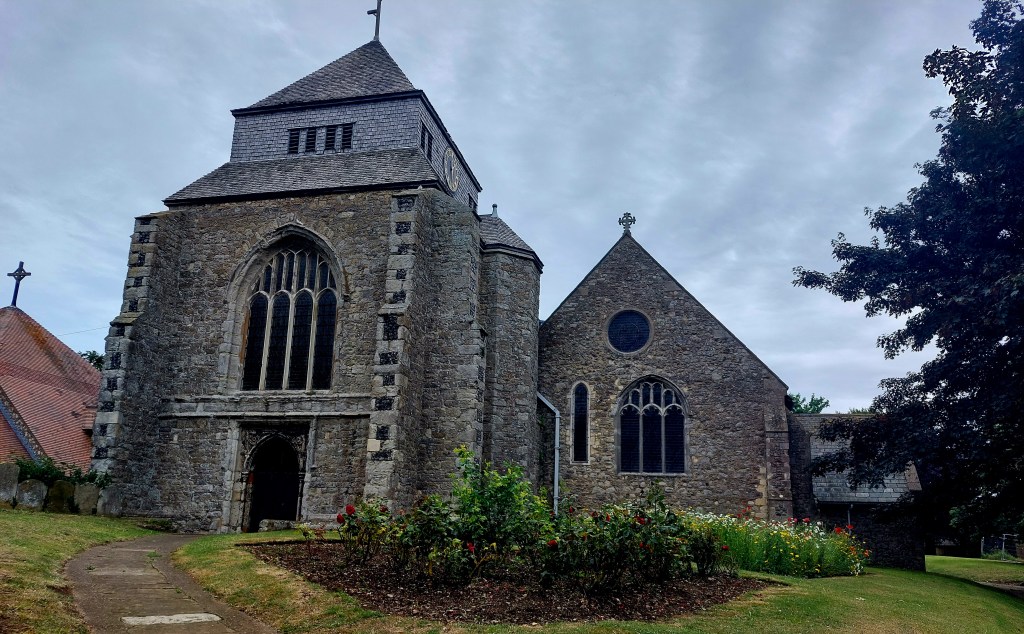
Minster Abbey, Sheppey

A Journey of Truth and Faith

(Talk on Luke 24:13-35 23rd April 2023)

This passage from Luke teaches us a lot about truth and faith. It is, in both a literal and a spiritual sense, about journeys. Literally, it is about two disciples (followers of Jesus) walking from Jerusalem to Emmaus. Spiritually, it is about their and our journey from not knowing Jesus to truly knowing Jesus and sharing our experiences of Jesus. It is about rediscovering Christ’s presence in our lives, gaining a fresher understanding of God’s transforming grace, allowing our hearts to be ignited with the Holy Spirit as we too walk with Christ.

The Bible makes very clear and specific statements about Jesus. As the disciples walked along they were discussing the scriptures and the recent events that had happened. When Jesus appeared to them they were walking the wrong way – away from Jerusalem. They were preoccupied with their own difficulties, overwhelmed with sadness, grief and hopelessness. They were unable to identify God’s purpose in what had happened.

Humans like to know reasons for…well everything. We ask (both aloud and to ourselves) why? We analyse, we interpret, we assume, we conclude. And we use the answers as a Sat Nav! What we decide the answers are determine/direct what and where we do/go next.

The disciples did not fully understand the Scriptures or the meaning of what had happened to Jesus. They had knowledge but it was incomplete and not understood. It was not true knowledge of the right information.

Jesus appeared and started to walk with them. They did not see Jesus. They were kept from recognising him. The Risen Christ walking with them on their journey, but unrecognised, igniting the fire of God’s love in their hearts. Like the Footsteps poem when there is only one set of footprints (because Jesus is carrying us).

But, this enabled Jesus to impart true knowledge. He explains and interprets for them. This teaches us that the key to interpreting the Old Testament is Jesus.

Jesus explained everything from Moses to the prophets, how the Messiah would save God’s people through His death and resurrection, rescuing a sinful, unholy people by reconciling them with The Holy God.

Jesus is the Messiah whose life, death and resurrection grants us salvation. Jesus Himself told us “I am the way, the truth and the life, no man comes to the Father except through me”.

God cannot be near sin. The only way for us sinners to be reconciled to Him was for Jesus to become sin, be punished for our sin, to die and defeat death; so that through His resurrection we could, with faith and repentance, be forgiven and have a relationship with God.

But it is not sufficient to just know the facts. We must also believe in that knowledge, we must truly believe in Jesus and in what He taught. Like the disciples recognising Jesus (when He broke the bread) and rushing back to tell the others, we have to open our eyes in faith. If we believe in Him then we strive to be in His image and this is shown in how we live. We need to believe in God’s word and be motivated by faith. We know God fulfils His promises but we also need to believe this. We know He is always with us, all the time, especially those times when we only see one set of footprints. But, we also need to believe this.

There is a story that gets quoted a lot so apologies if you, like me, have heard it used before:

There was a young boy caught in a house fire and forced to flee to the roof. The father stood on the ground below with outstretched arms, calling to his son, “Jump! I’ll catch you”. He knew the boy had to jump to save his life. All the boy could see was flame, smoke and darkness. The boy was too afraid to leave the roof. His father kept yelling “Jump! I WILL catch you”. The boy protested “Daddy, I can’t see you” The father replied, “But I CAN see you and that’s all that matters”.

Reece Sherman’s Faith Lessons

Do we understand truly? Or do we rely on our assumptions? Do we truly believe and trust in God? I pray that we do.

God is always there for us and will catch us. He can see us even if we cannot see Him. Do we have enough faith to jump into those life saving arms? I pray that we do.

Thank you.

Poppet on a journey, running through grass