Be prepared!

As I was reading the passage Luke chapter 12, verses 32 – 40, some words from The Lion King popped into my head:

“Even you can’t be caught unawares, so, prepare for a chance of a lifetime, be prepared for sensational news. A shining new era is tiptoeing nearer. And where do we feature? Just listen to teacher. Be prepared!”

There are many distractions in our world, many temptations and many things clamouring for our attention. 

Where your treasure is there also will your heart be.

Jesus is calling us to prioritise and to focus on the things and activities that give eternal life. He is reminding us that we should be centering our lives on God. The world will not make this easy. There will be distractions in the world around us which may make this seem difficult. But (there’s always a but!) it is essential for our lives as Christians and if we don’t we will be caught unprepared!

This passage from Luke is about vocation! It is not simply ‘be prepared and you will be saved’.

It is actually about being ready and alert, being aware and listening so that when God calls us to action we can seize the opportunity and spring into action, spreading the good news full of the energy of the gospel – healing, justice, love, grace, peace, mercy …

Those who are ready for the return of the Lord will be served by God. Remember the words of the hymn: 

“This is my God, the Servant King.”

This gives the impression of being a contradiction but it does not mean that we stop serving God. Instead it is a promise of what will happen when you re-centre your life around God. The good news of Christ will serve you in your life so that you are not afraid.

Jesus promises that God has given everything so that we do not need to be afraid. He then goes on to talk about how God will serve us reminding us about the gift of life and creation, the gift of eternal life, the gift of the Holy Spirit in Baptism and the gift of Christ’s body and blood in Communion. This highlights how abundantly God showers gifts upon us, how abundantly He loves us and desires good for us. It echoes His covenant with Abraham. 

So, how ready are we?

Are we ready to help others in need? Have we considered the issues of peace and justice going on in the world? Are we ready to be part of God’s solution?

Jesus is encouraging us to live with an expectation that God is always and already with us … and watching as God has always been. Jesus being incarnated as man was a reminder and embodiment of that reality and an example for us to follow.

This passage of priorities is a call to keep God’s priorities ahead of our own every day in all the choices we make. God’s list of priorities may seem long or challenging at times. It means accepting God’s forgiveness for our own sins and forgiving those who sin against us.

It means loving one another and loving our enemies. It means standing up to injustice when we see it, praying for and voting for and working for peace in the world. 

It means living and shopping and consuming in ways that care for creation; eating and drinking and exercising in ways that care for the temples our bodies are meant to be.

Going back to just before Jesus gave us this list of priorities He says to us:

“Do not be afraid little flock, for it is the Father’s good pleasure to give you the kingdom”.

God wants us to be with Him in His kingdom. God’s kingdom is already here among us thanks to Jesus’s sacrifice and resurrection. 

Being typical human beings we don’t see and experience it clearly because we’re looking the wrong way or wandering off on our own instead of following our God Guide.

But, like the pleasure we get giving someone a gift, God has immense pleasure in gifting us His kingdom, right here, right now as a foretaste of things to come, because of His grace. And God’s list of priorities is the key that opens the gate.

By being generous we can glimpse God’s kingdom. By sacrificing something, giving something freely and willingly to someone who needs it, enables us to experience and share in a measure of His kingdom. 

By seeking out the least among us and giving them a hand we can feel the kingdom among us. By forgiving all who cross us we experience the peace of the kingdom – the peace that passes all understanding. 

Converse with those with different opinions to yourself, send a note to someone who’d be surprised you thought of them, keep them in your prayers and God’s kingdom will be in your midst and theirs.

Be Ready

Be Alert

Be Prepared

Listen for God’s call and spring into action.

Be Prepared

Do You Want To Be Healed?

John 5:1-9

This short but potent passage from John contains themes of healing, restoration and the transforming power of faith. It symbolises humanity’s need for divine intervention and the opportunity of spiritual renewal through encountering Christ. The pool represents the need to seek God’s grace and trust in His ability to heal both physically and spiritually.

The man in this passage had been unable to walk for 38 years and had given up hope that he could be healed.

From John’s brief account and if we were to read on further we can ascertain that this inform man was old (well over the life expectancy of the time), a dependant who was unable to care for himself, he liked to complain and put the blame on others, he was an unrepentant sinner who was ungrateful and disloyal.

Jesus’s healing of this man would have been at the direction of God the Father and is an example of God’s complete and utter grace.

God saves sinners.

God saw us in our hopeless, helpless condition and rescued us. He gives hope to the hopeless and help to the helpless.

Jesus cares about people even when problems make them feel hopeless or sad.

Jesus healed the man and he was able to walk again.

Jesus brushes off the excuses of the lame man. Don’t make excuses – work around them.

We wait too long to ask for healing. Instead seize the moment and ask God to work in your life. It’s not easy to live with illness and hope for healing.

Spiritual healing may occur without physical healing. A positive outlook in the face of our own disease or injury, and as our bodies age, is a miracle in itself. We have to do our part to maintain good health. Small changes to improve our health is part of the healing process.

God helps those who can not help themselves.

God helps those who see their inability to save or help themselves, who turn from self to the saviour and trust in God.

All the healings Jesus performed remind us that God saves sinners.

Without God it is impossible for man to save himself.

We need God to give us feet to walk in His ways, we need to receive eyes to see His truth and have strength to walk in obedience to Him.

This is a picture of God’s initiative in salvation and He saves us by His grace.

Jesus saw the man. He knew him. He spoke to him.

God sees us. God knows us. He then speaks to us.

Jesus came to give us life abundantly.

Healing

Boring and Mundane

Advance warning – my story of faith is not dramatic! I know I am not the only one here who has sat in a church meeting where the minister has asked for people to give testimony or to talk about finding the light and thought “but I’ve always believed”. The reality is my story is ordinary and mundane.

I had a Christian family and learnt about Jesus from an extremely young age. I’ve belonged to and been part of church my whole life.

And, having explained that I have no dramatic Hollywood style event to entertain you with, I could stop here …

…or I could, which is what I’m going to do, continue anyway and tell you more – including why it is that ordinary mundane testimonies can be a blessing to us.

Being a Christian and following a Christian life is difficult – and it’s supposed to be. Remember that old adage that implies that something’s worth is measured by how hard you had to work for it. God, through His grace and His Son Jesus Christ, has given us the most valuable gift of all; but to follow in our Lord’s footsteps takes hard work and perseverance.

We are called to faithfulness. We are persecuted, we suffer, we face trials tribulations. temptation and false teachers trying to send us off track.

When times are difficult we are tempted to give up and many do fall away. The epistles remind us to persevere, to put on God’s armour. to stand firm and to ensure in following Jesus Christ.

Remaining steadfast, staying on the narrow path and being faithful teach the need to focus on persevering, to continue to put our trust in God and to not falter.

The well known poem about the footsteps in the sand really is true. God never leaves us. Whilst people fall away and leave Him; He does not abandon us.

When I give my burdens to Him I feel a physical lightness and literally feel the weight removed from my shoulders as He takes the load for me.

When times are easy, I feel His presence walking beside me and we enjoy the journey together.

If things are more difficult I feel His hand in mine.

In times of great trial He is supporting me or carrying me if you like.

And in times of great sorrow I feel His arms around me as He embraces me with His great love and comfort.

This is certainly a great blessing and in return I pray that God will continue to fill me with His love so that it can overflow through me to others.

We are called to carry each other’s burdens, encourage and bring back the wanderers. We are called to follow Christ’s example to aspire to God’s standard and to repent of all – however mundane – that makes us guilty of not reaching that standard.

God told us to pass His teachings to our children. Having parents, teachers, ministers and peers who did this points to God’s continued faithfulness as does having been preserved in the faith. God catches me when I stumble.

He has blessed me and kept me. He has blessed you and kept you.

So let us sing of His great love for evermore and make His faithfulness known through all generations and let us give thanks to God.

Holding Hands

He Is Risen!

Listening to the readings again on Easter Sunday with the women going to the tomb to prepare Jesus’s body reminds me of something I read recently about Mary – Jesus’s mother.

It is interesting, is it not, that Jesus’s mother – arguably His greatest disciple, a woman of tremendous faith, who stayed by Him to the bitter end, is not listed amongst the women going to attend to Jesus’s body.

And this poses the theory that the first person Jesus appeared to may well have been His mother and that this is why she was not among those going to the tomb at dawn. Such an appearance would be part of completing her participation in the essential parts of the paschal mystery.

Mary suffered above all others in the suffering and death of her son. Christ kept the commandments. He honoured His heavenly Father, His earthly father and His mother, so it makes sense that he’d visit her first.

If a son lived far away and his mother was told he’d died but he was actually alive and healthy and he returned to the area, it would highlight that he was not a good son if he visited his friends first and his mother last.

Jesus was the perfect son. So, why would He not visit His mother first. There’s also her faith, which, despite the apostles losing theirs at Jesus’s passion, Mary had in abundance. Scripture tells us that the Lord shows Himself to those who have faith in Him. And, of course, she loved her son so much and scripture tells us that those who love Him will be visited by Him.

How joyful she must have felt at seeing her son alive once more.

There is a special kind of joy at Easter. It’s not just the spring flowers springing up into life or the longer days. What it is is a deep, radiant joy born from our Lord’s victory over sin and death so that we might have eternal life with Him.

Jesus leaves the darkness and rises to new life. Through God’s grace, this gives us the gift that, no matter what our past was, we have permission to leave it behind and embrace the hope and joy of new lives in Christ. His sacrifice and act of intermediary reconciliation grants us forgiveness of our past sins, our present sins and our future sins.

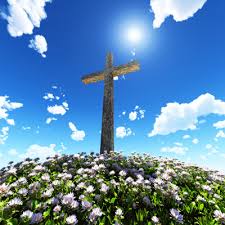
A cross in a sunny field of flowers. Easter Joy.

The Time Had Arrived

Palm Sunday is the day we appoint to mark Jesus’s parade into Jerusalem.

Up to this point Jesus has told His disciples to keep the knowledge of His Messiahship to themselves because His hour had not yet come. But now, the time had arrived. Jesus was making a declaration and He took dramatic action to make the announcement. Jesus rode into Jerusalem in a way which would be an unmistakable claim to be the Messiah – God’s approved king.

This event had been carefully planned. “The Lord needs it” was a password chosen and set up a long time prior to this event taking place.

It was certainly an act of defiance and courage. There was already a price on Jesus’s head. And yet, He enters in a way which throws the lime-light upon Him – giving Him centre stage. Every eye now beheld Him.

Jesus was fulfilling the prophecy in Zechariah 9. Even with His deliberate claim to be king, Jesus underlined the kind of kingship He claimed – king of love and peace.

Jesus used the language of the culture of the time. His procession used symbols which were part of the common understanding; touching a hope and a need in the people’s hearts. Consequently. the people eagerly responded.

Jesus rode a colt. A colt is an unridden donkey – which symbolised purity and peace. This confirmed His fulfilment of the Messiah role was by bringing reconciliation and peace.

In those days in that country, donkeys were considered noble. Only in war did kings ride a horse. In times of peace they rode donkeys.

By riding a donkey, Jesus came as a king of peace and love – not the conquering military hero the Jews had expected and awaited.

The waving of palm branches acknowledged Jesus’s authority. By throwing down their cloaks, the people were ushering a prince into their midst; showing honour and homage. And the traditional welcome to a new king – “Blessed is He who comes in the name of the Lord”.

In the loudest way possible Jesus was saying, “Here I am, your king, your prince of peace.” The reply – “Hosanna” meaning “save us” – accepting that Jesus is the saviour.

Some of the pharisees – not all but some – heard the crowds and did not like it. They felt contempt at all the rabble as well as being afraid of Rome – who did not like disturbances from others.

In response to the pharisees telling the crowd to be quiet, Jesus answers that if the crowd were silent the stones would shout out.

When it is time, it is time. God’s purpose will be fulfilled. The king has come. The kingdom is coming.

The triumphal entry did not happen in a vacuum. It was not an accident. Everyone gathered together saw the meaning before them plain and simple. The king was entering the city in righteous victory and the crow were in desperate need of salvation and rescue.

We often read the whole passion – the whole suffering – on Palm Sunday because out of context from each other the rest doesn’t make full sense.

Jesus, the true king, the one coming in the name of the Lord, entering in triumph, helps us understand the whole passion more fully. It was never about human thrones and powers – it was always about triumph over evil and death.

The one who resurrected Lazarus comes to Jerusalem, in faithful obedience to the covenant, to allow humanity to expend its evil upon Him and for Him to then rise up from the dead. Humanity expends its evil upon the Son of God. The Powers and Principalities of the world snuff out the light. Satan claims he has victory over the God with whom he thought equality could be grasped.

But … that is not the end of the story …

… Jesus comes to us the same way He came to Jerusalem – amidst the praises of the people. enthroned by the cries begging for salvation and the royal welcome.

He guides us through His passion-tide, to bring us to share in His meal, to kneel at His cross, to wait by His tomb, to await His resurrection and victory over the darkness, the grave and His defeat of Satan, as we shout “Alleluia” on Easter Sunday.

The six stages of Holy Week:

  • Jesus as king
  • Jesus’s obedience to God’s will
  • Jesus as suffering servant
  • Betrayal and loyalty
  • Jesus’s passion/suffering
  • Salvation through Jesus

What a difference a day makes.

What a difference a week makes.

Palm Sunday, crowds are cheering Jesus and celebrating. Yet, just a few short days later, the same crowds jeer and call for the brutal murder of Jesus upon the cross.

Jesus knew what was coming but He still taught and proclaimed the Kingdom of God to His final breath.

Jesus made one last appeal to be accepted as their king. Before the hatred of men engulfed Him.

Once again, He confronted them with love’s invitation.

donkey

A Sin Is A Sin or The Fig Tree

In the first part of Luke recounting the teaching of Jesus and the fig tree are people discussing Pilate mixing the blood of Galileans with their sacrifices.

This event, and that of the Tower of Siloam also mentioned by Jesus, were probably very well known by the crowds of the time, however, we know little about them today.

It is interesting that Pilate’s brutality is mentioned – which links up with the content of other historical references to him – and this gives us an impression of Pilate in advance of Jesus’s trial.

Considering this brutal nature of Pilate makes his act of washing his hands of Jesus stand out more. Pilate was quite happy to brutally kill people but he did not want to claim responsibility in any way for the death of Jesus.

Jesus uses the conversations of the crowd – one about a state sanctioned event and one an apparently random accident – for His teachings.

Jesus implies that we must not equate tragedy with divine punishment. However, repentance is needed universally. Unless we repent we will perish. To perish means the destruction of one’s soul.

The unrepentant will suddenly find that they have delayed too long and they have lost themselves.

Jesus asks the people – do they think that the Galileans being talked abount were greater sinners because of what happened to them. The Jews linked sin with suffering.

But there is no scale of sin. A sin is a sin.

Jesus expounds further by telling the parable of the fig tree. The fig tree was favoured because they had a higher chance of growing in the poor and shallow soil of the region.

Uselessness invites disaster. What is useful goes from strength to strength where what is useless is eliminated.

What would we answer when asked “of what use were you in this world?”

The land owner initially pronounces imminent and decisive judgement. The tree had not borne fruit for the last three years and so he wanted it cut down.

Nothing which only takes can survive.

The fig tree was taking strength and sustenance from the soil. In return it was producing nothing. This was the fig tree’s sin.

There are two types of people:

  • Those who take out more than they put in.
  • Those who put in more than they take out.

There is the duty placed upon us of handing things on better than we found them.

A fig tree normally takes three years to reach maturity. If it is not fruiting by then it is unlikely to produce fruit. But, this fig tree was given another chance.

The gardener pleaded for the tree to be given an extra year and the gardener would dig around the tree, placing manure around it. If the tree bears fruit it will stay but if the tree bears no fruit after the extra year it will be cut down.

The fig tree was given a second chance. We are given a second chance.

A second chance to change and repent.

It is always Jesus’s way to give man chance after chance. Peter, Mark and Paul all are witnesses to that. God is infinitely kind to those who fall and rise again.

God transforms us by grace – a grace that calls us to be generous towards those still trapped by poverty, want and devastation.

All sinners face the same fate before God. Everyone must stand before Him in judgement.

God is patient but, whilst He allows second chances and time for repentance, there is a limit.

There is a final chance!

If we refuse chance after chance, if God’s appeal and challenge come again and again in vain, the day finally comes, not when God has shut us out, but when we by deliberate choice have shut ourselves out.

Jesus uses the events of Galileans being executed and the tower falling on people in Jerusalem to emphasise the urgency of repentance, warning that those who don’t repent will perish.

A sin is a sin. There are no sins that are lesser than others. All sins are a sin.

Don’t be like the fruitless tree!

Focus on producing good fruit; on living a life which pleases God – rather than focussing on the misfortunes of others.

Jesus is emphasising that repentance is not just about acknowledging sins but actively changing to conform to God’s will.

The fig tree parable highlights God’s grace and the opportunity for change and restoration.

Fig Tree

Here Is The News…

(Isaiah 40:1-11, Luke 3:1-6)

Today, we have heard about the proclamation of God’s message.

The message is that people need to repair their lives and prepare for Christ’s coming. John (the Baptist) proclaims this by calling the people to repent and be baptised.

We also have the beginning of the end before the new beginning.

We have the introduction of four men who will play significant roles in Jesus’s crucifixion. In fact, the seven people Luke mentions at the beginning of our Gospel reading, are only remembered today, despite historical records, because they are mentioned here in Luke’s Gospel.

God chooses unlikely people. We sometimes wonder about our calling, but God knows what He is doing. He knows the right people to call. God often calls the lowly.

And John fulfils the prophecy from Isaiah quoted by Luke. “A voice of one calling in the wilderness, ‘Prepare the way for the Lord…'”

But why in the wilderness and not Jerusalem? The wilderness is sparse whereas Jerusalem was highly populated and held the Temple.

Yet, throughout history the wilderness has been a place where God has shaped His people and forged the nation of Israel. It is where God’s prophets did most of their work and where Jesus was tested. God continues to work in the wilderness; for the wilderness is where and when life seems bleak and barren. It is when we are most open to hearing God. God works in the wilderness of our lives.

The baptism of repentance for the remission of sins is the type of baptism that John introduced to the Jews. They were already familiar with a different type of baptism – a type called Proselyte Baptism which was a ritual required of any Gentile who wished to become a Jew to cleanse sins.

But John was introducing a baptism which required all to repent and be baptised for the forgiveness of sins.

This concept was unfamiliar to the Jews and so the prophecy that John would give the people knowledge of salvation was fulfilled through his teaching of this concept.

John taught the ethical requirements of repentance. It requires bearing fruit worthy of repentance and sharing with those in need. To deal honestly with people and not use power in an abusive way.

Advent is a time of preparation. Here we find the way to prepare – bearing fruit worthy of repentance -sharing with those in need – dealing with people honestly – using power justly – turning around and facing a new direction.

Repent and turn around away from the sin. Turn away from worldly compulsions and turn towards Godly affections.

The reward of repentance is remission of sins. This is more than just forgiveness. It is also freedom from compulsions and addictions and habits that threaten to undo us.

Repentance is called for by John at both personal and national levels for without it Israel was heading towards destruction.

At the end of this Gospel Luke emphasises again repentance and forgiveness . “Thus it is written, and thus it was necessary for Christ to suffer and to rise from the dead the third day, and that repentance and remission of sins should be preached in His name to all nations…”

People still need forgiveness. God still forgives.

People know they are sinners. Dealing with sin seriously can be a relief because if sin is not ignored but is addressed then forgiveness can be believed.

Just as Israel needed repentance, we also need to prepare our hearts and minds to receive the Lord and to help our friends and family prepare their hearts and minds as well.

The important work and the real goal is the preparation of our hearts and minds to receive God and the work of the Holy Spirit.

We can contribute to the Spirit’s work in many ways but especially through prayer and the preparation of our hearts.

ALL will see God’s salvation.

Jesus has eliminated barriers to the salvation of all people.

We live in a highly divided world. God calls ALL people in every land, every race, every persuasion, every circumstance.

ALL are called. ALL will see the salvation.

No-one is excluded. The call is to repent and receive forgiveness of sins.

Wilderness

Advent Is For Life Not Just For Christmas

Our reading from Luke (Luke 21:25-36) today is part of a longer apocalyptic teaching. So, why are we starting Advent with these warnings instead of with the message that a baby will be born?

Well, Advent doesn’t just precede Christmas when we remember the birth of Jesus. Advent is that time of waiting, of preparation, of making sure we are ready. It is about preparing our hearts and opening our minds.

But we are not just ensuring we are ready for baby Jesus. We also need to be ready for when Jesus comes again.

Advent is for life, not just for Christmas!

It is about being ready for Jesus, for watching and waiting and preparing for Him to come, both as a baby and when He comes again in glory. We must be alert, ready for the coming of the end. Not caught up in the commercialisation, the excess and the worries of the day but remaining ever watchful, confident and eager for the events Jesus tells us of – the signs that our deliverance is nigh. That He IS come again.

We all know what waiting is like. In smaller concepts there’s waiting for a bus, waiting for an appointment, waiting for the right vicars to be called to Sheppey. Sometimes the wait seems interminably long…

… and yet it does come to an end with fulfilment as that bus, appointment, those vicars, anything else we’re waiting for … Ashley’s Amazon parcels, the shopping, all arrive.

And they don’t always arrive when we expect them – sometimes the waiting is dragged out and they are a bit (at least in our eyes) late.

But then they arrive and that moment of waiting, that moment of expectation, changes into certainty, realisation and fulfilment of what we have received. No one waits without good reason. How long we wait is determined by the reward at the end. And Jesus is the greatest reward!

So we wait, patiently, trusting in God as we wait.

Waiting faithfully and being prepared, for our Lord will come again – but only God knows the exact day and time. We wait patiently through suffering for the wait is worth it.

Often people fill the waiting with distractions and keep busy to avoid the waiting. How easy it is to miss the very thing we are waiting for if we do that; because we are paying attention to the distractions instead of watching and waiting.

Advent is taking time, slowing down, opening our minds, being prepared to change.

It is the chance to wait and change our lives. Don’t miss that by running around. Instead get our hearts ready for Jesus to be in our lives more fully that ever before.

We must trust and be prepared to trust.

We must trust God in both the good and the bad times.

Take a step back, let God into every situation, listen to His guidance, pray on it, trust and wait.

We know God’s promise will be fulfilled. We must trust in His promise with faith and prayer.

We must be ready as we wait.

If Jesus returned tomorrow, or even this afternoon, are we prepared? Do we put enough planning and preparation into being ready for Him?

Make time for God. Live how Jesus wants us to live. Ask yourself what would Jesus do? Are our hearts and minds focussed on Him? Are we ready?

Tradition is actually the passing on of belief – despite the vernacular it isn’t staying the same or doing things this way because that’s how they were done 20 or 30 years ago. No! It’s actual meaning is the passing on of belief. If we are not ready we could miss out. Pass on the belief so all God’s children can be ready. Keep an open mind. Think and be prepared.

Faith is about going deeper in our personal journey with Christ. Know Jesus and be open to Jesus.

Ensure we have what we need to be prepared so that, no matter what day or hour He returns, we are ready. Don’t be complacent.

Keep relationship with God, and work on it doing God’s will every day.

Advent is a time when we have to look at our lives. Do we accept forgiveness and follow Him?

Humans are very good at procrastination.

Procrastination is very different to waiting.

So, humans procrastinate, run out of time and think I’ll do it tomorrow. But tomorrow might not come, the chance might never come again.

We must respond to God immediately when He calls us.

We must NOT be resistant to change or let rituals become idols.

Don’t procrastinate. Prepare now and keep the preparation ongoing.

Be ready and continue to be ready.

For God’s time is not our time but His promises are always kept. Jesus came, Jesus IS coming again!

So again I say, Advent is for life not just for Christmas!

Advent

Remembrance

This morning we have two key elements. We have the good news which is the gospel and we have Remembrance.

Our gospel1 this morning recounts an event which took place at the Sea of Galilee. Now, in Jesus’s time this was the centre of a prosperous fishing industry. The importance of knowing this will become clear shortly. 

And the event Mark is recounting is the pivotal moment of Jesus calling His first disciples. Relevant both then and now is that the call to follow Jesus was a call to BE with Jesus as well as to learn and be Jesus’s representatives, carrying out the ministry He gives. The disciples were with Jesus and learning directly from Jesus.

So Jesus calls to those He had chosen, and immediately they left their nets, their boats, their fishing businesses, their families, everything. No hanging back, no hesitation, no requests for extra time to finish what they were doing or to pack their equipment. Immediately! Leaving everything! To follow and be with Jesus!

These were just ordinary men, the same as you and me. They heard the call, calling to something deep inside them, and they knew they must heed it. They followed Jesus. They made mistakes just like all of us and they learnt from these, repented and were forgiven. They went on to do great work spreading the good news of Jesus all around the world and this was not without suffering and death but Jesus was with them and had prepared them for this work. They did not follow blindly but with eyes which had been opened.

God calls every single one of us and our whole lives must come under His rule. Our money, our relationships, our work, our time, our everything should be under the rule of Jesus – not because we accept Him as king but because He IS king. And what we are called to do is to repent and believe. To turn away from sin and accept the forgiveness freely offered to us by Jesus. 

Believing that Jesus is king who brought God’s kingdom to us and embracing it in faith, turning from sin and embracing forgiveness is the very starting point of discipleship. We are unable to move forward without repenting and submitting to the rule of Jesus. 

Belief is not merely accepting something as true. Belief involves a response from our whole being in complete obedience.

Just like in Jesus’s day when the people trusted in all sorts of things: their ancestry, land, temple, and laws are just a few examples of many, people today trust in many differing things. Jesus was calling them and calls us to trust the good news that God was and is doing something new through Jesus. To be part of His kingdom requires letting go of all these earthly ties that distract us and putting our whole trust in Jesus. Repent and believe because God has come and you can belong to His kingdom and have your sin taken away.

But that doesn’t mean we have to forget.

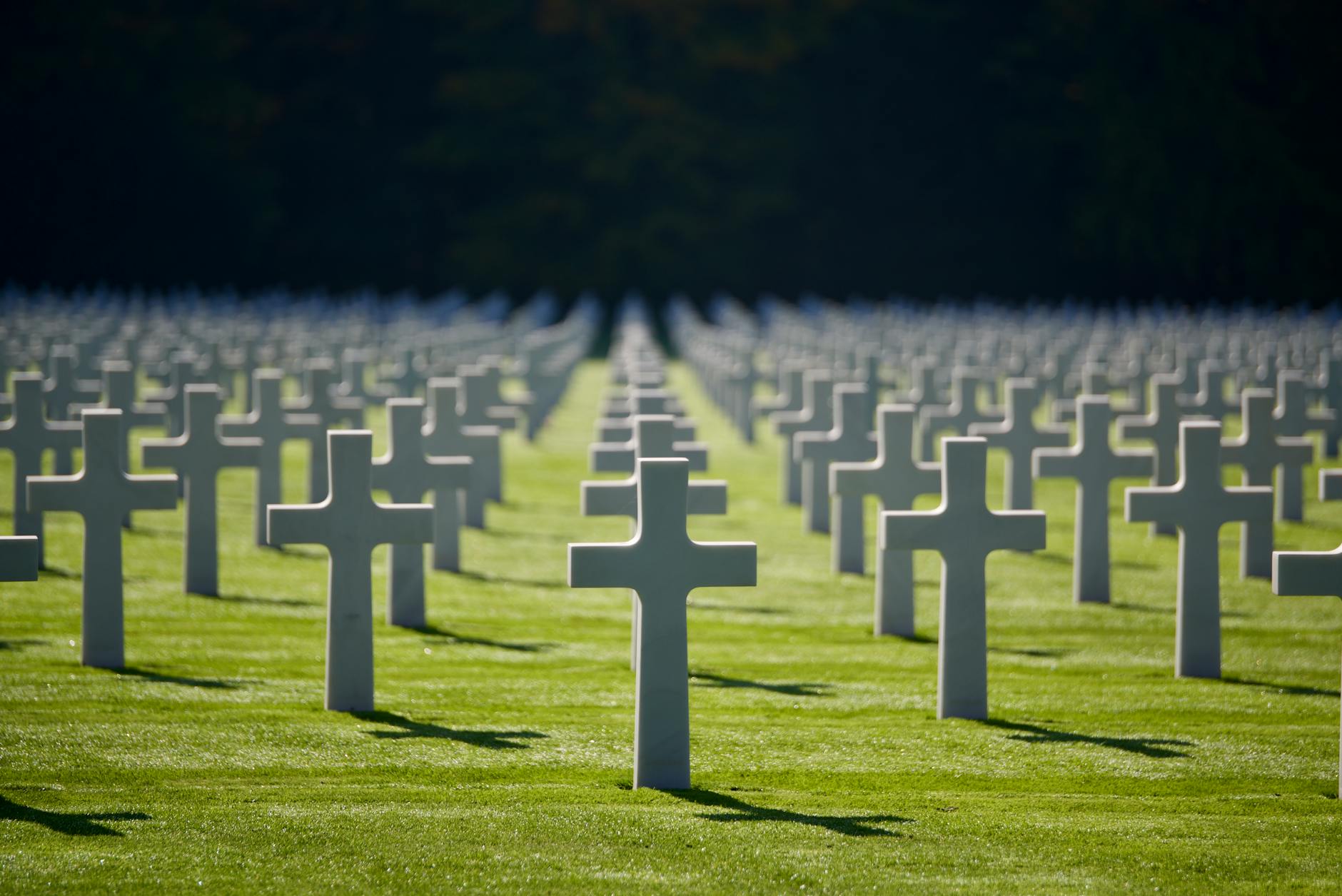
Remembrance Sunday is an opportunity to remember and honour those who have lost their lives in conflict and those who were left physically and emotionally scarred.

It is an opportunity to all join in the silence together and allow our remembrances to help us face more honestly what it means to be human and to deepen our commitment to peace.

In all of this we seek God’s everlasting and all encompassing love.

War brings much death and trauma. There are those who cannot speak of the horrors they experienced. The silence we hold today also honours them.

As we struggle to find words to speak into the silence and horror of loss and trauma, we make Christ known. In the depths, we discover, He gives us words to speak of healing, forgiveness, and the knowledge that in Christ death is not the end and that love not violence is the final word.

God takes from us all our raging and bitterness, if we just let Him, and in the resurrection He shows us the way to peace.

The hard won, costly peace of the sacrifice of His son, who faced war yet did not respond with retribution and retaliation but with mercy, forgiveness and love.

We hold silence and remember, not so we can forget for the rest of the year, but so we can be reminded of a call to speak and recommit to live as peacemakers, as people who through the love and passion of the self-offering and sacrifice of Christ, God has come near.

And we live into the hope of a world where war will be no more.

We will remember them.

Poppy
  1. (Mark 1:14-20) ↩︎

Time of Change …

… time for change. As we enter October change is all around us. Changing leaves falling off trees, darkness approaches earlier each day, changing times, people come and people go. It will be tough but God will see us through.

Be strong and courageous. Do not fear or be in dread of them, for it is the Lord your God who goes with you. He will not leave you or forsake you. (Deuteronomy 31:6)

When change comes, whether it is planned and expected or whether it has been thrust upon us, whether it is wanted or unwanted, it is an opportunity to take a good look at ourselves. What do we need to change about ourselves and how we react and respond to the changes that must take place. What we need to change to be the best we can be – to have open hearts and minds and ears for God. To actually listen to His voice and His plan for us. To take the next steps on our journey.

To open ourselves to changes that will have to be made to enable us to make it through difficult situations. To be open to and make the changes that are required for us to flourish in the future.

To everything there is a season, a time for every purpose under heaven. (Ecclesiastes 3:1)

Change can be challenging and many are resistant to it but change is a normal and necessary part of life. And, of course, change can be exciting, stimulating or rejuvenating but it can also be disorientating, uncomfortable and stressful. However, change will happen whether we want it to or not, so we need to accept and embrace it, as much as possible.

But the Lord, our God, is our strength and shield. We do not need to fear what tomorrow may hold. God is with us and will never leave us. He protects us and His plans for us are good.

The Lord is my strength and my shield; my heart trusts in Him and He helps me. My heart leaps for joy, and with my song I praise Him. (Psalm 28:7)

Embracing Change