

Exodus 14:19ff, Psalm 114, Romans 14:1-12, Matthew 18:21-35
In our readings we have the Israelites crossing the Red Sea safely whilst the Egyptians perish leading to the Israelites respecting and being in awe of God. All, like in our Psalm, in the presence of God. Paul in Romans highlights that we are the Lord’s and should do all things in honour of the Lord; giving Him thanks. And Matthew with the key word that binds all this together – forgiveness.
Exodus is a book about migration. It means a mass departure of a large group of people (in this case the Israelites) from a place (Egypt) all at the same time. At this point in the Exodus of Israel the Israelites were camped at the edge of the Red Sea. The Angel of God and the Cloud Pillar, sent by God to lead them, moved behind the Israelites whilst they were waiting to cross the Red Sea becoming a barrier between them and the Egyptian Army. God was with and protecting His people.
Just like He was with and protected His people then, God is with and protects His people now. Even when we feel overwhelmed in a struggle of some kind God is with and protecting us.
There was a time delay before the parting of the Red Sea. During this time when the Angel and Cloud were between the Egyptians and the Israelites both were protected. The Cloud was a source of light to the Israelites symbolising God’s glory and salvation; but a source of darkness to the Egyptians symbolising God’s judgement.
Like He so often does for us, God was giving the Egyptians another chance. During this time before their sentence was carried out the Egyptians were being given time. Time to repent form the heart, time to turn around, time to let the Israelites go, time to go home. Had they done this their sentence would have been lifted, they would have been forgiven, they would have been spared.
The waters of the Red Sea parted and the Israelites walked across the dry land in the middle to the other side. The Egyptians tried to follow the Israelites across the sea bed and God fought on the side of the Israelites until they were all safely across. The Egyptians started to flee back the way they had come but God commanded Moses to hold his staff over the sea and the waters returned.
God doesn’t need people in order to perform miracles but He often gets them to take part. God used this opportunity to vindicate Moses, who had been accused by the Israelites, before our reading starts, of having the lowest of motivations and an evil heart. God is showing the Israelites that Moses is their chosen leader.
Seeing the Egyptians dead on the seashore proved to the Israelites that God keeps His promises, that their deliverance from Egypt was real and that their oppressors were dead.
God delivered Israel in a miraculous way, demonstrating His faithfulness to Israel and to all His people.
The deliverance of Passover and the miracle of the Red Sea go hand in hand. Without the victory at the Red Sea the redemption at Passover would have been lost; and they would never have made to the Red Sea without the redemption at Passover. Likewise, the redemption of the cross would be lost without the miracle of the resurrection. Israel walked through potential death to new life in the presence of God. When we accept God’s unconditional forgiveness and when we forgive others we also have new life, a fresh start, in the presence of God.
Our reading from Paul’s letter to the Romans teaches us that we should accept all in faith, the new to faith, the mature in faith, and all those in-between, without condition i.e. we should not make spiritual maturity a condition or requirement for fellowship.
Paul reminds us it is not our place to pass judgement on any fellow Christian. They should stand or fall before their own Master – God.
There is a lot of useless, harmful division amongst some Christians over silly, unimportant and bigoted things. Paul does not say we must erase our differences but to rise above them as Christian brothers and sisters.
Or as Bishop Rose says: Instead of being a melting pot and all melding into one unidentifiable gloop we should be a fruit salad. Each a different bit of fruit all rubbing together in the fruit salad making it more interesting and flavoursome.
From beginning to end our lives are connected to others. No one is an island. From beginning to end our lives are to be dedicated to God and so whatever we do we must honour the Lord. We will stand before the Judgement Seat of Christ; which is concerned with a Christian’s rewards and position in the Kingdom. Don’t judge your brother or sister in Christ for we will all be judged by Christ.
Every knee shall bow! All will have to appear before God in humility and give an account of ourselves before Him. We should forgive our brothers and sisters and let God deal with them as He will surely deal with us all.
Again, our instruction is to forgive, which brings us to our excerpt from Matthew.
Peter asked how many times we are to forgive, suggesting seven times. To us that doesn’t seem very many but the accepted limit taught by many rabbis of the time was three; and so Peter probably felt seven was more than generous.
Jesus’s answer alludes to and is in contrast with Lamech’s in Genesis 4:24, in which Lamech says “If someone who kills Cain is punished seven times, then the one who kills me will be punished seventy-seven times.” Lamech is talking unlimited vindictiveness.
In giving the answer of seventy-seven, Jesus is saying we are to forgive the repentant an unlimited number of times. But even more than that we should also forgive the unrepentant unlimitlessly.
Jesus follows His answer with the story about the servant who did not forgive.
This servant owed a huge debt which he would never be able to repay. He begged for more time – even though it would be fruitless. His master took pity on him in compassion and mercy and forgave him the debt,
However, upon his return home this servant found someone who owed him a debt in an amount which was a tiny fraction of the amount he had just been forgiven. With unsparing severity he demanded repayment. The one owing this smaller amount used the same plea yet instead of being met with the same compassion and forgiveness he was thrown into the debtor’s prison.
When the master of the servant who had received mercy heard what had happened he was understandably angry that this man who had been forgiven so much had then been so unforgiving. The servant ends up in prison to be tortured.
Giving genuine forgiveness from the heart is required of all who have been forgiven. God forgives us all unconditionally and in comparison our sins against each other are but a tiny percentage of our sins against God. Therefore we have no justification for not forgiving.
We incur greater wrath from God by refusing to forgive than we do for the rest of our sins.
We must forgive from the heart, unconditionally and not determined by whether those who sin against us are repentant.
It’s worth saying again; since we have been forgiven so much we have no right to withhold forgiveness.
Jesus’s parable shows we must be more forgiving not less forgiving. If we forgive in words only and not in our hearts we are still condemned.
Granting forgiveness is evidence of having truly been forgiven. Whereas being unforgiving shows that the heart of the unforgiver has not allowed in the love of Jesus.
The unforgiving servant in the parable was delivered to the torturers. Not forgiving others is a form of torturing ourselves and can do us great harm.Those who will not forgive cannot expect forgiveness.
Forgiveness goes hand in hand with love. If we really want to love and be loved we must learn how to forgive and how to accept forgiveness. There is no love without forgiveness and no forgiveness without love. Forgiveness is the final form of love and cannot be separated from love.
When you forgive, you love, and when you love God’s light shines upon you.
So, if we really want to live, we must learn to forgive.
We can pray: I love you. I’m sorry. Please forgive me. Thank you.
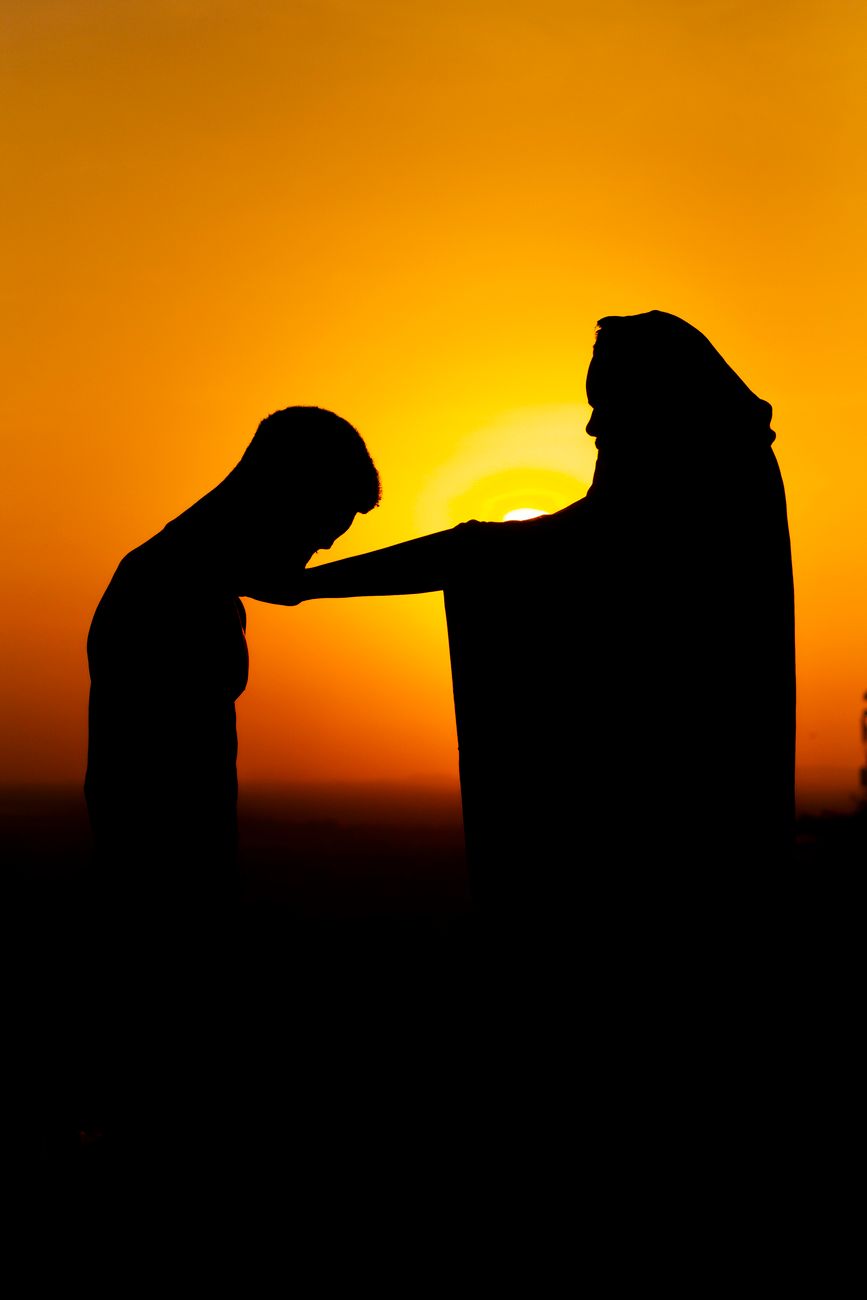


 Just because