
“A disciple is not above the teacher nor a slave above the master; it is enough for the disciple to be like the teacher and the slave like the master. If they have called the master of the house Beelzebul, how much more will they malign those of his household! “So have no fear of them, for nothing is covered up that will not be uncovered and nothing secret that will not become known.
Matthew 10:24-39
What I say to you in the dark, tell in the light, and what you hear whispered, proclaim from the housetops. Do not fear those who kill the body but cannot kill the soul; rather, fear the one who can destroy both soul and body in hell.
Are not two sparrows sold for a penny? Yet not one of them will fall to the ground apart from your Father. And even the hairs of your head are all counted. So do not be afraid; you are of more value than many sparrows. “Everyone, therefore, who acknowledges me before others, I also will acknowledge before my Father in heaven, but whoever denies me before others, I also will deny before my Father in heaven.
Not Peace, but a Sword “Do not think that I have come to bring peace to the earth; I have not come to bring peace but a sword. For I have come to set a man against his father, and a daughter against her mother, and a daughter-in-law against her mother-in-law, and one’s foes will be members of one’s own household.
“Whoever loves father or mother more than me is not worthy of me, and whoever loves son or daughter more than me is not worthy of me, and whoever does not take up the cross and follow me is not worthy of me. Those who find their life will lose it, and those who lose their life for my sake will find it.
The very first event recognizing fathers occurred on July 5, 1908, in Fairmont, West Virginia. Grace Golden Clayton organized a church service to honour 362 men who had died in the Monongah mining disaster a few months prior. Subsequently, after much lobbying, Father’s Day was created by Sonora Smart Dodd of Spokane, Washington, in 1910 to recognise her single Civil War veteran father who raised and cared for her and her five siblings after their mother died in childbirth.
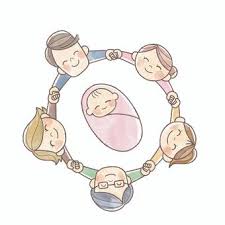
On Father’s Day, we pause to honour the physical and spiritual fathers we have in our lives, which includes those who have to be both mother and father, and all that they have done. From Psalm 103 verse 13, “As a father shows compassion to his children, so the Lord shows compassion to those who fear him”.
There are many aspects to the perceived role of fatherhood and there are different people who may fulfil this role for us. For some it is their Dad, for some their Mum, for some a Grandparent, for some a carer or a foster parent and for some a trusted mentor or friend. All these people are loved by those they love and care for and we thank God, our Almighty Father, for these people, for all they do and for the way they touch our lives.
Fear causes failure. Fear causes failure in discipleship.
Sometimes one of the harder jobs of a parental type role is having to tell us things that are tough to prepare us for what lies ahead.
Jesus is preparing His disciples for their mission and does not hide from them the threats they will come up against but He also explains why they must not let this fear control or hinder them.
The disciples are to undertake their mission in complete vulnerability and dependence on God; even though they will face arrests, beatings, opposition (including from family and friends), hatred and persecution.
Why tell the disciples the trials they will suffer? Wouldn’t this put them off the task assigned to them?
By warning them in advance, not only do the disciples have the opportunity to be prepared, but also saying aloud the suffering and trials to be faced is the first step to being freed from the grip of fear.
Jesus doesn’t just tell the disciples the worst case scenarios, He also gives reassurance and instructions to resist fear. The most important part of this reassurance is the relationship between the disciples and Jesus, and through Him God.
Jesus warns His disciples that the fate of the Master or Teacher also awaits their disciples and so the disciples should be ready to receive a similar response from the leaders of Israel that Jesus Himself receives and to have no fear of them.
Proclaiming and living the Gospel is the most powerful tool the disciples have against world powers.
Death threats can be a powerful way of controlling people through fear. Whilst humans try to use this power, Jesus reassures the disciples that humans only have power to destroy the body, not the whole person. Only God can destroy both soul and body. However, God is not like human rulers. God has ultimate power over our whole being and exercises this power with mercy and love.
The call to discipleship has priority and is above all other claims on identity, allegiance, family and friends.
To take up our cross aligns the discipleship mission and fate with that of Jesus which can include humiliation, suffering, shame, opposition and death. It implies identification with marginal people who do not “find their lives in this world”. But it comes with the promise from Jesus that anyone who loses their life for Him will “find it” whereas those “finding their life in the world” will lose it.
Jesus shows us that the answer to fear includes recognising and naming it. Fear of the unknown or unacknowledged is a far greater fear than the fear of the known and spoken.
We need to be honest and transparent in recognising the elements of human power including those rooted in the threat of death and suffering. We need to be aware of the conflict and division that proclaiming and living the Gospel inevitably produces. We need deep awareness and conviction of God’s presence in the world in love, mercy and compassion.
Today’s society is guilty of having a lack of commitment and has left its cross on the side of the road.
Every organisation that relies on regular and committed volunteers – churches, Girl Guiding, Scouts to name just a couple – all are having trouble finding people to take on running these groups, to take on responsibility for the different elements that need doing, to run and to support events. People don’t mind making use of these various groups when it suits them but they will not commit to regular attendance, regular giving or taking on responsibility.
There are all kinds of reasons used and excuses given to explain this such as working hours or childcare but, whilst that does affect some, it most certainly does not affect everyone. What about the childless? The unemployed? The retired? Those with compatible working hours or who work part time? Those who do have the talents and time to take an active part but who won’t? And so forth.
People today would rather keep their interpretation of freedom, stay at home watching the television or surf the internet. People think less about being or don’t want to be part of something whether that be a cause, a group or community of believers (in anything) and think more about individual pleasure and activities. And we are all guilty.
Today, people are told to just do what they can and this encourages people to not put the effort in.
Jesus does not say that to us. He did not say it to the disciples. Instead He told a group of scared men that it required commitment and was going to be very tough. He told them this in no uncertain terms.
Did they decline – No
Did they give up – No
Did they say actually Jesus I don’t really feel like doing that today – No
What they did do was to rise to the challenge in total commitment to Jesus.
People, regardless of age, will be what society expects them to be. If a child is told they can’t do something then they start to believe they can’t do it and won’t even try. If you tell a child they can’t behave they won’t even try and the more they don’t – whether that is leaving rubbish on the floor, not putting things away, being rude causing damage, shooting catapults or any action that the adult considers misbehaviour. If they are constantly told they can’t behave they don’t.
Likewise, the more people are told not to overdo it or to be careful because they are frail or that they don’t need to then the less they do and the more fearful and frail they become.
We must train ourselves to take a risk and be willing to commit and do.
Jesus told His disciples not to be afraid, that they would be guided and protected, that they were precious to God and that even if their bodies or feelings got hurt no harm would come to their souls.
God’s love and protection surrounds and insulates us from the worst human powers and earthly life can throw at us. We might suffer as all typical humans suffer but we are precious to God, He holds us in His hand and keeps our souls safe. We can and will endure.
In a society that encourages lazy, self indulgent life on the sidelines it can be difficult to be as committed and courageous as those first Christians.
We must not be complacent. As the world is, it is easy to become. We must be on our guard always to ensure that the world does not drain us of our commitment to others and to God. We must resist the temptation to be lazy and uninvolved.
Like those first disciples, as Jesus’s followers we are all involved with each other, with God’s will for the world, with His command to spread the word, and to bring in the kingdom; and we must not let the siren call of selfishness and lack of commitment prevent that purpose.