Calling Levi

In chapter 9 of Matthew’s Gospel,  Matthew recounts his own call from Jesus to become a disciple. Matthew was the name Jesus gave him. Until he became one of Jesus’s disciples, he was called Levi. And he was at his place of work in the tax office. The Jewish people did not like those among their number who became tax collectors. They viewed these people as sinners and collaborators with the Romans against their own people. Tax collectors had the force of the Roman soldiers behind them to force the people to pay the taxes, but not only that, they were considered to be extortioners because they were allowed to keep any money they over-collected. Consequently, most if not all tax collectors over-charged on purpose to line their own pockets.

The call from Jesus gave Levi Matthew the opportunity to literally turn his life around. When he was a tax collector he was busy taking but Jesus was calling him to a work that was essentially giving.

Jesus said to him “Follow Me” and he did. He left his desk, taking nothing but his pen. Jesus called him and the only thing he took from his trade was the pen this trade had taught him to use; a skill he then used to compose his Gospel of Jesus’s teachings.

There is archaeological evidence that fish taken from the Sea of Galilee were taxed. So Jesus took as His disciple the taxman that may have taken money from Peter, James, and John and the other fishermen among the disciples. Certainly, initially, it would have been difficult for them to accept each other. Yet, in one way, Levi made more of a sacrifice than some of the other disciples. Peter, James, and John could easily go back to their fishing business, but it would be practically impossible for Levi to go back to tax collecting.

Jesus sat at the table in the house, and many tax collectors and sinners came and sat down with Him. This context suggests that this was a gathering of Matthew’s friends and former business associates. Possibly, Jesus took advantage of Matthew’s decision to also reach those whom he knew.

And so the disciples were asked, “Why does your Teacher eat with tax collectors and sinners?”  The answer to this question was simple, because Jesus is the friend of sinners. As Paul wrote in Romans 5:8 “But God demonstrates His own love toward us, in that while we were still sinners, Christ died for us”.

We are fortunate that God calls sinners and not just saintly people. Jesus came to benefit those who understood their inherent need for Him. Yet the proud who see no need for Jesus do not benefit.

Jesus quoted Hosea 6:6, “I desire mercy and not sacrifice”. In Hosea’s day, God’s people were still good at bringing sacrifice, but they had abandoned mercy because they gave up the knowledge of God and truth. God would rather have right hearts, full of truth and mercy than sacrifice.

These words are more striking when we remember that they were addressed to the teachers of men. This rebuke showed that they did not know God, and Jesus bade them go and learn the meaning of their own Scriptures. These “teachers of men” thought they knew everything already, and the rebuke made them angry.

This event illustrates Jesus’s mission to seek and save the lost, calling them to repentance and a new life.

Collecting taxes

Discipleship Is Costly

Luke 14:25-33

Jesus is on His way to Jerusalem because the time of His death is approaching. He was accompanied by His disciples, whom He was teaching and preparing, but time was short. Hence, Jesus’s radical call. It was absolutely necessary for them to leave everything behind and be prepared for their own death if they are serious about following Him and about going with Him to Jerusalem.

There were also large crowds accompanying Jesus as He journeyed towards Jerusalem.

Jesus was also teaching these crowds.

Those who were already following Jesus needed to be taught the nature of true discipleship. They needed to be fully aware of what following Him costs.

Following Jesus demands full and total devotion to God.

Jesus was so fully devoted to His mission that it meant abandoning and being rejected by His home town and His family. For those who must leave their family behind to be able to fully follow Jesus it could be perceived as hating one’s family in the eyes of some.

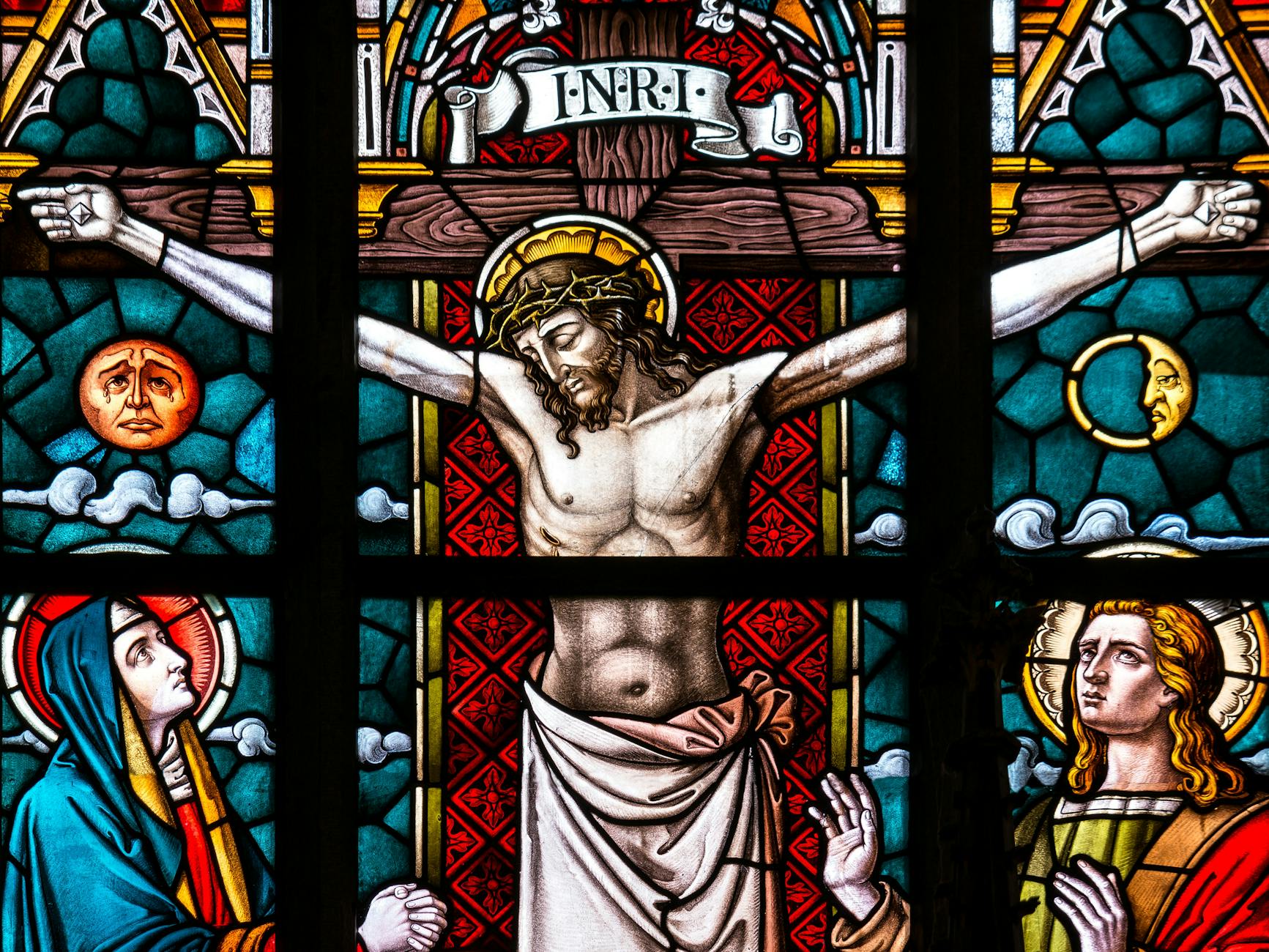
Jesus tells us that to be His disciple means carrying our cross and following Him.

He is giving His disciples advance warning.

The road they were following Jesus down is expected to end in death, and they must prepare themselves.

Full devotion is described by and measured by what future is being committed to.

As usual, Jesus gave examples in order to help His disciples and the crowd understand the importance of fully evaluating the cost of following Him.

It was not a decision to be made lightly. Each person in the crowd and each disciple needed to consider whether they could follow Him to the very end, leaving everything else behind.

“None of you can be my disciple if you do not give up all your possessions.”

Jesus is entirely serious in saying that those following Him to Jerusalem must not be encumbered in any way.

But, if we look at other contexts and situations, does Jesus require every one, every disciple, every where and in every time to abandon family and possessions and run headlong towards death for Him?

If we look at the rest of the New Testament we can discern that the answer to this question is no.

The rest of the New Testament portrays faithful disciples maintaining family relationships and retaining possessions.

There are the apostles who travelled with their wives as they travelled far and wide on missionary work. The members of the church who had homes and possessions, with which they supported the church and the work of Peter, Paul and the other apostles.

It is important, however, to reiterate that these converts held their possessions loosely and were willing to give them up for the good of others and to support the Gospel mission.

It is also important to realise and accept that the requirements Jesus placed upon those wanting to follow Him on the road to Jerusalem will be required to be fulfilled should the circumstances dictate.

All followers of Jesus must remind themselves constantly that following Him faithfully could require the full sacrifice of family, possessions and even life itself. Those Christians who do not encounter or experience that extreme sacrifice must ensure that their family, possessions and life do not become so dear to us that they draw us away from full devotion.

Discipleship IS costly.

It demands continuous giving – giving time, giving energy, giving attention, taking initiative, making sacrifices, facing opposition, losing privacy, embracing obscurity, even shedding tears.

The making of disciples is not just sharing the Gospel, but sharing our own selves, gladly, for the souls of others. It means giving, giving, giving, giving and even more giving.

It is more blessed to give than to receive. So it also is with the hearts of disciples. It makes me happier for you to have my time, energy, attention. initiative, than it does for me to keep them to myself.

The crowd who were with Jesus on the road were interested enough to be following Him. However, they hadn’t fully grasped the implications and cost of discipleship. The same is true for many today. Throughout the world, both in churches and out, are crowds of people interested in Jesus but who do not really grasp the full implications, cost and commitment of discipleship for themselves.

And it is to such as these that Jesus is speaking to here. Those people who are willing to follow Jesus and learn from Him but only as long as the cost to them is not too high. Casual followers, followers who are here today but gone tomorrow.

Jesus points out that this is a total misunderstanding of what it means to be a Christian and He strongly addresses this misunderstanding.

We are to put Jesus first, to put our love for God above everything else in our lives.

The Christian life demands strength to love.

The Christian life demands that we carry a cross.

The Christian life demands that we give up everything for God.

There is only one person who has ever managed to do this perfectly and, of course, that is Jesus Christ Himself. He is our model – our example. We are to imitate Him, or in the words of Thomas A Kempis we are to develop “The Imitation of Christ”.

Growth in discipleship is ultimately growth in becoming more Christlike in our thoughts and actions.

And that involves sacrifice and hard work.

Are we ready to count the cost and become the disciples Jesus wants us to be.

It’s a choice we must make.

Not only that but we must keep making that choice

every

single

day!

Count the cost

Pride and Humility

In Luke, chapter 14, verses 7 to 14, Jesus is teaching us about pride and humility.

Jesus was at the house of one of the pharisees to eat a meal. Jesus often had disputes with the pharisees but He still spent time with them; not as a pharisee Himself but being God’s Son on earth He was showing them God’s example and love. And whilst at this meal Jesus watched.

He watched and saw how the others at this meal behaved and how they strategically placed themselves to get the best seats in the house; that is the places which would grant them the most honour or, if you like, jostling for the Top Table.

In Jesus’s day, seating arrangements were very important in society as the most honoured person sat in a particular seat, then the next most honoured, then the next and so on. A wedding banquet was the most important occasion and where you got seated at such a party was indicative of your standing in the community. This made it the perfect example for Jesus to use to teach His lesson.

And, of course, if you were to take the most honoured place and the host wanted someone else to sit there you would be asked to move – which would be embarrassing and would make you feel great shame.

Not everyone has the same exact customs to denote social standing and highlight how important or honoured someone is. But, there are many occasions in modern life where one’s own sense of self importance, pride and high opinion of one’s self can be displayed.

Pride comes before a fall. Shame comes after self exaltation.

Instead of playing the self promotion game, work hard for the Lord and let God raise us up.

When sitting in that lower place we are not there to make ourselves noticed in order to try and get ourselves placed higher. Nor are we there to pout and show dissatisfaction with the aim to let others know we don’t belong there. On the contrary, there is something wonderful and joyful about being content in whatever place God allows us to have.

Joyfully embrace the lower place. If the Master moves us to a higher place think how much more satisfying it is to know that God has raised you up than if you raised yourself up.

When we seek to honour ourselves we will always be humbled.

Jesus was the perfect One to teach this lesson, because He fulfilled it perfectly. He (God’s Son incarnated as flesh) deserved the highest place but He took the lowest and was ‘granted’ the highest.

Jesus had also noticed that the pharisee had chosen guests from a sense of pride, lacking in love for others and only inviting those who could give something in return. So Jesus went on to warn the host about the danger of pride when choosing guests.

Jesus is not saying that we can never invite certain friends/relatives/associates. What He is saying is not to make a habit of only inviting the same clique of people all the time.

He is telling the pharisee, and us, not to only associate with people for what they can do for us. He is telling us not to put self at the centre of our lives. We are called to follow Jesus and His example was that of putting others in the centre of our living.

It is better to give than to receive.

It is a wonderful feeling to give a gift that can never be repaid. Such a feeling helps give us a small insight into the pleasure of God in giving the gift of His grace, mercy, salvation and blessing to His people.

We never lose out when we follow the pattern of God’s generosity. Jesus shows us that we need to live with an eternal perspective of life as He promises God provides us with full repayment at the resurrection of the righteous; when our lives are weighed up on the balance sheet and audited by He who knows our hearts and minds, our actions and our motivations.

So, in summary:

Practise and prioritise humility over pride in everything.

Our works should be for the glory of God not for the praise of others.

We should embrace a lifestyle of radical hospitality, welcoming all.

And we need to understand that God’s kingdom operates with a different set of values to the world’s values. It operates with God’s values.

Humility

Rest

This miracle in the passage from Luke chapter 13, verses 10-17, is quite understated when compared to some of the other miracle accounts. We are told that the woman suffered for 18 years, Jesus lay hands on her, pronounced her free from her ailment and she was set free.

The synagogue leader then points out what many of the Rabbis and Jews may have been thinking – that healing was work and so should have been done on one of the 6 days of labour and not on the Sabbath.

Jesus’s response was that of the lesser to the greater. He points out that any of those gathered there would still take care of an animal if it needed help on the Sabbath so how much more should they respond to a human being in need. 

But the conversation is actually deeper than this. 

In the original Greek the synagogue leader’s words use the word ‘dei’ to make his claim about the ought of work but it also describes what is necessary for Jesus to do as God’s Son and representative; which is why Jesus’s response picks up on the synagogue leader’s claim. It is not about a divine necessity to work on the other 6 days but on the divine necessity to free the woman from what binds her on the Sabbath. And, of course, for added emphasis Jesus calls her what she is – a daughter of Abraham – magnifying the need to heal, liberate and unbind.

And the people praise God. They recognise Jesus as the one who brings in healing power to those who need it most.

Jesus is God’s repairman for the world.

God made the world and He made it good. He also made it holy. When Jesus acts in His Father’s name it is right and natural that people give Him glory. God in Jesus entered the world so it and everything in it could rest, be saved, be restored and perfected. 

Returning to ourselves, do we stand in need of a special Sabbath rest day?

A setting aside that day of rest is something we have lost sight of. We work all hours, shop all hours – assisted by worldly pressures, stores staying open and online shopping. There is the expectation that phone lines will be open 24/7. Society seems to forget the welfare and wellbeing of both the workers and themselves.

The reasons God gave us the Sabbath are overlooked and forgotten.

Nothing must get in the way of instant gratification, of getting what we want instantly, of consumerism.

The pressure this puts on us all leaves us crooked and burdened like the woman in the passage. We need Jesus to repair and heal us just like she did. 

We need to put Sabbath time aside to rest from the worldly pressures and to spend time with God.

Resting and Relaxing, sitting on a bench with a peaceful view

Be prepared!

As I was reading the passage Luke chapter 12, verses 32 – 40, some words from The Lion King popped into my head:

“Even you can’t be caught unawares, so, prepare for a chance of a lifetime, be prepared for sensational news. A shining new era is tiptoeing nearer. And where do we feature? Just listen to teacher. Be prepared!”

There are many distractions in our world, many temptations and many things clamouring for our attention. 

Where your treasure is there also will your heart be.

Jesus is calling us to prioritise and to focus on the things and activities that give eternal life. He is reminding us that we should be centering our lives on God. The world will not make this easy. There will be distractions in the world around us which may make this seem difficult. But (there’s always a but!) it is essential for our lives as Christians and if we don’t we will be caught unprepared!

This passage from Luke is about vocation! It is not simply ‘be prepared and you will be saved’.

It is actually about being ready and alert, being aware and listening so that when God calls us to action we can seize the opportunity and spring into action, spreading the good news full of the energy of the gospel – healing, justice, love, grace, peace, mercy …

Those who are ready for the return of the Lord will be served by God. Remember the words of the hymn: 

“This is my God, the Servant King.”

This gives the impression of being a contradiction but it does not mean that we stop serving God. Instead it is a promise of what will happen when you re-centre your life around God. The good news of Christ will serve you in your life so that you are not afraid.

Jesus promises that God has given everything so that we do not need to be afraid. He then goes on to talk about how God will serve us reminding us about the gift of life and creation, the gift of eternal life, the gift of the Holy Spirit in Baptism and the gift of Christ’s body and blood in Communion. This highlights how abundantly God showers gifts upon us, how abundantly He loves us and desires good for us. It echoes His covenant with Abraham. 

So, how ready are we?

Are we ready to help others in need? Have we considered the issues of peace and justice going on in the world? Are we ready to be part of God’s solution?

Jesus is encouraging us to live with an expectation that God is always and already with us … and watching as God has always been. Jesus being incarnated as man was a reminder and embodiment of that reality and an example for us to follow.

This passage of priorities is a call to keep God’s priorities ahead of our own every day in all the choices we make. God’s list of priorities may seem long or challenging at times. It means accepting God’s forgiveness for our own sins and forgiving those who sin against us.

It means loving one another and loving our enemies. It means standing up to injustice when we see it, praying for and voting for and working for peace in the world. 

It means living and shopping and consuming in ways that care for creation; eating and drinking and exercising in ways that care for the temples our bodies are meant to be.

Going back to just before Jesus gave us this list of priorities He says to us:

“Do not be afraid little flock, for it is the Father’s good pleasure to give you the kingdom”.

God wants us to be with Him in His kingdom. God’s kingdom is already here among us thanks to Jesus’s sacrifice and resurrection. 

Being typical human beings we don’t see and experience it clearly because we’re looking the wrong way or wandering off on our own instead of following our God Guide.

But, like the pleasure we get giving someone a gift, God has immense pleasure in gifting us His kingdom, right here, right now as a foretaste of things to come, because of His grace. And God’s list of priorities is the key that opens the gate.

By being generous we can glimpse God’s kingdom. By sacrificing something, giving something freely and willingly to someone who needs it, enables us to experience and share in a measure of His kingdom. 

By seeking out the least among us and giving them a hand we can feel the kingdom among us. By forgiving all who cross us we experience the peace of the kingdom – the peace that passes all understanding. 

Converse with those with different opinions to yourself, send a note to someone who’d be surprised you thought of them, keep them in your prayers and God’s kingdom will be in your midst and theirs.

Be Ready

Be Alert

Be Prepared

Listen for God’s call and spring into action.

Be Prepared

The Good Samaritan

The Good Samaritan is a well-known story. Is it really just a parable or was Jesus recounting something that actually happened?

It’s certainly feasible and likely enough to have been an actual occurrence. Let me tell you a real, modern day version:

We got in the car, turn the key in the ignition, and, you’ve probably guessed it, the car wouldn’t start. The battery had suddenly and unexpectedly died. RIP battery!

So, there’s us by the roadside with my husband holding jump leads and jumping up and down trying to flag down the cars that were passing to ask them for help.

So many cars just drove past …

… and then another past, slowed down, turned around and drove back to us. The driver had turned around so that his car was facing the right way to be able to link up the jump leads. He got the car started for us.

We didn’t know him, he didn’t know us, he was just passing through, seen someone in need of help and provided that help.

Willingly, for no reason other than seeing someone in trouble and knowing that they could help. A real good Samaritan.

Jesus told the parable in response to the questions from the lawyer. Now, the lawyer had asked Jesus a question to which he knew the answer and so Jesus answered him with a question, drawing out the answer to the lawyer’s question so that it was provided by the lawyer himself.

Consequently, in a bid to justify asking the question in the first place, the lawyer asks for clarification on who classes as his neighbour. It is this that provokes Jesus into telling the good Samaritan parable.

There was a constant threat of bandits on the wilderness roads. And they did indeed beat people up and steal their possessions. Jesus’s audience, therefore, would not have been surprised by this scenario; it was after-all a part of their normal lives.

The audience may well have expected it to be the priest or Levite who’d help the victim, especially as they both have a calling to care for others.

Yet, they just pass by.

It is the one the audience would have least suspected to assist who gave the victim aid. Samaritans and Jews were not normally friendly towards each other. In fact, the Samaritans were hated by the Jews.

The victim’s own people passed him by. It was someone they would have considered an enemy who stopped and saved his life. Not only that the Samaritan provided for him whilst he healed and returned to health.

Jesus gave the lawyer, crowd, disciples and us the instruction to “Go and do likewise”.

But, like those cars that just drove straight past, how frequently are we the ones who pass the other by. The compassionate generosity of the Samaritan are the example for us to follow but so often we ignore the cries of the downtrodden, the disenfranchised, the forgotten.

The victim. ignored by his own people, reminds us what it feels like to be forgotten by others. The feelings of loneliness and forsakenness call for compassion and empathy for all experiencing it.

Whilst Jesus is the one telling the story, on a theological level God is both the one in the ditch as His children pass by, and the one who shows compassion and mercy to us when we are in need – the one who saved us through the cross.

This parable is a reminder that the call to care for others often goes unheard as we pass by the cries of those needing help.

Broken down car awaiting the ‘Good Samaritan’

The Feast of St Peter and St Paul

(2 Timothy 4:6-8,17-18, Matthew 16:13-19)

St Peter and St Paul do not have separate feast days and are celebrated together as foundation members of the church – they were instrumental in establishing and spreading Christianity They had complementary ministries with Peter often being called the Apostle to the Jews and Paul the Apostle to the Gentiles.

Peter, originally a fisherman, was chosen by Jesus to lead His church. Paul, originally a pharisee, persecuted Christians until his conversion on the road to Damascus. Their deaths in Rome solidified their connection and their importance to the early church.

In our Gospel reading, Peter is praised for his belief and faith in Jesus as the Son of the Living God. Peter had times of doubt and unfaithfulness but the first call in his following of Jesus was to grow in the faith that would sustain his life.

Jesus withdrew from the mainly Jewish region of Galilee to a place more populated by Gentiles as a kind of retreat or respite. Whilst there He asked the disciples who the crowds thought He was – not because He didn’t know but as an ice breaker to His next question; who do the disciples say He is. And, of course, Peter answered “You are the Christ, the Son of the Living God”.

This question is asked of all who hear of Jesus, it is us, not Him, who are judged by the answer. If we really believe Jesus is who He said He is then that will affect the way we live.

Jesus presupposes that His disciples would have thought differently to the men of the crowds.

Jesus was a national reformer, a miracle worker, a prophet. He is the Christ.

Peter understood that Jesus was not just God’s Messiah but also God Himself. Jesus praises Peter for his bold and correct declaration. Jesus reveals to Peter that Peter had spoken by divine inspiration.

The name Peter means Rock. Peter was and would become a Rock. God was transforming his character into something solid and reliable.

“On this rock I will build my church”. Jesus is the cornerstone – the church’s one foundation. Peter was the first Rock among many Rocks. Interestingly, this is the first use of the word church in the New Testament. It came from a Greek word which just meant “group” or “called out group”.

Jesus prophesies the building of the church and claims ownership – “My church”. Jesus brings His people together, on a firm foundation, building them into something that belongs to Him and which is a stronghold.

“I will build, on this Rock, My church, the gates of Hades shall not prevail against it”.

Jesus promises that the forces of death and darkness cannot prevail against or conquer the church.

Jesus gave Peter the keys to the kingdom. Peter opened the doors of the kingdom to the Jesus (Acts 2:38-39). Peter opened the doors of the kingdom to the Gentiles (Acts 10:34-44). Peter was allocated special privileges but Jesus did not grant him the authority to pass the special privileges or authority to future generations.

Jesus gave permission and authority to the first generation apostles to make rules for the early church. This was a responsibility of the disciple group as a whole.

Jesus told His disciples not to tell anyone He was The Christ. He was pleased His disciples were coming to know who He was in truth, but He didn’t want His identity known before the proper time.

Before they could preach that Jesus was the Messiah, they had to learn what that meant.

The Epistle focuses on Paul’s impending death and God’s faithfulness. Paul’s life was a sacrifice and his death was a transition to be with the Lord. Faith is not faith in one’s own abilities bit in God’s faith planted within us which turns us, despite the upheavals and setbacks and failures of life into faithful workers in the vineyard. It speaks of conformity in Christ and is full of verses filled of hope.

Hope in the present, seeing the world with different eyes, with knowledge that Christ is present today. Hope from the certainty that God works through Him at all times, for the community, in the community, with the community.

“The Lord will rescue me from every evil attack and save me for His heavenly kingdom”. This is the prayer of one who relies solely on God and knows that it is not his work but God who will hold him, justify him and bless him. There is no other help but what God gives.

In this promise, we are all invited to pray.

Rocks

Boring and Mundane

Advance warning – my story of faith is not dramatic! I know I am not the only one here who has sat in a church meeting where the minister has asked for people to give testimony or to talk about finding the light and thought “but I’ve always believed”. The reality is my story is ordinary and mundane.

I had a Christian family and learnt about Jesus from an extremely young age. I’ve belonged to and been part of church my whole life.

And, having explained that I have no dramatic Hollywood style event to entertain you with, I could stop here …

…or I could, which is what I’m going to do, continue anyway and tell you more – including why it is that ordinary mundane testimonies can be a blessing to us.

Being a Christian and following a Christian life is difficult – and it’s supposed to be. Remember that old adage that implies that something’s worth is measured by how hard you had to work for it. God, through His grace and His Son Jesus Christ, has given us the most valuable gift of all; but to follow in our Lord’s footsteps takes hard work and perseverance.

We are called to faithfulness. We are persecuted, we suffer, we face trials tribulations. temptation and false teachers trying to send us off track.

When times are difficult we are tempted to give up and many do fall away. The epistles remind us to persevere, to put on God’s armour. to stand firm and to ensure in following Jesus Christ.

Remaining steadfast, staying on the narrow path and being faithful teach the need to focus on persevering, to continue to put our trust in God and to not falter.

The well known poem about the footsteps in the sand really is true. God never leaves us. Whilst people fall away and leave Him; He does not abandon us.

When I give my burdens to Him I feel a physical lightness and literally feel the weight removed from my shoulders as He takes the load for me.

When times are easy, I feel His presence walking beside me and we enjoy the journey together.

If things are more difficult I feel His hand in mine.

In times of great trial He is supporting me or carrying me if you like.

And in times of great sorrow I feel His arms around me as He embraces me with His great love and comfort.

This is certainly a great blessing and in return I pray that God will continue to fill me with His love so that it can overflow through me to others.

We are called to carry each other’s burdens, encourage and bring back the wanderers. We are called to follow Christ’s example to aspire to God’s standard and to repent of all – however mundane – that makes us guilty of not reaching that standard.

God told us to pass His teachings to our children. Having parents, teachers, ministers and peers who did this points to God’s continued faithfulness as does having been preserved in the faith. God catches me when I stumble.

He has blessed me and kept me. He has blessed you and kept you.

So let us sing of His great love for evermore and make His faithfulness known through all generations and let us give thanks to God.

Holding Hands

Tell Us Who You Are

The Jews asked Jesus whether He was the promised one from God.

In his writings, John has told us that this event took place during the Jewish Festival of Dedication. This festival is also called Hanukkah or the Festival of Lights; and it takes place in remembrance of the purification, or cleansing, of the Temple, in 164 BC, after the desecration committed by a king of Syria called Antiochus Epiphanes in 170 BC.

During this Festival of Lights there would be great illuminations in the Temple and in every Jesish home as a reminder of the light of freedom coming back to Israel – the freedom won to worship God. It is significant that Jesus chose this time to say “I am the light of the world, I alone can light men into the knowledge and presence of God”.

The location of this event was Solomon’s Porch. Now the first court in the Temple precincts was the Court of the Gentiles and along two sides ran the Royal Porch and Solomon’s Porch. These were rows of magnificent pillars, almost 40 feet high and roofed, where people walked to pray and meditate. Rabbis walked there teaching their students the doctrines of faith.

This was where the Jews chose to ask Jesus whether He was the one promised from God.

Some of those asking would have been genuinely wanting to know but others were trying to trap Jesus. Jesus did not fall into the trap, simply saying He had already told them who He was.

There is a saying that actions speak louder than words.

Every miracle performed by Jesus testified that the Messiah had come.

Jesus’s words, the authority with which He spoke, the way He explained the scriptures and put His teaching in their place, showed that God was speaking in Him.Both the words and deeds of Jesus were a continuous claim to be the anointed one of God.

The sheep of a shepherd knows his call.

Jesus is the good shepherd.

He knows His sheep, who follow Him when He calls.

And, to those who accept Jesus, He promises eternal life that would know no end and that is secure.

Jesus promised that for those who accept Him as Lord and Master and become members of His flock, the littleness of earthly life would be gone and His flock will know the splendour and magnificence of the life of God. Jesus promised that death would not be the end but the beginning with the glory of indestructible life.

And security. Jesus promised that nothing can snatch His sheep from His hand.

This does not mean that there would be no sorrow or suffering but that in sorrow and at the darkest hour they would still be conscious of the everlasting arms underneath and about them.

Even in a world crashing to disaster they would know the serenity of God.

God’s promise is true. His arms are around us, embracing us in His love. I say this from my own experience of feeling God’s loving arms when times are tough.

It is God who gave Jesus the sheep. Both Jesus and His sheep are in the Father’s hand. We are secure in God’s power.

The bond of unity is love. Proof of love is obedience. We are one with one another if we are bound in Christ obeying the words of Christ and following His example. Jesus was one with God because He loved and obeyed Him perfectly and He came to this world to make us what He is – one with God.

Sheep

The Time Had Arrived

Palm Sunday is the day we appoint to mark Jesus’s parade into Jerusalem.

Up to this point Jesus has told His disciples to keep the knowledge of His Messiahship to themselves because His hour had not yet come. But now, the time had arrived. Jesus was making a declaration and He took dramatic action to make the announcement. Jesus rode into Jerusalem in a way which would be an unmistakable claim to be the Messiah – God’s approved king.

This event had been carefully planned. “The Lord needs it” was a password chosen and set up a long time prior to this event taking place.

It was certainly an act of defiance and courage. There was already a price on Jesus’s head. And yet, He enters in a way which throws the lime-light upon Him – giving Him centre stage. Every eye now beheld Him.

Jesus was fulfilling the prophecy in Zechariah 9. Even with His deliberate claim to be king, Jesus underlined the kind of kingship He claimed – king of love and peace.

Jesus used the language of the culture of the time. His procession used symbols which were part of the common understanding; touching a hope and a need in the people’s hearts. Consequently. the people eagerly responded.

Jesus rode a colt. A colt is an unridden donkey – which symbolised purity and peace. This confirmed His fulfilment of the Messiah role was by bringing reconciliation and peace.

In those days in that country, donkeys were considered noble. Only in war did kings ride a horse. In times of peace they rode donkeys.

By riding a donkey, Jesus came as a king of peace and love – not the conquering military hero the Jews had expected and awaited.

The waving of palm branches acknowledged Jesus’s authority. By throwing down their cloaks, the people were ushering a prince into their midst; showing honour and homage. And the traditional welcome to a new king – “Blessed is He who comes in the name of the Lord”.

In the loudest way possible Jesus was saying, “Here I am, your king, your prince of peace.” The reply – “Hosanna” meaning “save us” – accepting that Jesus is the saviour.

Some of the pharisees – not all but some – heard the crowds and did not like it. They felt contempt at all the rabble as well as being afraid of Rome – who did not like disturbances from others.

In response to the pharisees telling the crowd to be quiet, Jesus answers that if the crowd were silent the stones would shout out.

When it is time, it is time. God’s purpose will be fulfilled. The king has come. The kingdom is coming.

The triumphal entry did not happen in a vacuum. It was not an accident. Everyone gathered together saw the meaning before them plain and simple. The king was entering the city in righteous victory and the crow were in desperate need of salvation and rescue.

We often read the whole passion – the whole suffering – on Palm Sunday because out of context from each other the rest doesn’t make full sense.

Jesus, the true king, the one coming in the name of the Lord, entering in triumph, helps us understand the whole passion more fully. It was never about human thrones and powers – it was always about triumph over evil and death.

The one who resurrected Lazarus comes to Jerusalem, in faithful obedience to the covenant, to allow humanity to expend its evil upon Him and for Him to then rise up from the dead. Humanity expends its evil upon the Son of God. The Powers and Principalities of the world snuff out the light. Satan claims he has victory over the God with whom he thought equality could be grasped.

But … that is not the end of the story …

… Jesus comes to us the same way He came to Jerusalem – amidst the praises of the people. enthroned by the cries begging for salvation and the royal welcome.

He guides us through His passion-tide, to bring us to share in His meal, to kneel at His cross, to wait by His tomb, to await His resurrection and victory over the darkness, the grave and His defeat of Satan, as we shout “Alleluia” on Easter Sunday.

The six stages of Holy Week:

  • Jesus as king
  • Jesus’s obedience to God’s will
  • Jesus as suffering servant
  • Betrayal and loyalty
  • Jesus’s passion/suffering
  • Salvation through Jesus

What a difference a day makes.

What a difference a week makes.

Palm Sunday, crowds are cheering Jesus and celebrating. Yet, just a few short days later, the same crowds jeer and call for the brutal murder of Jesus upon the cross.

Jesus knew what was coming but He still taught and proclaimed the Kingdom of God to His final breath.

Jesus made one last appeal to be accepted as their king. Before the hatred of men engulfed Him.

Once again, He confronted them with love’s invitation.

donkey