Here Is The News…

(Isaiah 40:1-11, Luke 3:1-6)

Today, we have heard about the proclamation of God’s message.

The message is that people need to repair their lives and prepare for Christ’s coming. John (the Baptist) proclaims this by calling the people to repent and be baptised.

We also have the beginning of the end before the new beginning.

We have the introduction of four men who will play significant roles in Jesus’s crucifixion. In fact, the seven people Luke mentions at the beginning of our Gospel reading, are only remembered today, despite historical records, because they are mentioned here in Luke’s Gospel.

God chooses unlikely people. We sometimes wonder about our calling, but God knows what He is doing. He knows the right people to call. God often calls the lowly.

And John fulfils the prophecy from Isaiah quoted by Luke. “A voice of one calling in the wilderness, ‘Prepare the way for the Lord…'”

But why in the wilderness and not Jerusalem? The wilderness is sparse whereas Jerusalem was highly populated and held the Temple.

Yet, throughout history the wilderness has been a place where God has shaped His people and forged the nation of Israel. It is where God’s prophets did most of their work and where Jesus was tested. God continues to work in the wilderness; for the wilderness is where and when life seems bleak and barren. It is when we are most open to hearing God. God works in the wilderness of our lives.

The baptism of repentance for the remission of sins is the type of baptism that John introduced to the Jews. They were already familiar with a different type of baptism – a type called Proselyte Baptism which was a ritual required of any Gentile who wished to become a Jew to cleanse sins.

But John was introducing a baptism which required all to repent and be baptised for the forgiveness of sins.

This concept was unfamiliar to the Jews and so the prophecy that John would give the people knowledge of salvation was fulfilled through his teaching of this concept.

John taught the ethical requirements of repentance. It requires bearing fruit worthy of repentance and sharing with those in need. To deal honestly with people and not use power in an abusive way.

Advent is a time of preparation. Here we find the way to prepare – bearing fruit worthy of repentance -sharing with those in need – dealing with people honestly – using power justly – turning around and facing a new direction.

Repent and turn around away from the sin. Turn away from worldly compulsions and turn towards Godly affections.

The reward of repentance is remission of sins. This is more than just forgiveness. It is also freedom from compulsions and addictions and habits that threaten to undo us.

Repentance is called for by John at both personal and national levels for without it Israel was heading towards destruction.

At the end of this Gospel Luke emphasises again repentance and forgiveness . “Thus it is written, and thus it was necessary for Christ to suffer and to rise from the dead the third day, and that repentance and remission of sins should be preached in His name to all nations…”

People still need forgiveness. God still forgives.

People know they are sinners. Dealing with sin seriously can be a relief because if sin is not ignored but is addressed then forgiveness can be believed.

Just as Israel needed repentance, we also need to prepare our hearts and minds to receive the Lord and to help our friends and family prepare their hearts and minds as well.

The important work and the real goal is the preparation of our hearts and minds to receive God and the work of the Holy Spirit.

We can contribute to the Spirit’s work in many ways but especially through prayer and the preparation of our hearts.

ALL will see God’s salvation.

Jesus has eliminated barriers to the salvation of all people.

We live in a highly divided world. God calls ALL people in every land, every race, every persuasion, every circumstance.

ALL are called. ALL will see the salvation.

No-one is excluded. The call is to repent and receive forgiveness of sins.

Wilderness

Time of Change …

… time for change. As we enter October change is all around us. Changing leaves falling off trees, darkness approaches earlier each day, changing times, people come and people go. It will be tough but God will see us through.

Be strong and courageous. Do not fear or be in dread of them, for it is the Lord your God who goes with you. He will not leave you or forsake you. (Deuteronomy 31:6)

When change comes, whether it is planned and expected or whether it has been thrust upon us, whether it is wanted or unwanted, it is an opportunity to take a good look at ourselves. What do we need to change about ourselves and how we react and respond to the changes that must take place. What we need to change to be the best we can be – to have open hearts and minds and ears for God. To actually listen to His voice and His plan for us. To take the next steps on our journey.

To open ourselves to changes that will have to be made to enable us to make it through difficult situations. To be open to and make the changes that are required for us to flourish in the future.

To everything there is a season, a time for every purpose under heaven. (Ecclesiastes 3:1)

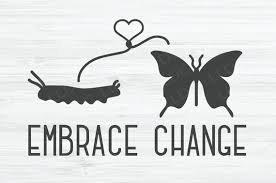
Change can be challenging and many are resistant to it but change is a normal and necessary part of life. And, of course, change can be exciting, stimulating or rejuvenating but it can also be disorientating, uncomfortable and stressful. However, change will happen whether we want it to or not, so we need to accept and embrace it, as much as possible.

But the Lord, our God, is our strength and shield. We do not need to fear what tomorrow may hold. God is with us and will never leave us. He protects us and His plans for us are good.

The Lord is my strength and my shield; my heart trusts in Him and He helps me. My heart leaps for joy, and with my song I praise Him. (Psalm 28:7)

Embracing Change

A Journey of Truth and Faith

(Talk on Luke 24:13-35 23rd April 2023)

This passage from Luke teaches us a lot about truth and faith. It is, in both a literal and a spiritual sense, about journeys. Literally, it is about two disciples (followers of Jesus) walking from Jerusalem to Emmaus. Spiritually, it is about their and our journey from not knowing Jesus to truly knowing Jesus and sharing our experiences of Jesus. It is about rediscovering Christ’s presence in our lives, gaining a fresher understanding of God’s transforming grace, allowing our hearts to be ignited with the Holy Spirit as we too walk with Christ.

The Bible makes very clear and specific statements about Jesus. As the disciples walked along they were discussing the scriptures and the recent events that had happened. When Jesus appeared to them they were walking the wrong way – away from Jerusalem. They were preoccupied with their own difficulties, overwhelmed with sadness, grief and hopelessness. They were unable to identify God’s purpose in what had happened.

Humans like to know reasons for…well everything. We ask (both aloud and to ourselves) why? We analyse, we interpret, we assume, we conclude. And we use the answers as a Sat Nav! What we decide the answers are determine/direct what and where we do/go next.

The disciples did not fully understand the Scriptures or the meaning of what had happened to Jesus. They had knowledge but it was incomplete and not understood. It was not true knowledge of the right information.

Jesus appeared and started to walk with them. They did not see Jesus. They were kept from recognising him. The Risen Christ walking with them on their journey, but unrecognised, igniting the fire of God’s love in their hearts. Like the Footsteps poem when there is only one set of footprints (because Jesus is carrying us).

But, this enabled Jesus to impart true knowledge. He explains and interprets for them. This teaches us that the key to interpreting the Old Testament is Jesus.

Jesus explained everything from Moses to the prophets, how the Messiah would save God’s people through His death and resurrection, rescuing a sinful, unholy people by reconciling them with The Holy God.

Jesus is the Messiah whose life, death and resurrection grants us salvation. Jesus Himself told us “I am the way, the truth and the life, no man comes to the Father except through me”.

God cannot be near sin. The only way for us sinners to be reconciled to Him was for Jesus to become sin, be punished for our sin, to die and defeat death; so that through His resurrection we could, with faith and repentance, be forgiven and have a relationship with God.

But it is not sufficient to just know the facts. We must also believe in that knowledge, we must truly believe in Jesus and in what He taught. Like the disciples recognising Jesus (when He broke the bread) and rushing back to tell the others, we have to open our eyes in faith. If we believe in Him then we strive to be in His image and this is shown in how we live. We need to believe in God’s word and be motivated by faith. We know God fulfils His promises but we also need to believe this. We know He is always with us, all the time, especially those times when we only see one set of footprints. But, we also need to believe this.

There is a story that gets quoted a lot so apologies if you, like me, have heard it used before:

There was a young boy caught in a house fire and forced to flee to the roof. The father stood on the ground below with outstretched arms, calling to his son, “Jump! I’ll catch you”. He knew the boy had to jump to save his life. All the boy could see was flame, smoke and darkness. The boy was too afraid to leave the roof. His father kept yelling “Jump! I WILL catch you”. The boy protested “Daddy, I can’t see you” The father replied, “But I CAN see you and that’s all that matters”.

Reece Sherman’s Faith Lessons

Do we understand truly? Or do we rely on our assumptions? Do we truly believe and trust in God? I pray that we do.

God is always there for us and will catch us. He can see us even if we cannot see Him. Do we have enough faith to jump into those life saving arms? I pray that we do.

Thank you.

Poppet on a journey, running through grass

Amen

Recently I was watching some of the programmes showing compilations of Paul McCartney performing and the following quote was put up on screen:

“I’m not particularly religious, but I do believe in the idea that there is some sort of higher power that can help us,” says McCartney. “So, this song becomes a prayer, or mini – prayer. And the word ‘Amen’ itself means ‘so be it’ – or ‘let it be'”

Paul McCartney speaking about his song “Let It Be”

This got me thinking about the word ‘Amen’ and all the different ways we use it. For me, the main use of ‘Amen’ is to conclude a prayer or as a response to a prayer but having started to think about the word and its other uses I looked at this word in more depth.

So, next came the English definitions of the word (just because that is the language I speak – no other reason) and these were listed as:

  • let it be
  • verily
  • truly
  • it is true
  • let it be so

The word is thought to be of Biblical Hebrew origin and appears many times in the Hebrew Bible as a confirmatory response and especially following blessings.

However, its root word is now common to a number of languages with the meaning:

  • to be firm
  • confirmed
  • reliable
  • dependable
  • to have faith
  • to believe

Having been imported into Greek from the Judaism of the Early Church, the word ‘Amen’ continued to spread becoming part of many other European languages, thence to Latin and then English. It can also be found in Arabic translations of the Bible and also other texts, for example after recitation of the Quran.

Sometimes ‘Amen’ is translated from the Hebrew word as ‘so be it’.

The phrase “Amen to that” can seem quite familiar but what do we actually mean when we say that. We use this to express strong agreement with something, as a declaration of affirmation, to say “that’s sorted then”. We also use it in the same way we might say “fine” or “just leave it there”.

I mentioned earlier about it being a concluding word in, or a response word to, prayer. Jesus’s response when asked to teach us how to pray was “The Lord’s Prayer” in which is included the line “Your will be done”. He teaches us to recognise and acknowledge God’s will. He teaches us (as He prayed at Gethsemane) “yet not my will but Yours”. How apt then that Amen also means “your will be done”. So when we pray we are confirming that whilst we ask God, we acknowledge that He can see the big picture that we cannot and He knows what is best even if we cannot see it at the time and therefore we are praying “if it is your will let it be done”.

As such, “Amen” is a prayer all by itself. If you are ever stuck and thinking that you don’t know what to pray, don’t worry, God knows what is in your heart. A sincere Amen is sufficient.

Poppet helping me work.