Jesus Trees From Mustard Seeds

At first glance it doesn’t always seem apparent, but our readings for today are still all connected.

The passage from Genesis 29 is about reaping what we sow and God’s grace in messy situations.

Jacob’s mother, Rebekah, and her brother, Laban, are skilled in playing dirty tricks in order to get what they want. It was by following this path of behaviour that led to Jacob having to flee from his brother’s wrath and going to his Uncle Laban.

This brokenness was part of the foundation of the 12 tribes of Israel, built from Jacob’s sons. Into this brokenness God was quietly weaving His grace. God’s grace works within the messy realities of our lives.

Jacob and Laban are tricky customers and the Bible is not telling us to be like them. Instead it asks the question “just how is the great God going to make anything out of these tricksters?”

It reminds me of when a child does something really stupid and we say to them: “And just what are we going to do with you?”

Which leads us to “how is God going to make anything out of us?”

I can imagine God watching us as we, in our innate stubbornness get into all sorts of scrapes, and smiling as He says: “And just what are We going to do with you?”

I think the answer to that has to have something to do with fun and laughter for, with fools like me, who God continues to choose as witnesses throughout the ages, it is certain that God has a tremendous sense of humour – which is a very good thing for some of us!

Which brings us back to reaping what we sow as we move onto Matthew 13. Our reading from Matthew consists of 4 parables and a question on understanding; starting with the mustard seed. The parable of the mustard seed reminds us of the parable of the sower, but now, we are not focusing on the soil. A mustard seed is so tiny but given the right conditions it will grow and spread into a bush. Here it is described as becoming a tree to highlight growth beyond expectation, but also to use the imagery of the scriptures where the image of a tree was used for a great kingdom. Just like the tiny seed becoming a great tree; this is a prophetic parable showing how from a small beginning the Gospel of Christ should reach all nations and fill them with righteousness and true holiness.

The mustard bush grows sturdy enough to house nests of birds. Birds also receive God’s care, such as in Matthew 6:26 where He feeds the birds of the air. Birds nesting in the branches of the mustard tree could be viewed as little ones sheltering in the overshadowing of God’s wings. However, in the Old Testament and other parables, birds have been used as symbols of the devil’s flock; for example the birds eating the seed of God’s Word in the parable of the sower. In this light the birds represent corruption taking refuge in Christianity’s shadow.

In our next parable, of the treasure hidden in the field, the field is the world. In Rabbinic Law, if a workman found treasure in a field and lifted it out then it would belong to the owner of the field. In this case the man did not lift up the treasure until after he had bought the field.

Jesus is the man who gave all He had to buy the field. The other parables we have looked at recently have spoken about corruption being alongside the true believers, like the weeds with the wheat. This one is focusing on how much God loves us – so much that He gave His only Son to die on the cross in order to redeem the world and the treasure within. So, if the field is the world and the man is Jesus then what is this treasure of so much value? It is us, it is true believers – God’s people.

The treasure in the field also reminds us that where your treasure is your heart is also. God does not ignore our needs but He challenges our material excess acquired for self serving purposes.

The parable of the costly pearl is similar to the treasure in the field. Here, a merchant finds a pearl of great value, sells all he has and buys it.

Again, we can look at the merchant as being Jesus and the valuable pearl as the believer whom Jesus gave everything for – including His life.

The ancient peoples considered a pearl to be the loveliest of all possessions. This highlights both how lovely the kingdom of heaven is and how much Jesus values His people.

Jesus also reminds us not to throw our pearls before swine for they will trample them underfoot and turn on us.

The dragnet is, as they say, exactly what it says on the tin. It was dragged throw the sea to capture and then herd fish to the shore where the fish would be sorted. Just like the weeds and the wheat, the good fish would be gathered and placed in vessels and the bad would be thrown away. This is revisiting the warning that, at the end of the age, angels will separate the wicked from the believers. The wicked to then be cast into the fiery furnace.

It is a bit like teaching a concept to a class and explaining it a different way for those who didn’t understand it the first time. Not only does Jesus explain what will happen at the eternal judgement multiple times but He also uses different metaphors. Everyone has had the chance to hear and understand, they just have to want to.

Jesus asked His disciples “Do you understand?”

“Yes, Lord” they answered.

Again, this reminds me of explaining something important to a child; after which asking them if they understood. They look up at you with their face a picture of innocence but looking so blank and say “yes.” If asked what they thought the meaning was the answer was, of course, “I don’t know”. Back to the beginning we go but this time looking at it a different way.

I can just imagine Jesus asking the disciples if they understood and, in the same way, they look at Him blankly saying ‘yes’, as He’s thinking ‘no, you really don’t’.

We could take that view – suspicious that they didn’t understand, and sometimes better understanding takes time to sink in.

Or, we could take it at face value that they did understand. Jesus did spend time with His disciples away from the crowd, explaining the parables to them and giving them extra teaching. The disciples had an advantage over the crowds – some of whom would not have understood.

Jesus said clearly that those who know and understand God’s word will know both the old and the new. The knowledge of the scriptures combined with the new teaching gives a deeper understanding of what they previously knew as it is lit up and re-understood through the new teaching.

The disciples are now responsible to share their understanding with others from a place of wisdom and understanding of things old and new.

Ministers and teachers of the Gospel should not be without sufficient knowledge and understanding of the Scriptures. They should be well versed in both the Old and New Testaments and have a sense of them with a stock of Spiritual knowledge.

Our Gospel started with the mustard seed and I would like to share the thought that we try to gift the tiny mustard seeds of Christ and we pray that they will be nurtured and grow into Jesus trees as I finish with the story ‘Only the Seed’.

Once upon a time, a pilgrim set out on the long journey in search of peace, joy and love. The pilgrim walked for many weary miles, and time passed. Gradually, the young, lively steps became slower and more laboured. The pilgrim’s journey passed through landscapes that were not always happy ones. Through war. Through sickness. Through quarrels and rejections and separations. A land where, it seemed, the more people possessed, the more warlike they became – the more they had to defend, the more they needed to attack each other. Longing for peace, they prepared for war. Longing for love, they surrounded themselves with walls of distrust and barriers of fear. Longing for life, they were walking deeper into death.

But one morning, the pilgrim came into a little cottage at the wayside. Something about this little cottage attracted the pilgrim. It was as though it was lit up from the inside. Full of curiosity, the pilgrim went inside. And inside the cottage was a little shop, and behind the counter stood a shopkeeper. It was hard to judge the age – hard even to say for sure whether it was a man or a woman. There was an air of timelessness about the place. “What would you like?” asked the shopkeeper in a kindly voice. “What do you stock here?” asked the pilgrim. “Oh, we have all the things here that you most long for,” replied that shopkeeper. “Just tell me what you desire.”

The pilgrim hardly knew where to begin. So many desires came rushing to mind at once. “I want peace – in my own family, in my native land and in the whole world. I want to make something good of my life. I want those who are sick to be well again and those who are lonely to have friends. I want those who are hungry to have enough to eat. I want every child born on this planet today to have a chance to be educated. I want everyone on earth to live in freedom. I want this world to be a kingdom of love.”

There was a pause while the pilgrim reviewed this shopping list. Gently, the shopkeeper broke in. “I’m sorry,” came the quiet reply. “I should have explained. We don’t supply the fruits here. We only supply the seeds.”

Only The Seed retold by Margaret Silf – origin source unknown.

Mustard Seeds (Photo by Siddharth Sharma on Pexels.com)

Jesus the Ladder

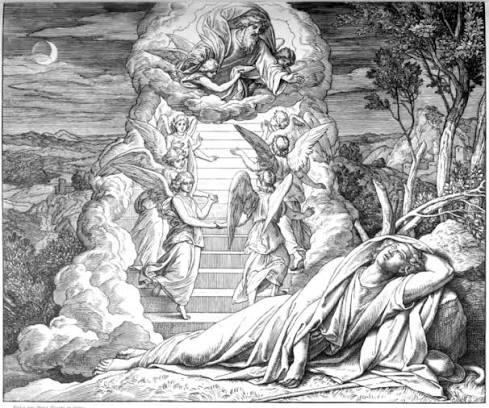
In Genesis 28, we catch up with Jacob as he is fleeing for his life. To say he’s been a bit of a naughty boy would be an understatement and his brother Esau (possibly along with a few others) are wanting to kill him.

As the sun had set Jacob stopped for the night and found a flat stone he could use as a pillow before settling down to sleep. And he dreamed that famous dream we refer to as Jacob’s Ladder of a great ladder with its top in heaven and its feet on earth. Angels were going up and down the ladder which reassured Jacob that God was closer than he had realised and that there was interaction between earth and heaven.

It is often asked why we look up at our sky to point our eyes towards heaven and why we think of it being above us. It is imagery such as this which feeds our perception of a literal higher plane as opposed to a metaphorical upness.

As is made clear in John’s Gospel, Jesus is the access to heaven. He is how people can go to heaven and how heaven can come down to people. Jesus is the ladder Jacob saw in his dream.

John 1:51 says “And He said to them, ‘Most assuredly, I say to you, hereafter you shall see heaven open, and the angels of God ascending and descending upon the Son of Man’.”

Jesus is the way to heaven, He doesn’t just show us the way, He is the way. As He said, recorded in John 14:6, “I am the way, the truth and the life. No one comes to the Father except through me.”

God appeared to Jacob introducing Himself as the God of Abraham and Isaac and repeats to Jacob the terms of the covenant given to Abraham, Isaac, and now to Jacob. God gave Jacob the promise of land and descendants but He also promised that He would be with Jacob, protecting him, until all these promises had been fulfilled. God continues to work until His work is complete in His people. God’s blessing and faithfulness to Jacob can be seen in the several ways that His presence was described in Jacob’s life. Jacob woke and declared “Surely the Lord is in this place and I did not know it.”

Jacob therefore renamed the place Bethel meaning House of God. So if you ever wondered what Bethel meant when you see or hear of a Bethel Church now you know.

He was correct in sensing the presence of the Lord but mistaken if he had thought that God was in some places and not others. God is everywhere – as David clearly understood from his words in Psalm 139.

During his dream, Jacob did not use the ‘stairway to heaven’; instead God spoke to Jacob where he was, demonstrating God’s immanent presence. He is not a faraway removed God calling long-distance but an indwelling God right here with us.

This encounter comes completely from God breaking into Jacob’s sleep state bringing a break to his anxious fleeing. At this vulnerable point in Jacob’s life, God emphasizes that He is not only the God of the first and second generation but also the God of Jacob. The reiteration of God’s promise also serves as a powerful reminder that Jacob’s life should not be governed by self-interest but by becoming a channel of God’s blessing to others.

When Jacob wakes from his dream he is a totally changed man and makes a vow showing his commitment to God.

This is the same Jacob who later would be called Israel and whose sons become the start of the twelve tribes of Israel.

From little acorns (or little dreams) great things grow.

Which leads us to Matthew 13 starting at verse 24, a passage which addresses the evil among us, God’s patience and the separation of believers and unbelievers at the end of the age.

The devil places a corrupt presence amongst innocents or in more generalised parlance unbelievers amongst believers. They look like genuine believers and we can get it wrong and mix them up. Only God knows and can tell the difference. 

The weeds or tares look just like the wheat until the ears are fully formed and it is ready for harvesting. This is why, to preserve and protect the true wheat, the tares are not separated out until the harvest. This prevents the wrong ones being destroyed when the tares are ripped out and burnt.

Whilst there are similarities between this parable and the parable of the sower from last week, what each element represents and the point of the parables are different. Last week’s parable showed how people receive and respond to the Word of God; whereas this week shows how God will divide His true people from false believers at the end of this age.

The field represents the entire world within which there is good seed representing the true believers and weeds or tares representing unbelievers. 

Make no mistake – by unbelievers we don’t mean those who are currently unbelievers but who will believe – they are wheat which is still developing their ears. No, we are talking about the end of the age when it is time for God’s harvest and those who are false believers, unbelieving or counterfeits who have been put there by the enemy – the devil – to try and corrupt true believers.

It is interesting how many ‘children’s stories’ are great works of theology. In 1883, The Princess and Curdie by George MacDonald was published. George MacDonald was a Scottish writer, theologian and preacher, a mentor for Charles Lutwidge Dodgson and a profound influence on J R Tolkien and C S Lewis. In this story, Curdie is given the ability that when he holds someone’s hand he can feel what it’s like on the inside – or how God sees them. Hands that look elegant and beautiful are cold, clammy, rough and coarse. Others, despite looking rough and deformed, are beautiful.

Or take Beauty and the Beast. Handsome Gaston is horrific on the inside whereas the terrifying Beast has beauty deep within. Or, of course, the Empress Jadis from C S Lewis’s Magician’s Nephew, who later becomes The White Witch. Digory reflects that “in all his life he had never known a woman so beautiful…” and yet within she was arrogant, callous and cruel.

It is not our job to weed them out but God’s. We are not to separate the good from the bad because we can only see what people are like now. We cannot see what they will become and we cannot see what is written in their hearts. 

Our job is to shine forth hope, to proclaim the Word of life, to speak of the love and forgiveness God has for us, of the power to change and the hope He gives us.

The reapers are the angels and will be sent out by Jesus the Son of Man.

There are two different paths and eternal destinies. A furnace of fire where the crop which came from the seeds of the devil will go and there is the radiant glory where the true believers shine forth as the sun.

The fire of the furnace will not destroy those thrown into it. Instead they will suffer a living torment with great woe, wailing and gnashing of teeth.

The wheat comes into God’s barn from all over the world, from all classes of society and from all ages. Yet all have one thing in common. They were all sown by the Lord from the good seed of His Word.

Jacob’s dream of a ladder between heaven and earth

What soil is your heart?

That same day Jesus went out of the house and sat beside the sea. Such great crowds gathered around him that he got into a boat and sat there, while the whole crowd stood on the beach. And he told them many things in parables, saying: “Listen! A sower went out to sow. And as he sowed, some seeds fell on a path, and the birds came and ate them up. Other seeds fell on rocky ground, where they did not have much soil, and they sprang up quickly, since they had no depth of soil.  But when the sun rose, they were scorched, and since they had no root, they withered away. Other seeds fell among thorns, and the thorns grew up and choked them. Other seeds fell on good soil and brought forth grain, some a hundredfold, some sixty, some thirty. If you have ears, hear!”

Then the disciples came and asked him, “Why do you speak to them in parables?” He answered, “To you it has been given to know the secrets of the kingdom of heaven, but to them it has not been given. For to those who have, more will be given, and they will have an abundance, but from those who have nothing, even what they have will be taken away. The reason I speak to them in parables is that ‘seeing they do not perceive, and hearing they do not listen, nor do they understand.’ With them indeed is fulfilled the prophecy of Isaiah that says:

‘You will indeed listen but never understand, and you will indeed look but never perceive. For this people’s heart has grown dull, and their ears are hard of hearing and they have shut their eyes, so that they might not look with their eyes, and hear with their ears and understand with their heart and turn— and I would heal them.’

“But blessed are your eyes, for they see, and your ears, for they hear. Truly I tell you, many prophets and righteous people longed to see what you see but did not see it and to hear what you hear but did not hear it.

“Hear, then, the parable of the sower. When anyone hears the word of the kingdom and does not understand it, the evil one comes and snatches away what is sown in the heart; this is what was sown on the path. As for what was sown on rocky ground, this is the one who hears the word and immediately receives it with joy, yet such a person has no root but endures only for a while, and when trouble or persecution arises on account of the word, that person immediately falls away. As for what was sown among thorns, this is the one who hears the word, but the cares of this age and the lure of wealth choke the word, and it yields nothing. But as for what was sown on good soil, this is the one who hears the word and understands it, who indeed bears fruit and yields in one case a hundredfold, in another sixty, and in another thirty.”

Matthew 13: 1-23

Jesus attracted huge crowds, especially when He went about outside. Some were believers and followers. Some were curious. Some had heard about Him and wanted to see for themselves. Some were there to report to the Pharisees what He was doing and saying. The multitudes had many, many motivations for being there and we need not dwell on their reasons because the important thing was that they were there in great numbers, waiting to hear His words.

So Jesus got into a boat and sat. Jesus often did this and it was a practical act for several reasons: – with such a large number in the crowd all jostling to be close to Him, it gave Him space to teach, a place where the crowd could all see and hear Him and He could see and hear them. Jesus didn’t just send out His disciples to proclaim The Word – He did it Himself and so to reach the people the outside was a perfect place. He still entered and taught in the synagogue. This was not “an instead of” but an “as well as”. Preaching both inside and out.

In a complete opposite to us today, we are told that Jesus the Teacher sat whilst the crowds stood. This was their custom that a teacher sat in order to signal the start of the teaching and the audience would remain standing as a mark of respect. Similar to standing when a judge enters or leaves a courtroom. It gave a clear signal that He was ready to start. Spurgeon, a Bible commentator, claims that there would be less sleeping in congregations if we (still) used this arrangement.

Jesus often taught in parables and He does so again here. These are often described as “earthly stories with a heavenly meaning”. The idea being that it is a story alongside the truth used with the intention to teach. This method of teaching has several advantages. It makes it easy for the crowd to remember as we are good at remembering stories. It makes them think about and study the meaning of what they have heard. In general, parables mainly teach one main point or principle and use scenarios that the people are familiar with.

Today’s parable is about a sower who scattered seed onto the ground. In those days the seed would be scattered first and then the land would be plowed.

As the sower scattered the seed it fell on four different types of ground:

  • The Wayside
  • Stony Places
  • Among Thorns
  • Good Ground

The wayside is the path the people walked on where nothing could grow because the ground was too hard.

The stony places were places where the soil was thin and lay upon a rocky shelf. Here the soil was warm so the seed would spring up quickly but because of the rock it was unable to plant roots and quickly died.

Among the thorns was fertile soil but so fertile that thorns grew there as well. The thorns grew faster than the grain and choked it out before the harvest. 

Good ground was just that. Soil that was fertile and weed free enabling a good productive crop to grow.

Jesus told the parable to the crowd with the instruction “He who has ears to hear, let him hear”. Jesus was not telling an unresponsive crowd to pay attention. This was a call for those who were spiritually sensitive to pay special attention; which makes more sense when put into context with the next few verses within which Jesus explains why He teaches with parables. And Jesus explains this because the disciples ask Jesus why He spoke to the crowd in parables. 

Jesus taught the disciples in a different way to the way He taught the multitudes. Jesus would spend time alone with His disciples explaining the parables, revealing deeper meanings, providing personal guidance, practical lessons and clear instructions. He corrected their misconceptions, challenged them and prepared them.

Jesus explained that He used parables so that the hearts of those rejecting Him would not be hardened further. 

Just like an oven can both set or harden clay yet melt plastic, so can the message of Jesus’s teachings both humble an honest heart leading to repentance yet harden the dishonest heart leading to disobedience. 

Teaching with parables puts the responsibility on the individual to see the truth revealed within it or to block it out if they do not wish to see it. It challenges the hearers of The Word.

In life you gain more or lose more. Weakness, like strength, is an increasing thing.

Those who have open hearts and minds and who are more sensitive to spiritual truth will gain more but those who don’t … won’t.

By teaching the crowd through these parables, those spiritually sensitive could understand but those who rejected Jesus’s teaching would just hear a story without receiving additional condemnation for rejecting The Word – another example of God’s mercy. Consequently, those who understand Jesus’s parables are genuinely blessed.

Jesus then explains that the parable with the different types of soil represents the condition of our hearts and our response to The Word of the Kingdom. The seed is The Word.

The Word of God must be understood before it can bear fruit. The wayside soil represents those whose hearts are hardened and who do not understand The Word they hear. The Word has no effect because it never penetrates and is quickly snatched away by Satan; whose aim is to keep as many as possible in darkness regarding their understanding of the Gospel.

The stony places represent those who initially receive The Word enthusiastically but this enthusiasm and acceptance of The Word quickly dies because they are not willing to endure trials or tribulation because of The Word. This is not because the growth or conversion was sudden but because of their lack of depth.

The soil where the seed falls among thorns represents fertile ground for the seed but this soil is too fertile because it grows many other things that choke out The Word. These thorns choking The Word are the cares of this world and the deceitfulness of riches. Like Esau, who thought little of the spiritual birthright, placing little value on spiritual things and instead valuing the material. Despite this spiritual birthright being full of treasure:

  • Every spiritual blessing
  • Being chosen by Jesus
  • Adoption into God’s family
  • Complete acceptance by God through Jesus
  • Redemption from our slavery to sin
  • The revelation and knowledge of the mystery of God’s will
  • True and total forgiveness
  • The riches of God’s grace
  • An eternal inheritance
  • The guarantee of the indwelling Holy Spirit.

Finally, there is the good soil representing those who receive The Word and where it flourishes and bears much fruit.

At different times we can see bits of ourselves in all these soils. There are those times when we are the wayside declaring there is no room. There are times when we will have a flash of enthusiasm upon hearing The Word that quickly dissipates. There are times when the cares, toils and materialism of this world threaten to choke God’s Word and our fruitfulness. And then there are the times we must strive for when we are that good soil, nourishing The Word and bearing much fruit.

It is the same seed – the same Word – and the same sower who casts the seed. The only difference is the soil – the condition of our hearts and how we receive The Word.

For disciples, this parable also offers encouragement. Even if it seems like only a few respond, God is in control and the harvest will be plentiful.

The Sower scattering the seed. (Photo by George Vespakias Vlachopoulos on Pexels.com)

The Yoke of Life

‘But to what will I compare this generation? It is like children sitting in the market-places and calling to one another, “We played the flute for you, and you did not dance; we wailed, and you did not mourn.” For John came neither eating nor drinking, and they say, “He has a demon”; the Son of Man came eating and drinking, and they say, “Look, a glutton and a drunkard, a friend of tax-collectors and sinners!” Yet wisdom is vindicated by her deeds.’

At that time Jesus said, ‘I thank you, Father, Lord of heaven and earth, because you have hidden these things from the wise and the intelligent and have revealed them to infants; yes, Father, for such was your gracious will. All things have been handed over to me by my Father; and no one knows the Son except the Father, and no one knows the Father except the Son and anyone to whom the Son chooses to reveal him. ‘Come to me, all you that are weary and are carrying heavy burdens, and I will give you rest. Take my yoke upon you, and learn from me; for I am gentle and humble in heart, and you will find rest for your souls. For my yoke is easy, and my burden is light.’

Matthew 11.16-19, 25-end

Matthew 11:16-30 is split into three parts:

  • Part 1 – verses 16 to 19
  • Part 2 – verses 20-24
  • Part 3 – verses 25-30

Our reading today misses out part 2; this is, of course, widely available in any good Bible. This whole section of teaching from Jesus starts off (at the beginning of Matthew 11) after the sending out of the disciples, which we have looked at over the past two weeks.

So, Jesus’s disciples have set off to proclaim and live the Gospel and Jesus gave them space to do this by going to other towns to teach when He is asked a question by the disciples of John the Baptist, who is now in prison. Jesus tells them to report back that the prophecy regarding the Messiah is being fulfilled. Jesus then speaks about John, likening him to Elijah and bringing us to part 1 of today’s Gospel.

Jesus rebukes, or if you prefer, sternly tells off, those who are displeased with or who do not accept the ministry of John the Baptist and Himself.

He points out how picky, choosy and uncertain His current generation were about receiving God’s message and His messengers … I imagine this would be much the same if He were instead addressing today’s generation. 

He points out that those who want to criticise will do so no matter what; whether it was John the Baptist teaching them, Jesus Himself, or someone completely different – if they want to find fault they will and likewise if they want to refuse to listen to God’s voice both when it comes through in a serious way or a joyful way they will. Basically, if what is being said does not suit them and is not what they want to hear they will reject it.

Jesus then quotes some of the criticisms and insults that had been made about Him and in doing so turns them on their head. What started as a jibe and a condemnation becomes a title of honour and we praise our Lord, thanking Him for being our friend – a friend of sinners.

Jesus then highlights that those who are wise are proved so by their actions. These are those who accept both Jesus and John for who they were and who they were called to be.

Like Moses leading thousands of people out of Egypt towards God and preparing them for the promised land, John led thousands of people to repentance, preparing the way for the Messiah.

Like Moses taught the people to discern God’s will for their lives and to obey His commands, Jesus taught, worked, loved, and rose again to show us the way back to the Father.

Which brings us to the missing part 2. Here Jesus has stern rebuke for the cities which had witnessed both John’s ministry and mighty works and despite these still are unrepentant and disregarded Him. Neglect is just as bad as persecution.

And so we reach part 3, where Jesus praises those who do receive His message.

As Jesus communicates here with His Father there is a strong sense of joy. The Father, Son and Holy Spirit communicate and commune with each other with joy. Not happiness, which is nothing like joy and which is fleeting but true joy. Joy is a far deeper and enduring state of being centered around connection, meaning and purpose, and which can be maintained even during difficult times.

Jesus responds positively to God choosing those that the world would deem unlikely to respond to His message, but don’t forget the wider context of the rising rejection of Jesus and His messengers, especially by the elite.

This section of the passage shows us more about the relationship between God the Father and God the Son, between whom there are no secrets. No one knows the Son as well as the Father and no one knows the Father as well as the Son. There is a difference in the way the Son knows the Father to the way we know Him.

God the Son and God the Father are equal whereas we know God because He lowers Himself so that we might know Him.

Jesus has authority and this is shown as He calls us to Him with the words “Come unto me”. This invitation is open to all. None are excluded. Jesus calls those who are burdened and those who recognise that they need to come to Jesus and rely on Him instead of attempting to struggle on by themselves. By burdened Jesus refers to the burdens that we take on ourselves whereas by heavy laden He is referring to those that others have put upon us.

Jesus extends the invitation further saying take my yoke upon you and learn from me. We must come as disciples to learn, willing to be guided by Jesus and not merely for what we can get out of it. 

The Israelites and ancient Jews used the idea of a yoke to mean someone’s obligation to God. They had:

  • the yoke of the kingdom
  •       the yoke of the law
  •       the yoke of the command
  •       the yoke of repentance
  •       the yoke of faith
  •       and the general yoke of God.

Jesus is simplifying this. He is saying stop over – complicating it with all these yokes. The yoke you need to take is my yoke. Take my yoke upon you and learn from me.

Let’s take a closer look at the yoke of Jesus:

  • It is easy and light … unless we turn away from it.
  • It is not connected with worries or concerns forbidden to us.
  • It doesn’t include any of the burdens we choose to add ourselves.

Jesus invites us to let go of the extra burdens we like to hold on to. We don’t like to let go of things but these burdens are not part of the yoke of Jesus and are just weights we refuse to release.

Jesus is gentle and lowly of heart. Throughout His ministry He shows His servant heart and His qualification to bear our burdens for us.

Jesus promises that if we take on His yoke we will find rest for our souls. God previously offered this promise to those who follow Him. “Thus says the Lord: ‘stand at the crossroads and look; ask for the ancient paths, where the good way lies; walk in it and you will find rest for your souls’…” (Jeremiah 6:16). And Jesus now repeats this promise in His own name.

With Jesus bearing it with us the yoke is easy and the burden is light. Alone it could be unbearable,  but we are not alone. It does not mean we will have an easy life lounging in front of a pool sipping a refreshing beverage. It does not mean that there are lighter demands. It does mean entering into and being in a discipleship.

If your yoke is uncomfortable, if your burden is heavy, then it is not Jesus’s yoke or burden and you have not let Him bear it. Instead you are holding onto it like grim death. Like A Christmas Carol’s Scrooge and Marley choking under the weight of the chains they forged in life.

Give it to Jesus, let Him bear it. Take on His yoke. Ultimately, it’s up to you, that’s what free will is. Do you want to be Scrooge before his conversion – weighted down by the chains of his own making, or after his conversion – a new human in Christ? For as Jesus says ‘My yoke is easy and my burden is light’.

My yoke is easy and my burden is light. (Photo by Suat Tu00fcfenk on Pexels.com)

You’re Welcome!

‘Whoever welcomes you welcomes me, and whoever welcomes me welcomes the one who sent me. Whoever welcomes a prophet in the name of a prophet will receive a prophet’s reward; and whoever welcomes a righteous person in the name of a righteous person will receive the reward of the righteous; and whoever gives even a cup of cold water to one of these little ones in the name of a disciple-truly I tell you, none of these will lose their reward.’ 

Matthew 10:40ff

These verses from the Gospel of Matthew continue the preparation Jesus is giving the disciples for their mission.

Jesus is explaining that to receive a messenger of Christ is spiritually identical to receiving Christ Himself and, by extension, God the Father. The disciples are to act as envoys or ambassadors of Jesus, extending His ministry and performing the same works that He is doing. The disciples are to share in Jesus’s poverty and homelessness, “taking with them no money or extra clothing and depending solely on others for hospitality and sustenance”.

In the verses prior to this passage we learnt that the disciples should expect to experience, at some point, the same hostility Jesus often did and that they must be willing to put Jesus’s mission ahead of family and other loyalties. But we also learnt that this comes with a promise from Jesus that whoever loses their life for His sake will find it.

These instructions, commission and promise were not uniquely for those first disciples but also for us today.

The Old Testament promises prophets a great reward in heaven and that the righteous will shine like the sun in the Father’s kingdom. ‘Little ones’ is being used here to refer to Jesus’s disciples and links with the parable of judgement – “I was thirsty and you gave me something to drink”; “Truly I tell you, just as you did it to one of the least of these, you did it to me.” It is also interpreted as children both literally as little children and also to us as children of God. The reward put aside for the little ones is more like an inheritance in that it is not earned but a pure gift. Those that welcome and care for the needs of the least, welcome and care for Jesus and become heirs to all that the Father has to give.

Just as Jesus was sent by God the Father to carry His authority and message, the disciples (and us) are sent by Jesus. By welcoming and listening to the ‘sent disciple’, people are actually receiving Christ.

Being sent means acting as a direct representative. Think about a Foreign Embassy in, say, London. Within the boundaries of that Embassy in London is the country the Embassy belongs to. Let’s take the Embassy of Finland as an example. Within the walls and boundaries of the Embassy of Finland is actually Finland. So a little bit of Finland resides in London, England. If we welcome the representatives of that Embassy, who are direct representatives of Finland we welcome all of Finland. Whereas, if we reject those representatives we are rejecting all of Finland.

We are in Christ and He is in us. We are ambassadors or representatives of Christ. If people reject us they are rejecting Christ. And that response displays how those people receive God. It doesn’t say anything about us but about them and that response forecasts how they will be received by God.

God loves us. We are His children and He protects us. He is sending us out to witness to our brothers and sisters and bring them back into our family.

We are sent by God. Jesus sends His disciples out to proclaim and live the word. The church is a sent church. This mission – sending – by Jesus not only is the church but is everything the church is, does and is supposed to be/do.

The church is not supposed to be confined to a building for an hour on a Sunday morning. It is not supposed to be confined to a specific service, whether that be Holy Communion, Praise and Worship or something else.

It is supposed to go out into communities, into the world, relying on and trusting God one hundred percent; living and proclaiming the word.

To be followers of Christ means being sent. So, what does being sent mean?

Being a sent church means no longer waiting for people to walk through its doors. Instead, it functions as a missionary community that scatters into the world, bearing the very presence and authority of Jesus to the neighbourhoods, the workplaces, the schools, homes and cultures it enters.

When you step into your community to serve, speak grace, or build relationships, the people you encounter are effectively encountering Jesus Himself. 

We are not all sent to be wandering missionaries, reliant on others for food and shelter but that does not make us exempt from fulfilling The Call. Jesus promises that even providing a small act of care, as simple as providing a cup of cold water, done in His name carries profound spiritual weight.

The entire baptised people are sent into the world to tell and embody the good news of Jesus Christ to others with humility and vulnerability and prepared for rejection.

What if we stop expecting people to come on their own initiative through those aforementioned church doors?

What if we truly took our calling seriously and took the Gospel to them?

What if we truly believed that we take the presence of Christ to every person we encounter, to every home, workplace, neighbourhood that we enter?

What if we saw every conversation as an opportunity to speak words of grace?

What if every interaction was an opportunity to embody Christ’s love for our neighbours?

We may not always receive a positive response when we take the risk of reaching out but you may be surprised at how many are ready to receive and just need us to reach out; no matter how humble our efforts.

The wages of sin are death but, just as whoever loses their life for Jesus finds it, whoever welcomes you welcomes Christ.

You’re Welcome

Commit and Live

“A disciple is not above the teacher nor a slave above the master; it is enough for the disciple to be like the teacher and the slave like the master. If they have called the master of the house Beelzebul, how much more will they malign those of his household! “So have no fear of them, for nothing is covered up that will not be uncovered and nothing secret that will not become known.
What I say to you in the dark, tell in the light, and what you hear whispered, proclaim from the housetops. Do not fear those who kill the body but cannot kill the soul; rather, fear the one who can destroy both soul and body in hell.

Are not two sparrows sold for a penny? Yet not one of them will fall to the ground apart from your Father. And even the hairs of your head are all counted. So do not be afraid; you are of more value than many sparrows. “Everyone, therefore, who acknowledges me before others, I also will acknowledge before my Father in heaven, but whoever denies me before others, I also will deny before my Father in heaven.

Not Peace, but a Sword “Do not think that I have come to bring peace to the earth; I have not come to bring peace but a sword. For I have come to set a man against his father, and a daughter against her mother, and a daughter-in-law against her mother-in-law, and one’s foes will be members of one’s own household.

“Whoever loves father or mother more than me is not worthy of me, and whoever loves son or daughter more than me is not worthy of me, and whoever does not take up the cross and follow me is not worthy of me. Those who find their life will lose it, and those who lose their life for my sake will find it.

Matthew 10:24-39


The very first event recognizing fathers occurred on July 5, 1908, in Fairmont, West Virginia. Grace Golden Clayton organized a church service to honour 362 men who had died in the Monongah mining disaster a few months prior. Subsequently, after much lobbying, Father’s Day was created by Sonora Smart Dodd of Spokane, Washington, in 1910 to recognise her single Civil War veteran father who raised and cared for her and her five siblings after their mother died in childbirth.

On Father’s Day, we pause to honour the physical and spiritual fathers we have in our lives, which includes those who have to be both mother and father, and all that they have done. From Psalm 103 verse 13, “As a father shows compassion to his children, so the Lord shows compassion to those who fear him”.

There are many aspects to the perceived role of fatherhood and there are different people who may fulfil this role for us. For some it is their Dad, for some their Mum, for some a Grandparent, for some a carer or a foster parent and for some a trusted mentor or friend. All these people are loved by those they love and care for and we thank God, our Almighty Father, for these people, for all they do and for the way they touch our lives.

Fear causes failure. Fear causes failure in discipleship.

Sometimes one of the harder jobs of a parental type role is having to tell us things that are tough to prepare us for what lies ahead.
Jesus is preparing His disciples for their mission and does not hide from them the threats they will come up against but He also explains why they must not let this fear control or hinder them.

The disciples are to undertake their mission in complete vulnerability and dependence on God; even though they will face arrests, beatings, opposition (including from family and friends), hatred and persecution.

Why tell the disciples the trials they will suffer? Wouldn’t this put them off the task assigned to them?

By warning them in advance, not only do the disciples have the opportunity to be prepared, but also saying aloud the suffering and trials to be faced is the first step to being freed from the grip of fear.

Jesus doesn’t just tell the disciples the worst case scenarios, He also gives reassurance and instructions to resist fear. The most important part of this reassurance is the relationship between the disciples and Jesus, and through Him God.

Jesus warns His disciples that the fate of the Master or Teacher also awaits their disciples and so the disciples should be ready to receive a similar response from the leaders of Israel that Jesus Himself receives and to have no fear of them.

Proclaiming and living the Gospel is the most powerful tool the disciples have against world powers.

Death threats can be a powerful way of controlling people through fear. Whilst humans try to use this power, Jesus reassures the disciples that humans only have power to destroy the body, not the whole person. Only God can destroy both soul and body. However, God is not like human rulers. God has ultimate power over our whole being and exercises this power with mercy and love.

The call to discipleship has priority and is above all other claims on identity, allegiance, family and friends.

To take up our cross aligns the discipleship mission and fate with that of Jesus which can include humiliation, suffering, shame, opposition and death. It implies identification with marginal people who do not “find their lives in this world”. But it comes with the promise from Jesus that anyone who loses their life for Him will “find it” whereas those “finding their life in the world” will lose it.

Jesus shows us that the answer to fear includes recognising and naming it. Fear of the unknown or unacknowledged is a far greater fear than the fear of the known and spoken.

We need to be honest and transparent in recognising the elements of human power including those rooted in the threat of death and suffering. We need to be aware of the conflict and division that proclaiming and living the Gospel inevitably produces. We need deep awareness and conviction of God’s presence in the world in love, mercy and compassion.

Today’s society is guilty of having a lack of commitment and has left its cross on the side of the road.

Every organisation that relies on regular and committed volunteers – churches, Girl Guiding, Scouts to name just a couple – all are having trouble finding people to take on running these groups, to take on responsibility for the different elements that need doing, to run and to support events. People don’t mind making use of these various groups when it suits them but they will not commit to regular attendance, regular giving or taking on responsibility.

There are all kinds of reasons used and excuses given to explain this such as working hours or childcare but, whilst that does affect some, it most certainly does not affect everyone. What about the childless? The unemployed? The retired? Those with compatible working hours or who work part time? Those who do have the talents and time to take an active part but who won’t? And so forth.

People today would rather keep their interpretation of freedom, stay at home watching the television or surf the internet. People think less about being or don’t want to be part of something whether that be a cause, a group or community of believers (in anything) and think more about individual pleasure and activities. And we are all guilty.

Today, people are told to just do what they can and this encourages people to not put the effort in.

Jesus does not say that to us. He did not say it to the disciples. Instead He told a group of scared men that it required commitment and was going to be very tough. He told them this in no uncertain terms.

Did they decline – No
Did they give up – No
Did they say actually Jesus I don’t really feel like doing that today – No

What they did do was to rise to the challenge in total commitment to Jesus.

People, regardless of age, will be what society expects them to be. If a child is told they can’t do something then they start to believe they can’t do it and won’t even try. If you tell a child they can’t behave they won’t even try and the more they don’t – whether that is leaving rubbish on the floor, not putting things away, being rude causing damage, shooting catapults or any action that the adult considers misbehaviour. If they are constantly told they can’t behave they don’t.

Likewise, the more people are told not to overdo it or to be careful because they are frail or that they don’t need to then the less they do and the more fearful and frail they become.

We must train ourselves to take a risk and be willing to commit and do.

Jesus told His disciples not to be afraid, that they would be guided and protected, that they were precious to God and that even if their bodies or feelings got hurt no harm would come to their souls.

God’s love and protection surrounds and insulates us from the worst human powers and earthly life can throw at us. We might suffer as all typical humans suffer but we are precious to God, He holds us in His hand and keeps our souls safe. We can and will endure.

In a society that encourages lazy, self indulgent life on the sidelines it can be difficult to be as committed and courageous as those first Christians.

We must not be complacent. As the world is, it is easy to become. We must be on our guard always to ensure that the world does not drain us of our commitment to others and to God. We must resist the temptation to be lazy and uninvolved.

Like those first disciples, as Jesus’s followers we are all involved with each other, with God’s will for the world, with His command to spread the word, and to bring in the kingdom; and we must not let the siren call of selfishness and lack of commitment prevent that purpose.

Volunteers needed

Calling and Love

Now the Lord said to Abram, “Go from your country and your kindred and your father’s house to the land that I will show you. I will make of you a great nation, and I will bless you and make your name great, so that you will be a blessing. I will bless those who bless you, and the one who curses you I will curse, and in you all the families of the earth shall be blessed.” So Abram went, as the Lord had told him, and Lot went with him. Abram was seventy-five years old when he departed from Haran. Abram took his wife Sarai and his brother’s son Lot and all the possessions that they had gathered and the persons whom they had acquired in Haran, and they set forth to go to the land of Canaan. When they had come to the land of Canaan, Abram passed through the land to the place at Shechem, to the oak of Moreh. At that time the Canaanites were in the land. Then the Lord appeared to Abram and said, “To your offspring I will give this land.” So he built there an altar to the Lord, who had appeared to him. From there he moved on to the hill country on the east of Bethel and pitched his tent, with Bethel on the west and Ai on the east, and there he built an altar to the Lord and invoked the name of the Lord. And Abram journeyed on by stages toward the Negeb.

Genesis 12: 1-9

As Jesus was walking along, he saw a man called Matthew sitting at the tax-collection station, and he said to him, “Follow me.” And he got up and followed him. And as he sat at dinner in the house, many tax collectors and sinners came and were sitting with Jesus and his disciples. When the Pharisees saw this, they said to his disciples, “Why does your teacher eat with tax collectors and sinners?” But when he heard this, he said, “Those who are well have no need of a physician, but those who are sick. Go and learn what this means, ‘I desire mercy, not sacrifice.’ For I have not come to call the righteous but sinners.”

While he was saying these things to them, suddenly a leader came in and knelt before him, saying, “My daughter has just died, but come and lay your hand on her, and she will live.” And Jesus got up and followed him, with his disciples. Then suddenly a woman who had been suffering from a flow of blood for twelve years came up behind him and touched the fringe of his cloak, for she was saying to herself, “If I only touch his cloak, I will be made well.” Jesus turned, and seeing her he said, “Take heart, daughter; your faith has made you well.” And the woman was made well from that moment. When Jesus came to the leader’s house and saw the flute players and the crowd making a commotion, he said, “Go away, for the girl is not dead but sleeping.” And they laughed at him. But when the crowd had been put outside, he went in and took her by the hand, and the girl got up. And the report of this spread through all of that district.

Gospel of Matthew 9:9-13, 18-26

Have you noticed how it is always busy people that Jesus calls?

When He calls us to do something, He calls us away from something else. He calls ordinary people out of the ordinariness of their lives. They are not being called because they have nothing to do and are just sitting there twiddling their thumbs. Jesus doesn’t call people who do nothing.

Every one of the disciples Jesus called were busy people and were in the middle of their normal work at the time they were called. Peter and Andrew were fishing. James and John were mending their nets. Levi (who becomes Matthew), as we read in the first part of the Gospel passage, was in the middle of his work collecting taxes.

It is not that they don’t have anything else to do. It is that the most important thing to do is to hear and obey the Saviour’s call. Jesus, our Saviour, says “Drop what you are doing and follow me”. And the correct and best response is, of course, to get up and follow Him.

Matthew did not choose Jesus. Matthew was rather busy collecting taxes and was not contemplating following anyone.

Jesus chose Matthew. Not only did He choose Matthew but He did not grant the option of thinking it over. Jesus chose Matthew and told him to follow then and there. And Matthew got up and followed Him. Jesus calls us to do the same. No thinking time. No preparation time. No advance training – the only available training is on the job as we go! Just drop everything and follow Him.

When Jesus called Matthew, Matthew got up and left his desk. He left behind the symbol of his profession and the root of his sinfulness. We are never called to something without being called away from something else. We cannot come into full discipleship if we are unable to let go of what Jesus is calling us to leave behind.

In the passage from Genesis 12 Abram is called by God to leave his country, his kin, his father’s house and travel to an unknown land that God would show him. He was called to leave his past behind and to put his trust fully in God for the future. You cannot get to what God has for you without letting go of where you are and what is holding you back and following Him. It is not what Jesus sees in us that makes us worthy of following Him, but what He puts in us when we obey His command.

Jesus also said “I desire mercy not sacrifice. Go and find out what this means”.

Hosea 6:6 says “For I desire steadfast love and not sacrifice.”

The Hebrew word used is “hesed”. I desire hesed not sacrifice. Hesed is translated as steadfast love, mercy, goodness, kindness, compassion and loyalty. Jesus, God, desires all these things from us; not just sacrifice. And here, the meaning of sacrifice is tithing. Gifts given to God and used to support the priests leading worship. Tithing is important to God. I remember reading about a church in Africa where, as the choir sang, the people brought their offerings to God; mostly grain and produce. The people did this with great joy and enthusiasm, giving to God a portion of whatever they had. Tithes and offerings are important to our worship and important to God. But, they are not more important than our steadfast love and mercy.

What do we tithe? What do we give to God? Is it our time? Our talents? A portion of our income or possessions? Volunteering to help our community? All of these are a form of tithe and sacrifice, but, whilst they are important to God, they are not as important as our steadfast love and mercy.

Let us imagine that you help out at the food bank on a Monday morning, preparing and handing out food parcels to the hungry. This is a tithe and a sacrifice. But, whilst you are doing this work, are you gossiping with the other volunteers? Are you speculating about our new Priest in Charge to be? Making assumptions about what he is like without having met him and without waiting to find out? Are you googling him, claiming to know all about him, his experience and his qualifications, even though you haven’t actually read his C.V? Are you judging and claiming you know precisely what he will do before he has even got here? Are you gossiping about other people you know? About those you are serving?

If so, where is the love, the mercy and the kindness? It is noticeably absent from this scenario and, sadly, it is exactly what occurred on Monday and so we pray for them.

God wants us to sacrifice our time, our talents, a portion of our treasures or income, but not at the sacrifice of our steadfast love and mercy.

Our time, talents and money are no substitute for our steadfast love towards God and our neighbours or for our kindness and mercy.

God shows us, and it is detailed over and over again in scripture, the kind of steadfast love and mercy that is important to Him. He is not asking anything of us that He has not already given us.

There is a story about Gandhi. A mother asked him to talk to her son about giving up sweets. He agreed but weeks went by. The mother asked him why he had not yet spoken to her son. Gandhi replied that he still intended to speak with her son but that he was finding it harder to give up sweets than he had expected. The mother realised that Gandhi could not and would not ask someone else to do something he was not already doing and so the conversation with her son could not take place until Gandhi himself had managed to give up sweets.

Like this story about Gandhi, God only asks of us what He has already given us. God gives us and shows us that His steadfast love and mercy for us endures forever and will be with us all the days of our lives.

God demonstrated this by giving us His Son. God so loved the world that He gave His only begotten Son that whoever believeth in Him shall not perish but will have everlasting life.

And Jesus demonstrated God’s steadfast love and mercy over and over again.

We not only have the example of the calling of Matthew in our readings but also the healing of the woman who had been bleeding for 12 years and the resurrection of the synagogue leader’s daughter.

Jesus showed the same mercy to everyone whether they believed in Him or not. His love and mercy really are unconditional and for everybody.

He called sinners, He healed the sick, He raised the dead, He spoke against injustice, He showed us how to love with a steadfast, merciful, kind, pure, good, everlasting love that knows no bounds. God loves us completely, unconditionally with an endless love that is for everyone.

Drop everything!

Let it go!

Follow Him!

Starfish Story

Pentecost

Pentecost – the day the Holy Spirit was sent to be with us forever – is about much more than we realise. It is about the reversal of division, about overcoming human limitations, about the power to forgive and about continuous ministry.

It is the culmination of a series of events that began a long long time before. Let’s start with the reversal of division.

The Tower of Babel

Now the whole earth had one language and the same words. And as they migrated from the east, they came upon a plain in the land of Shinar and settled there. And they said to one another, ‘Come, let us make bricks, and burn them thoroughly.’ And they had brick for stone, and bitumen for mortar. Then they said, ‘Come, let us build ourselves a city, and a tower with its top in the heavens, and let us make a name for ourselves; otherwise we shall be scattered abroad upon the face of the whole earth.’ The Lord came down to see the city and the tower, which mortals had built. And the Lord said, ‘Look, they are one people, and they have all one language; and this is only the beginning of what they will do; nothing that they propose to do will now be impossible for them. Come, let us go down, and confuse their language there, so that they will not understand one another’s speech.’ So the Lord scattered them abroad from there over the face of all the earth, and they left off building the city. [Genesis 11:1-8]

Instead of obeying the Lord God and allowing Him to be their God, the people gathered to build the tower. This was much more than our concept of a tower and was to be a man-made sacred mountain on which humanity intended to live and be gods themselves.

Humanity shunned the Lord God and His plan to restore Eden through them, and so God scattered humankind, dividing them with different languages, wanting to start again.

Israel did not actually exist at this point. God then selected Abram; a man from the very heart of the rebellion. It is through God’s covenant with Abram that Israel was created from Abram’s descendants.

In this covenant, God said that all the nations of the earth would be blessed through Abram and his descendants. This shows the intention of God; that despite His decision to punish the nations of the earth, the Israelites would serve as a mediator for the return of the True God with a trail leading the nations back to God through Israel and The Messiah.

When the Holy Spirit came, as described in Acts, as wind and fire, this links back to the images used for God’s presence in the Old Testament.

But more than that are the signs that the reunification, the reversal of division, is in progress whilst pointing to the division point. The flaming tongues were divided, and the crowd formed from all the nations, were confused. The tongues are distributed amongst the disciples as they are commissioned to preach the good news.

As the people heard about Jesus and His resurrection and became His followers, they carried the news back to their nations. The people are being reunited and reconciled with God through the Holy Spirit.

This is part of the continuous mission. To witness and call the people back to God. 

The Holy Spirit unites people across boundaries. It replaces judgement and division with understanding, unity and peace.

So, what about the overcoming of human limitations?

The Holy Spirit provides the inner strength needed to work through hurts, resentment and shame. This allows forgiveness as an act enabled by the Holy Spirit instead of human effort on its own.

Forgiveness is also part of the continuous mission as we are called to continually release grievances, heal relationships and extend the same forgiveness to others as that we receive from God.

Which brings us to the power to forgive.

Again Jesus said, “Peace be with you! As the Father has sent me, I am sending you”. And with that He breathed on them and said “Receive the Holy Spirit. If you forgive anyone’s sins, their sins are forgiven; if you do not forgive them, they are not forgiven.” [John 20: 19-23]

As Christians we are obliged to forgive. It can be difficult to forgive. It can be difficult to forgive others. It can be difficult to forgive ourselves.

Forgiveness – forgiving does not mean forgetting. It does not mean making excuses or trying to justify what occurred. It does not mean that there won’t be consequences. It is about whether those involved can move forward in life or whether they are imprisoned by being unforgiven.

If we choose for sins to be retained we choose a state of unforgiveness and living in darkness. To live in such darkness is our choosing not God’s choosing.

The Holy Spirit gives us power to forgive. It opens doors and allows us to live in the light. 

The Lord breathes the Holy Spirit on us and gives us a new life, a new heart and a new mission:

Go and forgive!

Peace is not possible without forgiveness. Love is not possible without forgiveness.

At Easter we celebrate the Resurrection of the Lord. Just like Jesus did not stay in the tomb His instructions didn’t either. He instructed us to love, to forgive, to reconcile, to love God, to love our neighbours and to love our enemies.

The highest form of love is forgiveness. 

Forgiveness is unconditional love. It is not only loving those who are easy to love but also those who are difficult to love.

Jesus arrived in that locked room and said to His disciples “Peace be with you” He was telling them that they did not need to be afraid of Him, that He loved them and that He forgave them.

Go in peace! Go and forgive!

Tongues of Fire (Photo by Marek Piwnicki on Pexels.com)

Three Promises

John 14:15-21

Our Gospel reading today is a passage of three promises. The promise of Jesus that He will not leave the disciples (or us) as orphans. The promise of the Holy Spirit that the Father will send His Spirit to dwell in us. And the promise of the Father that whoever obeys Jesus’s commands and loves Him will be loved by the Father and both God the Father and God the Son will make their home with us.

God the Father, Son and Holy Spirit want to be with us on earth because they want us to be with them in heaven.

When we obey God’s word and fulfil our mission, God comes to us and great things happen. Barriers are broken, enemies are reconciled, disease is cured, addiction is conquered, hope is established, people are blessed, communities are formed, unity is established and church happens. 

When God sends the Holy Spirit discouraged people cheer up, dishonest people clean up, sour people sweeten up, gossipers shut up, conflicted people make up, sleeping people wake up, lukewarm people fire up BUT most of all the Lord Jesus Christ, the Saviour of all the world, is lifted up.

What do we picture or imagine when we think of the Holy Spirit? When we think of Him, what do we think He looks like?

We have an image we apply to God the Father, whether consciously or subconsciously. In the Old Testament we have, amongst many others,  the imagery of the burning bush, the fiery and cloudy pillars. We have the imagery of God as the brightest light, and, thanks to the film industry there is of course the image of God as the kindly old man on a cloud with a long white beard. However, we personally imagine God when we try to box Him into a particular image, there are many solid concepts that we apply. 

We have an image we apply to God the Son. Jesus incarnated as human gives us a very definite image of God in man shape. The exact image is often influenced by works of art and our own society as we imagine Him looking more like our own rather than taking into consideration the human heritage and society He was born into. And, of course, for both God the Father and God the Son, we take the verse from Genesis that tells us that we were created in God’s own image and reverse it to mistakenly try and make God like us. However, again, regardless of how we personally imagine Jesus, we have a solid concept for Him.

But do we have the same solid concept of the Holy Spirit? Or is one of the reasons we do not refer to the Spirit as much as we should because we have less of a clear image in our minds of how to personify Him.

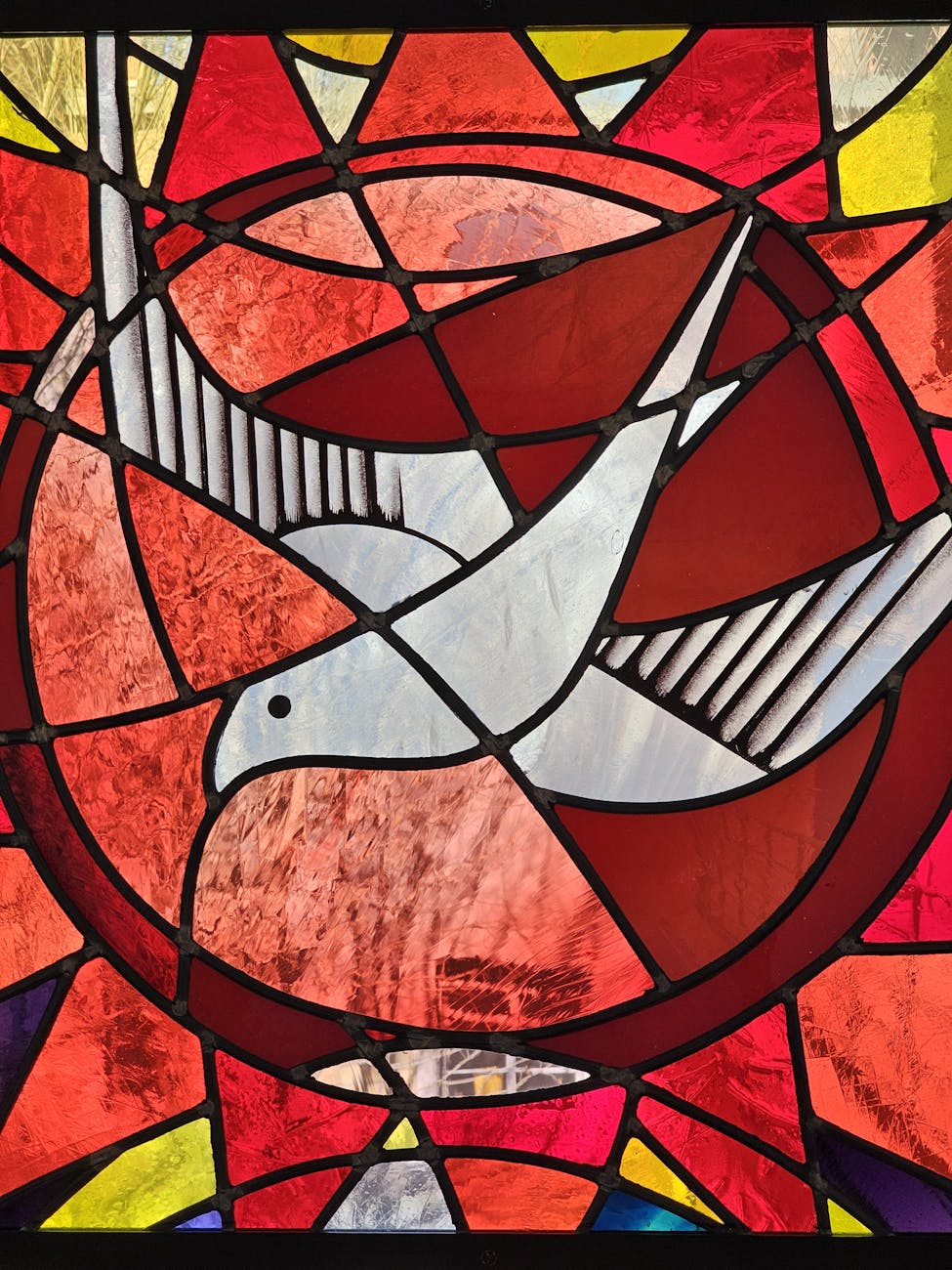
The Holy Spirit is the breath of God. He dwells in us. He has appeared as a dove and as tongues of fire. Jesus spoke of the Holy Spirit in very solid concrete terms. All mentions of the Holy Spirit in the Bible are very concrete, very solid, very real.

Jesus is, again, preparing His disciples for His departure. It’s been a bit of a rollercoaster for them.

Jesus prepares them for His death. Jesus is betrayed by one of their intimate group. Jesus is arrested, tried, tortured, crucified. He dies and is placed in the tomb, rises from the dead and is again with His disciples but now He is saying they have to say goodbye again as He is going back to the Father.

Confusion, betrayal, fear, terror, loss, sadness, grief, surprise, joy, relief and now they are looking loss in the face again.

But Jesus wasn’t leaving His disciples, or us, bereft of God. He was preparing the way for the Holy Spirit to be with and dwell in us. 

The Lord is here. His Spirit is with us. Ever present in our lives.

Jesus, God the Son, brought comfort, help, guidance and healing to the people He met. God the Holy Spirit brings comfort, help, healing and confidence in God’s continued and eternal presence. The Holy Spirit is the embodiment of God, dwelling within each one of us who have become united with Christ through our salvation; transforming us and growing us so that we can be a blessing to others and to the world.

Some one once described the Holy Spirit as “the present-tense of God”: not the God of history, not the God of the future, but the God of the here and now, active in our lives. Through the Holy Spirit we experience God on a day to day basis as He keeps us in God’s presence every moment of every day, sustaining us and our faith.

As the Holy Spirit works more and more in our lives we increasingly become obedient to God’s will for our lives. 

Jesus says “If you love me you will keep my commandments … and those who love me will be loved by the Father”.

Do you love Jesus?

We are not talking about a “pink and fluffy” kind of love.

Jesus wants our obedience, our actions, our devotion. Love for Jesus is about following His call on our lives. Authentic love for Jesus is shown by how we live to Him and how we live with each other.

Love for Jesus begins with emotion but as it deepens it moves to obedience and devotion.

And so we must rely on the power of the Holy Spirit working within us, changing us, transforming us, drawing us closer to God.

The Lord is here. His Spirit is with us. Change is coming!  

Holy Spirit (Photo by Ann H on Pexels.com)

The Vine of Life

Jesus is the vine, we are the branches. We know that Jesus taught using images that the disciples and crowds knew. Vineyards were a familiar concept to His listeners; both as a literal vine and as a metaphor. The Old Testament uses the vine as a metaphor for the people of Israel, in both positive and negative ways.

A vine and its branches can be twisty, intertwined and complex.

God is the Vine Grower, Jesus is the Vine and we are the branches. The Vine is the life source of the branches.

Jesus is the Way, the Truth and the Life. He is our life source. God, the Vine Grower, tends the branches and will lift up those that produce no fruit. 

Modern translations of this passage use the harsh words “cuts off” those that bear no fruit but the origin text used words that mean to lift up.

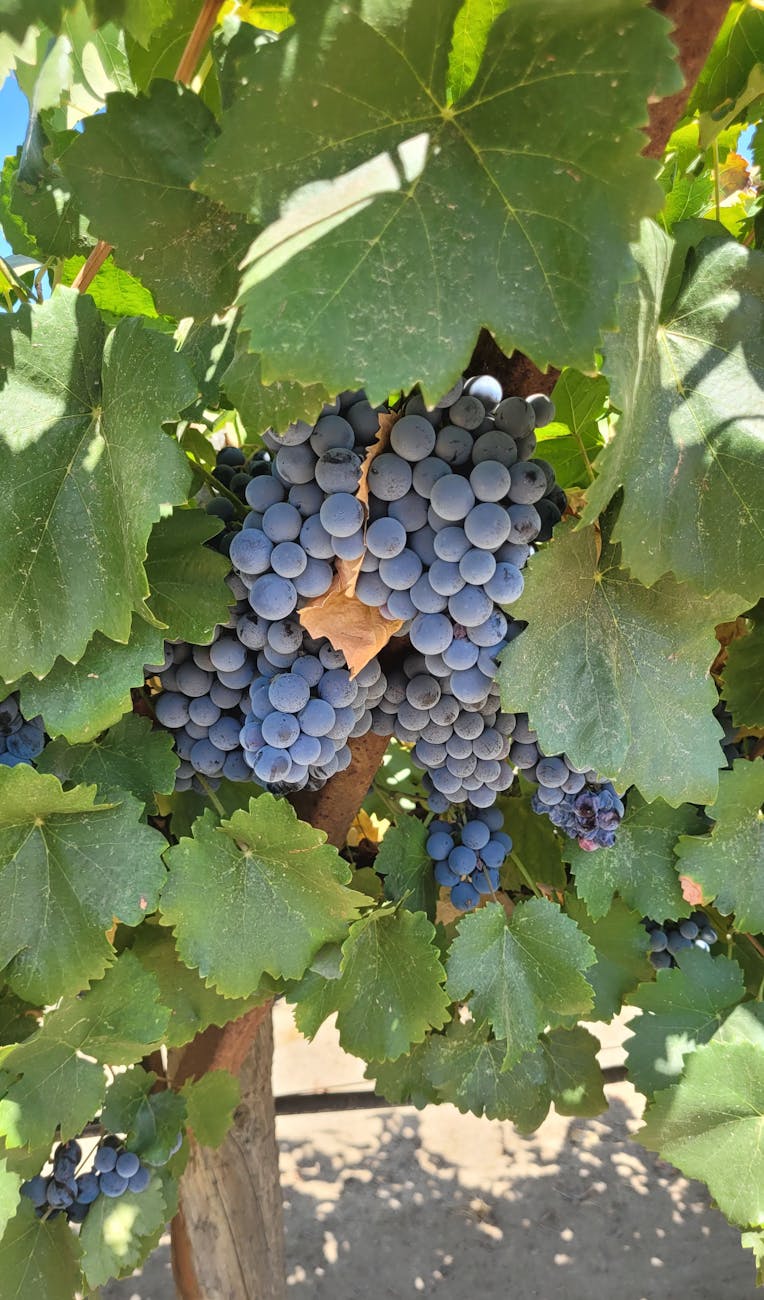
A vine grower will lift up those branches that are bearing no fruit so that instead of trailing along the ground, where the branches will grow tiny roots and try and feed themselves from the poor shallow soil, they are away from the ground and getting good nutrients from the actual vine. The shallow soil does not meet the needs of the branches leaving them unable to produce good fruit. The branches need to be nurtured by the vine which provides them with all they need and gives them a chance to produce good sweet fruit.

And the branches? Their job is to remain in the vine and produce fruit. 

Remain …

In this 8 verse passage the word remain appears 8 times. Jesus really wants us to get the message that we need to remain, or abide, in Him. He knows that we cannot “go it alone” even though our stubborn human selves will try. The branch cannot bear fruit when separated from the vine – to bear fruit it must remain part of the vine.

Do not be fooled into thinking that relying on God and abiding in Jesus gets us an easy ride. Quite the opposite. As Jesus reminds us “every branch that bears fruit will be pruned to make it bear more fruit” and branches bearing no fruit will be taken away and lifted up. Branches bearing fruit will be stripped of what they do not need to enable the nutrients to go to the fruit growing and enabling the branches to concentrate on the fruit and not be wasted on anything else.

Abiding in Christ the Vine does mean change! Being pruned – changed to bear much fruit. God preserves and nurtures us so we can produce good fruit and then He cleans us so we can produce more and sweeter fruit.

So let us abide in Christ the Vine, drench ourselves in His word and in prayer, so that we the branches can produce good sweet fruit.

Fruitful Vine (Photo by Gina Meyers on Pexels.com)