Mary …

We tend to use a mixture of readings from the Gospels of Matthew and Luke to revisit the miracle of Jesus’s birth. Here, Matthew doesn’t tell us how the Virgin Birth took place—except that it was by the Holy Spirit. Whereas, Luke gives a little more detail, the angel telling Mary that the Holy Spirit will come upon her, and the power of the Most High will overshadow her. The Virgin Birth is a divine miracle in the power of the Holy Spirit.

But Matthew does tell us two things about Jesus, one being what he does: “You shall call his name Jesus for he shall save his people from their sins”. Many Jews were looking for a Messiah who would come in conquering power. But Matthew shows us the much deeper human need. Jesus comes to save us from our sins—our spiritual needs far outweighing other needs.

The miracle of the Virgin Birth is also a sign of the far greater miracle and mystery of God becoming flesh and taking his place amongst us as one of us – the Incarnation. God didn’t just send angels, prophets and messengers—he came! In Jesus, God has come close; has taken human nature and human life to himself joining human nature to his own divine being. This is all of the Grace of God, who is a God who stoops to take us by the hand. In this respect, Matthew quotes from the Old Testament: ‘The virgin will be with child and will give birth to a son, and they will call him “Immanuel”—which means, “God with us.”’ If the name Jesus is descriptive of what Jesus does, Immanuel is descriptive of who Jesus is—God with us.

The miracle of the Virgin Birth points towards both the humanity and the deity of Jesus. He was a human person born in the normal way. He is also the eternal God who has come to us—the God-man. Jesus didn’t begin his existence at Christmas, but as eternal God, entered into time and space at Christmas. For unto us a Child is born, unto us a Son is given… (Isaiah 9:6).
So many people are ‘in the dark’ about God and don’t see him clearly. Yet, if you want to know what God is like, you only have to look at Jesus. Jesus Christ is the “Word of the Father, now in flesh appearing…” He is the revelation of the will, wisdom and person of God. His teaching is the
instruction of God. His death is the death of God-for-us. His resurrection is the victory of God! The meaning of Christmas is first and foremost a message of amazing grace, of a God who comes near.

The miracle of the Virgin Birth is a new creation, the beginning of a whole new world. What we can’t do for ourselves, God has and is doing. Into a world of brokenness and sadness God has come by means of a supernatural birth in the power of the Holy Spirit. But it doesn’t end there: the same Spirit who hovered over Mary and brought about a miracle of new life and transformation in her can also do the same in us! Regardless of who you are or what you have done you can start a whole new life as part of the new world. Jesus is the answer to our deepest needs. He is God come among us in order to save us from our sins and to rescue us from the deepest cause of our alienation and brokenness. When we start from the inside out we can have hope that the entirety of our life can experience the transformation he brings.


Mary, mother of Jesus (Photo by Juan Carlos Leva on Pexels.com)

John the Baptist

Matthew 11:2-11 is a reading which often gets overlooked.

John the Baptist is in prison. He has been in prison for some time and knows he will not leave it alive because Herod’s wife wants him dead. She has not yet, however, found a way of securing his death and Herod is intrigued by John and so listens to what he has to say. Consequently, John is treated with respect and his disciples were allowed to visit him freely. His disciples keep him up to date with what is going on in the world outside and report to him what they have witnessed of Jesus.

John sends his disciples to Jesus with the question “Art thou he that should come?”

This is where opinion amongst well-known commentators differ.

Some state that John sent the disciples only to remove their doubts.

Others state that this question came directly from John with the answer being directed to John; who may have been feeling impatient at hearing about the signs and wonders but not seeing the appearance of God’s kingdom in a way he expected and so was falling into despair in prison.

Many Christians struggle with this passage and John’s question. This is not surprising considering what else we know about John.

John the forerunner. The one sent to “Prepare the way of the Lord”.

John, who, before he had even been born, recognised his cousin as Lord and Saviour and jumped for joy in his mother’s womb.

Seeds of doubt planted by the devil reach their peak at times of great despair and can cause people to question even the most important fundamental truths.

We hope that, nay we know that, John’s faith did not fail him.

However, at a time of despair, languishing in jail, confirmation of what he knew to be true would consolidate and strengthen his faith and hope.

Yet, if John had sent his disciples to Christ with the question for their satisfaction then we know that Christ pointed them to what they had heard and seen; directing them to the way in which salvation was to be found.

John, who at Jesus’s baptism witnessed the Holy Spirit descend on Jesus and heard the voice from heaven confirming Jesus as God’s beloved Son with whom He is well-pleased, had shown Christ to his disciples.

John saw that some of these disciples were envying for his sake and some were making the same misinterpretations as many of the Jews did about the Messiah. John wanted to ensure, before his own inevitable death took place, that his disciples were satisfied from their own experience of and sight of the works of Christ; and so he sent them on this errand.

“Poor men have the good news proclaimed to them,” Jesus added when He spoke to John’s disciples. He invited them to His kingdom and told them of peace and pardon.

It was predicted in Isaiah that the Messiah would indeed preach good tidings to the meek (the gospel to the poor).

Jesus knew that John the Baptist, whose heart was with the poor, knew that He was the one who united power and tenderness and could be none other than the expected king.

From verse 6: Blessed is he who shall not take offence at my poverty and lowliness of life and who will not reject me and my doctrine.

John wanted, not to force Christ’s hand into revealing Himself before His time came but, to ensure that he had completed his mission and passed the baton over to the one for whom he had been preparing the way.

Jesus then gave testimony to John, and to all he had achieved.

What Jesus said about John was not only to praise John but also for all the people.

Those who listen to the word will be called to give account of their improvements. Do we think that once the sermon is over the work is done? No! It most certainly is not. In fact, that is when the great work really begins.

Fervency and zeal are required by all. Self must be denied; the bent, frame and temper of the mind must be altered.

Those who have an interest in salvation will not mind what the terms are nor how hard they seem.

Things of God are of both great and common concern.

God requires no more from us than the right use of what he has given us.

People are ignorant because they will not learn.

John was sent to prepare the people to receive the Messiah and he fulfilled this commission. He preached repentance and faith in Christ.

As John prepared the way for Jesus then so we must prepare now.

We must prepare our hearts and minds, making them right and open ready to receive Him again this Christmas and for when He comes again in glory.

Not only that but we must spread that good news so that others also have the chance to repent and prepare.

Handing over the baton (Photo by BOOM ud83dudca5 Photography on Pexels.com)

Once Upon A Time …

there was a little baby born in a stable who would become the saviour of the world. He was visited by shepherds and magi, whilst the angels sang and a star shone.

And that is precisely the problem – too many people treat the reports of Jesus’s birth as if it was a nice little fairy story for children. There is too much complacency, too much commercialism and too much watering down the truth because it’s easier to fall in with non-believers, materialism and instant gratification than it is to stand firm in the faith. Humans like an easy life but the ironic thing is that taking the easier road leads, at the end, to suffering.

The road less travelled, narrow and difficult though it may seem at times, is the path to God’s house. Whilst the journey may seem hard, the end is worth it. It is better to travel the more difficult road with Christ by our side and wait for our reward at the end of the journey than it is to opt for the easy journey and the consequences that await.

Advent is a time of waiting, watching and preparing, of truly listening to God with our heart and with all our senses, of opening our hearts and minds, of making changes and being prepared to be changed, of praying and inviting Jesus into our lives and our hearts. It is a time to get ready to climb that difficult path up the mountain. 

Jesus is the gift that keeps on giving. He is real and the path to life, not just a story for Christmas. He is our Saviour, our Redeemer, the King of Kings and Lord of Lords who rules through love not war. He sacrificed himself to defeat death and the devil to save us. He shows us God’s mercy, love and grace. He grants us forgiveness and shows us how to live.

This year, why not use this time of Advent to evaluate yourself and your faith, to choose Jesus, the greatest gift of all, to choose life not death. Yes that means making difficult choices and choosing the harder path over the easier one. It means loving the Lord your God with all your heart, mind, soul and strength and loving your neighbour as yourself. It means loving, forgiving and praying for your enemies. It means listening and obeying our Lord and Master and following him.

But what a friend we have in Jesus, all our sins and griefs he bears. What Joy, Love, Light and Peace we gain as a child of our Heavenly Father. 

Hell is truly an absence of God, of not being in his loving presence. So stop treating Jesus’s birth as a fairy story and give it back the significance it requires.

I pray that you all receive God’s blessing this Christmas.

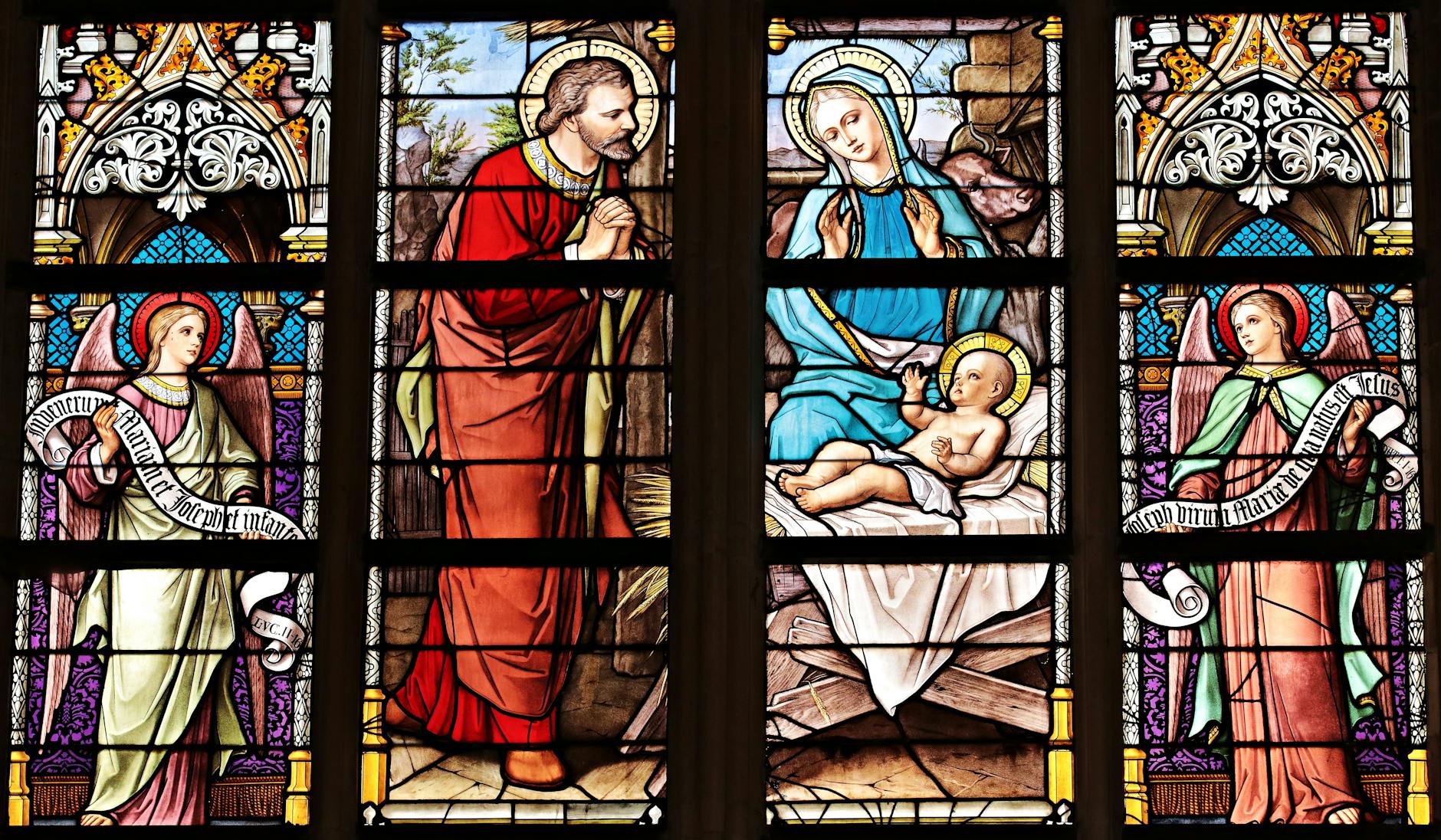
Image of a stained glass window depicting Jesus’s birth (Photo by Pixabay on Pexels.com)

King of Kings

The Sunday before Advent, we celebrate Christ the King, which concludes the church year as we begin the Advent Season and the new church year the following Sunday.

Whilst one of the more recent festival days of the church, having been added to the church calendar in 1925, it is when we join together to give thanks to Christ our King and to be reminded that all nations fall under the reign of God’s Son, and to remind the world that we all live under this reign, whether or not we acknowledge it.

Jesus is our King and is the King of kings.

So, what kind of king is he?

In his epistle to the Colossians, Paul tells us that in Jesus, our King, all things in heaven and earth, both seen and unseen, have been created through Jesus and for Jesus. There is nothing, no nation, no government, no earthly ruler that has not been created through Jesus and for Jesus. He is the Lord over all. King of kings and Lord of lords.

Paul goes on to tell us that without Jesus being an active part of our world everything would fall apart. Jesus is the glue that holds all things together. The ultimate sticky back plastic.

Paul tells us that our Almighty and all powerful God rescued us from the power of darkness into Jesus’s kingdom, where there is love, forgiveness, grace and mercy. All ruled over by the gentle, loving hand of Jesus. An all – powerful king who chooses not to rule by force but by love.

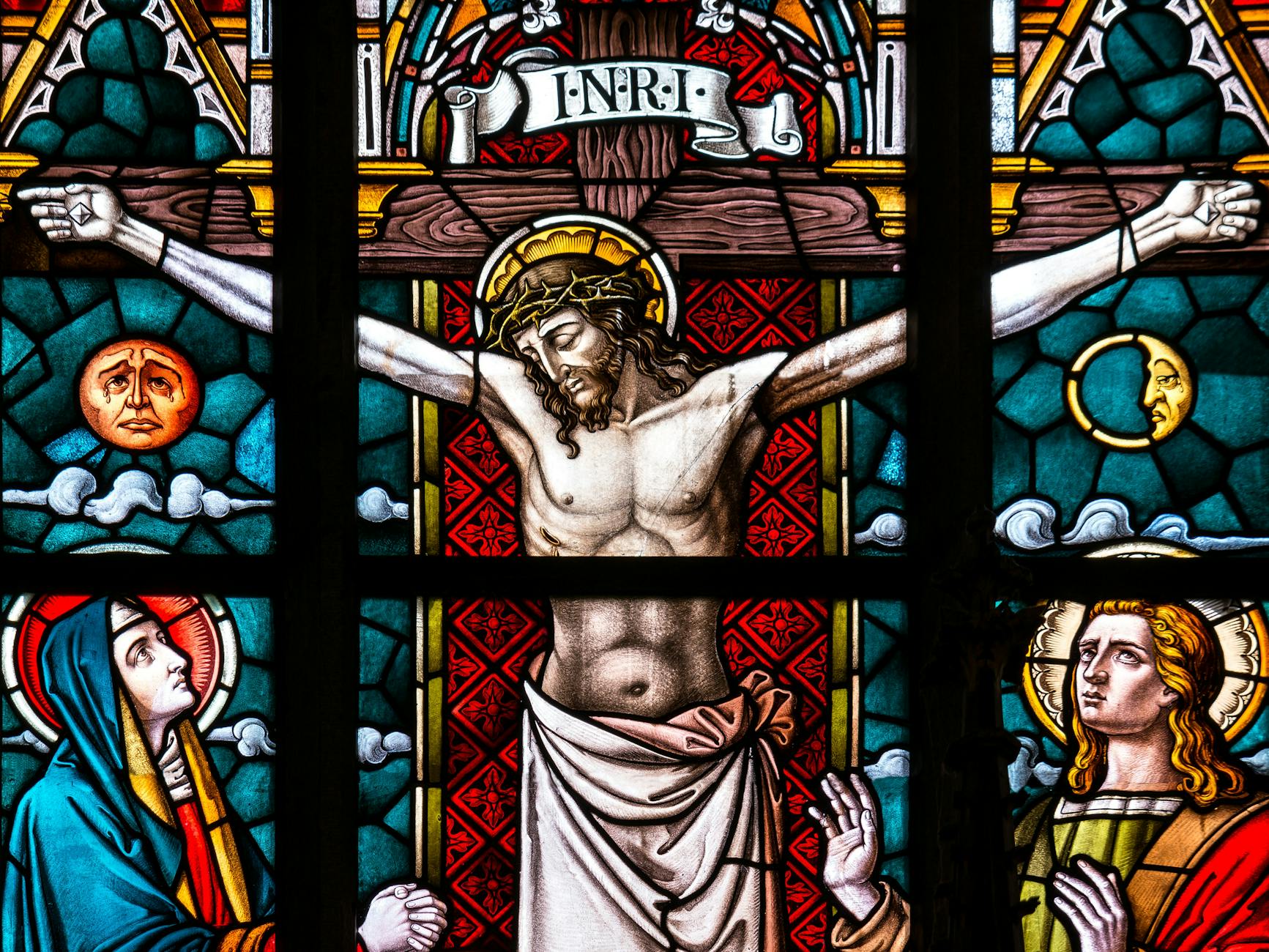
In Luke chapter 23, Jesus is being crucified and mocked. Jesus, our all – powerful king, allows himself to be crucified – killed in a cruel, torturous, shaming way; choosing to reign from a cross, willingly dying for us.

Yet it is this that shows us what it means to have Jesus as our king and what kind of king He is.

A king who is literally dying to save us. A king who took our humiliation and punishment for us. A king who was tortured and died and refused to save himself. A king who gets what he does not deserve – death on a cross – so that we can have what we do not deserve – life in his kingdom. A king of overflowing love showing us God’s overflowing love for us.

And he does not stop there, as demonstrated when, even though he was dying, he still found the breath to forgive the repentant thief.

Jesus is a king who is always ready to forgive and to welcome a repentant sinner home.

Christ, our king of love has let us off the cross, giving us the opportunity to be his disciples and live each day for him.

I invite you to think about what that means for you.

We give thanks for Christ our King, the all-powerful, who chooses to reign by love. The king who died so that we might live.

So, let us live not for ourselves but for him. Let us make the most of the opportunity to live each day for the king who died to save us and continue to do so until that blessed day when his kingdom will come in all it’s fullness and glory.

Christ The King (Photo by Pixabay on Pexels.com)

Signs of Daybreak

A rabbi once asked his students how they could tell when night had ended and day was on its way back.

‘Is it when you can see an animal in the distance, and can tell whether it is a sheep or a dog?’

‘No,’answered the rabbi.

‘Is it when you can look at a tree in the distance, and tell whether it is a fig tree or a peach tree?’

‘No.’

‘Well then,’ the students demanded, ‘when is it?’

‘It is when you look on the face of another hunan being and see that he or she is your brother or sister. Because if you cannot do that, then no matter what time it is, it is still night.’

Jesus said, “whoever does the will of my Father in heaven is my brother and sister and mother.”

We are all God’s children. Through faith and in Jesus Christ we are all part of the same family, all brothers and sisters.

This is the starting point for how we should treat one another. We are to respect our brother and sisters. 

We should listen to each other and be ready to hear God speaking. We should learn from, heed and act on their advice.

We should value them and the gifts they bring, thanking them for the different ways they serve and encouraging them.

We should be interested in their lives, how their week has been, and we should pray for them.

We are to treat each other as equals and honour them as a fellow heir in Christ.

We should love them, and our neighbour, as ourselves.

Let us look for the daybreak and the light of Christ shining brightly as we greet our brothers and sisters and welcome the day.

Daybreak

Riches and Heaven

A Sandwich for Supper

A story tells of a man who went to the office every day in his expensive car, and made important decisions and signed big contracts. Often, the important man would enjoy business lunches with his clients, and would try to distract the attention of his influential guests away from the unsavoury spectacle of the beggars on the streets of his city. One evening, after a hard day making money, he packed his briefcase to go home, where supper would be waiting for him. As he was locking his desk for the night, he caught sight of a stale sandwich lying abandoned at the back of the drawer. Without much thought he crammed it in his coat pocket. No need for it to go mouldy and mess up his desk. And on the way out to the car park he saw a street beggar on the steps, huddled in an old blanket. ‘Here my friend,’ he said to the beggar. ‘Here is something for your supper.’ And he gave him the stale sandwich. That night, the man dreamed that he was away on a business trip. After the day’s meeting, he was taken with his fellow directors to the town’s most luxurious restaurant. Everyone gave their orders and settled down with their aperitifs to look forward to a convivial evening. The orders arrived. Pate de foie gras. Medallions of venison. Lamb cutlets with rosemary and garlic. The dishes being brought to the table brought gasps of delight from all the company. Then his own order appeared. A waitress set in front of him one small plate, on which was served a stale sandwich. ‘What kind of service is this?’ the man demanded, enraged. ‘This isn’t what I ordered! I thought this was the best restaurant in town!’ ‘Oh sir,’ the waitress told him, ‘you’ve been misinformed. This isn’t a restaurant at all. This is heaven. We are only able to serve you what you sent on ahead while you were alive. I’m very sorry, sir, but when we looked under your name, the best we could find to serve to you was this little sandwich.’

Retelling of a Jewish folk story, Margaret Silf

Luke (chapter 16 verses 19 to end) tells us about the rich man and Lazarus. It is a stern teaching and word of warning from Jesus; although it is often misinterpreted.

We have a rich man living in luxury and a poor homeless man living right under the nose of the rich man, by his gate where the rich man could not miss him.

These are opposite extremes. The poor man has nothing, wears rags, is covered in sores and lives on the street. The rich man has fine clothes in colours that show off his wealth to the world, a luxurious home and an abundance of food.

The rich man had so much more than he needed, yet, despite seeing the poor man every day he completely ignored him and did nothing.

The poor man was so neglected that those passing did not even chase the dogs away from him.

Jesus has talked in other passages about how hard it is for the rich to enter the kingdom of heaven.

However, that is not because of the wealth itself but because of man’s love of wealth and the ignoring of those suffering and in need.

It is the state of our hearts and not the state of our wallets that interests Jesus.

The wealth and luxury the rich man enjoyed was not, in itself, what condemned him.

What condemned the rich man was that he totally ignored the poor man, despite him being right in his path.

We all have opportunities to help others laid in our paths. If we neglect these opportunities we are as guilty as the rich man. As Jesus said, “The poor will always be with us”.

The selfish use of worldly possessions is equally sinful. To do nothing when there are people like the poor man at our gates is equally wicked no matter how much wealth or how many possessions we have.

Spiritual things are also being represented in the different states of good and bad, in this world and the next.

The rich man’s sin was in providing only for himself. The poor man is in the depth of adversity and distress.

We are not told that the rich man caused any harm to the poor man but the rich man did not care for the poor man.

There is a time coming when those who hate and despise the people of God would gladly receive kindness from them. But the damned in hell will not have their torment eased.

Nothing can bring about true repentance without the special grace of God renewing the sinner’s heart.

Jesus is using this teaching to consolidate the dangers of the love of money, the deceitful, treacherous nature of riches; that those not using their property in the right way may not enter heaven, that they ought to heed the warnings from the prophets and their duty to care for and show kindness to the poor.

Both the rich and the poor man die. Jesus does not reveal what the after lands are really like. Instead He uses the preconceived ideas of those He is teaching; The point was to emphasise the total reversal of position of the rich man and the poor man.

The rich man, who lived in luxury whilst alive, now lives in torment and suffering. The poor man, who lived in suffering and torment whilst alive, is now the possessor of abundance and delight.

The rich man now wants from the poor man the help which he refused to give the poor man in life. Each must, however, reap in death what he has sown in life.

How we live our lives here determines life hereafter, the character we make out of ourselves, once set and hardened in this life, cannot be remoulded in the next.

The rich man’s request for his brethren serves only to try and excuse himself by claiming ignorance, and that had he known he would have been different. He tries to put the blame on insufficient warnings instead of owning it himself.

However, the teachings of Moses and the prophets are sufficient, holding a divine message for those who wish to listen.

It is not a lack of warnings but the aversion of will.

The rich man is in torment, not because he did not know his actions were wrong, but because he did not choose to do what he knew to be right.

Let us ponder the story of The Long-Handled Spoons:

A rabbi asked God to give him a glimpse of what heaven and hell would be like. God agreed to this request, and asked the prophet Elijah to be the rabbi’s guide on this adventure. Elijah first led the rabbi into a large room. In the middle of the room was a fire with a big cooking pot bubbling away on it. And in the pot was a delicious stew. All around the cooking pot sat a crowd of people. They each had a long-handled spoon, which they were dipping into the delicious stew. But the people looked pale and thin and wretched. There was an icy stillness in the room. The handles of the spoons were so long that no one was able to get the lovely food into their mouth. When the two visitors were back outide again, the rabbi asked Elijah what strange place this was. ‘That was hell,’ Elijah explained. Then Elijah led the rabbi to a second room, which looked exactly like the first. In the middle, a fire was blazing and a cooking pot was bubbling away, full of the same delicious, aromatic stew. People sat around the fire, with the same long-handled spoons in their hands But they were enjoying lively, animated conversations with each other. And the difference? Well, the people in the second room were not trying to feed themselves with the long-handled spoons. They were using the spoons to feed each other. ‘Ah, heaven,’ said the rabbi.

retold by Margaret Silf from an unknown source.
Long-handled spoon

Discipleship Is Costly

Luke 14:25-33

Jesus is on His way to Jerusalem because the time of His death is approaching. He was accompanied by His disciples, whom He was teaching and preparing, but time was short. Hence, Jesus’s radical call. It was absolutely necessary for them to leave everything behind and be prepared for their own death if they are serious about following Him and about going with Him to Jerusalem.

There were also large crowds accompanying Jesus as He journeyed towards Jerusalem.

Jesus was also teaching these crowds.

Those who were already following Jesus needed to be taught the nature of true discipleship. They needed to be fully aware of what following Him costs.

Following Jesus demands full and total devotion to God.

Jesus was so fully devoted to His mission that it meant abandoning and being rejected by His home town and His family. For those who must leave their family behind to be able to fully follow Jesus it could be perceived as hating one’s family in the eyes of some.

Jesus tells us that to be His disciple means carrying our cross and following Him.

He is giving His disciples advance warning.

The road they were following Jesus down is expected to end in death, and they must prepare themselves.

Full devotion is described by and measured by what future is being committed to.

As usual, Jesus gave examples in order to help His disciples and the crowd understand the importance of fully evaluating the cost of following Him.

It was not a decision to be made lightly. Each person in the crowd and each disciple needed to consider whether they could follow Him to the very end, leaving everything else behind.

“None of you can be my disciple if you do not give up all your possessions.”

Jesus is entirely serious in saying that those following Him to Jerusalem must not be encumbered in any way.

But, if we look at other contexts and situations, does Jesus require every one, every disciple, every where and in every time to abandon family and possessions and run headlong towards death for Him?

If we look at the rest of the New Testament we can discern that the answer to this question is no.

The rest of the New Testament portrays faithful disciples maintaining family relationships and retaining possessions.

There are the apostles who travelled with their wives as they travelled far and wide on missionary work. The members of the church who had homes and possessions, with which they supported the church and the work of Peter, Paul and the other apostles.

It is important, however, to reiterate that these converts held their possessions loosely and were willing to give them up for the good of others and to support the Gospel mission.

It is also important to realise and accept that the requirements Jesus placed upon those wanting to follow Him on the road to Jerusalem will be required to be fulfilled should the circumstances dictate.

All followers of Jesus must remind themselves constantly that following Him faithfully could require the full sacrifice of family, possessions and even life itself. Those Christians who do not encounter or experience that extreme sacrifice must ensure that their family, possessions and life do not become so dear to us that they draw us away from full devotion.

Discipleship IS costly.

It demands continuous giving – giving time, giving energy, giving attention, taking initiative, making sacrifices, facing opposition, losing privacy, embracing obscurity, even shedding tears.

The making of disciples is not just sharing the Gospel, but sharing our own selves, gladly, for the souls of others. It means giving, giving, giving, giving and even more giving.

It is more blessed to give than to receive. So it also is with the hearts of disciples. It makes me happier for you to have my time, energy, attention. initiative, than it does for me to keep them to myself.

The crowd who were with Jesus on the road were interested enough to be following Him. However, they hadn’t fully grasped the implications and cost of discipleship. The same is true for many today. Throughout the world, both in churches and out, are crowds of people interested in Jesus but who do not really grasp the full implications, cost and commitment of discipleship for themselves.

And it is to such as these that Jesus is speaking to here. Those people who are willing to follow Jesus and learn from Him but only as long as the cost to them is not too high. Casual followers, followers who are here today but gone tomorrow.

Jesus points out that this is a total misunderstanding of what it means to be a Christian and He strongly addresses this misunderstanding.

We are to put Jesus first, to put our love for God above everything else in our lives.

The Christian life demands strength to love.

The Christian life demands that we carry a cross.

The Christian life demands that we give up everything for God.

There is only one person who has ever managed to do this perfectly and, of course, that is Jesus Christ Himself. He is our model – our example. We are to imitate Him, or in the words of Thomas A Kempis we are to develop “The Imitation of Christ”.

Growth in discipleship is ultimately growth in becoming more Christlike in our thoughts and actions.

And that involves sacrifice and hard work.

Are we ready to count the cost and become the disciples Jesus wants us to be.

It’s a choice we must make.

Not only that but we must keep making that choice

every

single

day!

Count the cost

Pride and Humility

In Luke, chapter 14, verses 7 to 14, Jesus is teaching us about pride and humility.

Jesus was at the house of one of the pharisees to eat a meal. Jesus often had disputes with the pharisees but He still spent time with them; not as a pharisee Himself but being God’s Son on earth He was showing them God’s example and love. And whilst at this meal Jesus watched.

He watched and saw how the others at this meal behaved and how they strategically placed themselves to get the best seats in the house; that is the places which would grant them the most honour or, if you like, jostling for the Top Table.

In Jesus’s day, seating arrangements were very important in society as the most honoured person sat in a particular seat, then the next most honoured, then the next and so on. A wedding banquet was the most important occasion and where you got seated at such a party was indicative of your standing in the community. This made it the perfect example for Jesus to use to teach His lesson.

And, of course, if you were to take the most honoured place and the host wanted someone else to sit there you would be asked to move – which would be embarrassing and would make you feel great shame.

Not everyone has the same exact customs to denote social standing and highlight how important or honoured someone is. But, there are many occasions in modern life where one’s own sense of self importance, pride and high opinion of one’s self can be displayed.

Pride comes before a fall. Shame comes after self exaltation.

Instead of playing the self promotion game, work hard for the Lord and let God raise us up.

When sitting in that lower place we are not there to make ourselves noticed in order to try and get ourselves placed higher. Nor are we there to pout and show dissatisfaction with the aim to let others know we don’t belong there. On the contrary, there is something wonderful and joyful about being content in whatever place God allows us to have.

Joyfully embrace the lower place. If the Master moves us to a higher place think how much more satisfying it is to know that God has raised you up than if you raised yourself up.

When we seek to honour ourselves we will always be humbled.

Jesus was the perfect One to teach this lesson, because He fulfilled it perfectly. He (God’s Son incarnated as flesh) deserved the highest place but He took the lowest and was ‘granted’ the highest.

Jesus had also noticed that the pharisee had chosen guests from a sense of pride, lacking in love for others and only inviting those who could give something in return. So Jesus went on to warn the host about the danger of pride when choosing guests.

Jesus is not saying that we can never invite certain friends/relatives/associates. What He is saying is not to make a habit of only inviting the same clique of people all the time.

He is telling the pharisee, and us, not to only associate with people for what they can do for us. He is telling us not to put self at the centre of our lives. We are called to follow Jesus and His example was that of putting others in the centre of our living.

It is better to give than to receive.

It is a wonderful feeling to give a gift that can never be repaid. Such a feeling helps give us a small insight into the pleasure of God in giving the gift of His grace, mercy, salvation and blessing to His people.

We never lose out when we follow the pattern of God’s generosity. Jesus shows us that we need to live with an eternal perspective of life as He promises God provides us with full repayment at the resurrection of the righteous; when our lives are weighed up on the balance sheet and audited by He who knows our hearts and minds, our actions and our motivations.

So, in summary:

Practise and prioritise humility over pride in everything.

Our works should be for the glory of God not for the praise of others.

We should embrace a lifestyle of radical hospitality, welcoming all.

And we need to understand that God’s kingdom operates with a different set of values to the world’s values. It operates with God’s values.

Humility

Rest

This miracle in the passage from Luke chapter 13, verses 10-17, is quite understated when compared to some of the other miracle accounts. We are told that the woman suffered for 18 years, Jesus lay hands on her, pronounced her free from her ailment and she was set free.

The synagogue leader then points out what many of the Rabbis and Jews may have been thinking – that healing was work and so should have been done on one of the 6 days of labour and not on the Sabbath.

Jesus’s response was that of the lesser to the greater. He points out that any of those gathered there would still take care of an animal if it needed help on the Sabbath so how much more should they respond to a human being in need. 

But the conversation is actually deeper than this. 

In the original Greek the synagogue leader’s words use the word ‘dei’ to make his claim about the ought of work but it also describes what is necessary for Jesus to do as God’s Son and representative; which is why Jesus’s response picks up on the synagogue leader’s claim. It is not about a divine necessity to work on the other 6 days but on the divine necessity to free the woman from what binds her on the Sabbath. And, of course, for added emphasis Jesus calls her what she is – a daughter of Abraham – magnifying the need to heal, liberate and unbind.

And the people praise God. They recognise Jesus as the one who brings in healing power to those who need it most.

Jesus is God’s repairman for the world.

God made the world and He made it good. He also made it holy. When Jesus acts in His Father’s name it is right and natural that people give Him glory. God in Jesus entered the world so it and everything in it could rest, be saved, be restored and perfected. 

Returning to ourselves, do we stand in need of a special Sabbath rest day?

A setting aside that day of rest is something we have lost sight of. We work all hours, shop all hours – assisted by worldly pressures, stores staying open and online shopping. There is the expectation that phone lines will be open 24/7. Society seems to forget the welfare and wellbeing of both the workers and themselves.

The reasons God gave us the Sabbath are overlooked and forgotten.

Nothing must get in the way of instant gratification, of getting what we want instantly, of consumerism.

The pressure this puts on us all leaves us crooked and burdened like the woman in the passage. We need Jesus to repair and heal us just like she did. 

We need to put Sabbath time aside to rest from the worldly pressures and to spend time with God.

Resting and Relaxing, sitting on a bench with a peaceful view

Be prepared!

As I was reading the passage Luke chapter 12, verses 32 – 40, some words from The Lion King popped into my head:

“Even you can’t be caught unawares, so, prepare for a chance of a lifetime, be prepared for sensational news. A shining new era is tiptoeing nearer. And where do we feature? Just listen to teacher. Be prepared!”

There are many distractions in our world, many temptations and many things clamouring for our attention. 

Where your treasure is there also will your heart be.

Jesus is calling us to prioritise and to focus on the things and activities that give eternal life. He is reminding us that we should be centering our lives on God. The world will not make this easy. There will be distractions in the world around us which may make this seem difficult. But (there’s always a but!) it is essential for our lives as Christians and if we don’t we will be caught unprepared!

This passage from Luke is about vocation! It is not simply ‘be prepared and you will be saved’.

It is actually about being ready and alert, being aware and listening so that when God calls us to action we can seize the opportunity and spring into action, spreading the good news full of the energy of the gospel – healing, justice, love, grace, peace, mercy …

Those who are ready for the return of the Lord will be served by God. Remember the words of the hymn: 

“This is my God, the Servant King.”

This gives the impression of being a contradiction but it does not mean that we stop serving God. Instead it is a promise of what will happen when you re-centre your life around God. The good news of Christ will serve you in your life so that you are not afraid.

Jesus promises that God has given everything so that we do not need to be afraid. He then goes on to talk about how God will serve us reminding us about the gift of life and creation, the gift of eternal life, the gift of the Holy Spirit in Baptism and the gift of Christ’s body and blood in Communion. This highlights how abundantly God showers gifts upon us, how abundantly He loves us and desires good for us. It echoes His covenant with Abraham. 

So, how ready are we?

Are we ready to help others in need? Have we considered the issues of peace and justice going on in the world? Are we ready to be part of God’s solution?

Jesus is encouraging us to live with an expectation that God is always and already with us … and watching as God has always been. Jesus being incarnated as man was a reminder and embodiment of that reality and an example for us to follow.

This passage of priorities is a call to keep God’s priorities ahead of our own every day in all the choices we make. God’s list of priorities may seem long or challenging at times. It means accepting God’s forgiveness for our own sins and forgiving those who sin against us.

It means loving one another and loving our enemies. It means standing up to injustice when we see it, praying for and voting for and working for peace in the world. 

It means living and shopping and consuming in ways that care for creation; eating and drinking and exercising in ways that care for the temples our bodies are meant to be.

Going back to just before Jesus gave us this list of priorities He says to us:

“Do not be afraid little flock, for it is the Father’s good pleasure to give you the kingdom”.

God wants us to be with Him in His kingdom. God’s kingdom is already here among us thanks to Jesus’s sacrifice and resurrection. 

Being typical human beings we don’t see and experience it clearly because we’re looking the wrong way or wandering off on our own instead of following our God Guide.

But, like the pleasure we get giving someone a gift, God has immense pleasure in gifting us His kingdom, right here, right now as a foretaste of things to come, because of His grace. And God’s list of priorities is the key that opens the gate.

By being generous we can glimpse God’s kingdom. By sacrificing something, giving something freely and willingly to someone who needs it, enables us to experience and share in a measure of His kingdom. 

By seeking out the least among us and giving them a hand we can feel the kingdom among us. By forgiving all who cross us we experience the peace of the kingdom – the peace that passes all understanding. 

Converse with those with different opinions to yourself, send a note to someone who’d be surprised you thought of them, keep them in your prayers and God’s kingdom will be in your midst and theirs.

Be Ready

Be Alert

Be Prepared

Listen for God’s call and spring into action.

Be Prepared