Awe and Wonder*

*(John 6: 1-21), talk given at HTS 28th July 2024

Again, we have a reading that is often preached on. The feeding of the 5000 and walking on water – as recounted by John.

Consequently, I have heard so many different theories about how the feeding of the 5000 was accomplished.

These theories are spoken by supposed men of faith, and yet, what they all have in common is that they detract from the awesomeness of the miracle performed by Jesus.

I have said before (and will probably do so again) that we, mere mortals, try to explain away acts of God. We are so eager to know how something has been done that we make up theories to translate the unknowable, the un-understandable, the sheer magic if you like of God’s awesome power into something mundane as we falsely claim we know how it was achieved. Like explaining away all illusionist’s tricks as mere slight of hand. We can’t just accept the wonder – the miracle – for what it is.

A miracle!

The work of God!

An amazing gift from Him to us!

We don’t need to know how it was achieved – not if we have faith and believe. It should be enough for us just to know that God did it – God provided!

God did not ignore the pleas made on behalf of His people. Instead He provided what was needed and a lot more besides.

No one went hungry. Everyone ate their fill. And yet 12 baskets of bread remained at the end of the feast.

  • 12 baskets of bread
  • 12 tribes of Israel
  • 12 Apostles

Whilst you think about that for a moment; let me mention some more parallels that are at work here.

The Passover, a major festival in the Jewish calendar remembering when the Angel of Death passed over the houses of the Israelites the night before they, in a mass exodus, followed Moses out of Egypt into the Wilderness, where God provided for them with another miracle – manna – bread from heaven.

Moses, the foreteller of the plagues of Egypt, leading a crowd through a Wilderness where God provides them with the food they need each day. Moses, who went up a mountain to speak to God in peace and solitude away from the crowd.

Jesus, instead of foretelling plagues upon Egypt, provided healing in abundance. The crowd followed Him, drawn to Him by the signs they witnessed. Jesus was leading a crowd. John just tells us that they were the other side of the Sea of Galilee. The lack of a specific place name for where this significant event takes place puts it in parallel with Moses leading the Israelites through the Wilderness.

Jesus leads a crowd through the Wilderness. With the power given to Him by God His Father, Jesus provides bread in abundance. This acts as confirmation to the crowd that Jesus is from God. He sees what is in their minds and, knowing God’s plan knows that becoming the warrior king the crowd wanted was not how God wanted Him to save the world. Jesus goes up a mountain to speak with God in solitude away from the crowd.

As is a common thread through John’s Gospel; this passage is about who Jesus us and about proclaiming Jesus’s greatness. John does this by recounting this event in such a way that we see these parallels.

Both Moses and Jesus enabled their multitudes to have food in the Wilderness. However, it is the difference that is important here.

Moses asked God where to get food for the people. He didn’t know and asked God genuinely. Moses needed to rely on God. God provided, in abundance, food for His people. When Jesus asked Philip ‘where will we get bread for the people’ it was actually a rhetorical question. Jesus already knew what He was going to do. Jesus, the Son of God with the power of God, already knew that He Himself would perform a miracle providing food in abundance for the people.

John claims Jesus is testing Philip – and this is possible. The Jews knew the Scriptures in great depth. It is possible, therefore, that Jesus wanted to see whether the disciples knew enough about who He was, and is, and to see if they remembered the manna from heaven and would realise that in a similar way Jesus would be providing for His people.

We cannot second guess God, but what we do know is that if that was the case Philip failed. And not only Philip.

Like many today, Philip could only focus on how much it would cost to find a ‘shop’ and buy bread and Andrew could only focus on how little the supplies were.

And likewise, if Jesus tests us in a similar way, do we truly acknowledge that He will provide, or, do we fail the test by focussing on cost and resources?

Jesus fed His people. He took the loaves, gave thanks and distributed it to the people. And here we have the next important difference highlighting Jesus’s greatness.

If the Israelites collected more manna than they needed and tried to store it then the manna perished. When the disciples gathered the leftovers so that none would be wasted there were 12 baskets of good food leftover. Proof of the abundance Jesus provides for those who truly put their faith in and rely on Him.

The crowd see Jesus as a prophet sent from God. It is possible they may have seen Him as a second Moses.

But regardless of how the crowd saw Him, Jesus is more than just a prophet. He is the Son of God.

And in case we had any more doubts, like many passages in the Bible, like the Trinity, we have a third significant difference highlighting who Jesus is, His greatness and His power.

When the Israelites reached the Red Sea, Moses had to rely on God to part the waters so that he could lead the Israelites across on dry land.

When the disciples were crossing the sea in a boat, Jesus needed no such help. Jesus, God’s Son, with power over creation, walked on the water to the boat and immediately they all reach shore.

Jesus walked across the surface of the water as Lord and Master, revealing Himself to His disciples using His name – the name God revealed to Moses – I Am.

Moses is considered to be God’s greatest prophet and lawgiver. But Jesus is God. Jesus is mightier. Jesus is more.

Whoever you see as that Moses equivalent – be it as prophet or leader …

  • Jesus is greater
  • Jesus is the one who provides
  • Jesus is more

Let us see Jesus for who He really is. Let us fully put our faith and trust in Him. Let us fully rely on Him and allow Him to provide for us. Let us not continue to fail the test as Philip and Andrew did. Let us be ever thankful to God for HIs great grace, abundance and mercy. Amen.

The Sea

Minster Abbey Talk on John 17:1-11

“The time has come,” the Walrus said, “to talk of many things:…”

Lewis Carroll

And if we were having a conversation over some coffee and cake (hint hint) that is precisely what would happen. We would have a conversation; maybe about the weather, the coronation, a television drama, … all sorts.

Some of us find it easy to converse, some of us find it more difficult and communicate in other ways. Some of us are good at listening and for some of us it “goes in one ear and out the other”.

But, how do we pray?

There are many different ways we can pray, but ultimately, if we think about it, prayer is just the same as that conversation over coffee … isn’t it?

If not why not?

We have the opportunity to talk to God about anything and everything; and not just when we’re worried or in need or when things aren’t going as we’d like but also when we’re thankful, joyful and when things are going well.

We can do a lot of talking to God but we need to remember to listen as well. If we are honest none of us listen as much as we should.

Prayer is vitally important in our lives. An oft repeated quote “seven days without prayer makes one week (weak!)”.

Today’s Gospel reading is part of one of Jesus’s longest prayers.

In short it summarises Jesus’s relationship with the Father and the relationship He wanted His disciples to have with Himself and the Father.

Like the Holy Trinity (Father, Son and Holy Spirit) this prayer is in three sections.

  1. Jesus prays for Himself
  2. Jesus prays for His disciples
  3. Jesus prays for all believers past, present and future

Despite us having celebrated Jesus’s Ascension on Thursday, this prayer passage takes place before His arrest. But it is significant because it becomes Jesus’s evaluation of the purpose of His life, death, resurrection and ascension.

God’s glory and Jesus’s glory are one and the same. Through the death of Jesus God is glorified and all believers receive eternal life.

Eternal life is knowing the one true God; being in a living fellowship with God. And this life we receive when we accept Jesus into our hearts and lives. Jesus’s purpose, His mission, is salvation.

Jesus prays with great concern for His disciples. He was not concerned about Himself – He knew God’s plan, He knew He had to suffer and die to be victorious. Jesus’s victory was unquestionable. The disciples were just like us. They were not infallible. Jesus had predicted the disciples would desert Him. And so He prayed for them, that they would be kept safe and protected by the Father’s power and that they would fulfil their future ministry. The disciples were about to be tested and Jesus prayed that this would not separate them from Himself or from each other.

Again, like the Three-in-one, Jesus mentions three things about His disciples:

  1. They had accepted His teaching
  2. They had accepted the knowledge that Jesus is the Son of God
  3. They believed

Jesus prayed that the world would stop being opposed to God.

“All I have is Yours and all You have is Mine.” Jesus has equality with the Father.

He prays that, as He and God are one, the disciples and believers will remain as one.

In unity.

Not divided.

Division is the result of the failures of Christians.

God is awe-inspiring and loving. Jesus’s prayer is an outpouring of love and concern.

Jesus was shortly returning to the Father and to the glory He has before the world began. He had completed His mission. The Holy Spirit had been promised. With the help of the Holy Spirit it is now our turn.

Our mission, if we choose to accept it, is to bring glory to God through all we do in His name.

Are we ready?

Do we accept this mission?

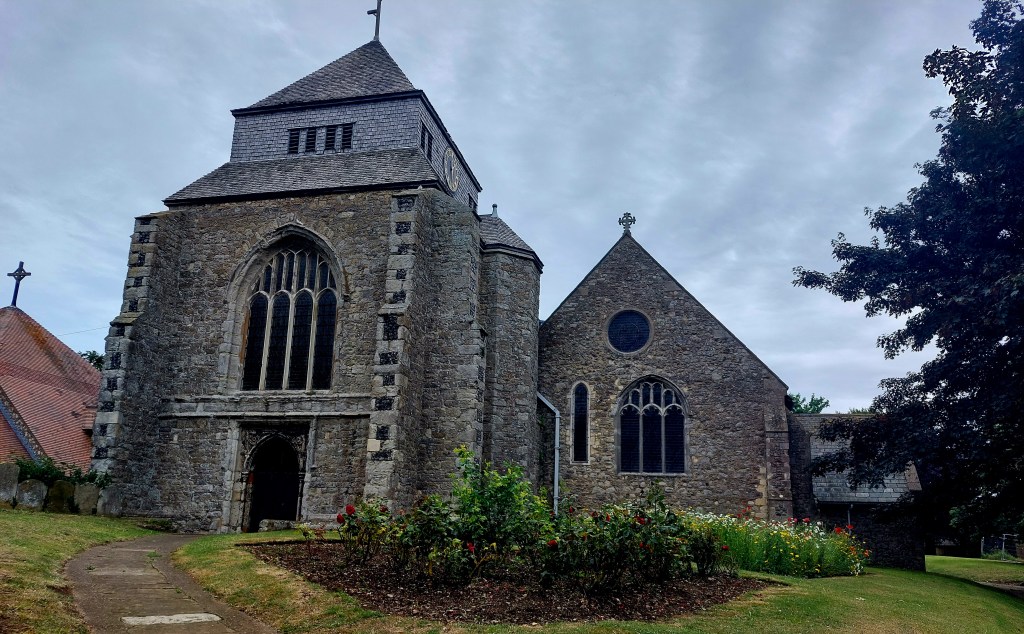
Minster Abbey, Sheppey

A Journey of Truth and Faith

(Talk on Luke 24:13-35 23rd April 2023)

This passage from Luke teaches us a lot about truth and faith. It is, in both a literal and a spiritual sense, about journeys. Literally, it is about two disciples (followers of Jesus) walking from Jerusalem to Emmaus. Spiritually, it is about their and our journey from not knowing Jesus to truly knowing Jesus and sharing our experiences of Jesus. It is about rediscovering Christ’s presence in our lives, gaining a fresher understanding of God’s transforming grace, allowing our hearts to be ignited with the Holy Spirit as we too walk with Christ.

The Bible makes very clear and specific statements about Jesus. As the disciples walked along they were discussing the scriptures and the recent events that had happened. When Jesus appeared to them they were walking the wrong way – away from Jerusalem. They were preoccupied with their own difficulties, overwhelmed with sadness, grief and hopelessness. They were unable to identify God’s purpose in what had happened.

Humans like to know reasons for…well everything. We ask (both aloud and to ourselves) why? We analyse, we interpret, we assume, we conclude. And we use the answers as a Sat Nav! What we decide the answers are determine/direct what and where we do/go next.

The disciples did not fully understand the Scriptures or the meaning of what had happened to Jesus. They had knowledge but it was incomplete and not understood. It was not true knowledge of the right information.

Jesus appeared and started to walk with them. They did not see Jesus. They were kept from recognising him. The Risen Christ walking with them on their journey, but unrecognised, igniting the fire of God’s love in their hearts. Like the Footsteps poem when there is only one set of footprints (because Jesus is carrying us).

But, this enabled Jesus to impart true knowledge. He explains and interprets for them. This teaches us that the key to interpreting the Old Testament is Jesus.

Jesus explained everything from Moses to the prophets, how the Messiah would save God’s people through His death and resurrection, rescuing a sinful, unholy people by reconciling them with The Holy God.

Jesus is the Messiah whose life, death and resurrection grants us salvation. Jesus Himself told us “I am the way, the truth and the life, no man comes to the Father except through me”.

God cannot be near sin. The only way for us sinners to be reconciled to Him was for Jesus to become sin, be punished for our sin, to die and defeat death; so that through His resurrection we could, with faith and repentance, be forgiven and have a relationship with God.

But it is not sufficient to just know the facts. We must also believe in that knowledge, we must truly believe in Jesus and in what He taught. Like the disciples recognising Jesus (when He broke the bread) and rushing back to tell the others, we have to open our eyes in faith. If we believe in Him then we strive to be in His image and this is shown in how we live. We need to believe in God’s word and be motivated by faith. We know God fulfils His promises but we also need to believe this. We know He is always with us, all the time, especially those times when we only see one set of footprints. But, we also need to believe this.

There is a story that gets quoted a lot so apologies if you, like me, have heard it used before:

There was a young boy caught in a house fire and forced to flee to the roof. The father stood on the ground below with outstretched arms, calling to his son, “Jump! I’ll catch you”. He knew the boy had to jump to save his life. All the boy could see was flame, smoke and darkness. The boy was too afraid to leave the roof. His father kept yelling “Jump! I WILL catch you”. The boy protested “Daddy, I can’t see you” The father replied, “But I CAN see you and that’s all that matters”.

Reece Sherman’s Faith Lessons

Do we understand truly? Or do we rely on our assumptions? Do we truly believe and trust in God? I pray that we do.

God is always there for us and will catch us. He can see us even if we cannot see Him. Do we have enough faith to jump into those life saving arms? I pray that we do.

Thank you.

Poppet on a journey, running through grass

Freddie The Burglar Raccoon

Freddie was a young raccoon,
He liked to run and run.
Sadly, he also liked to thieve
From all and everyone.
It didn't matter what it was
Or to whom it did belong.
So long as he could make it his
He thought he'd done no wrong.

"But Freddie" said Police Dog
"You will soon end up in jail,
And if you continue as you are
No one will pay your bail."
Freddie, he just did not believe,
He stole more and more and more.
Telling him it was a crime had now become a bore,
And Freddie being oh so young was too young for the law.

"But one day Fred they'll get you"
All his family did warn.
Yet Freddie he just looked at them
With a face of scorn.
But on Freddie's tenth birthday
All his thieving it did cease,
For on that day he stole again
And was cornered by police.
"Ah ha my lad we've got you now" Police Dog he did say
And Freddie can no longer steal,
For he is locked away!
A young raccoon.

Be Born Again

(John 3:1-17)

Nicodemus was a pharisee well educated and well versed in the scriptures. He recognised and acknowledged that Jesus was from God and that God was with him. Yet he came to see Jesus at night, being at the beginning of his belief in Jesus, not wanting his fellow pharisees to know that he had sought out Jesus.

Later, once Nicodemus’s faith and believe had grown he defended Jesus in front of the council and annointed Jesus’s body after the crucifixion.

Jesus responded to Nicodemus’s greeting  by starting to teach him how the Kingdom of Heaven can be reached. As is a common factor in conversations today, we are given the impression that Nicodemus has taken Jesus’s answer literally. Nicodemus is an intelligent man and some question whether he was merely stalling for time. However, whether he took Jesus’s answer literally or whether he was questioning it to allow him time to think, it is beneficial to us because this questioning opened up a further response from Jesus and the conversation that followed.

What does lend credence to the idea that Nicodemus was stalling for thinking time is that the Jews were not unfamiliar with the idea of rebirth and considered those converted to Judaism to have been reborn – just as we take those who have turned to Christ to have been reborn in Christ. As usual, like with the parables, Jesus was using metaphors and terminology the Jews were very familiar with.

So, being born again does not, thankfully, mean that Mothers are giving birth to the same person twice. In fact the actual rebirth is not even done by us but by God. What we must do is believe, believe and be baptised in water and in the Holy Spirit. We must receive the gift of the Holy Spirit and, with Jesus as our root, let it be fruitful so that we live with love, joy, patience, kindness, goodness, faithfulness, gentleness and self control.

Aptly, this reading this year fell on Trinity Sunday when we celebrate that God is Three in One – the Father (Presence of God), the Son (Voice of God) and the Holy Spirit (Breath of God). As we who believe are born of man, water and the Spirit. Three in One and One in Three.

“Don’t You Think She Looks Tired?”

Those Doctor Who aficionados in the room will recognise that quote. There is a point! The Doctor brings down the Prime Minister with just those words because she made one mistake. But, and here’s the thing, when the Earth was moved and was out of phase and they needed The Doctor to save them, it was that same person who gathered his old companions and helpers and found a way to show how to find the Earth and who then sacrificed herself.

The Doctor had judged her on one mistake and didn’t see past that to what she was capable of and who she really was.

The Jews in the Gospel reading (John 6:41–58) knew Jesus as Mary and Joseph’s son, as a man in their small community. They rejected Him. They did not believe. Pride prevented them from seeing Him as anything other than a poor lowly man and stopped them seeing who He really was – the Son of God – the one from God.

We likewise make assumptions about others. We put them in little boxes instead of seeing them with open hearts and minds, instead of seeing who they really are and what they will achieve.

So do we see Jesus as the Bread of Life? As the one who will sustain us?

Jesus said “I AM the Bread of Life”.

“I AM”.

These two words tell us precisely who Jesus is. We don’t need anything else. We are left in no doubt about who Jesus is.

“I AM” – the covenant name for God (Yahweh) in the Old Testament, a name for God that the Jews were very familiar with. The Jews, well versed in the Scriptures, knew precisely who Jesus was claiming to be.

But Jesus is also taking His miracle of the day before, providing actual bread, to the next level – the spiritual level. “I am the living bread that came down from heaven…The bread I will give to you is my flesh which I give so the world might live”.

Jesus is the incarnation of God who came down from heaven. He, like bread, is essential to life. Our Spiritual life, our Spiritual nourishment, renewed in our sacrament of Holy Communion.

Dying on the cross to save and forgive us and rising to new life. Just as, when we believe, our old life dies and we are raised to new life with Christ.

A repeated thread throughout the Scriptures is man’s desire for righteousness with God, a desire for eternity and to earn our way to heaven.

Jesus says those who believe in Him will never hunger or thirst. He is referring to our spiritual hunger.

By believing in Him and having faith in Him and His sacrifice for us on the cross, where He takes our sins and atones for them, He does what no one else can and feeds our spiritual hunger allowing us to be right with God.

The very moment a sinner believes in Jesus he is justified, welcomed, loved and accepted with no condemnation. He has peace with God instantly.

However, knowledge is nothing if you don’t believe! Knowing that Jesus died on the cross for us is not enough to save us. We have nothing if we do not believe in Him. The point now to be considered is whether we do actually believe.

“He that believes has everlasting life but he that does not believe will not see life” (John 3:36).

So let us believe and allow Jesus to be in our hearts, sustaining us as our Bread of Life.

Slices of bread.