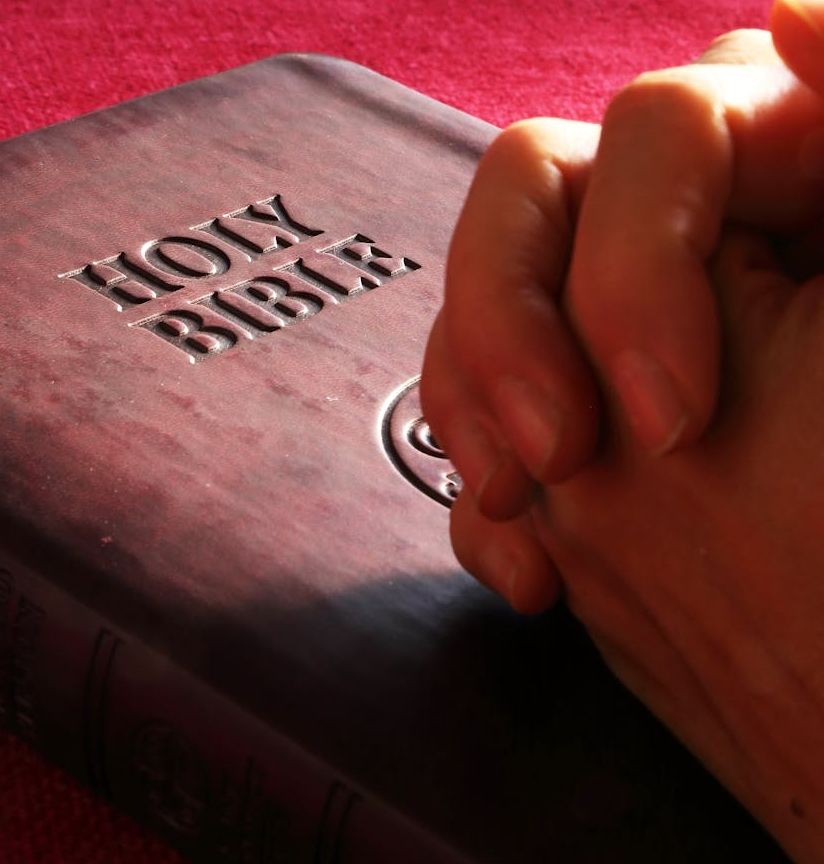
Father’s Day …

… originated in the United States in the early 20th century. In 1909, Sonora Smart Dodd, a woman from Spokane, Washington, proposed the idea of a day to honour fathers after hearing a Mother’s Day sermon. She wanted to recognize her father, who raised her and her siblings after her mother’s death.

As we enter into the month of June, Father’s Day is approaching and this gives us the opportunity to address why God is often referred to as Father.

Whilst referring to God as Father was less frequent prior to the birth of Jesus, God is referred to as Father in the Old Testament where He is called the Father of the nation of Israel. In the Gospels, when Jesus speaks about and prays to God He typically refers to Him as His “Abba, Father”. Teaching His disciples how to pray, Jesus said, “When you pray, you say, Our Father …” Jesus gave to us the right and privilege to come into the presence of the majesty of God and address Him as Father.

He transformed the meaning of the word for His time to call His people (Jews and Gentiles) to a true relationship with a caring, personal God, as scripture affirmed. It also puts an emphasis on God’s role as the source of all life, love and authority, similar to an ideal image of a father’s role in a family. It shows God’s interest in humanity, His care for His children and His ultimate power, providing, protecting and loving.

Galatians 4:4-4 “But when the set time had fully come, God sent his Son, born of a woman, born under the law, to redeem those under the law, that we might receive adoption to sonship. Because you are his sons, God sent the Spirit of his Son into our hearts, the Spirit who calls out, “Abba, Father.”

We don’t just call God Father because of Him being our creator but also because of the revelation given to us in Christ; which acknowledges a particular relationship with Him. God is also addressed as Father because He is His people’s redeemer and because we have been joined to Christ by adoption. Jesus died the death we deserve so that we might be joined to Him and adopted into God’s family.

“And by him we cry “Abba, Father.” The Spirit himself testifies with our spirit that we are God’s children. And now if we are children then we are heirs—heirs of God and co-heirs with Christ, if indeed we share in his sufferings in order that we may also share in his joy.”

Family of God

Do You Want To Be Healed?

John 5:1-9

This short but potent passage from John contains themes of healing, restoration and the transforming power of faith. It symbolises humanity’s need for divine intervention and the opportunity of spiritual renewal through encountering Christ. The pool represents the need to seek God’s grace and trust in His ability to heal both physically and spiritually.

The man in this passage had been unable to walk for 38 years and had given up hope that he could be healed.

From John’s brief account and if we were to read on further we can ascertain that this inform man was old (well over the life expectancy of the time), a dependant who was unable to care for himself, he liked to complain and put the blame on others, he was an unrepentant sinner who was ungrateful and disloyal.

Jesus’s healing of this man would have been at the direction of God the Father and is an example of God’s complete and utter grace.

God saves sinners.

God saw us in our hopeless, helpless condition and rescued us. He gives hope to the hopeless and help to the helpless.

Jesus cares about people even when problems make them feel hopeless or sad.

Jesus healed the man and he was able to walk again.

Jesus brushes off the excuses of the lame man. Don’t make excuses – work around them.

We wait too long to ask for healing. Instead seize the moment and ask God to work in your life. It’s not easy to live with illness and hope for healing.

Spiritual healing may occur without physical healing. A positive outlook in the face of our own disease or injury, and as our bodies age, is a miracle in itself. We have to do our part to maintain good health. Small changes to improve our health is part of the healing process.

God helps those who can not help themselves.

God helps those who see their inability to save or help themselves, who turn from self to the saviour and trust in God.

All the healings Jesus performed remind us that God saves sinners.

Without God it is impossible for man to save himself.

We need God to give us feet to walk in His ways, we need to receive eyes to see His truth and have strength to walk in obedience to Him.

This is a picture of God’s initiative in salvation and He saves us by His grace.

Jesus saw the man. He knew him. He spoke to him.

God sees us. God knows us. He then speaks to us.

Jesus came to give us life abundantly.

Healing

Boring and Mundane

Advance warning – my story of faith is not dramatic! I know I am not the only one here who has sat in a church meeting where the minister has asked for people to give testimony or to talk about finding the light and thought “but I’ve always believed”. The reality is my story is ordinary and mundane.

I had a Christian family and learnt about Jesus from an extremely young age. I’ve belonged to and been part of church my whole life.

And, having explained that I have no dramatic Hollywood style event to entertain you with, I could stop here …

…or I could, which is what I’m going to do, continue anyway and tell you more – including why it is that ordinary mundane testimonies can be a blessing to us.

Being a Christian and following a Christian life is difficult – and it’s supposed to be. Remember that old adage that implies that something’s worth is measured by how hard you had to work for it. God, through His grace and His Son Jesus Christ, has given us the most valuable gift of all; but to follow in our Lord’s footsteps takes hard work and perseverance.

We are called to faithfulness. We are persecuted, we suffer, we face trials tribulations. temptation and false teachers trying to send us off track.

When times are difficult we are tempted to give up and many do fall away. The epistles remind us to persevere, to put on God’s armour. to stand firm and to ensure in following Jesus Christ.

Remaining steadfast, staying on the narrow path and being faithful teach the need to focus on persevering, to continue to put our trust in God and to not falter.

The well known poem about the footsteps in the sand really is true. God never leaves us. Whilst people fall away and leave Him; He does not abandon us.

When I give my burdens to Him I feel a physical lightness and literally feel the weight removed from my shoulders as He takes the load for me.

When times are easy, I feel His presence walking beside me and we enjoy the journey together.

If things are more difficult I feel His hand in mine.

In times of great trial He is supporting me or carrying me if you like.

And in times of great sorrow I feel His arms around me as He embraces me with His great love and comfort.

This is certainly a great blessing and in return I pray that God will continue to fill me with His love so that it can overflow through me to others.

We are called to carry each other’s burdens, encourage and bring back the wanderers. We are called to follow Christ’s example to aspire to God’s standard and to repent of all – however mundane – that makes us guilty of not reaching that standard.

God told us to pass His teachings to our children. Having parents, teachers, ministers and peers who did this points to God’s continued faithfulness as does having been preserved in the faith. God catches me when I stumble.

He has blessed me and kept me. He has blessed you and kept you.

So let us sing of His great love for evermore and make His faithfulness known through all generations and let us give thanks to God.

Holding Hands

Tell Us Who You Are

The Jews asked Jesus whether He was the promised one from God.

In his writings, John has told us that this event took place during the Jewish Festival of Dedication. This festival is also called Hanukkah or the Festival of Lights; and it takes place in remembrance of the purification, or cleansing, of the Temple, in 164 BC, after the desecration committed by a king of Syria called Antiochus Epiphanes in 170 BC.

During this Festival of Lights there would be great illuminations in the Temple and in every Jesish home as a reminder of the light of freedom coming back to Israel – the freedom won to worship God. It is significant that Jesus chose this time to say “I am the light of the world, I alone can light men into the knowledge and presence of God”.

The location of this event was Solomon’s Porch. Now the first court in the Temple precincts was the Court of the Gentiles and along two sides ran the Royal Porch and Solomon’s Porch. These were rows of magnificent pillars, almost 40 feet high and roofed, where people walked to pray and meditate. Rabbis walked there teaching their students the doctrines of faith.

This was where the Jews chose to ask Jesus whether He was the one promised from God.

Some of those asking would have been genuinely wanting to know but others were trying to trap Jesus. Jesus did not fall into the trap, simply saying He had already told them who He was.

There is a saying that actions speak louder than words.

Every miracle performed by Jesus testified that the Messiah had come.

Jesus’s words, the authority with which He spoke, the way He explained the scriptures and put His teaching in their place, showed that God was speaking in Him.Both the words and deeds of Jesus were a continuous claim to be the anointed one of God.

The sheep of a shepherd knows his call.

Jesus is the good shepherd.

He knows His sheep, who follow Him when He calls.

And, to those who accept Jesus, He promises eternal life that would know no end and that is secure.

Jesus promised that for those who accept Him as Lord and Master and become members of His flock, the littleness of earthly life would be gone and His flock will know the splendour and magnificence of the life of God. Jesus promised that death would not be the end but the beginning with the glory of indestructible life.

And security. Jesus promised that nothing can snatch His sheep from His hand.

This does not mean that there would be no sorrow or suffering but that in sorrow and at the darkest hour they would still be conscious of the everlasting arms underneath and about them.

Even in a world crashing to disaster they would know the serenity of God.

God’s promise is true. His arms are around us, embracing us in His love. I say this from my own experience of feeling God’s loving arms when times are tough.

It is God who gave Jesus the sheep. Both Jesus and His sheep are in the Father’s hand. We are secure in God’s power.

The bond of unity is love. Proof of love is obedience. We are one with one another if we are bound in Christ obeying the words of Christ and following His example. Jesus was one with God because He loved and obeyed Him perfectly and He came to this world to make us what He is – one with God.

Sheep

He Is Risen!

Listening to the readings again on Easter Sunday with the women going to the tomb to prepare Jesus’s body reminds me of something I read recently about Mary – Jesus’s mother.

It is interesting, is it not, that Jesus’s mother – arguably His greatest disciple, a woman of tremendous faith, who stayed by Him to the bitter end, is not listed amongst the women going to attend to Jesus’s body.

And this poses the theory that the first person Jesus appeared to may well have been His mother and that this is why she was not among those going to the tomb at dawn. Such an appearance would be part of completing her participation in the essential parts of the paschal mystery.

Mary suffered above all others in the suffering and death of her son. Christ kept the commandments. He honoured His heavenly Father, His earthly father and His mother, so it makes sense that he’d visit her first.

If a son lived far away and his mother was told he’d died but he was actually alive and healthy and he returned to the area, it would highlight that he was not a good son if he visited his friends first and his mother last.

Jesus was the perfect son. So, why would He not visit His mother first. There’s also her faith, which, despite the apostles losing theirs at Jesus’s passion, Mary had in abundance. Scripture tells us that the Lord shows Himself to those who have faith in Him. And, of course, she loved her son so much and scripture tells us that those who love Him will be visited by Him.

How joyful she must have felt at seeing her son alive once more.

There is a special kind of joy at Easter. It’s not just the spring flowers springing up into life or the longer days. What it is is a deep, radiant joy born from our Lord’s victory over sin and death so that we might have eternal life with Him.

Jesus leaves the darkness and rises to new life. Through God’s grace, this gives us the gift that, no matter what our past was, we have permission to leave it behind and embrace the hope and joy of new lives in Christ. His sacrifice and act of intermediary reconciliation grants us forgiveness of our past sins, our present sins and our future sins.

A cross in a sunny field of flowers. Easter Joy.

The Time Had Arrived

Palm Sunday is the day we appoint to mark Jesus’s parade into Jerusalem.

Up to this point Jesus has told His disciples to keep the knowledge of His Messiahship to themselves because His hour had not yet come. But now, the time had arrived. Jesus was making a declaration and He took dramatic action to make the announcement. Jesus rode into Jerusalem in a way which would be an unmistakable claim to be the Messiah – God’s approved king.

This event had been carefully planned. “The Lord needs it” was a password chosen and set up a long time prior to this event taking place.

It was certainly an act of defiance and courage. There was already a price on Jesus’s head. And yet, He enters in a way which throws the lime-light upon Him – giving Him centre stage. Every eye now beheld Him.

Jesus was fulfilling the prophecy in Zechariah 9. Even with His deliberate claim to be king, Jesus underlined the kind of kingship He claimed – king of love and peace.

Jesus used the language of the culture of the time. His procession used symbols which were part of the common understanding; touching a hope and a need in the people’s hearts. Consequently. the people eagerly responded.

Jesus rode a colt. A colt is an unridden donkey – which symbolised purity and peace. This confirmed His fulfilment of the Messiah role was by bringing reconciliation and peace.

In those days in that country, donkeys were considered noble. Only in war did kings ride a horse. In times of peace they rode donkeys.

By riding a donkey, Jesus came as a king of peace and love – not the conquering military hero the Jews had expected and awaited.

The waving of palm branches acknowledged Jesus’s authority. By throwing down their cloaks, the people were ushering a prince into their midst; showing honour and homage. And the traditional welcome to a new king – “Blessed is He who comes in the name of the Lord”.

In the loudest way possible Jesus was saying, “Here I am, your king, your prince of peace.” The reply – “Hosanna” meaning “save us” – accepting that Jesus is the saviour.

Some of the pharisees – not all but some – heard the crowds and did not like it. They felt contempt at all the rabble as well as being afraid of Rome – who did not like disturbances from others.

In response to the pharisees telling the crowd to be quiet, Jesus answers that if the crowd were silent the stones would shout out.

When it is time, it is time. God’s purpose will be fulfilled. The king has come. The kingdom is coming.

The triumphal entry did not happen in a vacuum. It was not an accident. Everyone gathered together saw the meaning before them plain and simple. The king was entering the city in righteous victory and the crow were in desperate need of salvation and rescue.

We often read the whole passion – the whole suffering – on Palm Sunday because out of context from each other the rest doesn’t make full sense.

Jesus, the true king, the one coming in the name of the Lord, entering in triumph, helps us understand the whole passion more fully. It was never about human thrones and powers – it was always about triumph over evil and death.

The one who resurrected Lazarus comes to Jerusalem, in faithful obedience to the covenant, to allow humanity to expend its evil upon Him and for Him to then rise up from the dead. Humanity expends its evil upon the Son of God. The Powers and Principalities of the world snuff out the light. Satan claims he has victory over the God with whom he thought equality could be grasped.

But … that is not the end of the story …

… Jesus comes to us the same way He came to Jerusalem – amidst the praises of the people. enthroned by the cries begging for salvation and the royal welcome.

He guides us through His passion-tide, to bring us to share in His meal, to kneel at His cross, to wait by His tomb, to await His resurrection and victory over the darkness, the grave and His defeat of Satan, as we shout “Alleluia” on Easter Sunday.

The six stages of Holy Week:

  • Jesus as king
  • Jesus’s obedience to God’s will
  • Jesus as suffering servant
  • Betrayal and loyalty
  • Jesus’s passion/suffering
  • Salvation through Jesus

What a difference a day makes.

What a difference a week makes.

Palm Sunday, crowds are cheering Jesus and celebrating. Yet, just a few short days later, the same crowds jeer and call for the brutal murder of Jesus upon the cross.

Jesus knew what was coming but He still taught and proclaimed the Kingdom of God to His final breath.

Jesus made one last appeal to be accepted as their king. Before the hatred of men engulfed Him.

Once again, He confronted them with love’s invitation.

donkey

A Sin Is A Sin or The Fig Tree

In the first part of Luke recounting the teaching of Jesus and the fig tree are people discussing Pilate mixing the blood of Galileans with their sacrifices.

This event, and that of the Tower of Siloam also mentioned by Jesus, were probably very well known by the crowds of the time, however, we know little about them today.

It is interesting that Pilate’s brutality is mentioned – which links up with the content of other historical references to him – and this gives us an impression of Pilate in advance of Jesus’s trial.

Considering this brutal nature of Pilate makes his act of washing his hands of Jesus stand out more. Pilate was quite happy to brutally kill people but he did not want to claim responsibility in any way for the death of Jesus.

Jesus uses the conversations of the crowd – one about a state sanctioned event and one an apparently random accident – for His teachings.

Jesus implies that we must not equate tragedy with divine punishment. However, repentance is needed universally. Unless we repent we will perish. To perish means the destruction of one’s soul.

The unrepentant will suddenly find that they have delayed too long and they have lost themselves.

Jesus asks the people – do they think that the Galileans being talked abount were greater sinners because of what happened to them. The Jews linked sin with suffering.

But there is no scale of sin. A sin is a sin.

Jesus expounds further by telling the parable of the fig tree. The fig tree was favoured because they had a higher chance of growing in the poor and shallow soil of the region.

Uselessness invites disaster. What is useful goes from strength to strength where what is useless is eliminated.

What would we answer when asked “of what use were you in this world?”

The land owner initially pronounces imminent and decisive judgement. The tree had not borne fruit for the last three years and so he wanted it cut down.

Nothing which only takes can survive.

The fig tree was taking strength and sustenance from the soil. In return it was producing nothing. This was the fig tree’s sin.

There are two types of people:

  • Those who take out more than they put in.
  • Those who put in more than they take out.

There is the duty placed upon us of handing things on better than we found them.

A fig tree normally takes three years to reach maturity. If it is not fruiting by then it is unlikely to produce fruit. But, this fig tree was given another chance.

The gardener pleaded for the tree to be given an extra year and the gardener would dig around the tree, placing manure around it. If the tree bears fruit it will stay but if the tree bears no fruit after the extra year it will be cut down.

The fig tree was given a second chance. We are given a second chance.

A second chance to change and repent.

It is always Jesus’s way to give man chance after chance. Peter, Mark and Paul all are witnesses to that. God is infinitely kind to those who fall and rise again.

God transforms us by grace – a grace that calls us to be generous towards those still trapped by poverty, want and devastation.

All sinners face the same fate before God. Everyone must stand before Him in judgement.

God is patient but, whilst He allows second chances and time for repentance, there is a limit.

There is a final chance!

If we refuse chance after chance, if God’s appeal and challenge come again and again in vain, the day finally comes, not when God has shut us out, but when we by deliberate choice have shut ourselves out.

Jesus uses the events of Galileans being executed and the tower falling on people in Jerusalem to emphasise the urgency of repentance, warning that those who don’t repent will perish.

A sin is a sin. There are no sins that are lesser than others. All sins are a sin.

Don’t be like the fruitless tree!

Focus on producing good fruit; on living a life which pleases God – rather than focussing on the misfortunes of others.

Jesus is emphasising that repentance is not just about acknowledging sins but actively changing to conform to God’s will.

The fig tree parable highlights God’s grace and the opportunity for change and restoration.

Fig Tree

Storms

There’s that well known phrase: “The calm before the storm”. But there is a calm amidst the storm, and, it brings to mind lyrics from certain hymns.

“Lead us, heavenly Father, lead us o’er the world’s tempestuous sea; guard us, guide us, keep us, feed us, for we have no help by thee.”

“Eternal Father, strong to save, whose arm does bind the restless wave…O Saviour, whose almighty word, the winds and waves submissive heard, who walked upon the foaming deep, and calm amid the rage did sleep.”

Of course, Jesus as man would have needed, and had sleep. Jesus got tired, just as we get tired. We get the sense that, at times, Jesus was exhausted. He had huge crowds following Him about wanting His attention, to be healed, to be taught, to just be close to Him. He couldn’t just jump in the care to drive to the next town – He had to walk.

When we read passages like Jesus asleep amidst the storm, it is often that Jesus either wanted some time with just His disciples so He could continue their training and preparation for what was to come or/and He wanted some peace and quiet to pray and recharge.

Jesus trusted God. He knew He was near God no matter whether at sea or on land. Jesus knew He was in safe hands. He felt safe and relaxed and sleep overcame Him. Tired as He was, He slept through the sudden storm.

The Sea of Galilee often has and had sudden storms. More than 600 feet below sea level, it is surrounded by table lands beyond which are great mountains. Rivers cut deep ravines through the table lands and down into the sea. Table lands are large, flat, elevated areas of land. The ravines act like huge funnels drawing down cold winds from the mountains and so the storms strike.

This is how the storm that struck the boat Jesus and His disciples were in suddenly appeared. There was real peril. It was understandable that the disciples were scared. The woke Jesus who calmed the storm.

Everywhere that Jesus is, the storm becomes a calm.

Jesus calms the storms in and of our lives.

Jesus calms the storm of temptation.

Stevenson once said: “You know the Caledonian Railway Station in Edinburgh? One cold bleak morning I met Satan there.” It comes to us all to meet Satan. If we try to meet the tempest of temptation alone, with only our own strength, we will fail. But, if we meet it with Christ, He brings the calm and the temptations lose their power.

Jesus calms the storm of passion. He calms the hot heart and blazing tempers. On meeting one with these, someone said to them “I see you have succeeded in conquering your temper”.

The response?

“No, I didn’t conquer it. Jesus conquered it for me.”

Jesus calms the storms of sorrow.

At some point everyone experiences sorrow. The death of our loved one, tragedy, trauma, distress…

Jesus wipes our tears away and soothes our hearts. He holds us up. He calms the storm.

“With Christ in our vessel we can smile at the storm as we go sailing home.”

Jesus calms the storms of life. Wherever He is, the storm becomes a calm.

Storm

Two Mothers Are Brought Together

(Luke 1:39-55)

I love the title that Nicholas King’s translation gives this Gospel passage. Unlike most others which use “Mary visits Elisabeth” this one is “Two Mothers Are Brought Together”.

Even though their babies had not yet been born, Mary and Elisabeth were both expecting and so were most definitely mothers. They were also cousins. How apt that the saviour of the world and his forerunner were related. It was natural for Mary and Elisabeth to meet up and support each other – Elisabeth in the last three months of pregnancy and Mary in the first three.

Through these two lowly women (and at that time women were considered by society to be inferior and were overlooked and ignored) God begins His transformation of the world.

At Mary’s first words comes an immediate response from Elisabeth’s unborn child – John leaps. John has acknowledged both Mary’s presence and her baby’s significance – fulfilling the prophecy about Him that even before His birth He would be filled with the Holy Spirit. Before he is even born, John is pointing to the Messiah – announcing His coming.

Elisabeth is also filled with the Holy Spirit, enabling her to announce what Mary has not yet imparted – that Mary is also with child. It is through the Holy Spirit that Elisabeth knows who Mary’s child will be – enabling her to call Mary the “Mother of my Lord”.

These two women are demonstrating tremendous faith and determination to fulfil God’s will and His work for them.

Elisabeth blesses Mary. Our English language is often proclaimed quirky and translations into English can result in some things being obscured. In this case the translation obscures the fact that Elisabeth uses more than one word for blessed.

When Elisabeth says Mary is blessed among women and that Mary’s unborn baby is blessed she uses a term which means that both present and future generations will praise and speak well of Mary and her child.

But when Elisabeth says “Blessed is she who believed that there would be fulfilment of what was spoken to her by the Lord” she uses the same term Jesus used when He blessed people in the Beatitudes. Therefore, we could translate Elisabeth’s words as “Happy is she who believed”.

Despite all expectations and women’s lack of status in society, instead of being shamed for having this baby, Mary is honoured and she is blessed with divine joy because she believed and trusted in what God is able to do and what God promises to do.

Mary’s trust and faith is a direct opposite to Elisabeth’s husband Zechariah who had demanded proof that the angel’s word was true when the angel told him Elisabeth would have a baby. Whilst not mentioned in today’s reading, Zechariah’s punishment for his doubt was to be struck dumb. It was not until the baby was born and Zechariah wrote on a slate that his baby was called John that God granted him the ability to speak again.

Instead of doubting and demanding proof, Mary asked what would happen and then willingly accepted. A lowly village girl demonstrating believe and trust where the priest had doubted.

Elisabeth had had her own share of social exclusion and judgement. The role of women at that time was to have children and, until God granted her the gift of John, Elisabeth had been treated by society as a failure. God’s grace reversed Elisabeth’s social status. Elisabeth overturned social expectations and continued the pattern of social reversal as she greets Mary at the door with honour. When Elisabeth welcomes Mary she practices the same kind of inclusive love that Jesus shows to outcasts and sinners. She sees the reality of God’s love at work amongst those whom society excludes.

This passage reflects the importance of community support and shared experiences in faith. Mary’s visit was not just fulfilling a family obligation but was also Spiritual affirmation. Mary and Elisabeth trusted that God was coming to save and free them. They gave thanks, they responded to God’s love. They supported each other as they waited in hopeful anticipation.

Let us support each other in love with hiope and faith as we wait expectantly for our Lord to return.

Baby and Community

Here Is The News…

(Isaiah 40:1-11, Luke 3:1-6)

Today, we have heard about the proclamation of God’s message.

The message is that people need to repair their lives and prepare for Christ’s coming. John (the Baptist) proclaims this by calling the people to repent and be baptised.

We also have the beginning of the end before the new beginning.

We have the introduction of four men who will play significant roles in Jesus’s crucifixion. In fact, the seven people Luke mentions at the beginning of our Gospel reading, are only remembered today, despite historical records, because they are mentioned here in Luke’s Gospel.

God chooses unlikely people. We sometimes wonder about our calling, but God knows what He is doing. He knows the right people to call. God often calls the lowly.

And John fulfils the prophecy from Isaiah quoted by Luke. “A voice of one calling in the wilderness, ‘Prepare the way for the Lord…'”

But why in the wilderness and not Jerusalem? The wilderness is sparse whereas Jerusalem was highly populated and held the Temple.

Yet, throughout history the wilderness has been a place where God has shaped His people and forged the nation of Israel. It is where God’s prophets did most of their work and where Jesus was tested. God continues to work in the wilderness; for the wilderness is where and when life seems bleak and barren. It is when we are most open to hearing God. God works in the wilderness of our lives.

The baptism of repentance for the remission of sins is the type of baptism that John introduced to the Jews. They were already familiar with a different type of baptism – a type called Proselyte Baptism which was a ritual required of any Gentile who wished to become a Jew to cleanse sins.

But John was introducing a baptism which required all to repent and be baptised for the forgiveness of sins.

This concept was unfamiliar to the Jews and so the prophecy that John would give the people knowledge of salvation was fulfilled through his teaching of this concept.

John taught the ethical requirements of repentance. It requires bearing fruit worthy of repentance and sharing with those in need. To deal honestly with people and not use power in an abusive way.

Advent is a time of preparation. Here we find the way to prepare – bearing fruit worthy of repentance -sharing with those in need – dealing with people honestly – using power justly – turning around and facing a new direction.

Repent and turn around away from the sin. Turn away from worldly compulsions and turn towards Godly affections.

The reward of repentance is remission of sins. This is more than just forgiveness. It is also freedom from compulsions and addictions and habits that threaten to undo us.

Repentance is called for by John at both personal and national levels for without it Israel was heading towards destruction.

At the end of this Gospel Luke emphasises again repentance and forgiveness . “Thus it is written, and thus it was necessary for Christ to suffer and to rise from the dead the third day, and that repentance and remission of sins should be preached in His name to all nations…”

People still need forgiveness. God still forgives.

People know they are sinners. Dealing with sin seriously can be a relief because if sin is not ignored but is addressed then forgiveness can be believed.

Just as Israel needed repentance, we also need to prepare our hearts and minds to receive the Lord and to help our friends and family prepare their hearts and minds as well.

The important work and the real goal is the preparation of our hearts and minds to receive God and the work of the Holy Spirit.

We can contribute to the Spirit’s work in many ways but especially through prayer and the preparation of our hearts.

ALL will see God’s salvation.

Jesus has eliminated barriers to the salvation of all people.

We live in a highly divided world. God calls ALL people in every land, every race, every persuasion, every circumstance.

ALL are called. ALL will see the salvation.

No-one is excluded. The call is to repent and receive forgiveness of sins.

Wilderness